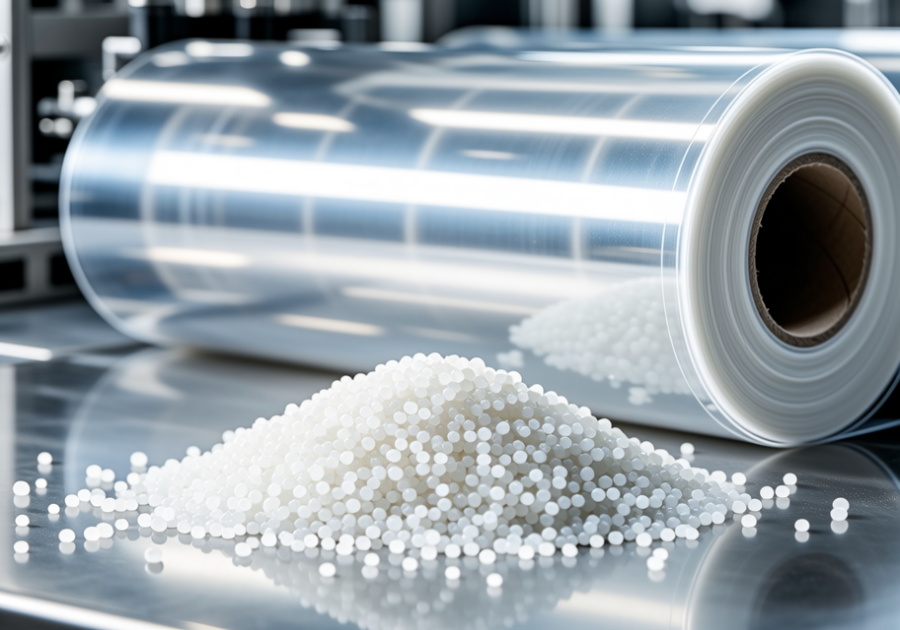
Does Nylon Shrink? How to Solve the Shrinkage Problem?
In this post, we will discuss the topic of "does nylon shrink". Then the cause of nylon shrinkage and "how to solve the shrinkage problem of nylon" will be shown in this essay.
What is Nylon?
Before discussing the subject of "does nylon shrink", let's talk about what nylon is. Nylon (short for PA) is a kind of Polyamide fiber, which is a general term for thermoplastic resins containing repeated amide groups on the main chain of molecular. The appearance of nylon has given a completely new look to textiles. Its synthesis is a breakthrough in the synthetic fiber industry, but also a very important milestone in polymer chemistry.
Nylon has good comprehensive properties, including mechanical properties, heat resistance, wear resistance, low friction coefficient, a certain flame retardant, easy processing, and suitable for reinforced modification with glass fiber and other fillers.
Does nylon shrink? Let’s look at the answer together!
Nylon cloth is a kind of very common synthetic fiber, usually not easy to shrink, but a shrinkage problem will happen when the heating is too high. For example, nylon clothes are easy to shrink after being exposed to hot water in the range of 80-100 degrees Celsius for 10-20 minutes or in high-temperature environments.
In addition, shrinkage problems will occur in the production process of nylon material. Its shrinkage rate is affected by many factors, including the type of nylon material, processing conditions, molding process and so on. Thus we can’t get a fixed value of its shrinkage rate. In general, the shrinkage rate of PA6 is 1%-3%, and the shrinkage rate of PA66 is about 0.5%-1.5%. So, does nylon shrink? In most cases, nylon has the problem of shrinkage.
The cause of nylon shrinkage
Does nylon shrink? The answer is YES! What is the reason of nylon shrinkage? It is caused by the structural changes of nylon molecular chains. When nylon meets a wet environment, water molecules will enter between the nylon molecular chains, which will shorten the distance between the molecular chains. The force between molecular chains will decrease due to the increase in temperature when nylon material encounters high temperatures. Then the arrangement of molecular chains becomes closer, thus bringing about shrinkage.
For nylon fabric shrinkage, how to avoid the shrinkage of nylon?
1. Choose the right temperature and washing method: High-temperature water and strong detergents should be avoided when cleaning, and warm water and gentle washing can be chosen to protect nylon materials.
2. Use a hanger to dry: Avoid using a dryer, because high temperature will cause the shrinkage again. Clothes can be dried using hangers, and avoid direct sunlight as much as possible.
3. Add vinegar water: When cleaning, adding a small amount of vinegar water can help reduce the shrinkage of nylon material. Because vinegar water can neutralize scale, make clothing soft, and reduce clothing shrinkage.
In the production process of nylon, how to improve the shrinkage problem?
1. Increase the temperature of injection molding: Properly increasing the injection molding temperature can make the nylon material more flowing, reduce the possibility of local shrinkage, and thus can solve the shrinkage problem to a certain extent.
2. Increase the time of mold cooling: Increasing the mold cooling time can make the nylon material more fully solidified during molding. Then we can reduce the possibility of shrinkage.
3. Choose the right nylon material: Different types of nylon material have different total shrinkage rates, so choosing the right nylon material is also a good way to improve the shrinkage problem.
4. Add some fiberglass in the production: The shrinkage of nylon is between 1.1% and 1.3% without fiberglass addition. When the glass fiber is added to the nylon material, the shrinkage rate will be greatly reduced to about 0.3%. In general, the more glass fiber is added, the smaller the shrinkage rate of nylon. However, if the glass fiber content is too large, the surface of the floating fiber will not be treated well.
Conclusion:
Before reading this essay, many people will have the question "Does nylon shrink?". Perhaps many people think that nylon is non-shrinkable. But In the production process of nylon material, there is often a shrinkage problem. And nylon cloth without the problem of shrinkage is only at a low temperature, and with no exposure to sunshine. So nylon shrinks in most cases. Therefore, it is necessary to learn to adopt some corresponding measures to avoid or reduce nylon shrinkage.
Looking for chemical products? Let suppliers reach out to you!
You May Interested In


Glow70/KLOW80 99% China Peptides Warehouse Direct Delivery Lyophilized Powder in Stock
$169/UNIT FOB


2026-10-22
Trade Alert
Delivering the latest product trends and industry news straight to your inbox.
(We'll never share your email address with a third-party.)

Related News
Recommend Reading
-
![Business Society’s Market Outlook for n-Butanol on August 31, 2026: Fluctuating Trend]()
Business Society’s Market Outlook for n-Butanol on August 31, 2026: Fluctuating Trend
-
![October Polyethylene Market Performance in China is Poor]()
October Polyethylene Market Performance in China is Poor
-
![Cost Pulls Up March PC Market Performance]()
Cost Pulls Up March PC Market Performance
-
![Supply Reduction Leads to Steady Increase in Cyclohexanone Prices in Shandong, China]()
Supply Reduction Leads to Steady Increase in Cyclohexanone Prices in Shandong, China
-
![Business Society’s Market Outlook for Acrylic Acid on August 31, 2026: Volatile Trend]()
Business Society’s Market Outlook for Acrylic Acid on August 31, 2026: Volatile Trend