Supreme Court exempts Saridon, Piriton from government's FDC ban list
The Supreme Court has allowed the sale of Saridon, Piriton expectorant and Dart tablets, three combination drugs among more than 300 that the government banned recently for being risky for patients, according to a report in the Economic Times newspaper.
While hearing a plea by GlaxoSmith-Kline, Piramal and Jagdale Industries, the court allowed them to continue selling the drugs because they were being manufactured before 1988, the report quoted a lawyer present at the proceedings as saying. “The Union of India disputed this position, saying that these fixed dose combinations are not pre-1988 combinations,” a second lawyer said. The court had earlier said the health ministry could not rely on its technical committee’s report to ban 15 combination drugs that were manufactured since before 1988, another lawyer said. The apex court directed the government to reply within two weeks to a separate application by the Federation of Pharma Entrepreneurs seeking a stay on the ban against all 328 combination drugs. The federation contended the government did not follow due process, one of the lawyers said.
Several popular cough syrups, painkillers and cold medicines are combination drugs, containing two or more therapeutic ingredients in a single dose. Saridon is marketed by Piramal to treat headaches. GSK’s Piriton is a cough syrup. “The court has passed an interim order permitting us (and other pre-1988 manufacturers who were excluded from the exempt list) to continue manufacturing and sale of the product subject to its final decision on our application,” a GSK spokesperson was quoted as saying in the report. Wockhardt, Lupin, Alkem, Mankind and MacLeods Pharmaceuticals are among the drug companies that have approached the Delhi High Court for relief from the ban.

You May Interested In


High Quality β-Nicotinamide adenine dinucleotide CAS 53-84-9 NADwith ready stock and best price
$3E+1/UNIT FOB


2026-10-25
Trade Alert
Delivering the latest product trends and industry news straight to your inbox.
(We'll never share your email address with a third-party.)

Related News
-
The Last 10% Tariff Trap: A New Chapter in U.S.–China Negotiations on “Fentanyl Tariffs”
-
Vietnam Drives ASEAN Towards a Modern Economy
-
USDA Puts Fresh Money Into Local Food Markets
-
Redwall Raises Prices by as Much as 80%, Songwon Launches Global Increases, and Chemical Companies Are Collectively Passing On Costs
-
U.S. Strikes Three Iranian Tankers as “Tanker-for-Tanker” Escalation Raises Chemical Shipping Risk
-
"No available slots" returns as global shipping rates skyrocket amid multiple factors
-
Panama Canal Delays Deeper Draft Cut, but Transit Capacity Is Still Tightening
-
Middle East Conflict Pushes Up Oil Prices as More Than 100 Chemical Raw Materials Rise in Concentration
-
Crude Tanker Freight From the Americas to Asia Tops $80 Million per Voyage Amid Global Shipping Crunch
-
China, U.S. and Australia Escalate Antidumping Scrutiny: Chemical Exports Face Rising Compliance Pressure
Recommend Reading
-
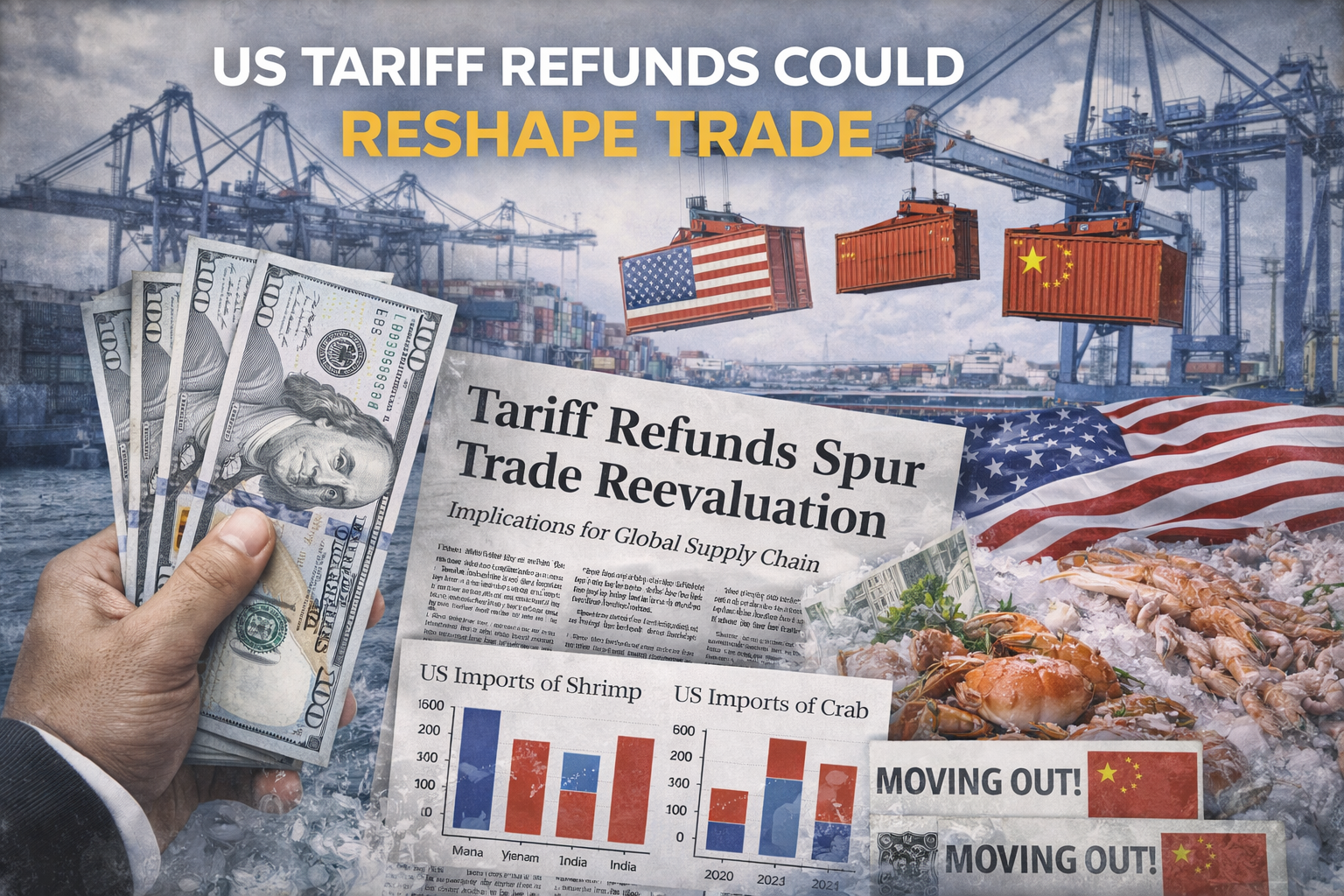
![US Tariff Refunds Could Reshape Seafood Trade]()
US Tariff Refunds Could Reshape Seafood Trade
-
![Hormuz Closure Raises Cold-Chain Risk]()
Hormuz Closure Raises Cold-Chain Risk
-
![India Issues Final Anti-Dumping Ruling on Chinese TDQ, with Duties Up to US$549 per Ton]()
India Issues Final Anti-Dumping Ruling on Chinese TDQ, with Duties Up to US$549 per Ton
-
![Russia’s Farm Trade Model Shows Strain]()
Russia’s Farm Trade Model Shows Strain
-
![Global Chemical Giants Light the Fuse: A TDI/MDI Price Storm Sweeps Asia and Europe—Who’s Fueling This “Cost Carnival”?]()
Global Chemical Giants Light the Fuse: A TDI/MDI Price Storm Sweeps Asia and Europe—Who’s Fueling This “Cost Carnival”?
-
![Since December, the Chinese phenol market has seen a significant decline]()
Since December, the Chinese phenol market has seen a significant decline
-
![Business Society September 16, 2026 Hydrofluoric Acid Trend Analysis: Fluctuating Trend]()
Business Society September 16, 2026 Hydrofluoric Acid Trend Analysis: Fluctuating Trend
-
![Business Society’s Acrylic Acid Trend Analysis for September 16, 2026: Strong Consolidation]()
Business Society’s Acrylic Acid Trend Analysis for September 16, 2026: Strong Consolidation
-
![Premium Global Chemical Sourcing Requests (29 Nov - 3 Dec 2025)]()
Premium Global Chemical Sourcing Requests (29 Nov - 3 Dec 2025)
-
![Costs Continue to Decline as October Styrene-Butadiene Rubber Market Weakens and Falls]()
Costs Continue to Decline as October Styrene-Butadiene Rubber Market Weakens and Falls