Explain Completely: Sodium Lauryl Sulfate in Shampoo
Sodium lauryl sulfate in shampoos, also known as SLS, plays a crucial role as a surfactant. It is widely used in various cleansing products due to its excellent cleaning properties. Let's learn more about the details of what Sodium Lauryl Sulfate is its advantages, and disadvantages.
What is Sodium Lauryl Sulfate?
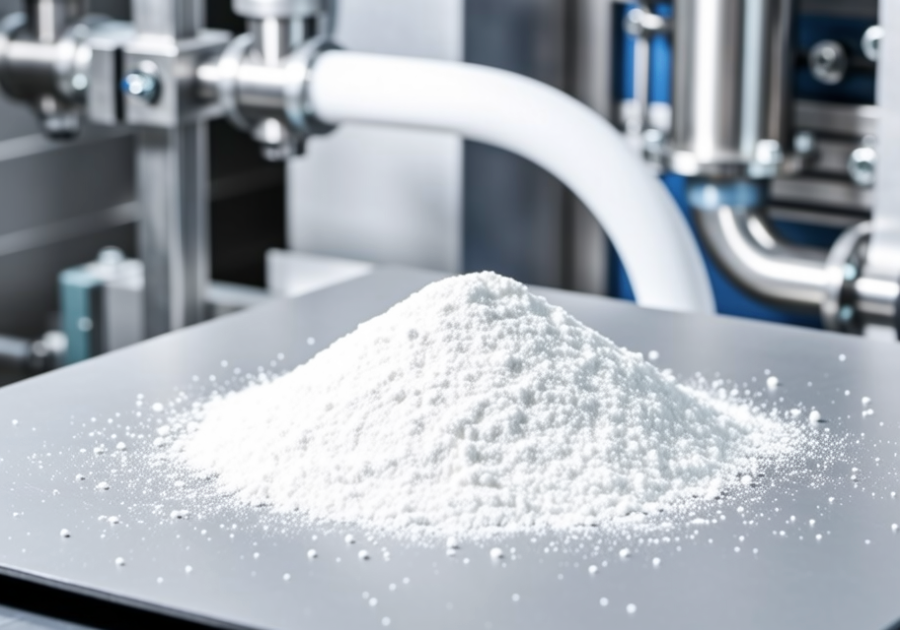
Sodium Lauryl Sulfate (SLS) is an anionic surfactant, also referred to as sodium dodecyl sulfate or sodium lauryl sulfate solution, with a chemical formula of C12H25SO4Na. It exists as a white or slightly yellowish powder or liquid, exhibiting a faint fatty odor. Easily soluble in water, it reduces the surface tension of aqueous solutions, facilitating the emulsification of oils. Insensitive to alkalis and hard water, it shows good compatibility with anions and non-ionic compounds.
Sodium Lauryl Sulfate (SLS) is widely used in a variety of cleaning products, such as laundry detergents and shampoos, due to its excellent degreasing ability. SLS effectively eliminates oils and stains through emulsification, wetting, and dispersion, a process that enhances the stability of cleaning formulations while reducing surface tension.
The molecular composition of SLS: Sulfate anion - negatively charged; this particular anion forms ionic bonds with water cations. These interactions enhance the solubility and cleaning efficiency of the detergent. At the same time, due to the hydrophobicity of its lauryl group, it adheres well to the surface of the stain, thus promoting its dispersion in water and facilitating cleaning.
However, the robust nature of this surfactant necessitates cautious consideration of its environmental impact through excessive use or prolonged exposure. Therefore, it becomes imperative to regulate the concentration and discharge of SLS during application to mitigate potential environmental risks effectively.
In summary: Sodium Lauryl Sulfate, a widely utilized surfactant, remarkably amplifies the effectiveness of its accompanying cleaning products.
Sodium Lauryl Sulfate in Shampoo
Based on the type of surfactants used, we can classify shampoos into three categories: sulfate shampoos; sulfate-free shampoos; and amino acid shampoos.
Sulfate surfactants include Sodium Laureth Sulfate (SLES) and Sodium Lauryl Sulfate (SLS).
Inexpensive and commonly present in shampoos, body washes, toothpaste, commercial soaps, and skincare products are sulfate surfactants. They excel as sulfate surfactants; however, their effectiveness may come at a cost: potential harshness to the skin.
Most market-available shampoos contain sulfate surfactants, notably Sodium Lauryl Sulfate. they include many pros but are not limited to proffering potent cleansing power. It efficiently eradicates dirt from the hair strands and imparts a silky-smooth texture upon rinsing—thus embodying an essential facet of effective shampoo formulation. Furthermore, due to its cost-efficiency factor; manufacturers can save significantly on production costs–a notable advantage in the competitive realm of product manufacturing and distribution.
People with hair loss or sensitive skin should steer clear of using sulfate-containing shampoos. Sulfate surfactants, due to their potent penetration capabilities, penetrate the skin and bind with its proteins; this action triggers protein denaturation, a process that strips off the lipid layer from the stratum corneum. It compromises Skin's Natural Moisturizing Factor (NMF). Consequently, dryness on the scalp, itchiness, and potential dandruff issues may afflict an individual.
Consider amino acid surfactants for a milder option. Basic units of proteins are amino acids; consequently, utilizing an amino acid shampoo can effectively repair damaged hair since our hair is also protein-based. Moreover, due to its weakly acidic nature and close pH proximity to our skin's levels - the use of such shampoos will impart a significantly gentler experience.
Amino acid surfactants, though less potent in cleaning power than sulfate surfactants: offer a gentler effect on the skin. Notably--they leave fewer residues; furthermore, even if some do penetrate the skin - their high compatibility with skin tissue minimizes cell toxicity and reduces harm to the dermis. It is worth noting that these surfactants yield lesser foam production.
The higher cost of predominantly amino acid surfactant-composed shampoos results in their tendency to be more expensive. Amino acid-based products are gaining popularity, yet sulfate surfactants—owing to their affordability—still dominate the market steadfastly.
Conclusion
In conclusion, Sodium Lauryl Sulfate in shampoos is a crucial component, contributing to their cleansing effectiveness and affordability. However, individuals with specific hair or skin conditions may opt for sulfate-free or amino acid-based alternatives to minimize potential adverse effects.
Looking for chemical products? Let suppliers reach out to you!
You May Interested In


Glow70/KLOW80 99% China Peptides Warehouse Direct Delivery Lyophilized Powder in Stock
$169/UNIT FOB


2026-10-15
Trade Alert
Delivering the latest product trends and industry news straight to your inbox.
(We'll never share your email address with a third-party.)

Related News
-
Chemical Properties and Uses of Tetraetil
-
Chemical Properties and Applications of Cyclopropen
-
Key Reactions of Cobalt Chloride
-
Uses and Properties of 3-Methyl-1-Butanol
-
Key Reactions and Uses of Lithium Aluminum Hydride
-
A New Weapon Against Spider Mites: Canada Moves to Approve Novel Miticide for Greenhouse Growers
-
Permanganate: Properties, Uses, and Safety
-
Iohexol: Properties, Uses, and Safety
-
Isobutyl: Properties, Uses, and Industrial Applications
-
HNO2 (Nitrous Acid): Properties, Uses, and Safety
Recommend Reading
-
![Heptane: Properties, Uses, and Industrial Applications]()
Heptane: Properties, Uses, and Industrial Applications
-
![Sodium Hypochlorite: Uses, Concentration Guide, and Critical Safety Hazards]()
Sodium Hypochlorite: Uses, Concentration Guide, and Critical Safety Hazards
-
![Isopropyl Alcohol (IPA) vs Ethanol: Which Solvent or Disinfectant is Better?]()
Isopropyl Alcohol (IPA) vs Ethanol: Which Solvent or Disinfectant is Better?
-
Barium Sulfide: Properties, Uses, and Safety
-
![Magnesium Chloride (MgCl₂): Properties, Uses, and Applications]()
Magnesium Chloride (MgCl₂): Properties, Uses, and Applications
-
![Business Society September 28, 2026 MTBE Trend Analysis: Bearish Oscillations]()
Business Society September 28, 2026 MTBE Trend Analysis: Bearish Oscillations
-
![Business Society’s September 3, 2026 Melamine Market Outlook: Fluctuating Trend]()
Business Society’s September 3, 2026 Melamine Market Outlook: Fluctuating Trend
-
![Business Society’s Market Outlook for Epichlorohydrin on August 21, 2026: Volatile Trend]()
Business Society’s Market Outlook for Epichlorohydrin on August 21, 2026: Volatile Trend
-
![Business Society Hydrofluoric Acid Trend Analysis for September 28, 2026: Stable Fluctuations]()
Business Society Hydrofluoric Acid Trend Analysis for September 28, 2026: Stable Fluctuations
-
![This Week's Titanium Dioxide Prices in China Decline (8.17-8.21)]()
This Week's Titanium Dioxide Prices in China Decline (8.17-8.21)