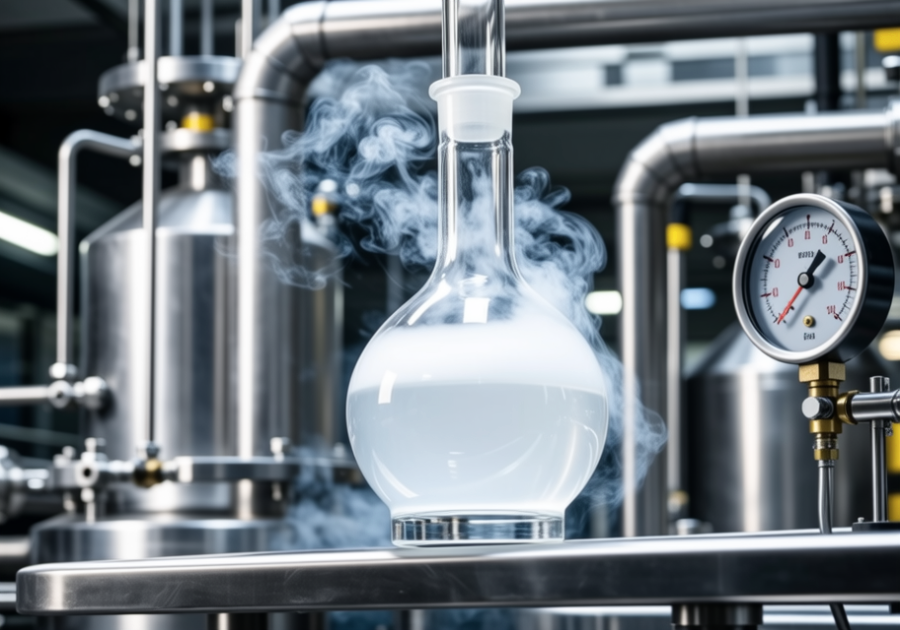
HNO2 (Nitrous Acid): Properties, Uses, and Safety
Nitrous acid (HNO2) is a weak, unstable acid often generated in situ for laboratory and industrial applications. Proper knowledge of its properties and safe handling practices is essential to avoid accidents and ensure efficient chemical reactions.
HNO2 Chemical Properties
HNO2 chemical properties define its reactivity and usefulness. Pure nitrous acid is difficult to isolate due to rapid decomposition into nitric oxide and nitric acid. In solution, it appears colorless to pale blue and acts as a mild oxidizing agent. Key properties include:
| Property | Value |
|---|---|
| Molecular Formula | HNO2 |
| Molar Mass | 47.01 g/mol |
| Appearance | Colorless to pale blue solution |
| Stability | Unstable, decomposes to NO and HNO3 |
| pKa | 3.3 |
Nitrous Acid Uses
The primary Nitrous Acid uses are in synthetic chemistry, where its reactivity is exploited in controlled reactions. Typical applications include:
- Diazotization of primary amines to produce aromatic diazonium salts.
- Nitrosation reactions for forming nitroso compounds.
- Preparation of nitrite solutions for analytical purposes.
- Oxidation and deamination reactions in research laboratories.
HNO2 in Chemical Synthesis
HNO2 in chemical synthesis is often generated on-demand to minimize hazards associated with storage. In organic chemistry, it is used to produce intermediates in dyes, pharmaceuticals, and agrochemicals. Reaction conditions such as temperature and pH must be carefully controlled to prevent decomposition.
HNO2 Storage and Safety
Safe handling of HNO2 storage and safety is crucial due to its unstable and reactive nature:
- Generate nitrous acid in situ whenever possible rather than storing it.
- Store precursors, such as sodium nitrite and acids, separately until immediately before use.
- Use personal protective equipment, including gloves, goggles, and lab coats.
- Work in well-ventilated areas to avoid exposure to nitrogen oxides.
- Follow proper spill and emergency protocols to handle accidental releases.
Organizations like the International Chemical Safety Card (ICSC) recommend strict handling guidelines to minimize health risks, including irritation and respiratory effects from NOx gases.
Laboratory and Industrial Applications
Although rarely stored long-term, HNO2 finds application in:
- Organic Synthesis: Key reagent for diazotization and nitrosation reactions.
- Analytical Chemistry: Detecting amines through diazonium salt formation.
- Research Labs: Studying reactive intermediates and mild oxidations.
Frequently Asked Questions
What is HNO2 used for?
HNO2 is mainly used for diazotization and nitrosation reactions, preparation of nitrite solutions, and analytical chemistry applications.
How should HNO2 be stored safely?
Nitrous acid should be generated on-demand. Store precursors separately, use proper PPE, and ensure adequate ventilation to prevent exposure.
What are the chemical properties of HNO2?
HNO2 is a weak, unstable acid that decomposes easily. In solution, it is colorless to pale blue, has a pKa of 3.3, and acts as a mild oxidizing agent.
How is HNO2 used in chemical synthesis?
It is used in situ for diazotization and nitrosation reactions, producing intermediates for pharmaceuticals, dyes, and agrochemicals.
Looking for chemical products? Let suppliers reach out to you!
You May Interested In


Glow70/KLOW80 99% China Peptides Warehouse Direct Delivery Lyophilized Powder in Stock
$169/UNIT FOB


2026-10-17
Trade Alert
Delivering the latest product trends and industry news straight to your inbox.
(We'll never share your email address with a third-party.)

Related News
-
Potassium Hydroxide (KOH): Soap Making, Batteries, and Safety
-
Potassium Nitrate Reactions & Uses (KNO3)
-
L-Alanine: Amino Acid Profile, Sports Nutrition, and Metabolic Role
-
SiO2: Properties, Uses, and Applications
-
Understanding Titanium Oxide: Properties and Uses
-
Sodium Nitrate: Fertilizer, Food Preservative, and Chemical Properties
-
What is Sodium Hipoklorit? (Definition, Uses & Safety)
-
Sodium Hypochlorite: Uses, Concentration Guide, and Critical Safety Hazards
-
Isopropyl Alcohol (IPA) vs Ethanol: Which Solvent or Disinfectant is Better?
-
Methanol Methyl Alcohol vs Ethanol: Toxicity, Fuel Uses, and Industrial Solvent Safety
Recommend Reading
-
![Heptane: Properties, Uses, and Industrial Applications]()
Heptane: Properties, Uses, and Industrial Applications
-
![Glycopyrronium: Pharmaceutical Applications, Mechanism, and Chemical Specs]()
Glycopyrronium: Pharmaceutical Applications, Mechanism, and Chemical Specs
-
![Uses of Dithiothreitol in Laboratories]()
Uses of Dithiothreitol in Laboratories
-
![Chemical Reactions and Uses of Stilbene]()
Chemical Reactions and Uses of Stilbene
-
![Applications of Diphenyl Cyanide]()
Applications of Diphenyl Cyanide
-
![Business Society’s DOP Market Outlook on August 14, 2026: Clearly Upward Trend]()
Business Society’s DOP Market Outlook on August 14, 2026: Clearly Upward Trend
-
![Business Society’s Market Outlook for China’s Hydrofluoric Acid on August 13, 2026: Volatile and Tending to Weaken]()
Business Society’s Market Outlook for China’s Hydrofluoric Acid on August 13, 2026: Volatile and Tending to Weaken
-
![Negotiation Expectations Warming Up Trigger Geopolitical Premium Retreat, Crude Oil Significantly Corrects]()
Negotiation Expectations Warming Up Trigger Geopolitical Premium Retreat, Crude Oil Significantly Corrects
-
![Change Rate Remains Negative, This Round of Refined Oil Retail Prices in China Will Be Reduced]()
Change Rate Remains Negative, This Round of Refined Oil Retail Prices in China Will Be Reduced
-
![Business Society LLDPE Daily Review: Weak Fluctuations on August 7, 2026]()
Business Society LLDPE Daily Review: Weak Fluctuations on August 7, 2026