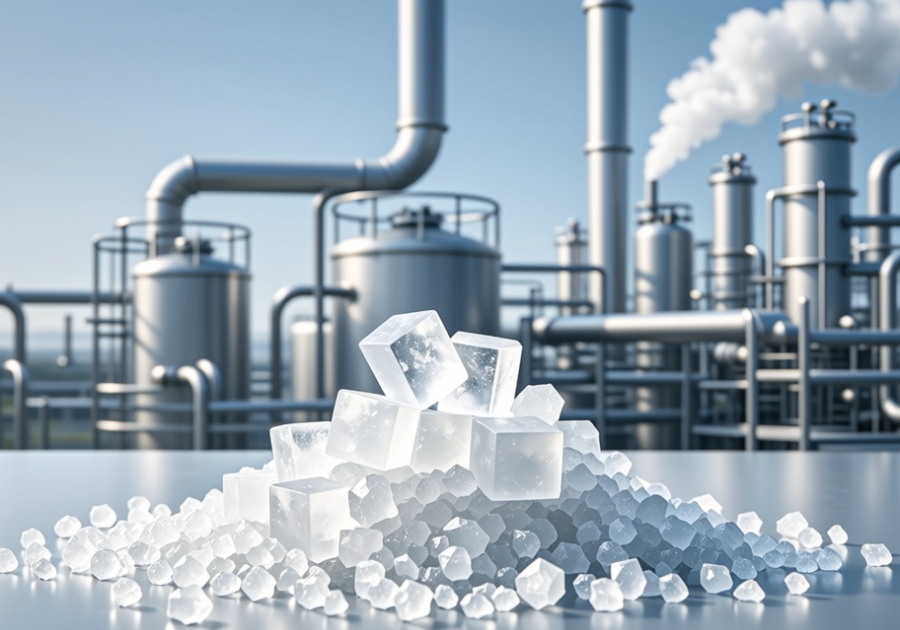
Caustic Chemicals Used In Soap Making | Detailed Overview
Beginning with ancient times, the soap craftsmanship prowess has thrilled the whole world with the addition of caustic chemicals used in soap making. Soap making, like any other art form, settled differences between cultures and societies.
It helped to preserve wisdom and opened ways into more in-depth knowledge about caustic chemicals used in soap making. At the heart of this age-old practice lies a closely guarded secret: the addition of lye and multiple types of oils in the procedure that will turn to melt, tepid fats and oils into cleansing bars.
The Chemistry of Saponification
The principal factor involved in soap making is the saponification process which represents a chemical reaction that leads to splitting up the triglyceride molecules that are in the fats and oils which results in soap and glycerin forming. This complex transformation is choreographed by the introduction of caustic chemicals used in soap making, mainly sodium hydroxide and potassium hydroxide which are highly active alkalis planned to initiate the saponification reaction which is the process of soap formation.
The Functions of Sodium Hydroxide and Potassium Hydroxide as Lye
Sodium hydroxide, commonly known as lye or caustic soda, contributes its massive influence to the saponification in the creation of bar soap. Also, you may pick its potassium-based counterpart, potassium hydroxide. This tincture has better efficiency for liquid soaps as it imparts a glide that completes a relevant formulation. It is these highly corrosive substances that are the key elements in the breaking of the triglyceride molecules and shape those valuable soap molecules that are crucial to the making of long-lasting and substantive cleansing products.
Achieving the Perfect Balance
Caustic chemicals used in soap making are the basic building blocks in the production of soap. However, they do have to be used very carefully, according to precise safety rules. The amounts and the mixing should be done correctly because imprecise measures and wrong approaches usually lead to the wrong results. Not enough caustic solution would leave unaffected crude oils, which implies a greasy soap that is not absorbed easily by the skin, whereas the unnecessary positive caustic solution excess may bring about a rather harsh, overly drying bar that is very irritating to the skin.
Protecting Yourself: Critical Safety Procedures
Working with corrosive chemicals should never be carried out in an impractical way, these chemicals can cause serious damage if they are not used appropriately. Personal protection equipment (PPE), which encompasses such items as goggles, gloves, and long-sleeved clothing is required to keep the skin and eye contact with these corrosive substances at bay. Ventilation is another strategic point. Besides, keeping neutralizers, acetic or citric acid, near is also necessary in case of accidental spills or exposure.
Beyond Traditional Soap Making: Caustic Chemicals as Societal Weaver
Although caustic chemicals used in soap making are vital for soap production, the potency of these chemicals is not constrained to the process of traditional soap making. Every laundry detergent, surfactant, and degreaser type consists of them and therefore they might be called the backbone of the overall cleaning product industry. In others, some caustic chemicals can be added with other things which are supposed to increase the sanitizing level or modify their characteristics to become a generic element in cleaning and personal care products kinds.
A Legacy of Safe and Responsible Use
Although these caustic chemicals are highly dangerous, there have been many successful soap productions in history that were based on safety measures and personal protective equipment. This demonstrates a situation where the right use of these powerful substances can be made, which means that the art of soapmaking can be continued while the safety of people is not compromised and at the same time, the environment is protected.
The Rise of Natural and Eco-Friendly Alternatives
In the last few years, there has been a rise of great interest in natural and eco-friendly soap-making methods that is underlined by consumers' craving for sustainable and environment-friendly products. Alternative manufacturing processes usually employ plant oils and natural lyes from wood ashes. Although they make the production lines more environmentally friendly, the use of caustic substances essential for saponification to occur remains and guarantees that the soaps are effective and long-lasting.
Embracing Innovation
Given the increasing need for handmade and specialist soaps, the chemically caustic stuff will still be used as it is one of the key components in the soap industry. Creating products that are both original and of good quality is what manufacturers are continuously looking up to by mixing up the old ways with modern styles and technology. One can see the evolution of soap making from sophisticated bars to ecological liquid soaps, and still find the best use of caustic chemicals at the core.
Conclusion
While sustainability and eco-friendliness become prominent in the global society, caustic chemicals used in soap making still endure. These rich extracts, in the experienced and skilled hands, are the catalyst and the essence, which turn the simple ordinary substance into a sophisticated cleansing bar, keeping the knowledge passed down through the centuries and cultures. Whether soap making is employed traditionally or in modern, eco-friendly formulations, the ethical use of caustic chemicals will remain the ‘soul’ of residue-free soaps that help to clean and restore our bodies with the help of mother nature.
Looking for chemical products? Let suppliers reach out to you!
You May Interested In


Glow70/KLOW80 99% China Peptides Warehouse Direct Delivery Lyophilized Powder in Stock
$169/UNIT FOB


2026-10-19
Trade Alert
Delivering the latest product trends and industry news straight to your inbox.
(We'll never share your email address with a third-party.)

Related News
Recommend Reading
-
![In December, the ammonium sulfate market in China showed a weak downward trend]()
In December, the ammonium sulfate market in China showed a weak downward trend
-
![A Comprehensive Review and Trend Forecast for Ethylene Glycol Prices in 2025-2026]()
A Comprehensive Review and Trend Forecast for Ethylene Glycol Prices in 2025-2026
-
![June Benzene Market Trend Summary (June 1, 2026 - June 30, 2026) in China]()
June Benzene Market Trend Summary (June 1, 2026 - June 30, 2026) in China
-
![Business Society September 17, 2026 BDO Trend Analysis: Strong Consolidation]()
Business Society September 17, 2026 BDO Trend Analysis: Strong Consolidation
-
![China’s Acetone Market in 2025 Continues to Decline, Constantly Reaching New Lows]()
China’s Acetone Market in 2025 Continues to Decline, Constantly Reaching New Lows