The Revenge of Titanium Dioxide: When a Ton of Pigment Ignites a Silent Uprising in China’s Chemical Industry
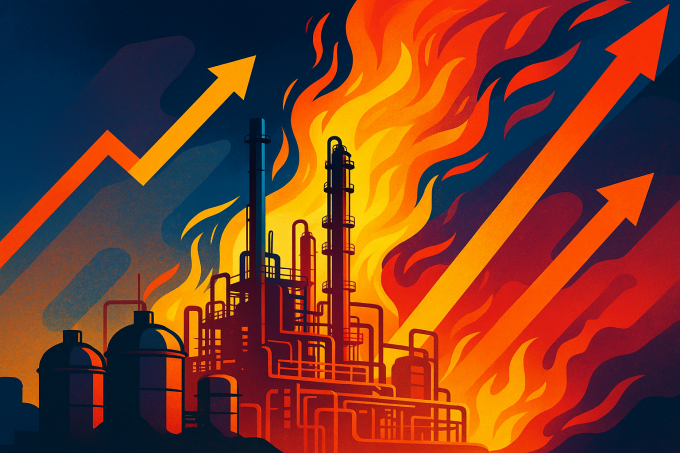
On December 22, 2025, what appeared to be a routine price adjustment notice sent shockwaves through the capital markets. In just three days, China’s “Big Three” titanium dioxide producers—Lomon Billions, Huayun Titanium, and Yibin Tianyuan—issued coordinated price increase letters, raising domestic chlorinated-process titanium dioxide prices by RMB 500–700 per ton, and international prices by USD 70–100 per ton. This marked the seventh collective price hike of 2025—the fiercest year-end surge yet. This is not mere supply-demand fluctuation; it is a silent revolution driven by cost pressures, structural shifts, and strategic alignment among industry leaders.
A single ton of white powder, now commanding unprecedented value: why has titanium dioxide suddenly become “unaffordable”?
Titanium dioxide (TiO₂), commonly known as “titanium white,” is a foundational white pigment used in paints, plastics, paper, cosmetics, and even new energy applications. Dubbed the “MSG of industry,” it may seem unremarkable, yet it is indispensable to modern manufacturing. Over the past year alone, its price has surged from around RMB 16,000 per ton to nearly RMB 23,000—a jump of over 40%. This latest rally is not spontaneous—it is the explosive release of long-simmering structural tensions.
First, raw material costs remain under relentless pressure. The core inputs for TiO₂—ilmenite ore and sulfuric acid—have seen sustained price hikes. Since 2024, global ilmenite supply has tightened due to declining output from Western Australian mines, while shipping costs rebounded. Domestically, environmental curbs have constrained sulfuric acid production, pushing prices upward. Data shows that in the first three quarters of 2025, ilmenite procurement costs rose 28% year-over-year, and sulfuric acid costs climbed 19%, directly inflating marginal production expenses.
Second, environmental regulations are forcing capacity rationalization. Stricter emissions and energy standards have led to the shutdown or retrofitting of outdated sulfate-process plants—historically dominant but highly polluting. Nationwide effective TiO₂ capacity contracted by 12% in 2025. Meanwhile, the cleaner, more efficient chlorinated process—though capital-intensive and technically demanding—is becoming the industry’s future. This “reverse selection,” where inferior capacity exits and superior capacity thrives, has handed unprecedented pricing power to leading players.
Third, downstream demand is quietly restructuring. While traditional paint demand softened due to China’s property slump, emerging sectors like photovoltaics, lithium batteries, and semiconductors are driving strong appetite for high-purity, weather-resistant chlorinated TiO₂. Demand is no longer about volume—it’s about quality and specificity. This shift has created a supply gap for premium-grade products, naturally pushing prices higher.
The table below illustrates key market dynamics in 2025:
| Indicator | Early 2024 | Q3 2025 | Trend |
|---|---|---|---|
| Domestic TiO₂ avg. price (RMB/ton) | 16,200 | 22,800 | +40.7% |
| Ilmenite import price (USD/ton) | 450 | 620 | +37.8% |
| Sulfuric acid price (RMB/ton) | 850 | 1,120 | +31.8% |
| National effective capacity (kt) | 4,200 | 3,700 | -11.9% |
| Chlorinated-process share (%) | 35% | 48% | +13 percentage pts |
| New energy sector demand growth (%) | +8% | +22% | Accelerating sharply |
These figures confirm: titanium dioxide is no longer a commoditized bulk chemical—it is evolving into a strategically valuable “industrial hard currency.”
The “Big Three” move in lockstep: market discipline or tacit collusion?
What makes this price hike so striking is not just its magnitude, but its remarkable coordination. All three giants issued notices within the same window, with nearly identical increases. This raises an inevitable question: is this organic market behavior—or a de facto oligopoly pact?
In truth, while competitive, the three companies operate in complementary niches. Lomon Billions dominates in scale, boasting the world’s largest chlorinated TiO₂ facility; Huayun Titanium focuses on high-end grades for global brands; Yibin Tianyuan leverages local Sichuan resources for cost-efficient production. They compete, but not head-to-head—they coexist through differentiation.
More crucially, the current market structure leaves little room for solo action. With small players exiting, industry concentration has soared—the top three now control over 65% of the market. In such an environment, any unilateral price cut would trigger a destructive chain reaction, dragging everyone into losses. Conversely, synchronized increases allow for shared risk and mutual benefit.
Moreover, downstream buyers’ bargaining power has weakened. Many paint and plastic manufacturers are themselves squeezed by rising costs and cannot sustain low-price procurement indefinitely. In high-tech sectors like solar and EVs, customers prioritize stable supply and product consistency over minor price savings. When buyers lose leverage, sellers reclaim pricing sovereignty.
Industry reshuffling accelerates: small players exit, giants harvest
Behind this price surge lies a profound industry-wide “capacity cleansing.” For years, China’s TiO₂ sector was plagued by overcapacity and brutal price wars. But now, the era of “cheap-and-dirty” is ending—premium capacity commands premium pricing.
Take Sichuan province: once home to dozens of small sulfate-process plants, many have been forcibly shut down since 2023 under local “green transformation” mandates. These marginal producers relied solely on low prices; without regulatory leniency, they vanished.
Meanwhile, leaders are doubling down. Lomon Billions has invested over RMB 10 billion in chlorinated-process expansion, maintaining plant utilization above 90%. Huayun Titanium partnered with BASF to develop nano-TiO₂ for electronic materials. They’re not just “raising prices”—they’re reclaiming strategic ground, trading higher margins for greater influence and resilience.
The rise of titanium dioxide mirrors China’s silent chemical awakening
The 2025 TiO₂ rally is far more than a commodity price move. It signals China’s basic chemical industry’s transition from “brute-force competition” to “high-quality strategic play.” When environmental compliance becomes a gatekeeper, technology defines survival, and demand fragments by quality, the old playbook of “race-to-the-bottom pricing” is obsolete.
The real winners are no longer the cheapest suppliers—but those who master cost control, understand customer needs, and build technological moats. The Big Three’s coordinated price action embodies this “winner-takes-more” logic.
Prices may not keep soaring forever, but every fluctuation will ripple across the entire industrial chain. When a ton of white powder can sway corporate earnings, reshape sector dynamics, and even influence national manufacturing competitiveness, we realize: this pigment is no longer just color—it’s the spark igniting China’s industrial upgrade.
And that spark is quietly burning across the land.

You May Interested In


High Quality β-Nicotinamide adenine dinucleotide CAS 53-84-9 NADwith ready stock and best price
$3E+1/UNIT FOB


2026-10-26
Trade Alert
Delivering the latest product trends and industry news straight to your inbox.
(We'll never share your email address with a third-party.)

Related News
-
Kemira Acquires AquaBlue
-
Uzbekistan Bets $17 Billion on Chemical Industry Upgrade
-
US MDI Supply Squeeze Triggers Price Hikes
-
ADNOC Reroutes Naphtha via Oman to Bypass Hormuz Risk
-
Tinci Materials Calls Off 2.65 Billion Yuan Project as Electrolyte Giant Shifts Strategy
-
Eastern Shenghong Projects First-Half Profit of 5 Billion Yuan – A Collective Turnaround for the Four Major Private Refiners? Is the Chemical Sector Rebounding?
-
End of an Era: KDC/One to Close 150-Year-Old Somerset Cosmetics Factory as Production Shifts to Scotland
-
Phillips 66 Locks Out 385 Workers at 275,000-bpd Bayway Refinery
-
SK Chemicals Partners with China’s Kelinle to Build Its Own Waste-Plastic Supply Network
-
BASF Raises European NPG and HDO Prices by Up to €300/Tonne as Costs Climb
Recommend Reading
-
![Titanium Dioxide Prices Are Up Again! This Round of Increases Has One Real Driver: Sulfuric Acid]()
Titanium Dioxide Prices Are Up Again! This Round of Increases Has One Real Driver: Sulfuric Acid
-
![Saudi Aramco’s 400,000 bpd Jazan Refinery Shuts After Attack]()
Saudi Aramco’s 400,000 bpd Jazan Refinery Shuts After Attack
-
![Canada Scraps PV Module Tariffs! Market Reopens, Demand for Supporting Chinese Chemical New Materials Set to Take Off]()
Canada Scraps PV Module Tariffs! Market Reopens, Demand for Supporting Chinese Chemical New Materials Set to Take Off
-
![Global Chemical Giants Light the Fuse: A TDI/MDI Price Storm Sweeps Asia and Europe—Who’s Fueling This “Cost Carnival”?]()
Global Chemical Giants Light the Fuse: A TDI/MDI Price Storm Sweeps Asia and Europe—Who’s Fueling This “Cost Carnival”?
-
![Egypt’s Chemical Surge: $9.4 Billion Export Boom Signals Industrial Powerhouse Rise]()
Egypt’s Chemical Surge: $9.4 Billion Export Boom Signals Industrial Powerhouse Rise
-
![Weak and Volatile Ethanol Market in China]()
Weak and Volatile Ethanol Market in China
-
![Cyclohexane Market Supply and Demand Balance, Operating Steadily in China]()
Cyclohexane Market Supply and Demand Balance, Operating Steadily in China
-
![This week, the price of China's 180CST fuel oil has fallen from its high position]()
This week, the price of China's 180CST fuel oil has fallen from its high position
-
![This Week, Anhydrous Hydrogen Fluoride Prices Remain Steady at High Levels in China (4.20-4.24)]()
This Week, Anhydrous Hydrogen Fluoride Prices Remain Steady at High Levels in China (4.20-4.24)
-
![Bull and Bear Factors Intertwined, Polyethylene at High Levels with Fluctuations]()
Bull and Bear Factors Intertwined, Polyethylene at High Levels with Fluctuations