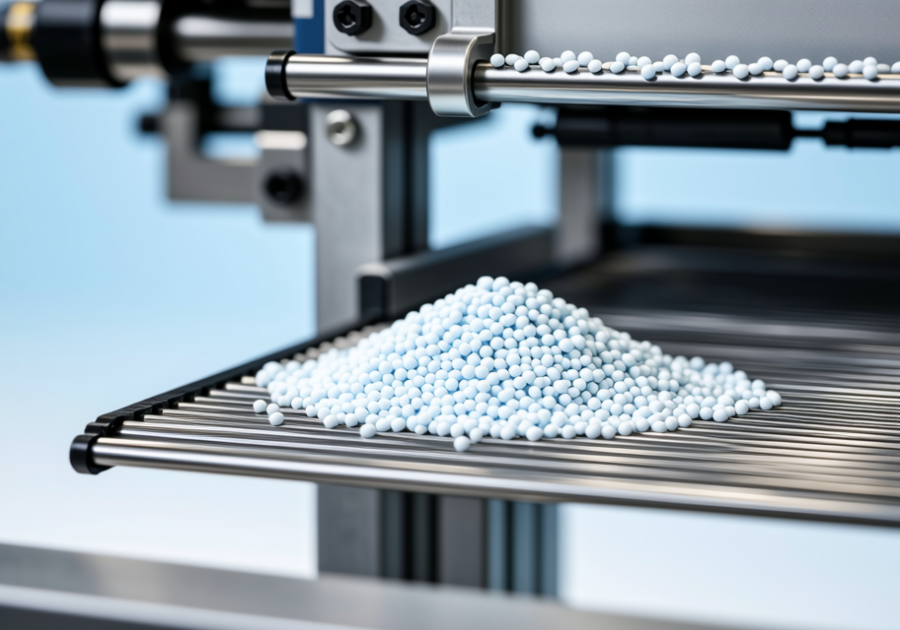
France, Italy and Germany plan to jointly ask the European Commission within weeks to launch a safeguards investigation into PET resin, epoxy resins and fibreglass, and to set import quotas on those products, Reuters reported on September 10, citing three sources. If the Commission accepts the request, it would mark the first time the EU deploys this rarely used trade defence instrument in chemicals and plastics, and would extend Brussels' trade curbs on China beyond electric vehicles into the chemical and polymer sectors.
Safeguards: a blunter tool with a much wider reach
Safeguards work differently from conventional anti-dumping measures. Anti-dumping targets unfair trade, requires proof of dumping, and sets duties that vary by country and company. Safeguards require no proof of dumping or subsidy — only that a surge in imports has caused serious injury to domestic industry — and then cap import volumes, with high duties applied above the quota.
The decisive difference is that safeguards are non-discriminatory. They apply to every trading partner, including countries with EU free trade agreements such as Japan and Canada. That is precisely why Brussels has avoided the instrument: of the EU's more than 150 trade measures currently in force, the overwhelming majority are anti-dumping or anti-subsidy duties, and only one safeguards regime exists, covering ferro-alloys.
Procedurally, any measure requires a qualified majority vote among member states. The Commission has not yet taken a position, and the EU's trade investigation docket is already backlogged by several months.
The three capitals have signalled where they stand. A French trade official said the country supports opening investigations into certain chemical and plastic products in principle, arguing that Europe's chemical industry is "facing major difficulties". Italy has expressed interest in such probes, and Germany's economy ministry said it is open in principle.
Why these three products first
The selection follows industrial logic. PET is used mainly in beverage bottles and food packaging, while epoxy resins and fibreglass feed wind turbine blades, automotive and construction — all three are high-volume, highly standardised materials where Europe still has domestic capacity.
The EU has already tried the anti-dumping route, and the results were mixed at best.
In 2024 the EU imposed anti-dumping duties of 6.6% to 24.2% on Chinese PET. In 2025 it taxed epoxy resins from mainland China, Chinese Taipei and Thailand, while terminating the investigation into South Korea after finding no dumping. The outcome: Chinese epoxy resin shipments to the EU fell to almost zero and Thai volumes dropped by roughly 70%, but South Korean imports rose 26.3% to about 57,000 tonnes — the freed-up share did not return to European plants.
Fibreglass followed the same pattern. After EU measures against Chinese products, Chinese producers expanded capacity in Egypt, Bahrain and Thailand, and in April 2026 the EU imposed anti-dumping duties of 11% to 25.4% on products from those three countries.
One detail captures the shift in thinking: in May 2026 the industry group PET Europe withdrew its complaint against Vietnamese PET, citing among other reasons that the Commission was considering other trade defence tools. Country-by-country duties have not contained capacity relocation, and Brussels is now weighing a broader instrument.
The list keeps growing beyond chemicals and plastics
EU measures against Chinese chemical products have landed in quick succession through 2026: definitive anti-dumping duties of 29.1% to 42.3% on adipic acid in May; provisional duties of 182.9% to 219.4% on alkyl phosphonic acids and their sodium salts the same month; provisional duties of 45.6% to 50% on PET spunbond nonwovens in June; provisional duties on Chinese sodium benzoate on July 28; and duties of 4.3% to 45.3% on Chinese tyres in July.
On June 4 the Commission opened an anti-dumping investigation into Chinese PBAT and PBSeT, following an April 20 complaint filed by BASF on behalf of EU industry — the bloc's first trade defence case against China's bio-based and biodegradable materials sector.
Institutional moves are running in parallel. According to a Financial Times report in May, carried by Reuters, the Commission is developing supply chain diversification rules that would cap single-supplier sourcing at roughly 30% to 40% for key industries, with remaining purchases spread across at least three suppliers in different countries — targeting chemicals and industrial machinery in particular. EU leaders agreed on June 19 to strengthen trade defences, and on September 17 reports said Brussels had asked China to voluntarily cap hybrid car exports.
The "import surge" premise is contested by the data
One complication deserves attention: safeguards legally require a surge in imports causing serious injury, and that premise looks shaky on the numbers.
In the first quarter of 2026, EU chemical imports fell 15.7% year on year. Imports of industrial chemicals from China alone declined by about 11.5%. More product is arriving at lower average unit prices into a shrinking demand pool, which depresses prices and erodes order books — and for plants with high fixed costs and continuous operation, falling orders push utilisation down and unit costs up.
Europe's chemical distress has several sources at once: high energy costs, weak demand and underinvestment, in a downturn the industry describes as its worst in decades, with large-scale job cuts at majors including BASF. Attributing that decline primarily to import competition explains only part of it.
Among the available options, however, restricting imports carries the least political resistance. Lowering energy costs requires rebuilding supply systems, stimulating demand depends on a recovery that has not arrived, and simplifying permitting and compliance rules would touch policy frameworks built over years. Quotas take effect faster.
Beijing has responded repeatedly. China's foreign ministry said on May 28 that the EU was selectively using trade data to justify curbs, and warned of a response.
What to watch next
EU-China trade talks have entered a critical window in October, with a second face-to-face TIC mechanism meeting scheduled for October 8-9 in China, covering export management and market access among other items. If the safeguards request is formally submitted in the coming weeks, chemicals and plastics are likely to move onto that agenda.
Pressure inside the EU to escalate continues to build. If the October talks produce no substantive outcome, curbs in chemicals and plastics could widen further — though the high degree of mutual dependence also leaves room for negotiation, and the near-term impact remains to be assessed.