3D printing of drug tablets in as little as 7 seconds
A new 3D printing technique can print drugs in seven seconds, enabling rapid on-site production of drugs, a UCL-led research team reports. The findings, published in the journal Additive Manufacturing, will help 3D printers adapt to the fast-paced clinical environment to produce personalised drugs on demand.
In the current study, the researchers added paracetamol, one of many drugs that can be produced with 3D printers, to the print form.
One of the leading technologies in 3D printing is vat photopolymerisation, which offers the highest resolution of complexity at the microscale and is also suitable for many drugs as high heat is not required.
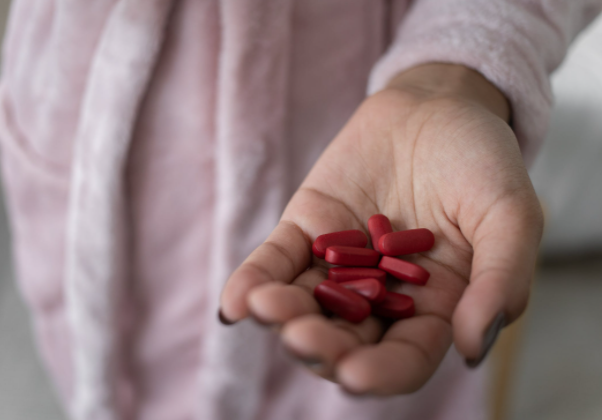
A new 3D printing technology can print drugs in seven seconds
The 3D printing technique uses a resin formulation in which the desired drug is dissolved in a solution of photoactive chemicals, which are activated by light to cure the resin into printed tablets. However, due to the layer-by-layer polymerisation method, reductive polymerisation is hampered by slow printing speeds.
Scientists have therefore developed a new reduction polymerisation technique that can print entire objects at once, reducing the print speed from several minutes to between 7 and 17 seconds (depending on the chosen resin composition).
This is achieved by shining multiple images of the object viewed from different angles onto the resin, with the amount of light gradually accumulating until the point at which polymerisation occurs is reached. By adjusting the intensity of the light at different angles and overlaps, all points of the 3D object in the resin can reach that threshold at the same time, allowing the entire 3D object to cure simultaneously.
The research, currently led by Professor Abdul Basit of the UCL School of Pharmacy, also involves researchers at the University of San Diego and FabRx, a UCL spin-off created by three members of the UCL research team.
It is understood that the Basit lab has previously developed 3D printed polymeric tablets to help people who need to take multiple medications each day, as well as tablets in Braille mode to help people with impaired vision.
Dr. Alvaro Gojans, co-lead author of the University of California School of Pharmacy, Fabrex and the University of San Diego Compostela, said, "Personalised 3D printed drugs are rapidly evolving and entering the clinic. To accommodate the fast-paced clinical environment. We have developed a 3D printer that can produce tablet PCs in seconds. This technology could be a game changer for the pharmaceutical industry."

How the meat loaf came to be?
You May Interested In


High Quality β-Nicotinamide adenine dinucleotide CAS 53-84-9 NADwith ready stock and best price
$3/UNIT FOB


2026-09-30
Trade Alert
Delivering the latest product trends and industry news straight to your inbox.
(We'll never share your email address with a third-party.)

Related News
-
Egyptian Pharmaceutical Market Research
-
CPHI China 2023 | At the Heart of Pharma
-
A Guide Into What the Pharmaceutical Use of Hexamine Is
-
In line with the 8201, Hengrui Pharmaceutical plans the HER2 ADC in this way
-
$50 billion in products were 'returned' to rationalize those blockbuster BD deals
-
Tronsound long-acting IL-36R antibody obtained FDA clinical IND
-
Dapagliflozin is approved in the EU for the treatment of symptomatic chronic heart failure
-
The FDA accepted Zuranolone's NDA application and granted it priority review rights for the treatment of MDD and PDD
-
Asia Hong Pharma announced that it has co-developed an innovative tumor therapy based on AI+RNA technology route with ReviR
-
Ribo Biologics announced that the world's first FIH application for a siRNA drug targeting FXI has been successfully approved by HREC in Australia
Recommend Reading
-
![Hormuz in Crisis: Freight Rates Surge to $6,000 as Global Trade Feels the Shock]()
Hormuz in Crisis: Freight Rates Surge to $6,000 as Global Trade Feels the Shock
-
![From Painting Walls to Total Collapse: The RMB 152 Million Debt That Tore Off the Last Veil of Asia Chuangneng’s Paint Empire]()
From Painting Walls to Total Collapse: The RMB 152 Million Debt That Tore Off the Last Veil of Asia Chuangneng’s Paint Empire
-
![Middle East Conflict Exposes Fragility of Global Fertilizer Supply Chains]()
Middle East Conflict Exposes Fragility of Global Fertilizer Supply Chains
-
![Germany Passes Healthcare Reform, Multinational Drugmakers Face 15.5% Mandatory Discount]()
Germany Passes Healthcare Reform, Multinational Drugmakers Face 15.5% Mandatory Discount
-
![South Korea to Impose Anti-Dumping Duties on Caustic Soda: Chinese Mainland Firms Face Up to 22.21%, Taiwan Region 38.89%]()
South Korea to Impose Anti-Dumping Duties on Caustic Soda: Chinese Mainland Firms Face Up to 22.21%, Taiwan Region 38.89%
-
![Cyclohexane Market Supply and Demand Balance, Operating Steadily in China]()
Cyclohexane Market Supply and Demand Balance, Operating Steadily in China
-
![Market Calm, Acrylonitrile Market Fluctuates within a Range in China]()
Market Calm, Acrylonitrile Market Fluctuates within a Range in China
-
![Cost Boost Limited; Adipic Acid Prices Continue to Decline in April]()
Cost Boost Limited; Adipic Acid Prices Continue to Decline in April
-
![This week, sodium metabisulfite prices rose in China (4.20-4.24)]()
This week, sodium metabisulfite prices rose in China (4.20-4.24)
-
![This Week, Anhydrous Hydrogen Fluoride Prices Remain Steady at High Levels in China (4.20-4.24)]()
This Week, Anhydrous Hydrogen Fluoride Prices Remain Steady at High Levels in China (4.20-4.24)