Is the chemical zone safe when it stops?
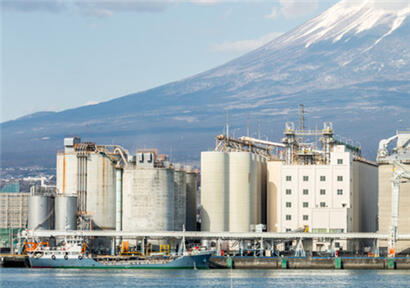
Recently, Xiangshui and Binhai Chemical Parks in Yancheng City, which have been completely "suspended", have suffered serious dangers of spontaneous combustion of enterprise warehouses. Fortunately, no casualties have been caused, but this kind of news has once again aroused widespread concern in the society. Facts have proved that the implementation of a complete shutdown in the chemical industry park can not completely eradicate the potential safety hazards, nor can it completely stop the occurrence of accidents.
At present, the suspension enterprises are more worried about the increasing risk and probability of leakage of large-scale production facilities exposed to the heat and rain for a long time, coupled with the continuous erosion of many strong corrosive media inside them. Safety professionals know very well that once the equipment material leaks, the risk consequences are far more serious than the enterprise warehouse fire. After the particularly serious explosion accident of Xiangshui "3.21", Yancheng immediately declared the complete closure of the Xiangshui Eco-chemical Industrial Park, and subsequently ordered all the chemical industrial parks in the city to stop production and rectify. Its motivation is to thoroughly investigate the potential safety hazards of each enterprise, strengthen preventive measures, and avoid the recurrence of such accidents. However, production can not be stopped without a deadline, and rectification can not be endless. This kind of comprehensive "shutdown" of the park is no different from the bottom of the kettle to draw salaries, and not to mention how much impact it will have on regional economy, chemical market, industrial chain, employee employment and so on. Its feasibility and reliability are worth discussing.
In fact, this practice is neither appropriate nor reliable nor scientific. From the two warehouse fire incidents mentioned above, it is no different from neglecting one another. It is a typical "floating ladle by pressing the gourd". The reason for this is determined by the attributes and characteristics of chemical production. The potential safety hazards caused by long-term shutdown mainly come from the following two aspects. On the one hand, most of the raw and auxiliary materials and energy used in chemical production are flammable, explosive, corrosive, low flash point, toxic and harmful. Effective management and monitoring are needed in both production and storage. However, after the enterprises are forced to stop production, there may be a certain amount of raw and auxiliary materials and semi-finished products in production devices, pipelines and storage tanks, and long-term shutdown has formed a great danger source. Especially some of the strong corrosive media, through a long time of corrosion aging on the weak parts of the device such as manholes, valve washers and so on, can easily lead to local material leakage and gasification. Some of the flammable and explosive gases are near the explosion limit or encounter open fire, which is very easy to cause explosion, explosion and other accidents. On the other hand, the limited or even unattended personnel left behind at the production site after the shutdown of the enterprise will inevitably reduce the intensity and frequency of on-site inspection, and the shutdown will not guarantee the normal operation of automatic security devices. In case of leakage, fire and other dangers, it will be difficult to be detected and disposed of in time. Major safety production and pollution accidents may occur. At present, enterprises are easy to stop production and difficult to resume work, even if there are enterprises to apply for resumption, it is also difficult to do so. First, each park has stopped supplying steam, without heat source, production will be impossible. Secondly, the procurement and transportation license of hazardous chemicals enterprises has been temporarily frozen by the relevant departments. Some enterprises that use hazardous chemicals as raw materials can not procure transportation. If they do it privately, they are suspected of committing crimes, and obviously production becomes a rice-free cooking pot. Thirdly, the park sewage treatment plant has completely stopped accepting sewage. At the same time, the enterprises have been shut down for a long time, and their benefits have declined sharply, even they have lost money. Moreover, they are unable to manage and deal with these dangerous goods effectively. The Park gathers a large number of assets of enterprises, and long-term idleness is a huge waste of resources. Enterprises are stationed in the park in order to secure production and operation, and do not want to encounter the hardship of being "stopped" and abandoned, let alone their own good devices become a potential source of danger to the people of one side.

You May Interested In


High Quality β-Nicotinamide adenine dinucleotide CAS 53-84-9 NADwith ready stock and best price
$3/UNIT FOB


2026-10-14
Trade Alert
Delivering the latest product trends and industry news straight to your inbox.
(We'll never share your email address with a third-party.)

Related News
-
U.S.-Iran Détente Triggers Oil Price Plunge, Energy and Chemical Sectors Tumble
-
"Zipper-Like" Opening and Closing of Hormuz Coupled with Russian Export Ban Send Energy and Chemical Prices Soaring
-
Global Countries Impose Tariffs on Chinese Chemical Products
-
AUTOMA Chem 2026: Powering Industry 4.0 in Chemistry
-
Chemical Raw Materials: How to Source Quality Suppliers & Understand Grades
-
Big adjustment! Basf quietly closed 11 factories in Germany and transferred to China for plant investment!
-
Fluorine chemical: profit generally declined, under the pressure to expand profit space
-
Chemical production in the 27 EU countries has continued to recover, and the market recovery is still cautious
-
China: The development of green agricultural is the trend, and the future focus is on innovation and quality
-
Bayer: Revenue of 13.765 billion euros( Q1)was in line with expectations
Recommend Reading
-
![Celanese Raises Acetyl Chain Prices Globally, VAM Up $150/MT in Latin America]()
Celanese Raises Acetyl Chain Prices Globally, VAM Up $150/MT in Latin America
-
![]()
"No available slots" returns as global shipping rates skyrocket amid multiple factors
-
![ARLANXEO Launches State-of-the-Art HNBR Plant in Changzhou, Strengthening Asia-Pacific Supply]()
ARLANXEO Launches State-of-the-Art HNBR Plant in Changzhou, Strengthening Asia-Pacific Supply
-
![GLP-1 API Route to U.S. Abruptly Narrows: FDA Heavily Penalizes U.S. Compounding Pharmacy and Bypasses Warning Letter to Ban Chinese Factory]()
GLP-1 API Route to U.S. Abruptly Narrows: FDA Heavily Penalizes U.S. Compounding Pharmacy and Bypasses Warning Letter to Ban Chinese Factory
-
![Two Contractors Hospitalized After Deflagration at BASF Ludwigshafen Site]()
Two Contractors Hospitalized After Deflagration at BASF Ludwigshafen Site
-
![Premium Global Chemical Sourcing Requests (14-16Sep.,2026)]()
Premium Global Chemical Sourcing Requests (14-16Sep.,2026)
-
![Business Society’s Phenol Trend Analysis for September 18, 2026: Relatively Strong Performance]()
Business Society’s Phenol Trend Analysis for September 18, 2026: Relatively Strong Performance
-
![Business Society’s Methanol Trend Analysis for September 18, 2026: Strong Consolidation]()
Business Society’s Methanol Trend Analysis for September 18, 2026: Strong Consolidation
-
![SiO2: Properties, Uses, and Applications]()
SiO2: Properties, Uses, and Applications
-
![Business Society’s MTBE Trend Analysis for September 17, 2026: Relatively Strong Fluctuations]()
Business Society’s MTBE Trend Analysis for September 17, 2026: Relatively Strong Fluctuations