Product
Supplier
Encyclopedia
Inquiry
Home > Pharmaceutical Intermediates > Bulk Drug Intermediates > 5′-ATP for Sale > Adenosine triphosphate, ATP 99% white powder 56-65-5 Senwayer
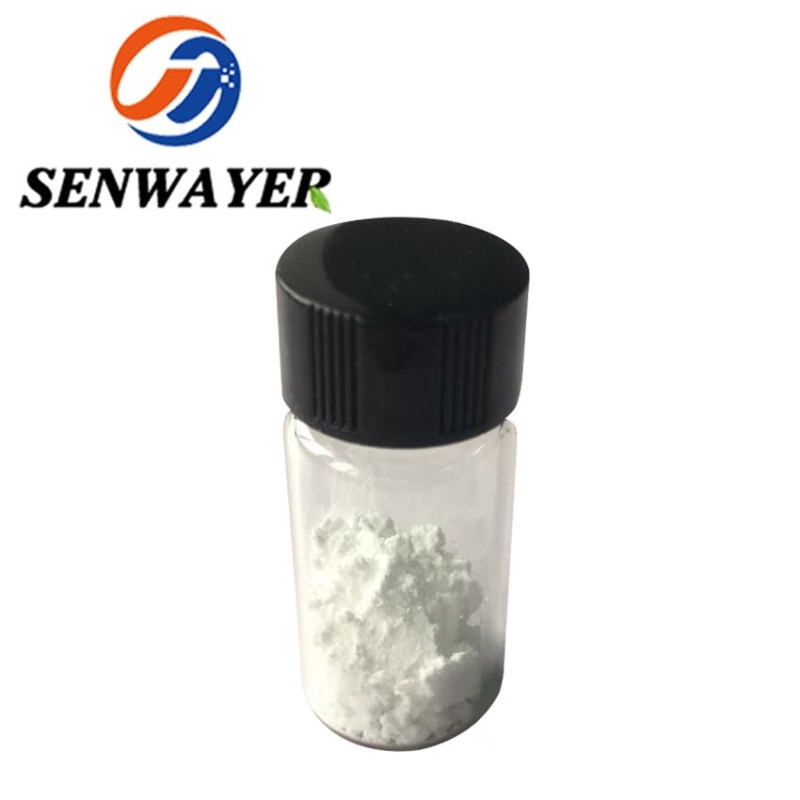
Adenosine triphosphate, ATP 99% white powder 56-65-5 Senwayer buy - large image1
Adenosine triphosphate, ATP 99% white powder 56-65-5 Senwayer buy - image1
Adenosine triphosphate, ATP 99% white powder 56-65-5 Senwayer buy - image2
Adenosine triphosphate, ATP 99% white powder 56-65-5 Senwayer buy - image3

Adenosine triphosphate, ATP 99% white powder 56-65-5 Senwayer

7 Inquiries

Unit Price: Get Latest Price
CAS No.:

56-65-5

Grade:

Pharmaceutical Grade

Content:

99%

Port:

shanghai

Brand:

Senwayer

Packaging:

500g/ bag 25kg/ drum

Price valid (until):

2023-04-15

Company Type:
Trader
Location:
China
Payment Terms:
TT against copy of documents,L/C
Average Lead Time:
10 days
Qualification:
Main Products:

API,nutrition supplements,plant extract,peptide,HCG,6-Aminocaproic acid

  • Product Description

  • Seller Information

  • Inquiry History

  • Description


      Product Introduction  


    Adenosine triphosphate is an organic compound and hydrotrope that provides energy to drive many processes in living cells, such as muscle contraction, nerve impulse propagation, condensate dissolution, and chemical synthesis. Found in all known forms of life, ATP is often referred to as the "molecular unit of currency" of intracellular energy transfer. When consumed in metabolic processes, it converts either to adenosine diphosphate or to adenosine monophosphate. Other processes regenerate ATP so that the human body recycles its own body weight equivalent in ATP each day. It is also a precursor to DNA and RNA, and is used as a coenzyme.

    Product nameAdenosine triphosphate
    CAS No.56-65-5
    MFC10H16N5O13P3
    MW507.18
    EINECS No.200-283-2
    Melting point144°C (rough estimate)
    Boiling point951.4±75.0 °C(Predicted)
    Density1.0 g/mL at 20 °C
    StorageKeep in dark place,Inert atmosphere,Store in freezer, under -20°C


      Product Function  


    ATP in Intracellular Signaling

    Signal transduction heavily relies on ATP. ATP can serve as a substrate for kinases, the most numerous ATP- binding protein. When a kinase phosphorylates a protein, a signaling cascade can be activated, leading to the modulation of diverse intracellular signaling pathways. Kinase activity is vital to the cell and, therefore, must be tightly regulated. The presence of the magnesium ion helps regulate kinase activity. Regulation is through magnesium ions existing in the cell as a complex with ATP, bound at the phosphate oxygen centers. In addition to kinase activity, ATP can function as a ubiquitous trigger of intracellular messenger release. These messengers include hormones, various-enzymes, lipid mediators, neurotransmitters, nitric oxide, growth factors, and reactive oxygen species. An example of ATP utilization in intracellular signaling can be observed in ATP acting as a substrate for adenylate cyclase. This process mostly occurs in G-protein coupled receptor signaling pathways. Upon binding to adenylate cyclase, ATP converts to cyclic AMP, which assists in signaling the release of calcium from intracellular stores. The cAMP has other roles, including secondary messengers in hormone signaling cascades, activation of protein kinases, and regulating the function of ion channels. 

    DNA/RNA Synthesis

    DNA and RNA synthesis requires ATP.  ATP is one of four nucleotide-triphosphate monomers that is necessary during RNA synthesis. DNA synthesis uses a similar mechanism, except in DNA synthesis, the ATP first becomes transformed by removing an oxygen atom from the sugar to yield deoxyribonucleotide, dATP.

    Purinergic Signaling

    Purinergic signaling is a form of extracellular paracrine signaling that is mediated by purine nucleotides, including ATP. This process commonly entails the activation of purinergic receptors on cells within proximity, thereby transducing signals to regulate intracellular processes. ATP is released from vesicular stores and is regulated by IP3 and other common exocytotic regulatory mechanisms. ATP is co-stored and co-released among neurotransmitters, further supporting the notion that ATP is a necessary mediator of purinergic neurotransmission in both sympathetic and parasympathetic nerves. ATP can induce several purinergic responses, including control of autonomic functions, neural glia interactions, pain, and control of vessel tone. 

    Neurotransmission

    The brain is the highest consumer of ATP in the body, consuming approximately twenty-five percent of the total energy available. A large amount of energy is spent on maintaining ion concentrations for proper neuronal signaling and synaptic transmission. Synaptic transmission is an energy-demanding process. At the presynaptic terminal, ATP is required for establishing ion gradients that shuttle neurotransmitters into vesicles and for priming the vesicles for release through exocytosis. Neuronal signaling depends on the action potential reaching the presynaptic terminal, signaling the release of the loaded vesicles. This process depends on ATP restoring the ion concentration in the axon after each action potential, allowing another signal to occur. Active transport is responsible for resetting the sodium and potassium ion concentrations to baseline values after an action potential occurs through the Na/K ATPase. During this process, one molecule of ATP is hydrolyzed, three sodium ions are transported out of the cell, and two potassium ions are transported back into the cell, both of which move against their concentration gradients.

    ATP in Muscle Contraction

    Muscle contraction is a necessary function of everyday life and could not occur without ATP. There are three primary roles that ATP performs in the action of muscle contraction. The first is through the generation of force against adjoining actin filaments through the cycling of myosin cross-bridges. The second is the pumping of calcium ions from the myoplasm across the sarcoplasmic reticulum against their concentration gradients using active transport. The third function performed by ATP is the active transport of sodium and potassium ions across the sarcolemma so that calcium ions may be released when the input is received. The hydrolysis of ATP drives each of these processes.


      About us  


    Wuhan senwayer century chemical Co.,Ltd located in the predominant WuHan City where is a traffic hinge of China,specilize in producing and developing pharmaceutical & its intermediates, Pesticide Intermediate, food additive, Plant extracts,and in distributing the products of our own company and affiliated enterprises.
    We have set up R&D center, quality inspection center and manufacturing site in Wuhan, Jiangsu and others places.
    Our company has professional staff who deal with chemical R&D and scientific management, and holds several sets of analyzing instruments with high efficiency and high sensitivity, such as HPLC, GC and Spectrophotometer. Meanwhile, we possess of complete Q.A. and Q.C. system, supply chemical products with good quality and custom-tailored products according to our clients' requirement.
    We have professional sales team, focus on quality and service, and we have achieved excellent performance over the years. Our company is committed to the development of international market , our products are mainly exported to many countries and regions, such as Europe, America, South-east Asia, the Middle East and Africa etc.
    With our constant efforts and good service, We sincerely hope to establish long-term cooperation and common development with our customers.
    If you are interested, pls contact me freely!

    ECHEMI Editorial Reference
    ATP is a central component of energy storage and metabolism in vivo, provides the metabolic energy to drive metabolic pumps and serves as a coenzyme in cells.
    Solid
    ATP is an adenosine 5'-phosphate in which the 5'-phosphate is a triphosphate group. It is involved in the transportation of chemical energy during metabolic pathways. It has a role as a nutraceutical, a micronutrient, a fundamental metabolite and a cofactor. It is an adenosine 5'-phosphate and a purine ribonucleoside 5'-triphosphate. It is a conjugate acid of an ATP(3-).|An adenine nucleotide containing three phosphate groups esterified to the sugar moiety. In addition to its crucial roles in metabolism adenosine triphosphate is a neurotransmitter.|Adenosine Triphosphate is an adenine nucleotide comprised of three phosphate groups esterified to the sugar moiety, found in all living cells. Adenosine triphosphate is involved in energy production for metabolic processes and RNA synthesis. In addition, this substance acts as a neurotransmitter. In cancer studies, adenosine triphosphate is synthesized to examine its use to decrease weight loss and improve muscle strength.

    Basic Info
    Product Name:

    5′-ATP

    Other Name:

    Adenosine 5′-(tetrahydrogen triphosphate);Adenosine 5′-triphosphate;Adenosine triphosphate;Adenosine 5′-triphosphoric acid;Atipi;ATP (nucleotide);5′-ATP;Atriphos;Striadyne;Triphosphoric acid adenosine ester;Adenylpyrophosphoric acid;Adetol;Triadenyl;Adephos;Triphosphaden;Adynol;Glucobasin;ATP;Cardenosine;Adenosine,5′-(tetrahydrogen triphosphate);Fosfobion;Myotriphos;Phosphobion;5: PN: WO2010069064 FIGURE: 3A claimed sequence;Adenosine-5′-triphosphate;10168-83-9;16488-07-6;51569-41-6;71800-44-7;84412-18-0;896506-78-8;917074-14-7;1259312-93-0

    CAS No.:

    56-65-5

    Molecular Formula:

    C10H16N5O13P3

    InChIKeys:

    InChIKey=ZKHQWZAMYRWXGA-KQYNXXCUSA-N

    Molecular Weight:

    507.18

    Exact Mass:

    507.18

    EC Number:

    200-283-2

    UNII:

    8L70Q75FXE

    DSSTox ID:

    DTXSID6022559

    NCI Thesaurus Code:

    C209

    Characteristics
    PSA:

    279

    XLogP3:

    -5.7

    Appearance:

    lyophilized powder

    Density:

    2.6±0.1 g/cm3

    Melting Point:

    187 - 190ºC (Decomposes)

    Boiling Point:

    951°C at 760 mmHg

    Flash Point:

    529.2±37.1 °C

    Refractive Index:

    1.904

    Water Solubility:

    1000.0 mg/mL; 862 mg/mL (magnesium salt)

    Storage Conditions:

    −20°C

    Toxicity:

    Peritoneal-rat LD50; 200 mg/kg; peritoneal-mouse LD50: 2780 mg/kg

    Flammability characteristics:

    Flammable; burning produces toxic nitrogen oxides and phosphorus oxide fumes

    Specific rotation:

    D22 -26.7° (c = 3.095)

    Collision Cross Section:

    196.4 Ų [M+H]+ [CCS Type: DT, Method: single field calibrated with Agilent tune mix (Agilent)]|185.74 Ų [M-H]- [CCS Type: DT, Method: single field calibrated with Agilent tune mix (Agilent)]|198.86 Ų [M-H]- [CCS Type: DT, Method: stepped-field]|196.6 Ų [M+H]+ [CCS Type: DT, Method: single field calibrated with ESI Low Concentration Tuning Mix (Agilent)]|196.9 Ų [M+H]+ [CCS Type: DT, Method: single field calibrated with ESI Low Concentration Tuning Mix (Agilent)]|204 Ų [M+Na]+ [CCS Type: DT, Method: single field calibrated with ESI Low Concentration Tuning Mix (Agilent)]|204.2 Ų [M+Na]+ [CCS Type: DT, Method: single field calibrated with ESI Low Concentration Tuning Mix (Agilent)]|188.2 Ų [M-H]- [CCS Type: DT, Method: single field calibrated with ESI Low Concentration Tuning Mix (Agilent)]|188.3 Ų [M-H]- [CCS Type: DT, Method: single field calibrated with ESI Low Concentration Tuning Mix (Agilent)]|193.5 Ų [M+Na-2H]- [CCS Type: DT, Method: single field calibrated with ESI Low Concentration Tuning Mix (Agilent)]|193.5 Ų [M-2H+Na]-

    Hazard Identification

    Classification of the substance or mixture

    Not classified.

    GHS label elements, including precautionary statements

    Pictogram(s) No symbol.
    Signal word

    No signal word

    Hazard statement(s)

    none

    Precautionary statement(s)
    Prevention

    none

    Response

    none

    Storage

    none

    Disposal

    none

    Other hazards which do not result in classification

    no data available

    Handling and Storage

    Precautions for safe handling

    Handling in a well ventilated place. Wear suitable protective clothing. Avoid contact with skin and eyes. Avoid formation of dust and aerosols. Use non-sparking tools. Prevent fire caused by electrostatic discharge steam.

    Conditions for safe storage, including any incompatibilities

    Store the container tightly closed in a dry, cool and well-ventilated place. Store apart from foodstuff containers or incompatible materials.

  • Seller Information
    Business Type:

    Trader

    Main Products:

    API,nutrition supplements,plant extract,peptide,HCG,6-Aminocaproic acid

    Location:

    Room 707, Block A, Zhongxing Times Digital Trade Port, No. 79 Xudong Street, Hongshan District, Wuhan City

    Payment Terms:

    TT against copy of documents,L/C

    Average lead Time:

    10 days

    Total Annual Revenue:

    $2.5 million-$5 million

    Total Employees:

    51-100

    Year of Establishment:

    2020

    Company Certificates
    • Dingwang Technology (Wuhan) Co., Ltd.Verified supplier certificate Verified supplier certificate
    • Dingwang Technology (Wuhan) Co., Ltd.SGS SGS
      Dingwang Technology (Wuhan) Co., Ltd located in the predominant WuHan City where is a traffic hinge of China,specilize in producing and developing pharmaceutical & its intermediates, Peptide, Nutritional supplements,food additive, Plant extracts,and in distributing the products of our own company and affiliated enterprises.
          We have set up R&D center, quality inspection center and manufacturing site in Wuhan, Jiangsu and others places.

    Our company has professional staff who deal with chemical R&D and scientific management, and holds several sets of analyzing instruments with high efficiency and high sensitivity, such as HPLC, GC and Spectrophotometer. Meanwhile, we possess of complete Q.A. and Q.C. system, supply chemical products with good quality and custom-tailored products according to our clients' requirement.
           We have professional sales team, focus on quality and service, and we have achieved excellent performance over the years. Our company is committed to the development of international market , our products are mainly exported to many countries and regions, such as Europe, America, South-east Asia, the Middle East and Africa etc.
         With our constant efforts and good service, We sincerely hope to establish long-term cooperation and common development with our customers.
  • Inquiry History
    7 Inquiries
    Country Product Purchase Quantity Date Posted
    Pakistan

    99% Factory Direct Nucleotide Material Adenosine Triphosphate ATP CAS 56-65-5

    25 KG Dec 28, 2023
    India

    Adenosine Triphosphate

    100 KG Apr 3, 2024
    Egypt

    Adenosine Triphosphate

    30 G Jul 10, 2025
    United States

    Adenosine Triphosphate

    10 KG Jun 14, 2024
    United States

    adenosine triphosphate

    100 G Mar 23, 2024
    Bangladesh

    Scopolamin powder

    500 G Feb 7, 2024
    United States

    5′-ATP

    1 KG Jan 6, 2024
    Post an enquiry for this product
pic ×

Scan the QR Code to Share

All products displayed on this website are only for non-medical purposes such as industrial applications or scientific research, and cannot be used for clinical diagnosis or treatment of humans or animals. They are not medicinal or edible.

According to relevant laws and regulations and the regulations of this website, units or individuals who purchase hazardous materials should obtain valid qualifications and qualification conditions.

The information shown above is provided by the enterprise itself, and the authenticity, accuracy and legitimacy of the content are the responsibility of the publishing company. ECHEMI does not bear any guarantee responsibility for this. Please be aware that risks in internet transactions objectively exist.

Feedback & Suggestions
Send Message

Thank you for your feedback. If you require further assistance, please contact us by email at info@echemi.com or call us at +86-532-55729510.