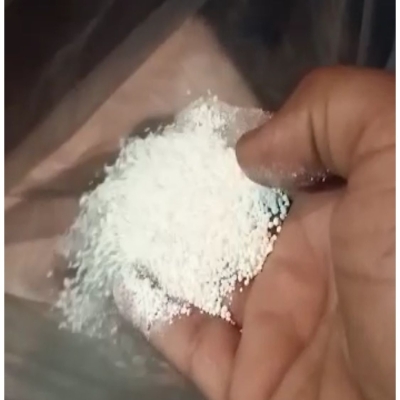
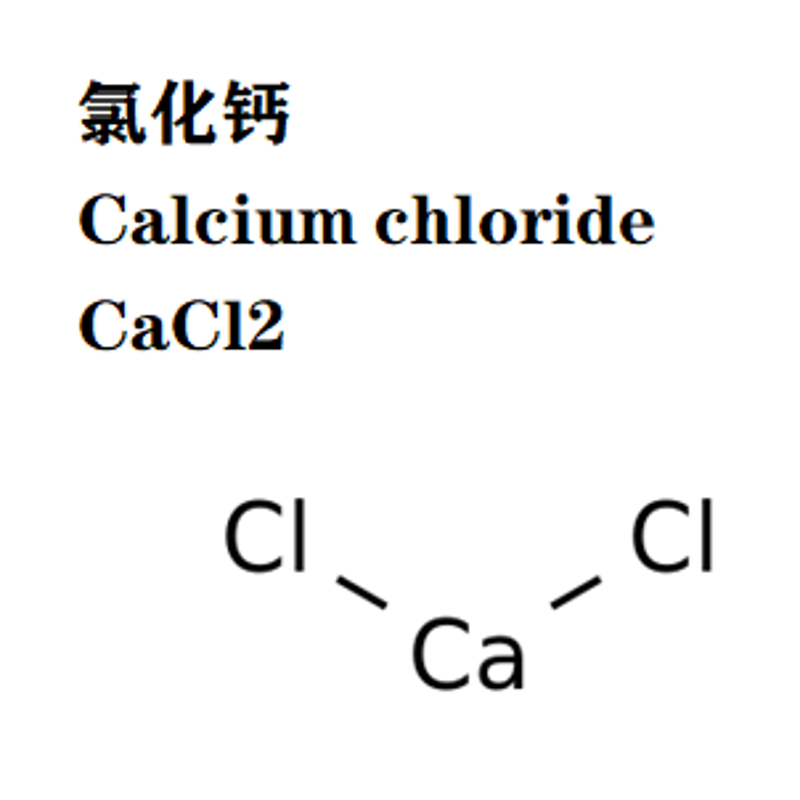
N-Hexanoic acid 99% see COA kanbei
ISO
142-62-1
Industrial Grade
99%
Qingdao
kanbei
25kg/drum
2023-03-02

PVC resin,pvc paste resin,melamine
-
Product Description
-
Seller Information
-
DescriptionECHEMI Editorial ReferenceCaproic acid appears as a white crystalline solid or colorless to light yellow solution with an unpleasant odor. Insoluble to slightly soluble in water and less dense than water. Contact may severely irritate skin, eyes and mucous membranes. May be toxic by ingestion, inhalation and skin absorption. Used to make perfumes.|Liquid; OtherSolid, Liquid|Solid|OILY COLOURLESS LIQUID WITH CHARACTERISTIC ODOUR.|colourless to very pale yellow, oily liquid/cheesy, sweat-like odour
Caproic acid appears as a white crystalline solid or colorless to light yellow solution with an unpleasant odor. Insoluble to slightly soluble in water and less dense than water. Contact may severely irritate skin, eyes and mucous membranes. May be toxic by ingestion, inhalation and skin absorption. Used to make perfumes.|Hexanoic acid is a C6, straight-chain saturated fatty acid. It has a role as a human metabolite and a plant metabolite. It is a straight-chain saturated fatty acid and a medium-chain fatty acid. It is a conjugate acid of a hexanoate.|Caproic Acid is a saturated medium-chain fatty acid with a 6-carbon backbone. Caproic acid is found naturally in various plant and animal fats and oils.CertificatesBasic Info-
Product Name:
Hexanoic acid
Other Name:Hexanoic acid;Butylacetic acid;Caproic acid;Capronic acid;n-Hexoic acid;n-Hexanoic acid;Pentylformic acid;n-Caproic acid;n-Hexylic acid;1-Pentanecarboxylic acid;Hexoic acid;1-Hexanoic acid;Hexylic acid;NSC 35598;NSC 8266;NAA 60;53896-26-7
CAS No.:142-62-1
Molecular Formula:C6H12O2
InChIKeys:InChIKey=FUZZWVXGSFPDMH-UHFFFAOYSA-N
Molecular Weight:116.16
Exact Mass:116.16
EC Number:205-550-7
UNII:1F8SN134MX
ICSC Number:1167
NSC Number:8266
UN Number:2829
DSSTox ID:DTXSID7021607|DTXSID00745666|DTXSID0028745
NCI Thesaurus Code:C68330
Color/Form:Oily liquid
Categories:
Characteristics-
PSA:
37.3
XLogP3:1.92 (LogP)
Appearance:Caproic acid appears as a white crystalline solid or colorless to light yellow solution with an unpleasant odor. Insoluble to slightly soluble in water and less dense than water. Contact may severely irritate skin, eyes and mucous membranes. May be toxic by ingestion, inhalation and skin absorption. Used to make perfumes.
Density:0.929 g/cm3 @ Temp: 20 °C
Melting Point:-3.4 °C
Boiling Point:205.8 °C
Flash Point:220 °F (NTP, 1992)|215 °F (102 °C) (Open cup)|102 °C o.c.
Refractive Index:Index of refraction: 1.4170 at 20 C/D|1.415-1.418
Water Solubility:5 to 10 mg/mL at 72° F (NTP, 1992)
Storage Conditions:Separated from strong oxidants, strong bases, food and feedstuffs.
Vapor Pressure:0.2 mm Hg at 68 °F ; 1 mm Hg at 158° F; 20 mm Hg at 233.2° F (NTP, 1992)
Vapor Density:4.01 (NTP, 1992) (Relative to Air)|4.01 (Air = 1)|Relative vapor density (air = 1): 4.0
Odor:Characteristic goat-like odor
Henrys Law Constant:7.58e-07 atm-m3/mole|Henry's Law constant = 7.58X10⁻⁷ atm cu m/mol at 25 °C
Dissociation Constants:pKa = 4.88
Collision Cross Section:128.54 Ų [M-H]- [CCS Type: DT, Method: single field calibrated with Agilent tune mix (Agilent)]
Experimental Properties:Heat of formation: -584.0 KJ/mol; Specific heat 2.33 J/g|Viscosity: 0.031 poise at 20 °C|Hydroxyl radical reaction rate constant = 5.5X10⁻¹² cu cm/molec-sec at 25 °C (est)
Air and Water Reactions:Slightly water soluble.
Reactive Group:Acids, Carboxylic
Reactivity Profile:CAPROIC ACID is a carboxylic acid. Carboxylic acids donate hydrogen ions if a base is present to accept them. They react in this way with all bases, both organic (for example, the amines) and inorganic. Their reactions with bases, called "neutralizations", are accompanied by the evolution of substantial amounts of heat. Neutralization between an acid and a base produces water plus a salt. Carboxylic acids with six or fewer carbon atoms are freely or moderately soluble in water; those with more than six carbons are slightly soluble in water. Soluble carboxylic acid dissociate to an extent in water to yield hydrogen ions. The pH of solutions of carboxylic acids is therefore less than 7.0. Many insoluble carboxylic acids react rapidly with aqueous solutions containing a chemical base and dissolve as the neutralization generates a soluble salt. Carboxylic acids in aqueous solution and liquid or molten carboxylic acids can react with active metals to form gaseous hydrogen and a metal salt. Such reactions occur in principle for solid carboxylic acids as well, but are slow if the solid acid remains dry. Even "insoluble" carboxylic acids may absorb enough water from the air and dissolve sufficiently in it to corrode or dissolve iron, steel, and aluminum parts and containers. Carboxylic acids, like other acids, react with cyanide salts to generate gaseous hydrogen cyanide. The reaction is slower for dry, solid carboxylic acids. Insoluble carboxylic acids react with solutions of cyanides to cause the release of gaseous hydrogen cyanide. Flammable and/or toxic gases and heat are generated by the reaction of carboxylic acids with diazo compounds, dithiocarbamates, isocyanates, mercaptans, nitrides, and sulfides. Carboxylic acids, especially in aqueous solution, also react with sulfites, nitrites, thiosulfates (to give H2S and SO3), dithionites (SO2), to generate flammable and/or toxic gases and heat. Their reaction with carbonates and bicarbonates generates a harmless gas (carbon dioxide) but still heat. Like other organic compounds, carboxylic acids can be oxidized by strong oxidizing agents and reduced by strong reducing agents. These reactions generate heat. A wide variety of products is possible. Like other acids, carboxylic acids may initiate polymerization reactions; like other acids, they often catalyze (increase the rate of) chemical reactions. This compound reacts with bases, oxidizing agents and reducing agents. (NTP, 1992).
Autoignition Temperature:716 °F (NTP, 1992)|716 °F (380 °C)|380 °C
Heat of Combustion:-3,492.4 KJ/mol (liquid)
Flammable Limits:Lower flammable limit: 1.3% by volume; Upper flammable limit: 9.3% by volume
Hazard IdentificationClassification of the substance or mixture
Skin corrosion, Sub-category 1C
GHS label elements, including precautionary statements
Pictogram(s) 
Signal word Danger
Hazard statement(s) H314 Causes severe skin burns and eye damage
Precautionary statement(s) Prevention P260 Do not breathe dust/fume/gas/mist/vapours/spray.
P264 Wash ... thoroughly after handling.
P280 Wear protective gloves/protective clothing/eye protection/face protection/hearing protection/...
Response P301+P330+P331 IF SWALLOWED: Rinse mouth. Do NOT induce vomiting.
P363 Wash contaminated clothing before reuse.
P304+P340 IF INHALED: Remove person to fresh air and keep comfortable for breathing.
P316 Get emergency medical help immediately.
P321 Specific treatment (see ... on this label).
P305+P351+P338 IF IN EYES: Rinse cautiously with water for several minutes. Remove contact lenses, if present and easy to do. Continue rinsing.
Storage P405 Store locked up.
Disposal P501 Dispose of contents/container to an appropriate treatment and disposal facility in accordance with applicable laws and regulations, and product characteristics at time of disposal.
Other hazards which do not result in classification
no data available
Handling and StoragePrecautions for safe handling
NO open flames. NO contact with strong oxidizing agents. Handling in a well ventilated place. Wear suitable protective clothing. Avoid contact with skin and eyes. Avoid formation of dust and aerosols. Use non-sparking tools. Prevent fire caused by electrostatic discharge steam.
Conditions for safe storage, including any incompatibilities
Separated from strong oxidants, strong bases and food and feedstuffs.Separated from strong oxidants, strong bases, food and feedstuffs.
-
-
Seller Information
-
Business Type:
Trader
-
Main Products:
PVC resin,pvc paste resin,melamine
-
Location:
Room 405, Unit 2, Building 1, Taiji Mansion, No. 38, Nanyang Road, Jinshui District, Zhengzhou City, Henan Province
-
Payment Terms:
TT against copy of documents,L/C
-
Average lead Time:
90 days
-
Total Annual Revenue:
$5 million-$10 million
-
Total Employees:
11-50
-
Year of Establishment:
2022
-
-
Country Product Purchase Quantity Date Posted Post an enquiry for this product
More from this Seller
-
-

-
β-N-Acetylglucosaminidase 99% white powder kanbei
Industrial Grade / 99%
-
-
-

-
Sodium lactate 99% white powder kanbei
Industrial Grade / 99%
-
-
-

-
Calcium chloride dihydrate 99% see COA kanbei
Industrial Grade / 99%
-
-
-

-
high quality OH-BTB 99% transparent liquid KANBEI
Industrial Grade / 99%
-
-
-

-
Butyraldehyde 99% kanbei
/ 99%
-
-
-
![5-([1,1'-biphenyl]-4-yl)-5,8-dihydroindolo[2,3-c]carbazole 99% see COA kanbei]( "5-([1,1'-biphenyl]-4-yl)-5,8-dihydroindolo[2,3-c]carbazole 99% see COA kanbei")
-
5-([1,1'-biphenyl]-4-yl)-5,8-dihydroindolo[2,3-c]carbazole 99% see COA kanbei
Industrial Grade / 99%
-


Hot Related Products
-
 Calcium chloride anhydrous94%
 -
 TUODA-Calcium chloride
 -
 Calcium Chloride 90% White Powder OR Granules
 -
 Calcium chloride Chemical Raw Material
 -
 Calcium chloride3
 -
 4-Hexylresocno 136-77-6
 -
 High purity TRIMETHALLYL ISOCYANURATE
 -
 calcium chloride 10043-52-4 74% White porous frit or granule Industrial
 -
 High Quality N-Hexanol CAS: 111-27-3
 -
 Food Grade Factory Price Calcium Chloride with Fast Delivery CAS 10043-52-4