Phosphorus Trichloride1
4 Inquiries
7719-12-2
Industrial Grade
100%
Rotterdam
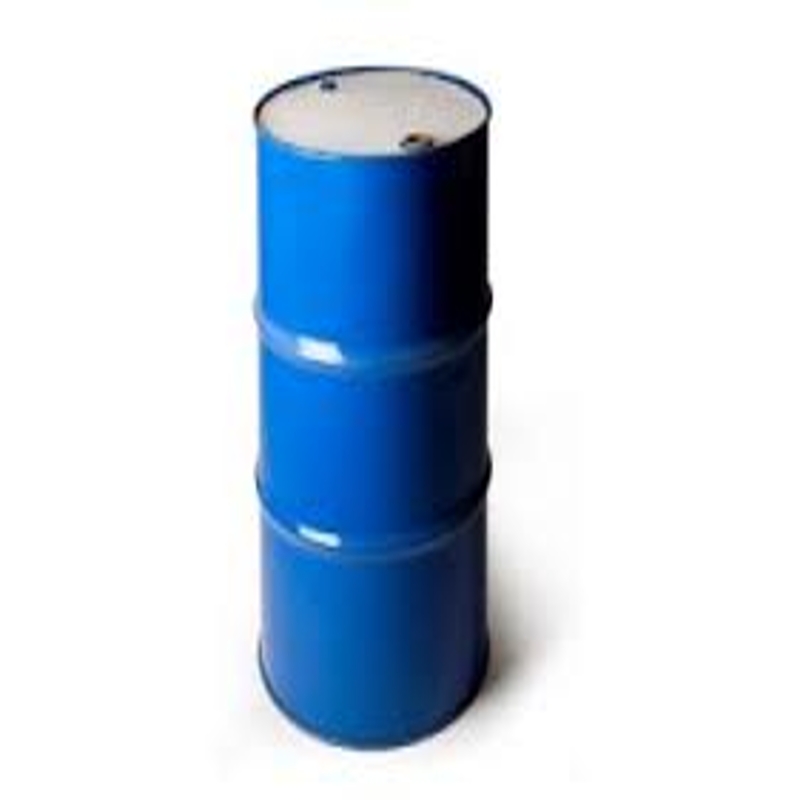
50KG
2023-12-24

Food Chemicals,Industrial Chemicals,Organic Chemicals
-
Product Description
-
Seller Information
-
Inquiry History
-
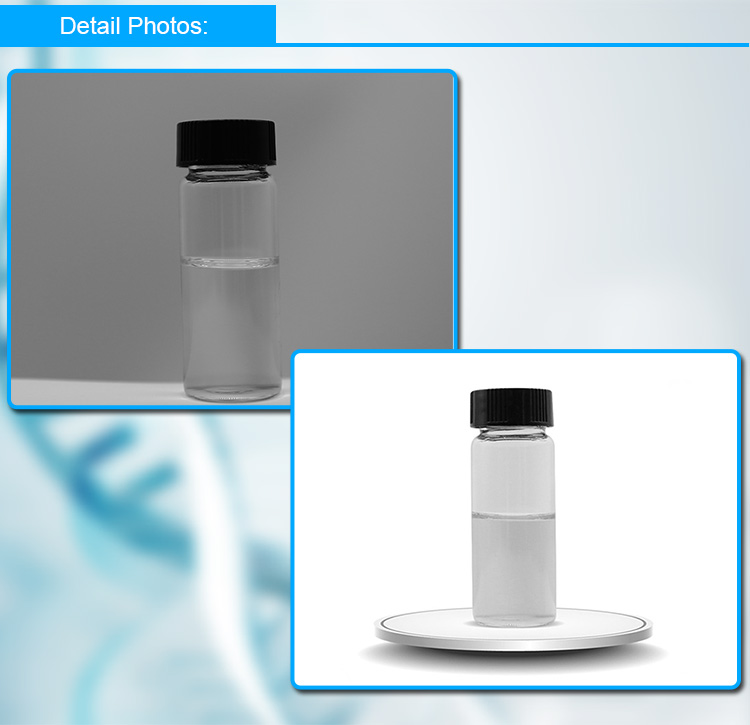
DescriptionECHEMI Editorial ReferenceA colorless or slightly yellow fuming liquid with a pungent and irritating odor resembling that of hydrochloric acid. Causes severe burns to skin, eyes and mucous membranes. Very toxic by inhalation, ingestion and skin absorption. Reacts with water to evolve hydrochloric acid, an irritating and corrosive gas apparent as white fumes. Phosphorus trichloride is a colorless to yellow, fuming liquid. Odor like hydrochloric acid.
Phosphorus trichloride appears as a colorless or slightly yellow fuming liquid with a pungent and irritating odor resembling that of hydrochloric acid. Causes severe burns to skin, eyes and mucous membranes. Very toxic by inhalation, ingestion and skin absorption. Reacts with water to evolve hydrochloric acid, an irritating and corrosive gas apparent as white fumes. Used during electrodeposition of metal on rubber and for making pesticides, surfactants, gasoline additives, plasticizers, dyestuffs, textile finishing agents, germicides, medicinal products, and other chemicals.|Liquid|COLOURLESS OR YELLOW FUMING LIQUID WITH PUNGENT ODOUR.|Colorless to yellow, fuming liquid with an odor like hydrochloric acid.
Phosphorus trichloride appears as a colorless or slightly yellow fuming liquid with a pungent and irritating odor resembling that of hydrochloric acid. Causes severe burns to skin, eyes and mucous membranes. Very toxic by inhalation, ingestion and skin absorption. Reacts with water to evolve hydrochloric acid, an irritating and corrosive gas apparent as white fumes. Used during electrodeposition of metal on rubber and for making pesticides, surfactants, gasoline additives, plasticizers, dyestuffs, textile finishing agents, germicides, medicinal products, and other chemicals.|Phosphorus trichloride is a phosphorus halide with formula Cl3P.Basic Info-
Product Name:
Phosphorus trichloride
Other Name:Phosphorous trichloride;Phosphorus chloride (PCl3);Phosphorous chloride;Phosphine,trichloro-;Trichlorophosphine;Phosphorus chloride (Cl6P2);Phosphorus trichloride;11082-95-4
CAS No.:7719-12-2
Molecular Formula:Cl3P
InChIKeys:InChIKey=FAIAAWCVCHQXDN-UHFFFAOYSA-N
Molecular Weight:137.33300
Exact Mass:137.33
EC Number:231-749-3
UNII:M97C0A6S8U
ICSC Number:0696
UN Number:1809
DSSTox ID:DTXSID5029687
Color/Form:Clear colorless, fuming liquid|Colorless to yellow, fuming liquid.
HScode:2812104300
Categories:
Characteristics-
PSA:
13.59000
XLogP3:2.92970
Appearance:Phosphorus trichloride appears as a colorless or slightly yellow fuming liquid with a pungent and irritating odor resembling that of hydrochloric acid. Causes severe burns to skin, eyes and mucous membranes. Very toxic by inhalation, ingestion and skin absorption. Reacts with water to evolve hydrochloric acid, an irritating and corrosive gas apparent as white fumes. Used during electrodeposition of metal on rubber and for making pesticides, surfactants, gasoline additives, plasticizers, dyestuffs, textile finishing agents, germicides, medicinal products, and other chemicals.
Density:1.574 g/cm3 @ Temp: 21 °C
Melting Point:-112 °C
Boiling Point:76 °C
Flash Point:none
Refractive Index:n20/D 1.5148(lit.)
Water Solubility:Reacts
Storage Conditions:Store at RT.
Vapor Pressure:23.32 psi ( 55 °C)
Vapor Density:4.75 (vs air)
Flammability characteristics:Noncombustible Liquid; however, a strong oxidizer that may ignite combustibles upon contact.
Explosive limit:Reacts violently with water producing heat and decomposition products including hydrochloric acid and phosphorous acid, causing fire and explosion hazard.
Odor:Pungent
Experimental Properties:Decomposes rapidly in moist air|12.97 kPa (97.3 mm Hg)at 20 °C; 85.75 kPa (643 mm Hg) at 70 °C|Heat of formation: -319.7 kJ/mol; heat of evaporation: 31 kJ/mol; molar heat capacity: 120.9 J mol/K; rapidly hydrolyzed by water with evolution of heat to form phosphonic acid HP(O)(OH)2, and hydrochloric acid|Conversion factor: 1 ppm = 5.62 mg/cu m
Air and Water Reactions:Fumes in air. Reacts violently with water. Hydrolysis produces dense hydrogen chloride vapors. Phosphorus trichloride reacts vigorously with water to generate gaseous HCl. Based on a scenario where the chemical is spilled into an excess of water (at least 5 fold excess of water), half of the maximum theoretical yield of Hydrogen Chloride gas will be created in 0.14 minutes. Experimental details are in the following: "Development of the Table of Initial Isolation and Protective Distances for the 2008 Emergency Response Guidebook", ANL/DIS-09-2, D.F. Brown, H.M. Hartmann, W.A. Freeman, and W.D. Haney, Argonne National Laboratory, Argonne, Illinois, June 2009.
Reactive Group:Acids, Strong Non-oxidizing
Reactivity Alerts:Water-Reactive
Reactivity Profile:PHOSPHORUS TRICHLORIDE is a strong reducing agent that may ignite combustible organic materials upon contact. May generate flammable and potentially explosive gaseous hydrogen upon contact with many common metals (except nickel and lead). Reactions with water are violent and produce heat and flashes of fire. Gives intensely exothermic reactions with iodine monochloride [Mellor 2, Supp. 1:502. 1956]. Several laboratory explosions have been reported arising from mixtures with acetic acid, along with other acids, sulfuric acid and derivatives, carboxylic acids, etc. These have been ascribed to poor heat control allowing the formation of phosphine [J. Am. Chem. Soc. 60:488. 1938]. Ignites when mixed with hydroxylamine [Mellor 8:290. 1946-47]. Causes an explosion on contact with nitric acid [Comp. Rend. 28:86]. It is incompatible with many common oxidants such as: sodium peroxide, fluorine, chromyl chloride, iodine chloride, to name a few. Isopropanol can react with PCl3, forming toxic HCl gas. (Logsdon, John E., Richard A. Loke., Isopropyl Alcohol. Kirk-Othmer Encyclopedia of Chemical Technology. John Wiley & Sons, Inc. 1996.)
Autoignition Temperature:Not flammable (USCG, 1999)
Ionization Potential:9.91 eV
Flammable Limits:Noncombustible Liquid; however, a strong oxidizer that may ignite combustibles upon contact.
Physical Dangers:The vapour is heavier than air.
Corrosivity:Corrodes most common construction materials.
Heat of Vaporization:30.5 kJ/mol
Critical Temperature & Pressure:Critical temperature: 285.5 °C
Hazard IdentificationClassification of the substance or mixture
Acute toxicity - Category 2, Oral
Skin corrosion, Sub-category 1A
Acute toxicity - Category 2, Inhalation
Specific target organ toxicity â repeated exposure, Category 2
GHS label elements, including precautionary statements
Pictogram(s) 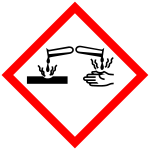
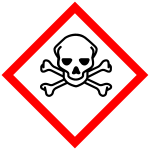
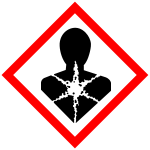
Signal word Danger
Hazard statement(s) H300 Fatal if swallowed
H314 Causes severe skin burns and eye damage
H330 Fatal if inhaled
H373 May cause damage to organs through prolonged or repeated exposure
Precautionary statement(s) Prevention P264 Wash ... thoroughly after handling.
P270 Do not eat, drink or smoke when using this product.
P260 Do not breathe dust/fume/gas/mist/vapours/spray.
P280 Wear protective gloves/protective clothing/eye protection/face protection/hearing protection/...
P271 Use only outdoors or in a well-ventilated area.
P284 [In case of inadequate ventilation] wear respiratory protection.
Response P301+P316 IF SWALLOWED: Get emergency medical help immediately.
P321 Specific treatment (see ... on this label).
P330 Rinse mouth.
P301+P330+P331 IF SWALLOWED: Rinse mouth. Do NOT induce vomiting.
P363 Wash contaminated clothing before reuse.
P304+P340 IF INHALED: Remove person to fresh air and keep comfortable for breathing.
P316 Get emergency medical help immediately.
P305+P351+P338 IF IN EYES: Rinse cautiously with water for several minutes. Remove contact lenses, if present and easy to do. Continue rinsing.
P320 Specific treatment is urgent (see ... on this label).
P319 Get medical help if you feel unwell.
Storage P405 Store locked up.
P403+P233 Store in a well-ventilated place. Keep container tightly closed.
Disposal P501 Dispose of contents/container to an appropriate treatment and disposal facility in accordance with applicable laws and regulations, and product characteristics at time of disposal.
Other hazards which do not result in classification
no data available
Handling and StoragePrecautions for safe handling
NO contact with water. Handling in a well ventilated place. Wear suitable protective clothing. Avoid contact with skin and eyes. Avoid formation of dust and aerosols. Use non-sparking tools. Prevent fire caused by electrostatic discharge steam.
Conditions for safe storage, including any incompatibilities
Provision to contain effluent from fire extinguishing. Separated from food and feedstuffs. See Chemical Dangers. Dry. Well closed. Ventilation along the floor.Provision to contain effluent from fire extinguishing. Separated from food and feedstuffs. See Chemical Dangers. Dry. Well closed. Ventilation along the floor.
-
-
Seller Information
-
Business Type:
Trader
-
Main Products:
Food Chemicals,Industrial Chemicals,Organic Chemicals
-
Location:
BINNEN PARALLELWEG 00027 5701PH HELMOND
-
Payment Terms:
TT against copy of documents
-
Average lead Time:
300 days
-
Total Annual Revenue:
$1 million-$2.5 million
-
Total Employees:
5-10
-
Year of Establishment:
1969
-
-
Inquiry History4 Inquiries
Country Product Purchase Quantity Date Posted  Turkey
Phosphorus trichloride
100 MT Feb 13, 2024  Germany
PCL3
20 MT Nov 23, 2023  United States
Phosphorus Trichloride
1 KG Dec 13, 2025  Egypt
Egypt
Phosphorus tri chloride
10 MT Aug 4, 2025 Post an enquiry for this product
More from this Seller
-
-

-
Dioctyl sebacate6
Industrial Grade / 100%
-
-
-

-
1-Hexene1
Industrial Grade / 100%
-
-
-

-
Sodium Propionate 100% White Powder
Industrial Grade / 100%
-
-
-

-
manganese sulphate3
Industrial Grade / 100%
-
-
-

-
Aluminium nitrate nonahydrate1
Industrial Grade / 100%
-
-
-

-
Sodium nitrite 100% White Powder
Industrial Grade / 100%
-



Hot Related Products
-
 99.9% Silicon Dioxide Powder Sio2 Powder Quartz with Best Price CAS 14808-60-7
 -
 High quality actory supply Thionyl chloride CAS NO.7719-09-7
 -
 White phosphorus 99.95%
 -
 16672-87-0
 -
 Thionyl chloride 99% prower aly-7719-09-7 lk
 -
 thionyl chloride 99% liquid 99% liquid
 -
 Thionyl chloride cas 7719-09-7 Molecular formula Cl2OS
 -
 Suoyi Liquid Sio2 Silica Silicon Dioxide White Transparent Dispersions for Cosmetics Composite Materials Paint
$1170/MT FOB
-
 Silicon dioxide 99.9% 14808-60-7
 -
 Thionyl chloride 99% colorless liquid 99% powder aly- 7719-09-7 lk