Cyanamide
4 Inquiries
420-04-2
Industrial Grade
99%
CUIKANG
G/bottle; Kg/bag; 25kg/barrel
2025-01-30

Cosmetics raw materials,Pesticide intermediate,Photoelectric material,pharmaceutical intermediates,Raw materials for food and health products,Polymer materials
-
Product Description
-
Seller Information
-
Inquiry History
-
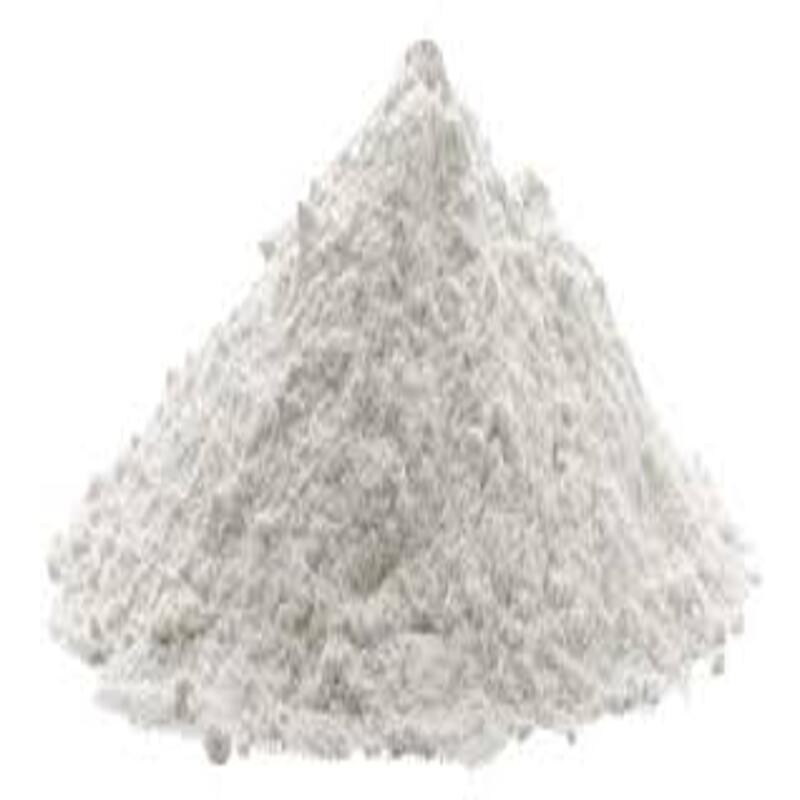
DescriptionECHEMI Editorial Referencewhite crystalline solid Cyanamide is a combustible crystalline solid, but it is usually found as a 25% liquid solution.
Cyanamide appears as colorless deliquescent crystals. Mp: 45°C; bp: 260°C. Density: 1.282 g cm-3. Quite soluble in water (77 g / 100 g solution at 15°C). Soluble in butanol, methyl ethyl ketone, ethyl acetate, alcohols, phenols, amines, ethers. Note: The term "cyanamide" is also used to refer to the important compound calcium cyanamide, which is a different chemical.|Liquid|COLOURLESS HYGROSCOPIC DELIQUESCENT CRYSTALS.|Crystalline solid.
Cyanamide appears as colorless deliquescent crystals. Mp: 45°C; bp: 260°C. Density: 1.282 g cm-3. Quite soluble in water (77 g / 100 g solution at 15°C). Soluble in butanol, methyl ethyl ketone, ethyl acetate, alcohols, phenols, amines, ethers. Note: The term "cyanamide" is also used to refer to the important compound calcium cyanamide, which is a different chemical.|Cyanamide is a nitrile that is hydrogen cyanide in which the hydrogen has been replaced by an amino group. It has a role as an EC 1.2.1.3 [aldehyde dehydrogenase (NAD(+))] inhibitor. It is a nitrile and a one-carbon compound. It is a conjugate acid of a cyanamide(2-).|Calcium cyanamide is used as a fertilizer, pesticide, and in the manufacture of other chemicals. It is irritating to the eyes, skin, and respiratory tract in humans. Acute (short-term) inhalation exposure may cause gastritis,rhinitis, pharyngitis, laryngitis, and tracheobronchitis. Acute oral exposure may cause a vasomotor reaction, resulting in intense flushing of the face, upper body, and arms. Tachycardia and hypotension have also been observed in humans following acute oral exposure. Chronic (long-term) occupational exposure has been reported to cause chronic rhinitis with perforation of the nasal septum in workers. EPA has not classified calcium cyanamide with respect to potential carcinogenicity.|A cyanide compound which has been used as a fertilizer, defoliant and in many manufacturing processes. It often occurs as the calcium salt, sometimes also referred to as cyanamide. The citrated calcium salt is used in the treatment of alcoholism.Basic Info-
Product Name:
Cyanamide
Other Name:Cyanamide;Amidocyanogen;Cyanogenamide;Cyanogen nitride;Carbamonitrile;Cyanoamine;Hydrogen cyanamide;N-Cyanoamine;Alzogur;Carbimide;TsAKS;NSC 24133;Dormex;Deurbraak;Cyanamide F 1000;F 1000;Dyhard VP 111;Amino cyanide;CY 100;Dormax;32729-71-8;65931-45-5
CAS No.:420-04-2
Molecular Formula:CH2N2
InChIKeys:InChIKey=XZMCDFZZKTWFGF-UHFFFAOYSA-N
Molecular Weight:42.041
Exact Mass:42.04
EC Number:206-992-3
UNII:21CP7826LC
ICSC Number:0424
NSC Number:267195|24133
UN Number:2811
DSSTox ID:DTXSID6020353|DTXSID9034490|DTXSID90745933
Color/Form:Orthorhombic, elongated, six-sided tablets from dimethyl phthalate|Crystallizes from a variety of solvents as somewhat unstable, colorless, orthorhombic, deliquescent crystals.|Deliquescent crystals|Cyanamide forms colorless, orthorhombic crystals or long transparent needles (from water), large platelike crystals when allowed to crystallize spontaneously from water, and crystals from dimethyl phthalate solution.
HScode:29269090
Categories:
Characteristics-
PSA:
49.8
XLogP3:-0.82 (20 deg C)
Appearance:Cyanamide appears as colorless deliquescent crystals. Mp: 45°C; bp: 260°C. Density: 1.282 g cm-3. Quite soluble in water (77 g / 100 g solution at 15°C). Soluble in butanol, methyl ethyl ketone, ethyl acetate, alcohols, phenols, amines, ethers. Note: The term "cyanamide" is also used to refer to the important compound calcium cyanamide, which is a different chemical.
Density:1.282 g/cm3 @ Temp: 20 °C
Melting Point:45-46 °C
Boiling Point:83 °C @ Press: 0.5 Torr
Flash Point:286°F
Refractive Index:1.397
Water Solubility:775 g/L
Storage Conditions:Solid is stored in a cool, dry, place. Liquid is stored in pH4 added with phosphoric acid, sulfuric acid, or boric acid.
Vapor Pressure:Vapour pressure, Pa at 20°C: 0.5
Vapor Density:1.45 (Air = 1)
Toxicity:LD50 i.p. in male mice: 200-300 mg/kg (Doull)
Flammability characteristics:Combustible Solid
PKA:1.03(at 25 °C)
Henrys Law Constant:Henry's Law constant = 2.66X10⁻¹¹ atm-cu m/mole (est)
Dissociation Constants:1.03 (at 25 °C)|Ka = 5.42X10⁻¹¹; Kb = 2.5X10⁻¹²|pKa = 10.3
Experimental Properties:Deliquescent; optimum pH for storage of soln is approx 4; attacks various metals|Formation of dicyandiamide begins at 122 °C; dipole moment in benzene at 20 °C: 3.8|Cryoscopic constant (water) 26.8-28.4; specific heat 0.547 cal/g/deg C between 0 °C and 39 °C|Heat of formation 14.05 kcal/mole (25 °C); polymerizes at 122 °C; heat of fusion 2.1 kcal/mole|For more Other Experimental Properties (Complete) data for Cyanamide (7 total), please visit the HSDB record page.
Air and Water Reactions:No rapid reaction with air Slow reaction with water or mositure in air
Reactive Group:Amines, Phosphines, and Pyridines
Reactivity Alerts:Polymerizable
Reactivity Profile:CYANAMIDE is the amide of cyanic acid. Non-flammable but combustible (flash point: 140° C). Decomposes on warming above 49° C. Emits toxic fumes of CN- and NOx when heated to decomposition or on contact with acids or acid fumes (Hazardous Chemicals Desk Reference, p. 353 (1987)). Contact with moisture, acids or bases may cause a violent reaction at temperatures above about 40° C. Dry solid may polymerize at temperatures above 122° C. Rapid or explosive polymerization may occur during the evaporation of aqueous solutions. Reacts explosively with strong oxidizing agents and strong reducing agents. Attacks various metals (International Chemical Safety Card).
Heat of Combustion:-176.4 kcal/mole (25 °C)
Ionization Potential:10.65eV|10.65 eV
Flammable Limits:Combustible Solid
Corrosivity:Non-corrosive, as far as known
Heat of Vaporization:16.4 kcal/mole
Hazard IdentificationClassification of the substance or mixture
Acute toxicity - Category 3, Oral
Acute toxicity - Category 3, Dermal
Skin corrosion, Category 1
Serious eye damage, Category 1
Skin sensitization, Category 1
Carcinogenicity, Category 2
Specific target organ toxicity â repeated exposure, Category 2
Hazardous to the aquatic environment, long-term (Chronic) - Category Chronic 3
Reproductive toxicity, Category 2
GHS label elements, including precautionary statements
Pictogram(s) 
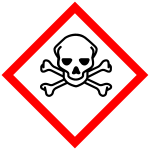

Signal word Danger
Hazard statement(s) H301 Toxic if swallowed
H311 Toxic in contact with skin
H314 Causes severe skin burns and eye damage
H317 May cause an allergic skin reaction
H351 Suspected of causing cancer
H373 May cause damage to organs through prolonged or repeated exposure
H412 Harmful to aquatic life with long lasting effects
Precautionary statement(s) Prevention P264 Wash ... thoroughly after handling.
P270 Do not eat, drink or smoke when using this product.
P280 Wear protective gloves/protective clothing/eye protection/face protection/hearing protection/...
P260 Do not breathe dust/fume/gas/mist/vapours/spray.
P261 Avoid breathing dust/fume/gas/mist/vapours/spray.
P272 Contaminated work clothing should not be allowed out of the workplace.
P203 Obtain, read and follow all safety instructions before use.
P273 Avoid release to the environment.
Response P301+P316 IF SWALLOWED: Get emergency medical help immediately.
P321 Specific treatment (see ... on this label).
P330 Rinse mouth.
P302+P352 IF ON SKIN: Wash with plenty of water/...
P316 Get emergency medical help immediately.
P361+P364 Take off immediately all contaminated clothing and wash it before reuse.
P301+P330+P331 IF SWALLOWED: Rinse mouth. Do NOT induce vomiting.
P363 Wash contaminated clothing before reuse.
P304+P340 IF INHALED: Remove person to fresh air and keep comfortable for breathing.
P305+P351+P338 IF IN EYES: Rinse cautiously with water for several minutes. Remove contact lenses, if present and easy to do. Continue rinsing.
P305+P354+P338 IF IN EYES: Immediately rinse with water for several minutes. Remove contact lenses, if present and easy to do. Continue rinsing.
P317 Get medical help.
P333+P317 If skin irritation or rash occurs: Get medical help.
P362+P364 Take off contaminated clothing and wash it before reuse.
P318 IF exposed or concerned, get medical advice.
P319 Get medical help if you feel unwell.
Storage P405 Store locked up.
Disposal P501 Dispose of contents/container to an appropriate treatment and disposal facility in accordance with applicable laws and regulations, and product characteristics at time of disposal.
Other hazards which do not result in classification
no data available
Handling and StoragePrecautions for safe handling
NO open flames. Handling in a well ventilated place. Wear suitable protective clothing. Avoid contact with skin and eyes. Avoid formation of dust and aerosols. Use non-sparking tools. Prevent fire caused by electrostatic discharge steam.
Conditions for safe storage, including any incompatibilities
Separated from food and feedstuffs and incompatible materials. See Chemical Dangers. Cool. Store at maximum 20 °C, never exceed 30 °C. Dry. Well closed. Keep in a well-ventilated room. Store only if stabilized. See Notes. Store in stainless steel, polyethylene or polypropylene.The commercial 50% solution produced by Degussa AG is stabilized by a special buffer system to a pH between 4.0 and 4.6. Typically, it contains less than 1.5 % dicyandiamide, less than 0.5% urea, and less than 0.1 % thiourea. This solution is stable for at least 3 months if stored at a temperature below 20 deg C. Prolonged storage leads to an increase in the pH and thus to instability of the solution. If a pH of 5.2 has been reached, the product should be used quickly, above pH 5.5 it should be discarded immediately by mixing it with at least the double volume of water. Otherwise, a thermal runaway reaction leading to temperatures above 100 deg C and potential bursting of the container may occur.
-
-
Seller Information
-
Business Type:
Manufactory
-
Main Products:
Cosmetics raw materials,Pesticide intermediate,Photoelectric material,pharmaceutical intermediates,Raw materials for food and health products,Polymer materials
-
Location:
D307, Zhuque Square Office Building, No. 14, Chang'an North Road, Beilin District, Xi'an City, Shaanxi Province
-
Payment Terms:
TT against copy of documents,TT against B/L draft before shipment,100% TT in advance
-
Average lead Time:
45
-
Total Annual Revenue:
Less than $1 million
-
Total Employees:
11-50
-
Year of Establishment:
2023
-
Certifications:
ISO,ISO,ISO
-
-
Inquiry History4 Inquiries
Country Product Purchase Quantity Date Posted  Russia
Cyanamide
1 MT Jan 20, 2025  Spain
Spain
Hydrogen Cyanamide
20 KG Jan 29, 2024  Italy
Italy
Cyanamide
10000 L Oct 26, 2025  India
India
Cynamide
1 MT Dec 19, 2023 Post an enquiry for this product