Product
Supplier
Encyclopedia
Inquiry
Home > Organic Chemistry > Quinones > Zinc diethyldithiocarbamate for Sale > 99% White Powder Zinc diethyldithiocarbamate CAS NO (14324-55-1) in bulk
99% White Powder Zinc diethyldithiocarbamate  CAS NO (14324-55-1) in bulk buy - large image1
99% White Powder Zinc diethyldithiocarbamate  CAS NO (14324-55-1) in bulk buy - image1
99% White Powder Zinc diethyldithiocarbamate  CAS NO (14324-55-1) in bulk buy - image2
99% White Powder Zinc diethyldithiocarbamate  CAS NO (14324-55-1) in bulk buy - image3
99% White Powder Zinc diethyldithiocarbamate  CAS NO (14324-55-1) in bulk buy - image4
99% White Powder Zinc diethyldithiocarbamate  CAS NO (14324-55-1) in bulk buy - image5
99% White Powder Zinc diethyldithiocarbamate  CAS NO (14324-55-1) in bulk buy - image6

99% White Powder Zinc diethyldithiocarbamate CAS NO (14324-55-1) in bulk

3 Inquiries

Unit Price: Get Latest Price
CAS No.:

14324-55-1

Grade:

Industrial Grade

Content:

99%

Port:

Durban

Brand:

Custom

Packaging:

As per customer requirement

Price valid (until):

2024-05-30

Company Type:
Distributor
Location:
South Africa
Qualification:
Main Products:

Sodium Lauryl Ether Sulfate,Caustic Soda,Soda Ash,Citric Acid,Calcium Hypochlorite,Oxalic Acid

  • Product Description

  • Seller Information

  • Inquiry History

  • Description


      Product Detail  


                                                                                      1. 1. Introduction to Zinc Diethyldithiocarbamate (CAS number 14324-55-1): Zinc diethyldithiocarbamate, often abbreviated as ZDEC, is a coordination complex used primarily as an accelerator in the vulcanization of rubber. With the CAS number 14324-55-1, it plays a crucial role in the rubber industry, contributing to the production of various rubber products.

                                                                                        2. Chemical Structure and Composition: At its molecular level, zinc diethyldithiocarbamate consists of a zinc ion coordinated with two diethyldithiocarbamate ligands. This coordination complex facilitates its function as a vulcanization accelerator, promoting the cross-linking of rubber molecules during curing.

                                                                                        3. Synthesis and Production: Zinc diethyldithiocarbamate is typically synthesized by reacting diethyldithiocarbamic acid with a zinc salt, such as zinc oxide or zinc chloride, under appropriate conditions. The resulting complex is then isolated and purified for commercial use.

                                                                                        4. Vulcanization Accelerator in Rubber Industry: One of the primary applications of zinc diethyldithiocarbamate is as an accelerator in the vulcanization process of rubber. During vulcanization, ZDEC promotes the formation of cross-links between rubber polymer chains, leading to improved mechanical properties, such as elasticity, strength, and resistance to heat and aging.

                                                                                        5. Rubber Products and Applications: Zinc diethyldithiocarbamate finds widespread use in the production of various rubber products, including tires, hoses, belts, seals, and footwear. Its role as a vulcanization accelerator ensures the efficient and consistent curing of rubber compounds, resulting in high-quality end products.

                                                                                        6. Compatibility and Synergies: Zinc diethyldithiocarbamate is often used in combination with other accelerators, such as sulfur-based accelerators or other dithiocarbamates, to achieve specific vulcanization characteristics and properties tailored to the intended application. These accelerator systems can exhibit synergistic effects, enhancing vulcanization efficiency and performance.

                                                                                        7. Safety Considerations and Handling Precautions: As with handling any chemical compound, proper safety precautions should be observed when working with zinc diethyldithiocarbamate. This includes the use of appropriate personal protective equipment, adherence to safe handling practices, and disposal according to regulatory guidelines.

                                                                                        8. Environmental Impact and Regulations: While zinc diethyldithiocarbamate is considered relatively safe for industrial use, its environmental impact should be carefully managed. Discharge into water bodies or soil should be avoided to prevent ecological harm. Regulatory compliance with environmental regulations governing its use, handling, and disposal is essential.

                                                                                        9. Research and Development: Ongoing research efforts in the rubber industry aim to develop novel accelerator systems with improved efficiency, sustainability, and environmental compatibility. These endeavors may lead to the discovery of alternative accelerators or innovative formulations that reduce reliance on traditional additives like zinc diethyldithiocarbamate.

                                                                                        10. Future Perspectives and Industry Outlook: As the demand for high-performance rubber products continues to grow, zinc diethyldithiocarbamate is expected to maintain its importance as a key accelerator in the vulcanization process. Continued innovation and research in rubber technology will drive the development of new formulations and applications, ensuring the continued relevance of ZDEC in the rubber industry.


      Specifications  


    Items Specifications
    Chemical Formula C10H20N2S4Zn
    Molecular Weight 362.92 g/mol
    Appearance White to pale yellow powder
    Melting Point Decomposes above 150°C
    Solubility Insoluble in water, soluble in organic solvents
    Odor Slight odor
    Flash Point Not applicable
    Storage Store in a cool, dry, well-ventilated area away from heat and incompatible materials
    Stability Stable under normal conditions
    Purity ≥ 98%
    Moisture Content ≤ 0.5%
    pH Not applicable
    Hazardous Properties Not classified as hazardous


      Product Pictures


    Shop Factory Price  of best 4-Chlorophenyl)acetonitrile  CAS NO (140-53-4)-Detailed Image 2Shop Factory Price  of best 4-Chlorophenyl)acetonitrile  CAS NO (140-53-4)-Detailed Image 3Shop Factory Price  of best 4-Chlorophenyl)acetonitrile  CAS NO (140-53-4)-Detailed Image 4Shop Factory Price  of best 4-Chlorophenyl)acetonitrile  CAS NO (140-53-4)-Detailed Image 5Shop Factory Price  of best 4-Chlorophenyl)acetonitrile  CAS NO (140-53-4)-Detailed Image 6

    Basic Info
    Product Name:

    Zinc diethyldithiocarbamate

    Other Name:

    Zinc,bis(N,N-diethylcarbamodithioato-κS,κS′)-,(T-4)-;Zinc,bis(diethyldithiocarbamato)-;Zinc,bis(diethylcarbamodithioato-S,S′)-,(T-4)-;Zinc,bis(diethylcarbamodithioato-κS,κS′)-,(T-4)-;(T-4)-Bis(N,N-diethylcarbamodithioato-κS,κS′)zinc;Zinc diethyldithiocarbamate;Bis(diethyldithiocarbamato)zinc;Zinc bis(diethyldithiocarbamate);Vulkacit ZDK;Zinc diethylcarbamodithioate;Diethyldithiocarbamic acid zinc salt;Ethazate;Ethyl Ziram;Vulcacure ZE;Ethylzimate;Carbamodithioic acid,diethyl-,zinc salt;Hermat ZDK;Vulkacit LDA;Zinc bis(N,N-diethyldithiocarbamate);Zinc N,N-diethyldithiocarbamate;Nocceler EZ;Soxinol EZ;EZ (carbamate);EZ;Bis(diethyldithiocarbamato)zinc(II);Bis(N,N-diethyldithiocarbamato)zinc;NSC 177699;Sanceler EZ;Vulkazit LDA;Perkacit ZDEC-PDR;Karbamat ETS;Accelerator ZDC;ZDC;Accel EZ;ZDEC;Mercure ZDC;Accelerator EZ;Rhenogran ZDEC 80;Accelerator ZDA;Bostex 561;136-94-7;14460-21-0;15465-13-1;18445-58-4;32733-02-1;39456-86-5;92481-10-2;115028-55-2;120092-57-1;880359-15-9;905572-85-2;2169916-09-8

    CAS No.:

    14324-55-1

    Molecular Formula:

    C10H20N2S4Zn

    InChIKeys:

    InChIKey=RKQOSDAEEGPRER-UHFFFAOYSA-L

    Molecular Weight:

    361.93

    Exact Mass:

    359.980072

    EC Number:

    238-270-9

    UNII:

    ICW4708Z8G

    DSSTox ID:

    DTXSID5021463

    Color/Form:

    White powder

    HScode:

    29302000

    Categories:

    Quinones

    Characteristics
    PSA:

    70.66000

    XLogP3:

    2.31750

    Appearance:

    solid

    Density:

    1.47 g/cm3 @ Temp: 20 °C

    Melting Point:

    172-176 °C

    Boiling Point:

    330.6°C (estimate)

    Flash Point:

    204°(400°F)

    Water Solubility:

    Insoluble in water. soluble in benzene carbon disulfide and organic liquids.

    Storage Conditions:

    Keep in a cool, dry, dark location in a tightly sealed container or cylinder. Keep away from incompatible materials, ignition sources and untrained individuals. Secure and label area. Protect containers/cylinders from physical damage.

    Vapor Pressure:

    1.1mmHg at 25°C

    Toxicity:

    Oral-rat LDL0: 3340 mg/kg; Abdominal cavity-mouse LD50: 142 mg/kg

    Flammability characteristics:

    Flammable; burning produces toxic nitrogen oxides, sulfur oxide fumes; poisoning reaction: strong irritation to eyes, nose, throat

    Hazard Identification

    Classification of the substance or mixture

    Acute toxicity - Category 4, Oral

    Skin irritation, Category 2

    Eye irritation, Category 2

    Skin sensitization, Category 1

    Specific target organ toxicity – single exposure, Category 3

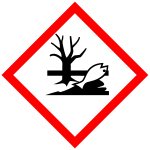
    Hazardous to the aquatic environment, short-term (Acute) - Category Acute 1

    Hazardous to the aquatic environment, long-term (Chronic) - Category Chronic 1

    GHS label elements, including precautionary statements

    Pictogram(s)

    Signal word

    Warning

    Hazard statement(s)

    H302 Harmful if swallowed

    H315 Causes skin irritation

    H319 Causes serious eye irritation

    H317 May cause an allergic skin reaction

    H335 May cause respiratory irritation

    H410 Very toxic to aquatic life with long lasting effects

    Precautionary statement(s)
    Prevention

    P264 Wash ... thoroughly after handling.

    P270 Do not eat, drink or smoke when using this product.

    P280 Wear protective gloves/protective clothing/eye protection/face protection/hearing protection/...

    P261 Avoid breathing dust/fume/gas/mist/vapours/spray.

    P272 Contaminated work clothing should not be allowed out of the workplace.

    P271 Use only outdoors or in a well-ventilated area.

    P273 Avoid release to the environment.

    Response

    P301+P317 IF SWALLOWED: Get medical help.

    P330 Rinse mouth.

    P302+P352 IF ON SKIN: Wash with plenty of water/...

    P321 Specific treatment (see ... on this label).

    P332+P317 If skin irritation occurs: Get medical help.

    P362+P364 Take off contaminated clothing and wash it before reuse.

    P305+P351+P338 IF IN EYES: Rinse cautiously with water for several minutes. Remove contact lenses, if present and easy to do. Continue rinsing.

    P333+P317 If skin irritation or rash occurs: Get medical help.

    P304+P340 IF INHALED: Remove person to fresh air and keep comfortable for breathing.

    P319 Get medical help if you feel unwell.

    P391 Collect spillage.

    Storage

    P403+P233 Store in a well-ventilated place. Keep container tightly closed.

    P405 Store locked up.

    Disposal

    P501 Dispose of contents/container to an appropriate treatment and disposal facility in accordance with applicable laws and regulations, and product characteristics at time of disposal.

    Other hazards which do not result in classification

    no data available

    Handling and Storage

    Precautions for safe handling

    Handling in a well ventilated place. Wear suitable protective clothing. Avoid contact with skin and eyes. Avoid formation of dust and aerosols. Use non-sparking tools. Prevent fire caused by electrostatic discharge steam.

    Conditions for safe storage, including any incompatibilities

    Store the container tightly closed in a dry, cool and well-ventilated place. Store apart from foodstuff containers or incompatible materials.

  • Seller Information
    Business Type:

    Distributor

    Main Products:

    Sodium Lauryl Ether Sulfate,Caustic Soda,Soda Ash,Citric Acid,Calcium Hypochlorite,Oxalic Acid

    Location:

    13 PROTEA PARK MILKWOOD STREET RANGEVIEW GAUTENG 1739

    Payment Terms:

    TT against copy of documents,TT against B/L draft before shipment

    Average lead Time:

    60

    Total Annual Revenue:

    $1 million-$2.5 million

    Total Employees:

    11-50

    Year of Establishment:

    2012

  • Inquiry History
    3 Inquiries
    Country Product Purchase Quantity Date Posted
    Bangladesh

    ZDEC

    400 KG Nov 6, 2025
    Sri Lanka

    Zinc dibutyldithiocarbomate

    1 KG Mar 15, 2024
    Sri Lanka

    Zinc Diethyldithio carbomate

    1 KG Mar 15, 2024
    Post an enquiry for this product
pic ×

Scan the QR Code to Share

All products displayed on this website are only for non-medical purposes such as industrial applications or scientific research, and cannot be used for clinical diagnosis or treatment of humans or animals. They are not medicinal or edible.

According to relevant laws and regulations and the regulations of this website, units or individuals who purchase hazardous materials should obtain valid qualifications and qualification conditions.

The information shown above is provided by the enterprise itself, and the authenticity, accuracy and legitimacy of the content are the responsibility of the publishing company. ECHEMI does not bear any guarantee responsibility for this. Please be aware that risks in internet transactions objectively exist.

Feedback & Suggestions
Send Message

Thank you for your feedback. If you require further assistance, please contact us by email at info@echemi.com or call us at +86-532-55729510.