




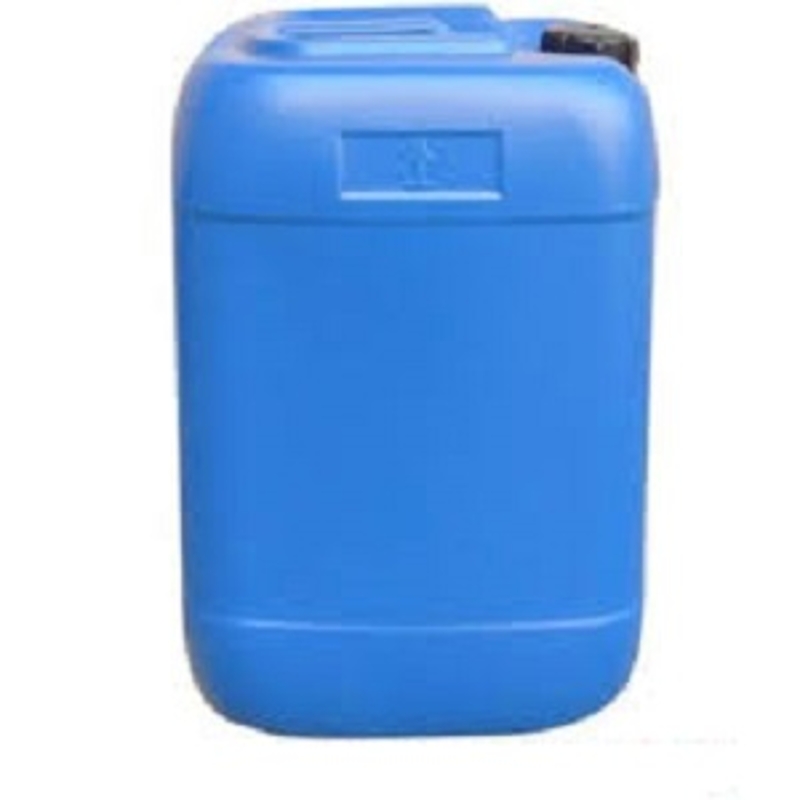
99%4-Hydroxy-4-methyl-2-pentanone
4 Inquiries
123-42-2
Industrial Grade
99%
qingdao
according the reuqiremnets
Yes
2024-06-22

Food additives,Pharmaceutical raw materials,Chemicals,Comestic raw materials
-
Product Description
-
Seller Information
-
Inquiry History
-
DescriptionECHEMI Editorial ReferenceColorless liquid with a faint, minty odor.
Diacetone alcohol is a chemical compound with the formula CH3C(O)CH2C(OH)(CH3)2, sometimes called DAA. This liquid is a common synthetic intermediate used for the preparation of other compounds, and is also used as a solvent.
Diacetone alcohol appears as a clear colorless liquid with a pleasant odor. Flash point below 141°F. Less dense than water. Vapors heavier than air.|Liquid; WetSolid|Liquid|COLOURLESS LIQUID WITH CHARACTERISTIC ODOUR.|Colorless liquid with a faint, minty odor.
Diacetone alcohol appears as a clear colorless liquid with a pleasant odor. Flash point below 141°F. Less dense than water. Vapors heavier than air.|Diacetone alcohol is a beta-hydroxy ketone formed by hydroxylation of 4-methylpentan-2-one at the 4-position. It has been isolated from Achnatherum robustum. It has a role as a plant metabolite.Basic Info-
Product Name:
Diacetone alcohol
Other Name:2-Pentanone,4-hydroxy-4-methyl-;4-Hydroxy-4-methyl-2-pentanone;Diacetone alcohol;Diketone alcohol;4-Hydroxy-2-keto-4-methylpentane;2-Methyl-2-pentanol-4-one;Tyranton;Acetonyldimethylcarbinol;2-Methyl-4-oxo-2-pentanol;Pyranton A;4-Methyl-4-hydroxy-2-pentanone;2-Hydroxy-2-methyl-4-pentanone;4-Hydroxy-4-methyl-2-oxopentane;NSC 9005;2-Methyl-4-oxopentan-2-ol
CAS No.:123-42-2
Molecular Formula:C6H12O2
InChIKeys:InChIKey=SWXVUIWOUIDPGS-UHFFFAOYSA-N
Molecular Weight:116.15800
Exact Mass:116.16
EC Number:204-626-7
UNII:Q7WP157PTD
ICSC Number:0647
NSC Number:9005
UN Number:1148
DSSTox ID:DTXSID6024917
Color/Form:COLORLESS LIQUID|Colorless liquid.|Faint, minty odor.
HScode:2914130000
Categories:
Characteristics-
PSA:
37.30000
XLogP3:0.73640
Appearance:Diacetone alcohol appears as a clear colorless liquid with a pleasant odor. Flash point below 141°F. Less dense than water. Vapors heavier than air.
Density:0.9382 g/cm3 @ Temp: 20 °C
Melting Point:-44 °C
Boiling Point:22.0 °C @ Press: 1.0 Torr
Flash Point:58ºC
Refractive Index:1.4223-1.4243
Water Solubility:Miscible
Storage Conditions:Store in a tightly closed container. Store in a cool, dry, well-ventilated area away from incompatible substances.
Vapor Pressure:<1 mm Hg ( 20 °C)
Vapor Density:4 (vs air)
Flammability characteristics:Class II Combustible Liquid: Fl.P. at or above 100°F and below 140°F.
Explosive limit:vol% in air: 1.8.9
Odor:FAINT PLEASANT ODOR
OH:4.00e-12 cm3/molecule*sec
Experimental Properties:CONVERSION FACTORS: 1 PPM= 4.75 MG/CU M; 1 MG/L= 216.5 PPM|It forms a constant boiling mixture with water at 99.6 °C containing about 13% diacetone alcohol
Air and Water Reactions:Highly flammable. Soluble in water.
Reactive Group:Alcohols and Polyols
Reactivity Alerts:Highly Flammable
Reactivity Profile:Acetyl bromide reacts violently with alcohols or water, [Merck 11th ed., 1989]. Mixtures of alcohols with concentrated sulfuric acid and strong hydrogen peroxide can cause explosions. Example: An explosion will occur if dimethylbenzylcarbinol is added to 90% hydrogen peroxide then acidified with concentrated sulfuric acid. Mixtures of ethyl alcohol with concentrated hydrogen peroxide form powerful explosives. Mixtures of hydrogen peroxide and 1-phenyl-2-methyl propyl alcohol tend to explode if acidified with 70% sulfuric acid, [Chem. Eng. News 45(43):73(1967); J, Org. Chem. 28:1893(1963)]. Alkyl hypochlorites are violently explosive. They are readily obtained by reacting hypochlorous acid and alcohols either in aqueous solution or mixed aqueous-carbon tetrachloride solutions. Chlorine plus alcohols would similarly yield alkyl hypochlorites. They decompose in the cold and explode on exposure to sunlight or heat. Tertiary hypochlorites are less unstable than secondary or primary hypochlorites, [NFPA 491 M, 1991]. Base-catalysed reactions of isocyanates with alcohols should be carried out in inert solvents. Such reactions in the absence of solvents often occur with explosive violence, [Wischmeyer(1969)].
Autoignition Temperature:1118 °F (USCG, 1999)|ACETONE-FREE 603 °C (1118 °F); COMMERCIAL 643 °C (1190 °F)|640 °C
Heat of Combustion:-13000 Btu/lb= -7250 cal/g= -303X10+5 J/kg (est)
Flammable Limits:1.8% LOWER & 6.9% UPPER|Class II Combustible Liquid: Fl.P. at or above 100°F and below 140°F.
Heat of Vaporization:11718.8 GCAL/GMOL
Critical Temperature & Pressure:CRITICAL TEMPERATURE: 633 °F, 334 °C, 607 DEG K; CRITICAL PRESSURE: 380 PSIA= 36 ATM= 3.6 MN/SQ M
Hazard IdentificationClassification of the substance or mixture
Eye irritation, Category 2
GHS label elements, including precautionary statements
Pictogram(s) 
Signal word Warning
Hazard statement(s) H319 Causes serious eye irritation
Precautionary statement(s) Prevention P264 Wash ... thoroughly after handling.
P280 Wear protective gloves/protective clothing/eye protection/face protection/hearing protection/...
Response P305+P351+P338 IF IN EYES: Rinse cautiously with water for several minutes. Remove contact lenses, if present and easy to do. Continue rinsing.
Storage none
Disposal none
Other hazards which do not result in classification
no data available
Handling and StoragePrecautions for safe handling
NO open flames, NO sparks and NO smoking. Above 58°C use a closed system, ventilation and explosion-proof electrical equipment. Use non-sparking handtools. Handling in a well ventilated place. Wear suitable protective clothing. Avoid contact with skin and eyes. Avoid formation of dust and aerosols. Use non-sparking tools. Prevent fire caused by electrostatic discharge steam.
Conditions for safe storage, including any incompatibilities
Fireproof. Separated from acids, bases, amines and oxidants.... MATERIALS WHICH ARE TOXIC AS STORED OR WHICH CAN DECOMPOSE INTO TOXIC COMPONENTS ... SHOULD BE STORED IN A COOL WELL-VENTILATED PLACE, OUT OF THE DIRECT RAYS OF THE SUN, AWAY FROM AREAS OF HIGH FIRE HAZARD, AND SHOULD BE PERIODICALLY INSPECTED ... INCOMPATIBLE MATERIALS SHOULD BE ISOLATED .
-
-
Seller Information
-
Business Type:
Trader
-
Main Products:
Food additives,Pharmaceutical raw materials,Chemicals,Comestic raw materials
-
Location:
Room 501, Unit 6, No. 40, hushan road,Licang,Qingdao
-
Payment Terms:
TT against copy of documents,TT against B/L draft before shipment,100% TT in advance
-
Average lead Time:
10 days
-
Total Annual Revenue:
$1 million-$2.5 million
-
Total Employees:
11-50
-
Year of Establishment:
2017
-
-
Inquiry History4 Inquiries
Country Product Purchase Quantity Date Posted  Egypt
Egypt
Diacetone Alcohol
20 MT Jul 10, 2026  South Korea
Diacetone alcohol
8 MT Apr 14, 2026  India
India
Diacetone Alcohol
15 MT Dec 18, 2024
India
DI-ACETONE
1.00 20' Fcl Oct 26, 2023 Post an enquiry for this product
More from this Seller
-
-

-
Fiber Glass WoolFiber Glass Wool Factory Bioactive glass
Cosmetics Grade / 98%
-
-
-

-
2-Methyl Butyric Acid from factory East chem-best price
Industrial Grade / 98%
$1-1.2/MT FOB
-
-
-

-
beta-Sitosterol factory price -East
Cosmetics Grade / 98%
-
-
-

-
Dodecyl Carbonate
Industrial Grade / 99%
-
-
-

-
99%Shikimic acid
Industrial Grade / 99%
-
-
-

-
POLYETHYLENE GLYCOL TRIMETHYLNONYL ETHER from factory East Chemsources-best price
Cosmetics Grade / 98%
-



Hot Related Products
-
 Phthalic anhydride 99.5% White flakes 99.5% OUCHEM
 -
 CAS 85-44-9") Phthalic anhydride (PA) CAS 85-44-9
Phthalic anhydride (PA) CAS 85-44-9 -
 KOREA OCI") PA PHTHALIC ANHYDRIDE (NAPHTHALENE BASE) KOREA OCI
PA PHTHALIC ANHYDRIDE (NAPHTHALENE BASE) KOREA OCI -
 PHTHALIC ANHYDRIDE White Crystalline Solid
 -
 phthalic anhydride,:2,5-Isobenzofurandione
 -
 Phthalic Anhydride 99.5% White Flakes - Industrial Grade
 -
 Anhydride phtalique
 -
 Factory Supply Phthalic Anhydride/PA 99.9% CAS: 85-44-9
 -
 Best price benzyl chloride 99.6% CAS 100-44-7 White liquid
 -
 phthalic anhydride/PA Low price industrial grade 99% Industry Solvent, White Crystalline SAA63254782200 SAA


