Product
Supplier
Encyclopedia
Inquiry
Home > Agrochemicals > Pesticide Intermediates > Methylnaphthalene for Sale > Methylnaphthalene CAS No.: 1321-94-4 Different Grade Yellow or reddish Liquid 75% Assay Methylnaphthalene
Methylnaphthalene CAS No.: 1321-94-4 Different Grade Yellow or reddish Liquid 75% Assay Methylnaphthalene buy - large image1
Methylnaphthalene CAS No.: 1321-94-4 Different Grade Yellow or reddish Liquid 75% Assay Methylnaphthalene buy - image1
Methylnaphthalene CAS No.: 1321-94-4 Different Grade Yellow or reddish Liquid 75% Assay Methylnaphthalene buy - image2
Methylnaphthalene CAS No.: 1321-94-4 Different Grade Yellow or reddish Liquid 75% Assay Methylnaphthalene buy - image3
Methylnaphthalene CAS No.: 1321-94-4 Different Grade Yellow or reddish Liquid 75% Assay Methylnaphthalene buy - image4
Methylnaphthalene CAS No.: 1321-94-4 Different Grade Yellow or reddish Liquid 75% Assay Methylnaphthalene buy - image5
Methylnaphthalene CAS No.: 1321-94-4 Different Grade Yellow or reddish Liquid 75% Assay Methylnaphthalene buy - image6

Methylnaphthalene CAS No.: 1321-94-4 Different Grade Yellow or reddish Liquid 75% Assay Methylnaphthalene

Unit Price: Get Latest Price
CAS No.:

1321-94-4

Grade:

Industrial Grade

Content:

75%

Port:

ANY PORT IN CHINA

Brand:

EAST CHEMSOURCES LIMITED

Packaging:

IBC

Price valid (until):

2024-06-23

Company Type:
Trader
Location:
China
Qualification:
Main Products:

Food additives,Pharmaceutical raw materials,Chemicals,Comestic raw materials

  • Product Description

  • Seller Information

  • Description

    Shop Yellow or reddish Liquid Methylnaphthalene Industrial Grade CAS No.: 1321-94-4-Detailed Image 1

    SAFETY DATA SHEETS

    According to the UN GHS revision 9

    Version: 1.0

    Creation Date: July 15, 2019

    Revision Date: July 15, 2019

    SECTION 1: Identification

    1.1GHS Product identifier

    Product name

    Methylnaphthalene

    1.2Other means of identification

    Product number

    -

    Other names

    1(or2)-Methylnaphthalene; Naphthalene, methyl-; Mixed Methylnaphthalene

    1.3Recommended use of the chemical and restrictions on use

    Identified uses

    Industrial and scientific research use.

    Uses advised against

    no data available


    SECTION 2: Hazard identification

    2.1Classification of the substance or mixture

    Acute toxicity - Category 4, Oral

    Eye irritation, Category 2

    Specific target organ toxicity – single exposure, Category 3

    Specific target organ toxicity – repeated exposure, Category 2

    Hazardous to the aquatic environment, long-term (Chronic) - Category Chronic 2

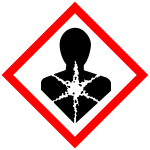
    2.2GHS label elements, including precautionary statements

    Pictogram(s) Shop Yellow or reddish Liquid Methylnaphthalene Industrial Grade CAS No.: 1321-94-4-Detailed Image 2
    Signal word

    Warning

    Hazard statement(s)

    H302 Harmful if swallowed

    H319 Causes serious eye irritation

    H335 May cause respiratory irritation

    H336 May cause drowsiness or dizziness

    H373 May cause damage to organs through prolonged or repeated exposure

    H411 Toxic to aquatic life with long lasting effects

    Precautionary statement(s)
    Prevention

    P264 Wash ... thoroughly after handling.

    P270 Do not eat, drink or smoke when using this product.

    P280 Wear protective gloves/protective clothing/eye protection/face protection/hearing protection/...

    P261 Avoid breathing dust/fume/gas/mist/vapours/spray.

    P271 Use only outdoors or in a well-ventilated area.

    P260 Do not breathe dust/fume/gas/mist/vapours/spray.

    P273 Avoid release to the environment.

    Response

    P301+P317 IF SWALLOWED: Get medical help.

    P330 Rinse mouth.

    P305+P351+P338 IF IN EYES: Rinse cautiously with water for several minutes. Remove contact lenses, if present and easy to do. Continue rinsing.

    P304+P340 IF INHALED: Remove person to fresh air and keep comfortable for breathing.

    P319 Get medical help if you feel unwell.

    P391 Collect spillage.

    Storage

    P403+P233 Store in a well-ventilated place. Keep container tightly closed.

    P405 Store locked up.

    Disposal

    P501 Dispose of contents/container to an appropriate treatment and disposal facility in accordance with applicable laws and regulations, and product characteristics at time of disposal.

    2.3Other hazards which do not result in classification

    no data available

    SECTION 3: Composition/information on ingredients

    3.1Substances

    Chemical name Common names and synonyms CAS number EC number Concentration
    Methylnaphthalene Methylnaphthalene 1321-94-4 215-329-7 100%

    SECTION 4: First-aid measures

    4.1Description of necessary first-aid measures

    If inhaled

    Fresh air, rest.

    Following skin contact

    Remove contaminated clothes. Rinse and then wash skin with water and soap.

    Following eye contact

    First rinse with plenty of water for several minutes (remove contact lenses if easily possible), then refer for medical attention.

    Following ingestion

    Rinse mouth. Give a slurry of activated charcoal in water to drink. Rest. Refer for medical attention .

    4.2Most important symptoms/effects, acute and delayed

    SYMPTOMS: Exposure to this compound may cause skin irritation. It may also cause photosensitization. The vapors, fumes or direct contact with the solid may be irritating to the eyes. Inhalation of the vapors may produce airway irritation, headache, nausea, weakness and collapse. Long term overexposure has led to corneal changes. Ingestion may lead to systemic poisoning involving the gastrointestinal tract, kidneys and blood-forming tissue. Individuals with erythrocytic glucose-6-phosphate dehydrogenase deficiency may be particularly susceptible to possible hemolytic effects. Individuals with a history of or pre-existing disease in eyes, mucous membranes, skin, blood-forming tissues or blood, liver or lungs may be at greater risk of adverse health effects when exposed to this material. ACUTE/CHRONIC HAZARDS: This compound can cause skin irritation and photosensitization. It may be harmful if inhaled or absorbed through the skin, and may be highly toxic if swallowed. When heated to decomposition this compound emits acrid smoke and fumes. (NTP, 1992)

    Harmful if inhaled. Liquid causes irritation of the eyes and skin and skin photosensitization. Harmful if swallowed. Chronic exposure may cause liver or kidney damage. (USCG, 1999)

    4.3Indication of immediate medical attention and special treatment needed, if necessary

    Emergency and supportive measures: 1. Maintain an open air way and assist ventilation if necessary. 2. Treat coma and seizures if they occur. 3. Treat hemolysis and resulting hemoglobinuria if they occur by intravenous hydration and urinary alkalinization. Naphthalene

    SECTION 5: Fire-fighting measures

    5.1Suitable extinguishing media

    If material on fire or involved in fire: Use water in flooding quantities as fog. Solid streams of water may be ineffective. Solid streams of water may spread fire. Use foam, dry chemical, or carbon dioxide. Methylnaphthalenes, liquid

    5.2Specific hazards arising from the chemical

    This chemical is probably combustible. (NTP, 1992)

    This chemical is combustible. (NTP, 1992)

    5.3Special protective actions for fire-fighters

    Wear self-contained breathing apparatus for firefighting if necessary.

    SECTION 6: Accidental release measures

    6.1Personal precautions, protective equipment and emergency procedures

    Avoid dust formation. Avoid breathing mist, gas or vapours.Avoid contacting with skin and eye. Use personal protective equipment.Wear chemical impermeable gloves. Ensure adequate ventilation.Remove all sources of ignition. Evacuate personnel to safe areas.Keep people away from and upwind of spill/leak.

    6.2Environmental precautions

    Collect leaking and spilled liquid in sealable containers as far as possible. Absorb remaining liquid in sand or inert absorbent. Then store and dispose of according to local regulations. Do NOT let this chemical enter the environment.

    6.3Methods and materials for containment and cleaning up

    If you spill this chemical, FIRST REMOVE ALL SOURCES OF IGNITION. Then, use absorbent paper to pick up all liquid spill material. Your contaminated clothing and absorbent paper should be sealed in a vapor-tight plastic bag for eventual disposal. Solvent wash all contaminated surfaces with 60-70% ethanol followed by washing with a soap and water solution. Do not reenter the contaminated area until the Safety Officer (or other responsible person) has verified that the area has been properly cleaned.

    SECTION 7: Handling and storage

    7.1Precautions for safe handling

    Handling in a well ventilated place. Wear suitable protective clothing. Avoid contact with skin and eyes. Avoid formation of dust and aerosols. Use non-sparking tools. Prevent fire caused by electrostatic discharge steam.

    7.2Conditions for safe storage, including any incompatibilities

    Store in an area without drain or sewer access. Provision to contain effluent from fire extinguishing.You should store this material under ambient temperatures.

    SECTION 8: Exposure controls/personal protection

    8.1Control parameters

    Occupational Exposure limit values

    no data available

    Biological limit values

    no data available

    8.2Appropriate engineering controls

    Ensure adequate ventilation. Handle in accordance with good industrial hygiene and safety practice. Set up emergency exits and the risk-elimination area.

    8.3Individual protection measures, such as personal protective equipment (PPE)

    Eye/face protection

    Wear tightly fitting safety goggles with side-shields conforming to EN 166(EU) or NIOSH (US).

    Skin protection

    Wear fire/flame resistant and impervious clothing. Handle with gloves. Gloves must be inspected prior to use. Wash and dry hands. The selected protective gloves have to satisfy the specifications of EU Directive 89/686/EEC and the standard EN 374 derived from it.

    Respiratory protection

    If the exposure limits are exceeded, irritation or other symptoms are experienced, use a full-face respirator.

    Thermal hazards

    no data available

    SECTION 9: Physical and chemical properties and safety characteristics

    Physical state

    PHYSICAL DESCRIPTION: Bluish-brown oil or a clear yellow liquid. Coal tar or mothball odor. (NTP, 1992)

    Colour

    Colorless liquid or oil

    Odour

    no data available

    Melting point/freezing point

    -8° F (NTP, 1992)

    Boiling point or initial boiling point and boiling range

    242.8°C at 760 mmHg

    Flammability

    Combustible.

    Lower and upper explosion limit/flammability limit

    no data available

    Flash point

    82.2°C

    Auto-ignition temperature

    984° F (USCG, 1999)

    Decomposition temperature

    no data available

    pH

    no data available

    Kinematic viscosity

    no data available

    Solubility

    less than 1 mg/mL at 64° F (NTP, 1992)

    Partition coefficient n-octanol/water

    log Kow of 3.87

    Vapour pressure

    0.0518mmHg at 25°C

    Density and/or relative density

    1.016 g/cm3

    Relative vapour density

    4.91 (NTP, 1992) (Relative to Air)

    Particle characteristics

    no data available

    SECTION 10: Stability and reactivity

    10.1Reactivity

    Decomposes on heating. This produces acrid smoke and irritating fumes.

    10.2Chemical stability

    This chemical is stable under normal laboratory conditions. Solutions of this chemical in water, DMSO, 95% ethanol or acetone should be stable for 24 hours under normal lab conditions.

    10.3Possibility of hazardous reactions

    Moderate fire risk.METHYLNAPHTHALENE is incompatible with strong oxidizing agents. It is also incompatible with peroxides and oxygen. (NTP, 1992)

    10.4Conditions to avoid

    no data available

    10.5Incompatible materials

    This compound is incompatible with strong oxidizers.

    10.6Hazardous decomposition products

    When heated to decomposition it emits acrid smoke and irritating fumes

    SECTION 11: Toxicological information

    Acute toxicity

    • Oral: LD50 Rat oral 1840 mg/kg
    • Inhalation: no data available
    • Dermal: no data available

    Skin corrosion/irritation

    no data available

    Serious eye damage/irritation

    no data available

    Respiratory or skin sensitization

    no data available

    Germ cell mutagenicity

    no data available

    Carcinogenicity

    A4; Not classifiable as a human carcinogen.

    Reproductive toxicity

    no data available

    STOT-single exposure

    no data available

    STOT-repeated exposure

    no data available

    Aspiration hazard

    no data available

    SECTION 12: Ecological information

    12.1Toxicity

    • Toxicity to fish: LC50; Species: Salmo trutta (Brown Trout) yearling; Conditions: freshwater, static, 10 deg C, pH 7.6-8.0, hardness 210-290 mg/L CaCO3, alkalinity 165-200 mg/L CaCO3, dissolved oxygen >50%; Concentration: 8400 ug/L for 48 hr /formulation
    • Toxicity to daphnia and other aquatic invertebrates: EC50; Species: Daphnia magna (Water Flea) age 4-6 days, length 1.5 mm; Conditions: freshwater, static, 23 deg C, pH 6-7, dissolved oxygen 5-9 mg/L; Concentration: 10 mmol/cu m for 48 hr (95% confidence interval: 3-40 mmol/cu m) /> or =97% purity/; Effect: Immobilization.
    • Toxicity to algae: EC50; Species: Pseudokirchneriella subcapitata (Green Algae); Conditions: static; Concentration: 12000 ug/L for 14 days; Effect: growth, general /formulation
    • Toxicity to microorganisms: no data available

    12.2Persistence and degradability

    AEROBIC: Aerobic aqueous screening test data showed a 84 and 95% loss of 0.1 ppm methylnaphthalenes in 1 and 5.6 days, respectively, for acclimated sewage inoculum; methylnaphthalenes did not degrade with unacclimated sewage(1). No loss of 1-methylnaphthalene was observed for a 5 day BOD test with sewage seed at 20 deg C(2). When marine water was used as an inoculate, 1- and 2-methylnaphthalene at respective concentrations of 0.045 and 0.067 ppm disappeared within 10 days under aerobic conditions at 25 deg C(3). Using the Japanese MITI I procedure, <5% degradation of methylnaphthalene occurred in 28 days; for the MITI II test with a freshwater inoculum, 49 and 72% of the 1- and 2-isomers were lost in 28 days under aerobic conditions at 25 deg C(4). A marine water die-away study with sediment inoculum from Dunstaffnage Bay, Oban, Scotland showed a 92 and 88.5% loss of 1- and 2-methylnaphthalene, respectively, contained in crude oil after 7 days at 20 deg C(5). Methylnaphthalenes, present at 0.5 ppm carbon, was completely removed within 14 days from acclimated fresh-well water grab samples from Tuffenwies and Zurich, Switzerland, with a pH of 8.0, at 10 and 25 deg C and microbial populations of 300-400 cells/mL(6). Grab samples of groundwater aquifer soil that had acclimated to creosote wastes containing methylnaphthalene were able to degrade methylnaphthalenes, present at 0.02 to 0.12 ppm, under aerobic conditions at 25 deg C in less than a week(7). An average loss of 5.6 and 6.5% per week was observed for autoclaved controls(7). Unacclimated material from the same aquifer degraded methylnaphthalenes at an average rate of 3.5% per week; however autoclaved controls lost methylnaphthalenes at an overall rate of about 11% per week(7). Methylnaphthalene, present in light Arabian crude oil, showed little biodegradation in sea water, but when nutrients were added biodegradation increased; with sea water, sediment and nutrients, 100% biodegradation was seen in <10 days(8).

    12.3Bioaccumulative potential

    After 2, 3, 5 and 6 weeks exposure, the average bioconcentration factors for 1- and 2-methylnaphthalene in the muscle tissue of Coho salmon (Onchorhynchus kisutch) were 30, 85, 160 and 60, respectively(1). After 2 weeks exposure, the average bioconcentration factor for 1- and 2-methylnaphthalene in the muscle tissue, liver and gills of Starry flounder (Platichthys stellatus) was 420, 1800 and 355, respectively(1). BCFs of 360-810 and 360-620 were found using carp (Cyprinus carpio) which were exposed for 60 days at respective concentrations of 1-methylnaphthalene of 1 and 10 ug/L(2). According to a classification scheme(3), BCF values of <30 are low and >1000 are very high. Methylnaphthalenes may be metabolized by some aquatic organisms(SRC).

    12.4Mobility in soil

    Using a structure estimation method based on molecular connectivity indices(1), the Koc of methylnaphthalenes can be estimated to be 2530(SRC). However, 1-methylnaphthalene has reported Koc values of 2290(2) and 4400(3) and 2-methylnaphthalene has a reported Koc value of 4350(2) and measured Koc value of 8500(3). According to a classification scheme(4), these Koc values suggest that methylnaphthalenes are expected to have slight to no mobility in soil.

    12.5Other adverse effects

    no data available

    SECTION 13: Disposal considerations

    13.1Disposal methods

    Product

    The material can be disposed of by removal to a licensed chemical destruction plant or by controlled incineration with flue gas scrubbing. Do not contaminate water, foodstuffs, feed or seed by storage or disposal. Do not discharge to sewer systems.

    Contaminated packaging

    Containers can be triply rinsed (or equivalent) and offered for recycling or reconditioning. Alternatively, the packaging can be punctured to make it unusable for other purposes and then be disposed of in a sanitary landfill. Controlled incineration with flue gas scrubbing is possible for combustible packaging materials.

    SECTION 14: Transport information

    14.1UN Number

    ADR/RID: UN3082 (For reference only, please check.) IMDG: UN3082 (For reference only, please check.) IATA: UN3082 (For reference only, please check.)

    14.2UN Proper Shipping Name

    ADR/RID: ENVIRONMENTALLY HAZARDOUS SUBSTANCE, LIQUID, N.O.S. (For reference only, please check.) IMDG: ENVIRONMENTALLY HAZARDOUS SUBSTANCE, LIQUID, N.O.S. (For reference only, please check.) IATA: ENVIRONMENTALLY HAZARDOUS SUBSTANCE, LIQUID, N.O.S. (For reference only, please check.)

    14.3Transport hazard class(es)

    ADR/RID: 9 (For reference only, please check.) IMDG: 9 (For reference only, please check.) IATA: 9 (For reference only, please check.)

    14.4Packing group, if applicable

    ADR/RID: III (For reference only, please check.) IMDG: III (For reference only, please check.) IATA: III (For reference only, please check.)

    14.5Environmental hazards

    ADR/RID: Yes IMDG: Yes IATA: Yes

    14.6Special precautions for user

    no data available

    14.7Transport in bulk according to IMO instruments

    no data available

    SECTION 15: Regulatory information

    15.1Safety, health and environmental regulations specific for the product in question

    Chemical name Common names and synonyms CAS number EC number
    Methylnaphthalene Methylnaphthalene 1321-94-4 215-329-7
    European Inventory of Existing Commercial Chemical Substances (EINECS) Listed.
    EC Inventory Listed.
    United States Toxic Substances Control Act (TSCA) Inventory Listed.
    China Catalog of Hazardous chemicals 2015 Not Listed.
    New Zealand Inventory of Chemicals (NZIoC) Listed.
    Philippines Inventory of Chemicals and Chemical Substances (PICCS) Listed.
    Vietnam National Chemical Inventory Listed.
    Chinese Chemical Inventory of Existing Chemical Substances (China IECSC) Listed.
    Korea Existing Chemicals List (KECL) Listed.

    SECTION 16: Other information

    Information on revision

    Creation Date July 15, 2019
    Revision Date July 15, 2019

    Abbreviations and acronyms

    • CAS: Chemical Abstracts Service
    • ADR: European Agreement concerning the International Carriage of Dangerous Goods by Road
    • RID: Regulation concerning the International Carriage of Dangerous Goods by Rail
    • IMDG: International Maritime Dangerous Goods
    • IATA: International Air Transportation Association
    • TWA: Time Weighted Average
    • STEL: Short term exposure limit
    • LC50: Lethal Concentration 50%
    • LD50: Lethal Dose 50%
    • EC50: Effective Concentration 50%

    Pls input...

    Shop Yellow or reddish Liquid Methylnaphthalene Industrial Grade CAS No.: 1321-94-4-Detailed Image 3

    Items Specifications
    Appearance Yellow or reddish Liquid
    Density I D.21g/cm2 Density I D.21g/cm2
    Density I D.21g/cm2 75

    Shop Yellow or reddish Liquid Methylnaphthalene Industrial Grade CAS No.: 1321-94-4-Detailed Image 4Shop Yellow or reddish Liquid Methylnaphthalene Industrial Grade CAS No.: 1321-94-4-Detailed Image 5Shop Yellow or reddish Liquid Methylnaphthalene Industrial Grade CAS No.: 1321-94-4-Detailed Image 6Shop Yellow or reddish Liquid Methylnaphthalene Industrial Grade CAS No.: 1321-94-4-Detailed Image 7

    Basic Info
    Product Name:

    Methylnaphthalene

    Other Name:

    Naphthalene,methyl-;Methylnaphthalene;Tetrosin MNLF;Dycar MN;Monomethylnaphthalene;Sure-Sol 187

    CAS No.:

    1321-94-4

    Molecular Formula:

    C11H10

    InChIKeys:

    QPUYECUOLPXSFR-UHFFFAOYSA-N

    Molecular Weight:

    142.1971

    Exact Mass:

    142.07800

    EC Number:

    201-966-8

    HScode:

    2902909090

    Characteristics
    PSA:

    0

    XLogP3:

    3.87

    Appearance:

    Methylnaphthalene appears as bluish-brown oil or a clear yellow liquid. Coal tar or mothball odor. (NTP, 1992)

    Density:

    1.02015 g/cm3 @ Temp: 20 °C

    Melting Point:

    34 °C

    Boiling Point:

    240 °C

    Flash Point:

    82°C

    Refractive Index:

    1.6085 (estimate)

    Water Solubility:

    Solubility in water, g/100ml at 25°C: 0.003

    Storage Conditions:

    You should store this material under ambient temperatures.

    Vapor Pressure:

    Vapour pressure, Pa at °C: 7.2

    Vapor Density:

    Relative vapour density (air = 1): 4.9

    Hazard Identification

    Classification of the substance or mixture

    Acute toxicity - Category 4, Oral

    Eye irritation, Category 2

    Specific target organ toxicity – single exposure, Category 3

    Specific target organ toxicity – repeated exposure, Category 2

    Hazardous to the aquatic environment, long-term (Chronic) - Category Chronic 2

    GHS label elements, including precautionary statements

    Pictogram(s)
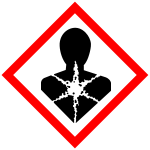
    Signal word

    Warning

    Hazard statement(s)

    H302 Harmful if swallowed

    H319 Causes serious eye irritation

    H335 May cause respiratory irritation

    H336 May cause drowsiness or dizziness

    H373 May cause damage to organs through prolonged or repeated exposure

    H411 Toxic to aquatic life with long lasting effects

    Precautionary statement(s)
    Prevention

    P264 Wash ... thoroughly after handling.

    P270 Do not eat, drink or smoke when using this product.

    P280 Wear protective gloves/protective clothing/eye protection/face protection/hearing protection/...

    P261 Avoid breathing dust/fume/gas/mist/vapours/spray.

    P271 Use only outdoors or in a well-ventilated area.

    P260 Do not breathe dust/fume/gas/mist/vapours/spray.

    P273 Avoid release to the environment.

    Response

    P301+P317 IF SWALLOWED: Get medical help.

    P330 Rinse mouth.

    P305+P351+P338 IF IN EYES: Rinse cautiously with water for several minutes. Remove contact lenses, if present and easy to do. Continue rinsing.

    P304+P340 IF INHALED: Remove person to fresh air and keep comfortable for breathing.

    P319 Get medical help if you feel unwell.

    P391 Collect spillage.

    Storage

    P403+P233 Store in a well-ventilated place. Keep container tightly closed.

    P405 Store locked up.

    Disposal

    P501 Dispose of contents/container to an appropriate treatment and disposal facility in accordance with applicable laws and regulations, and product characteristics at time of disposal.

    Other hazards which do not result in classification

    no data available

    Handling and Storage

    Precautions for safe handling

    Handling in a well ventilated place. Wear suitable protective clothing. Avoid contact with skin and eyes. Avoid formation of dust and aerosols. Use non-sparking tools. Prevent fire caused by electrostatic discharge steam.

    Conditions for safe storage, including any incompatibilities

    Store in an area without drain or sewer access. Provision to contain effluent from fire extinguishing.You should store this material under ambient temperatures.

  • Seller Information
    Business Type:

    Trader

    Main Products:

    Food additives,Pharmaceutical raw materials,Chemicals,Comestic raw materials

    Location:

    Room 501, Unit 6, No. 40, hushan road,Licang,Qingdao

    Payment Terms:

    TT against copy of documents,TT against B/L draft before shipment,100% TT in advance

    Average lead Time:

    10

    Total Annual Revenue:

    $1 million-$2.5 million

    Total Employees:

    11-50

    Year of Establishment:

    2017

    QINGDAO EASTCHEMSORCES TRADE LIMITED is a leading Manufactory supplier of Sorbitol, Citric acid, Sodium hypochlorite based in Qingdao, Shandong, China. With a commitment to quality and customer satisfaction, QINGDAO EASTCHEMSORCES TRADE LIMITED has become a trusted name in the industry. Our product line includes a range of high-quality Sorbitol, Citric acid, Sodium hypochlorite, which are available at competitive prices. QINGDAO EASTCHEMSORCES TRADE LIMITED has established itself as a reliable supplier of chemical products on the echemi.com.

  • Country Product Purchase Quantity Date Posted
    Post an enquiry for this product
pic ×

Scan the QR Code to Share

All products displayed on this website are only for non-medical purposes such as industrial applications or scientific research, and cannot be used for clinical diagnosis or treatment of humans or animals. They are not medicinal or edible.

According to relevant laws and regulations and the regulations of this website, units or individuals who purchase hazardous materials should obtain valid qualifications and qualification conditions.

The information shown above is provided by the enterprise itself, and the authenticity, accuracy and legitimacy of the content are the responsibility of the publishing company. ECHEMI does not bear any guarantee responsibility for this. Please be aware that risks in internet transactions objectively exist.

Feedback & Suggestions
Send Message

Thank you for your feedback. If you require further assistance, please contact us by email at info@echemi.com or call us at +86-532-55729510.