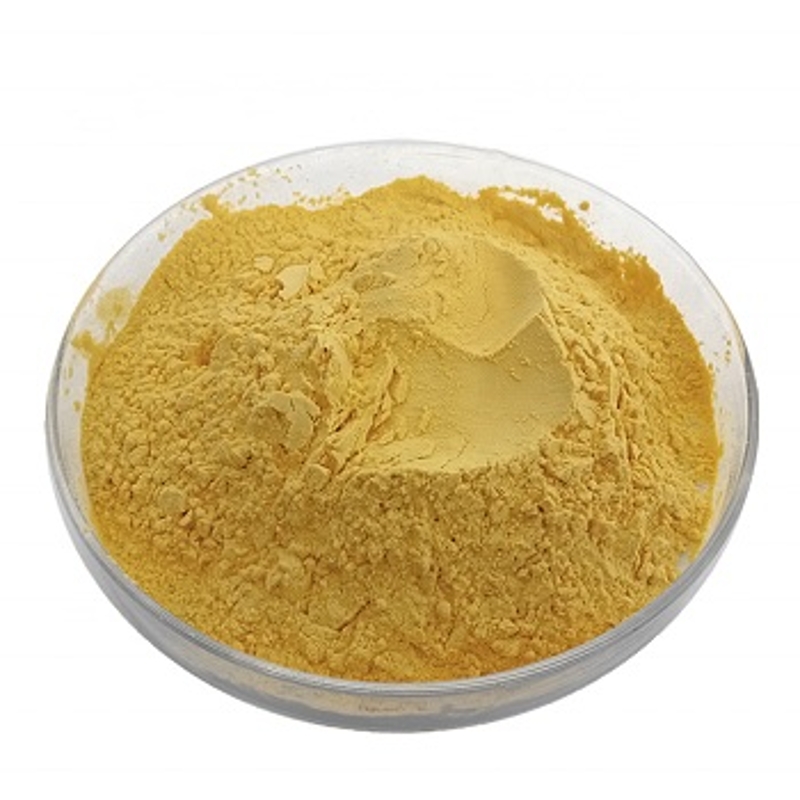
Hot Selling Top quality Copper(II) sulfate with best price CAS 7758-98-7
48 Inquiries
7758-98-7
Agricultural Grade
46%
Texas
TRN TRADER
25kg
Yes
2025-04-10
Fertilisers,Water Traitement,Ferro Alloys,Chemicals
-
Product Description
-
Seller Information
-
Inquiry History
-
DescriptionECHEMI Editorial ReferenceCupric sulfate appears as a white or off-white solid. Melting point 200°C with decomposition. Non-combustible.|Copper(II) sulfate is a metal sulfate compound having copper(2+) as the metal ion. It has a role as a sensitiser, a fertilizer and an emetic. It contains a copper(2+).|Cupric sulfate is a salt created by treating cupric oxide with sulfuric acid. This forms as large, bright blue crystals containing five molecules of water (CuSO4∙5H2O) and is also known as blue vitriol. The anhydrous salt is created by heating the hydrate to 150 °C (300 °F). Cupric sulfate is used primarily for agricultural purposes, as a pesticide, germicide, feed additive, and soil additive. Some of its secondary uses are as a raw material in the preparation of other copper compounds, as a reagent in analytic chemistry, as an electrolyte for batteries and electroplating baths, and in medical practice as a locally applied fungicide, bactericide, and astringent. Copper is an essential trace element and an important catalyst for heme synthesis and iron absorption. After zinc and iron, copper is the third most abundant trace element found in the human body. Copper is a noble metal and its properties include high thermal and electrical conductivity, low corrosion, alloying ability, and malleability. Copper is a component of intrauterine contraceptive devices (IUD) and the release of copper is necessary for their important contraceptive effects. The average daily intake of copper in the USA is approximately 1 mg Cu with the diet being a primary source. Interestingly, the dysregulation of copper has been studied with a focus on neurodegenerative diseases, such as Wilson’s disease, Alzheimer’s disease, and Parkinson’s disease. Data from clinical observations of the neurotoxic effects of copper may provide the basis for future treatments affecting copper and its homeostasis.|Copper is an essential trace element that is included in some over-the-counter multivitamin and mineral supplements, even though copper deficiency is quite rare and supplementation is rarely needed. The amounts of copper found in typical supplements has not been associated with serum enzyme elevations or with clinically apparent liver injury. However, accidental or intentional copper overdose can cause an acute liver injury and chronic ingestion of excessive amounts of copper can result in copper overload and chronic liver injury.|A sulfate salt of copper. It is a potent emetic and is used as an antidote for poisoning by phosphorus. It also can be used to prevent the growth of algae.Basic Info
-
Product Name:
Copper sulfate
Other Name:Sulfuric acid copper(2+) salt (1:1);Copper(2+) sulfate (1:1);Blue stone;Blue vitriol;Cupric sulfate;Cupric sulfate anhydrous;Cupric sulphate;Roman vitriol;Copper sulfate (CuSO4);Copper(II) sulfate;Copper sulfate;Copper monosulfate;Copper sulfate (1:1);Copper(2+) sulfate;Blue Copper;Incracide E 51;Incracide 10A;Hylinec;Monocopper sulfate;MAC 570;Cuivrol;Delcup;Bluestone;EarthTec;Sulfuric acid,copper(2+) salt (1:1);Mastercop;Upinorg;Reducer Cu;Baijunling;Black blue stone;Sulfuric acid,monocopper(1+) salt;XWHGS 005;131540-94-8;139939-69-8
CAS No.:7758-98-7
Molecular Formula:CuSO4
InChIKeys:ARUVKPQLZAKDPS-UHFFFAOYSA-L
Molecular Weight:159.61
Exact Mass:248.934158
EC Number:231-847-6
UNII:KUW2Q3U1VV
ICSC Number:0751
UN Number:3288|3077
DSSTox ID:DTXSID6034479
Color/Form:Grayish-white to greenish-white rhombic crystals or amorphous powder /SRP: somewhat wet/; White when dehydrated; Gray to white and has rhombic crystals
ATC Code:V - Various
HScode:2833250000
Categories:
Characteristics-
PSA:
88.6
Physical Properties:Cupric sulfate appears as a white or off-white solid. Melting point 200 °C with decomposition. Non-combustible.; Dry Powder; Large Crystals; Liquid; Liquid; Other Solid; Dry Powder; Wet Solid; Large Crystals; Dry Powder; Wet Solid; CBI; Grayish-white to greenish-white solid; Hygroscopic; Soluble in water; [Merck Index] White odorless crystalline solid; Soluble in water (316 g/L at 20 deg C); [MSDSonline]; WHITE HYGROSCOPIC CRYSTALS.
XLogP3:-0.25970
Appearance:Slightly greenish to gray powder
Density:2.29 at 59 °F (USCG, 1999) - Denser than water; will sink; 3.6; 3.6 g/cm³; 3.6 @25 °C
Melting Point:590; 590 °C decomp
Boiling Point:650; 650 °C (decomp to cupric oxide)
Refractive Index:INDICES OF REFRACTION: 1.733, 1.724, 1.739
Water Solubility:Very soluble in hot water, soluble cold water; Soluble in methanol (1.1 g/100 ml), but insoluble in ethanol; it readily dissolves in aqueous ammonia and excess alkali metal cyanides, with the formation of complexes; In water, 243 g/l @ 0 °C.; 75.4 g/100 cc water @ 100 °C; 1.04 g/100 cc methanol @ 18 °C; Solubility in water, g/l at 20 °C: 203 (freely soluble)
Storage Conditions:KEEP TIGHTLY CLOSED.
Vapor Pressure:7.3 mm Hg ( 25 °C)
Toxicity:For healthy, non-occupationally-exposed humans the major route of exposure to copper is oral. The mean daily dietary intake of copper in adults ranges between 0.9 and 2.2 mg. ... In some cases, drinking water may make a substantial additional contribution to the total daily intake of copper, particularly in households where corrosive waters have stood in copper pipes. ... All other intakes of copper (inhalation and dermal) are insignificant in comparison to the oral route. Inhalation adds 0.3-2.0 ug/day from dusts and smoke. Women using copper IUDs are exposed to only 80ug or less of copper per day from this source. The homeostasis of copper involves the dual essentiality and toxicity of the element. Its essentiality arises from its specific incorporation into a large number of proteins for catalytic and structural purposes. The cellular pathways of uptake, incorporation into protein and export of copper are conserved in mammals and modulated by the metal itself. Copper is mainly absorbed through the gastrointestinal tract. From 20 to 60% of the dietary copper is absorbed, with the rest being excreted through the feces. Once the metal passes through the basolateral membrane it is transported to the liver bound to serum albumin. The liver is the critical organ for copper homeostatis. The copper is partitioned for excretion through the bile or incorporation into intra- and extracellular proteins. The primary route of excretion is through the bile. The transport of copper to the peripheral tissues is accomplished through the plasma attached to serum albumin, ceruloplasmin or low-molecular weight complexes. ... The biochemical toxicity of copper, when it exceeds homeostatic control, is derived from its effects on the structure and function of biomolecules, such as DNA, membranes and proteins directly or through oxygen-radical mechanisms. The toxicity of a single oral dose of copper varies widely between species. ... The major soluble salts (copper(II) sulfate, copper(II) chloride) are generally more toxic than the less soluble salts (copper(II) hydroxide, copper (II) oxide). Death is preceded by gastric hemorrhage, tachycardia, hypotension, hemolytic crisis, convulsions and paralysis. ... Long-term exposure in rats and mice showed no overt signs of toxicity other than a dose-related reduction in growth after ingestion ... The effects included inflammation of the liver and degeneration of kidney tubule epithelium. ... Some testicular degeneration and reduced neonatal body and organ weights were seen in rats ... and fetotoxic effects and malformations were seen at high dose levels. ... Neurochemical changes have been reported after oral administration ... A limited number of immunotoxicity studies showed humoral and cell-mediated immune function impairment in mice after oral intakes in drinking-water ... Copper is an essential element and adverse health effects /in humans/ are related to deficiency as well as excess. Copper deficiency is associated with anemia, neutropenia and bone abnormalities but clinically evident deficiency is relatively infrequent in humans. .. Except for occasional acute incidents of copper poisoning, few effects are noted in normal /human/ populations. Effects of single exposure following suicidal or accidental oral exposure have been reported as metallic taste, epigastric pain, headache, nausea, dizziness, vomiting and diarrhea, tachycardia, respiratory difficulty, hemolytic anemia, hematuria, massive gastrointestinal bleeding, liver and kidney failure, and death. Gastrointestinal effects have also resulted from single and repeated ingestion of drinking-water containing high copper concentrations, and liver failure has been reported following chronic ingestion of copper. Dermal exposure has not been associated with systemic toxicity but copper may induce allergic responses in sensitive individuals. Metal fume fever from inhalation of high concentrations in the air in occupational settings have been reported ... A number of groups are described where apparent disorders in copper homeostasis result in greater sensitivity to copper deficit or excess than the general population. Some disorders have a well-defined genetic basis. These include Menkes disease, a generally fatal manifestation of copper deficiency; Wilson disease (hepatolenticular degeneration), a condition leading to progressive accumulation of copper; and hereditary aceruloplasminemia, with clinical symptoms of copper overload. Indian childhood cirrhosis and idiopathic copper toxicosis are conditions related to excess copper which may be associated with genetically based copper sensitivity ... These are fatal conditions in early childhood where copper accumulates in the liver. ... Other groups potentially sensitive to copper excess are hemodialysis patients and subjects with chronic liver disease. Groups at risk of copper deficiency include infants (particularly low birth weight/preterm babies, children recovering from malnutrition, and babies fed exclusively with cow's milk), people with maladsorption syndrome (e.g., celiac disease, sprue, cystic fibrosis), and patients on total parenteral nutrition. Copper deficiency has been implicated in the pathogenesis of cardiovascular disease. The adverse effects of copper must be balanced against its essentiality. Copper is an essential element for all biota ... At least 12 major proteins require copper as an integral part of their structure. It is essential for the utilization of iron in the formation of hemoglobin, and most crustaceans and molluscs possess the copper-containing hemocyanin as their main oxygen-carrying blood protein. ... A critical factor in assessing the hazard of copper is its bioavailablity. Adsorption of copper to particles and complexation by organic matter can greatly limit the degree to which copper will be accumulated ... At many sites, physiochemical factors limiting bioavailability will warrant higher copper limits. ... Excess copper is sequestered within hepatocyte lysosomes, where it is complexed with metallothionein. Copper hepatotoxicity is believed to occur when the lysosomes become saturated and copper accumulates in the nucleus, causing nuclear damage. This damage is possibly a result of oxidative damage, including lipid peroxidation. Copper inhibits the sulfhydryl group enzymes such as glucose-6-phosphate 1-dehydrogenase, glutathione reductase, and paraoxonases, which protect the cell from free oxygen radicals. It also influences gene expression and is a co-factor for oxidative enzymes such as cytochrome C oxidase and lysyl oxidase. In addition, the oxidative stress induced by copper is thought to activate acid sphingomyelinase, which lead to the production of ceramide, an apoptotic signal, as well as cause hemolytic anemia. Copper-induced emesis results from stimulation of the vagus nerve. (L277, T49, A174, L280) No indication of carcinogenicity to humans (not listed by IARC). People must absorb small amounts of copper every day because copper is essential for good health, however, high levels of copper can be harmful. Very-high doses of copper can cause damage to your liver and kidneys, and can even cause death. Copper may induce allergic responses in sensitive individuals. (L278, L279) The substance can be absorbed into the body by inhalation of its aerosol and by ingestion. Oral (L277) ; inhalation (L277) ; dermal (L277) Cough. Sore throat. Redness. Pain. Redness. Pain. Blurred vision. Abdominal pain. Burning sensation. Nausea. Vomiting. Diarrhoea. Shock or collapse. Breathing high levels of copper can cause irritation of the nose and throat. Ingesting high levels of copper can cause nausea, vomiting, diarrhea, headache, dizziness, and respiratory difficulty. (L278, L279) Chemical: COPPER SULFATE Occupational hepatotoxin - Secondary hepatotoxins: the potential for toxic effect in the occupational setting is based on cases of poisoning by human ingestion or animal experimentation. Methemo
Odor:Pleasant odor
Experimental Properties:On heating dec above 560 degree|Hydroscopic, with conversion to the pentahydrate in moist air below 30 °C|Dielectric constant: 10.3 @ 17 to 22 °C
Air and Water Reactions:Soluble in water.
Reactive Group:Salts, Acidic
Reactivity Profile:Anhydrous CUPRIC SULFATE serves as a weak oxidizing agent. Causes hydroxylamine to ignite. Gains water readily. The hydrated salt is vigorously reduced by hydroxylamine [Mellor 8:292(1946-1947)]. Both forms are incompatible with finely powdered metals. Both are incompatible with magnesium, corrode steel and iron, may react with alkalis, phosphates, acetylene gas, hydrazine, or nitromethane, and may react with beta-naphthol, propylene glycol, sulphathiazole and triethanolamine if the pH exceeds 7 (NTP, 1992). Both act as acidic salts, corrode metals and irritate tissues.
Autoignition Temperature:Not flammable (USCG, 1999)
Hazard IdentificationClassification of the substance or mixture
Acute toxicity - Category 4, Oral
Skin irritation, Category 2
Eye irritation, Category 2
Hazardous to the aquatic environment, short-term (Acute) - Category Acute 1
Hazardous to the aquatic environment, long-term (Chronic) - Category Chronic 1
GHS label elements, including precautionary statements
Pictogram(s) 
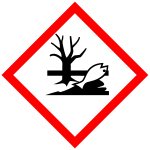
Signal word Warning
Hazard statement(s) H302 Harmful if swallowed
H315 Causes skin irritation
H319 Causes serious eye irritation
H410 Very toxic to aquatic life with long lasting effects
Precautionary statement(s) Prevention P264 Wash ... thoroughly after handling.
P270 Do not eat, drink or smoke when using this product.
P280 Wear protective gloves/protective clothing/eye protection/face protection/hearing protection/...
P273 Avoid release to the environment.
Response P301+P317 IF SWALLOWED: Get medical help.
P330 Rinse mouth.
P302+P352 IF ON SKIN: Wash with plenty of water/...
P321 Specific treatment (see ... on this label).
P332+P317 If skin irritation occurs: Get medical help.
P362+P364 Take off contaminated clothing and wash it before reuse.
P305+P351+P338 IF IN EYES: Rinse cautiously with water for several minutes. Remove contact lenses, if present and easy to do. Continue rinsing.
P391 Collect spillage.
Storage none
Disposal P501 Dispose of contents/container to an appropriate treatment and disposal facility in accordance with applicable laws and regulations, and product characteristics at time of disposal.
Other hazards which do not result in classification
no data available
Handling and StoragePrecautions for safe handling
Handling in a well ventilated place. Wear suitable protective clothing. Avoid contact with skin and eyes. Avoid formation of dust and aerosols. Use non-sparking tools. Prevent fire caused by electrostatic discharge steam.
Conditions for safe storage, including any incompatibilities
Well closed. Dry.KEEP TIGHTLY CLOSED.
-
-
Seller Information
-
Business Type:
Manufactory
-
Main Products:
Fertilisers,Water Traitement,Ferro Alloys,Chemicals
-
Location:
5312 State Highway 121
-
Payment Terms:
TT against copy of documents,D/P,L/C,D/A,O/A,TT against B/L draft before shipment,100% TT in advance
-
Average lead Time:
7 days
-
Total Annual Revenue:
$10 million-$25 million
-
Total Employees:
51-100
-
Year of Establishment:
2017
Company Certificates-
 Company Registration
-
 US Tax Clearance 2024
-
 Trade conformity
-
 ACCREDITION
-
-
Inquiry History48 Inquiries
Country Product Purchase Quantity Date Posted  Zambia
Copper Sulphate
500 PCS Feb 25, 2026  Australia
Copper Sulfate
20 MT Feb 5, 2026  India
India
Copper Sulphate
1000 KG Jan 6, 2026
India
Rad copper sulphate
1 KG Dec 8, 2025
India
copper sulphate
200 G Dec 8, 2025  Malaysia
copper sulfate
1 MT Sep 12, 2025
India
Sulfuric acidcopper(2+) salt (1:1)
50 MT Sep 8, 2025
India
Copper sulphate 25%
250.00 KG Aug 11, 2025  Vietnam
Copper Sulphate - CuSO4
24 TON Jun 6, 2025  Egypt
Egypt
copper sulfate
1 MT May 22, 2025
Egypt
copper sulfate
10 MT May 18, 2025  Zimbabwe
Copper Sulphate
1 TON Apr 21, 2025
India
copper sulfate
50.00 KG Apr 7, 2025  United States
copper sulphate
1000 TON Mar 11, 2025  Thailand
Copper sulfate
25 KG Feb 17, 2025  Saudi Arabia
Cupric sulfate
1 KG Feb 10, 2025  Kampuchea (Cambodia )
Copper sulfate
1.88 TON Nov 20, 2024
Kampuchea (Cambodia )
Copper Sulfate
1.88 TON Nov 19, 2024
India
COPPER SULPHATE CRYSTAL
20.00 MT Oct 21, 2024  Slovakia
Request for Quotation – Supply of Chemicals in max. 30 kg Bags on Pallets
150 MT Sep 4, 2024 Post an enquiry for this product


More from this Seller
-
-

-
99% Purity of BAC Water CAS-7732-18-5 Wholesale Price
Agricultural Grade / 98%
-
-
-

-
Plant Linear Alkyl Benzene Sulfonic Acid Factory Supply 96% LABSA
Industrial Grade / 98%
-
-
-

-
Hot Sale Maleic Anhydride 99.98% white briquete
Industrial Grade / 98%
-
-
-

-
Raw Materials Surfactant AES28% Sodium Lauryl Ether Sulphate SLES 28% Texapon 28%
Agricultural Grade / 46%
-



Hot Related Products
-
 Waste water Treatment Chemicals
 -
 TCCA 90% Trichloroisocyanuric Acid
 -
 Sodium Lauryl Ether Sulphate - SLES 70%
$1000-1300/MT EXW
-
 Aluminum chlorohydrate supplier
 -
 TCCA 90% Trichloroisocyanuric Acid Chlorine Tablet Granular Powder for swimming pool
 -
 Industry/Food-grade Poly Aluminum Chloride20%-30% For water treatment Additive
$235.22/MT EXW
-
 Sodium Hypochlorite 1
 -
 Sodium hypochlorite 99% Light yellow liquid ZSHHY-7681-52-9 SHANDONG ZHISHANG CHEMICAL
 -
 Hope--Zinc oxide
 -
 SLES 70%-Batong