Benomyl Broad-Spectrum Systemic Fungicide for Agricultural and Horticultural Use
COA
17804-35-2
Industrial Grade
50%
Durban Port
UMGS
Available in 100g, 500g, 1kg sachets; 25kg fiber drums or as per client requirements
2025-06-16

Chemicals bulk
-
Product Description
-
Seller Information
-
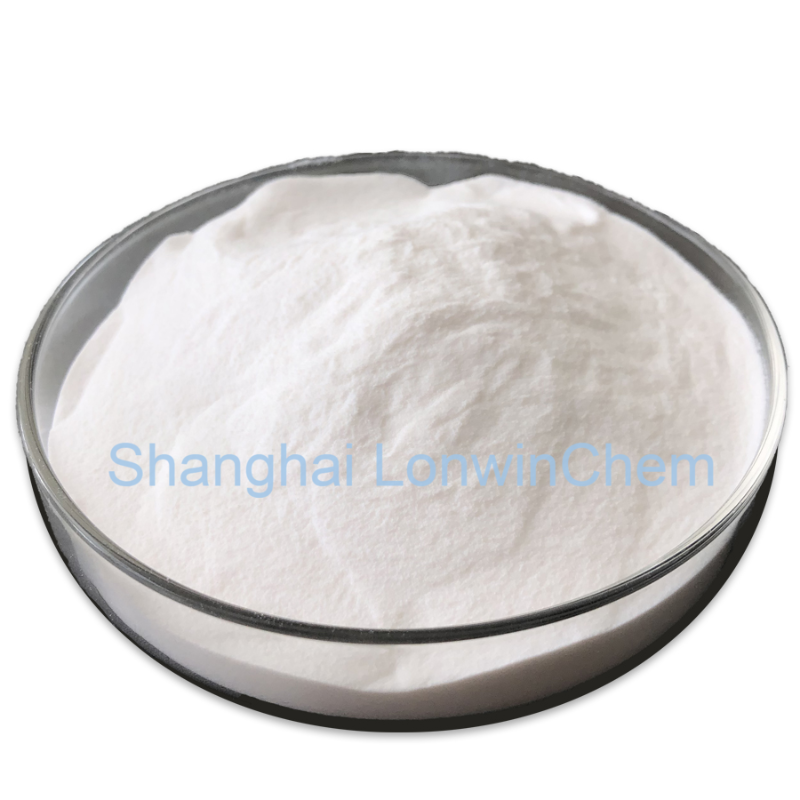
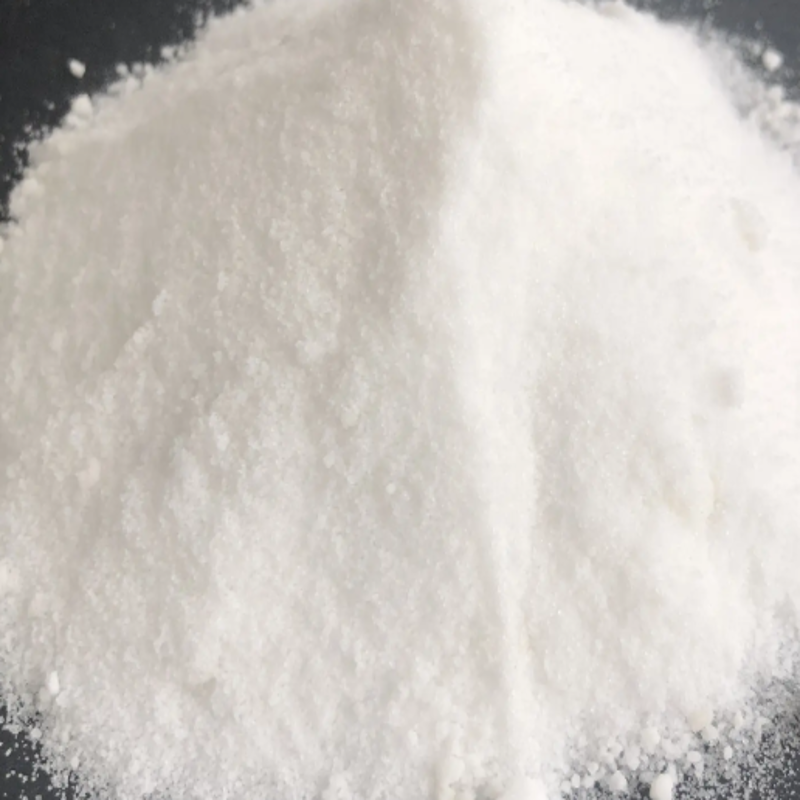
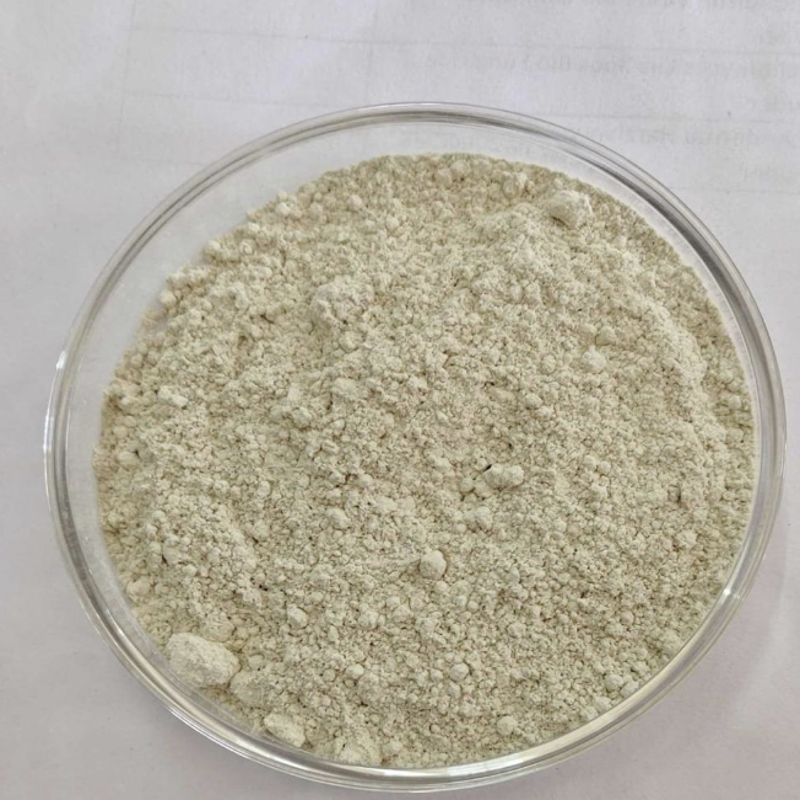
DescriptionECHEMI Editorial ReferenceBenomyl is a white crystalline solid. Faint acridodor.ChEBI: A member of the class of benzimidazoles that is the methyl ester of [1-(butylcarbamoyl)-1H-benzimidazol-2-yl]carbamic acid. A foliar fungicide used to control a wide range of Ascomycetes and Fungi Imperfecti ina wide range of crops.Benomyl, a tan-coloured crystalline solid/powder, is a systemic fungicide with a characteristicodour.Benomyl is a systemic and broad-spectrum fungicide that is currently registered for usein more
Benomyl appears as colorless to white crystals or off-white powder. Faint acrid odor. (NTP, 1992)|Solid|WHITE CRYSTALLINE POWDER WITH CHARACTERISTIC ODOUR.|White crystalline solid with a faint, acrid odor.|White crystalline solid with a faint, acrid odor. [fungicide] [Note: Decomposes without melting above 572°F.]
Benomyl appears as colorless to white crystals or off-white powder. Faint acrid odor. (NTP, 1992)|Benomyl is a member of the class of benzimidazoles that is the methyl ester of [1-(butylcarbamoyl)-1H-benzimidazol-2-yl]carbamic acid. A foliar fungicide used to control a wide range of Ascomycetes and Fungi Imperfecti in a wide range of crops. It has a role as an anthelminthic drug, a tubulin modulator, a microtubule-destabilising agent, an acaricide and an antifungal agrochemical. It is a member of benzimidazoles, a carbamate ester, an aromatic amide, a benzimidazole fungicide and a benzimidazolylcarbamate fungicide.|A systemic agricultural fungicide used for control of certain fungal diseases of stone fruit.CertificatesBasic Info-
Product Name:
Benomyl
Other Name:Carbamic acid,N-[1-[(butylamino)carbonyl]-1H-benzimidazol-2-yl]-,methyl ester;2-Benzimidazolecarbamic acid,1-(butylcarbamoyl)-,methyl ester;Carbamic acid,[1-[(butylamino)carbonyl]-1H-benzimidazol-2-yl]-,methyl ester;Fungicide D-1991;Methyl 1-(butylcarbamoyl)-2-benzimidazolecarbamate;Methyl 1-(butylcarbamoyl)-2-benzimidazolylcarbamate;Benomyl;Benlate 50W;BBC;Benlate;Du Pont 1991;Benlate 50;Fundazol;NS 02 (fungicide);MBC;Uzgen;Tersan 1991;BC 6597;Fungochrom;Agrocit;NS 02;Benomyl-Imex;Fundazol 50WP;Kribenomyl;Benomil;Zetamil;NSC 263489;Marvel;Safomyl;Benlate WP;Benlate 50WP;Benfungin;Benfungin WP;Minelate 50WG;39357-40-9;52683-56-4;1135441-25-6
CAS No.:17804-35-2
Molecular Formula:C14H18N4O3
InChIKeys:InChIKey=RIOXQFHNBCKOKP-UHFFFAOYSA-N
Molecular Weight:290.32
Exact Mass:290.32
EC Number:241-775-7
UNII:TLW21058F5
ICSC Number:0382
NSC Number:263489
UN Number:3077|2757
DSSTox ID:DTXSID5023900
Color/Form:White crystalline solid [Note: Decomposes without melting above 572 degrees F].
HScode:29339900
Categories:
Characteristics-
PSA:
85.2
XLogP3:2.12
Appearance:Colorless Solid
Density:0.38 g/cm³
Melting Point:140 °C (decomp)
Boiling Point:Decomposes
Refractive Index:1.6000 (estimate)
Water Solubility:H2O: <0.1 g/100 mL at 20 ºC
Storage Conditions:APPROX 4°C
Vapor Pressure:Vapour pressure, Pa at 25°C: (negligible)
Toxicity:Oral-Rat LD50: 10000 mg/kg; Oral-Mouse LD50: 5600 mg/kg
Flammability characteristics:Flammable; burning produces toxic nitrogen oxide gas
Explosive limit:vol% in air: 0.05
Odor:Faint, acrid odor.
Henrys Law Constant:4.93e-12 atm-m3/mole|Henry's Law constant = 4.93X10⁻¹² atm-cu m/mole @ 25 °C
Collision Cross Section:190.14 Ų [M+HCOO]-
Experimental Properties:In some solvents dissociation occurs to form carbendazim and butyl isocyanate. ... Decomposed by strong acids and strong alkalis.|OPTIMAL PH FOR HYDROXYLATION WAS BETWEEN PH 7.0 & 8.0, & @ ABOUT 8.0 FOR ESTER CLEAVAGE; BUTYLCARBAMOYL SIDE CHAIN WAS STABLE @ PH 7.5 BUT BECAME INCREASINGLY LABILE WITH INCREASING ACIDITY.|DECOMP WITHOUT MELTING.|IN AQ SOLN, BENOMYL DECOMPOSES TO METHYL N-(2-BENZIMIDAZOLYL) CARBAMATE & THE ETHYL ANALOG.
Air and Water Reactions:Insoluble in water.
Reactive Group:Amides and Imides
Reactivity Profile:BENOMYL is incompatible with strong acids, peroxides and strong oxidizers. Decomposed by strong alkalis. Also decomposes on storage with water (NTP, 1992).
Autoignition Temperature:428 °F (NTP, 1992)|220 °C
Flammable Limits:Noncombustible Solid
Physical Dangers:Dust explosion possible if in powder or granular form, mixed with air.
Corrosivity:NON-CORROSIVE TO METALS
Hazard IdentificationClassification of the substance or mixture
Skin irritation, Category 2
Skin sensitization, Category 1
Specific target organ toxicity â single exposure, Category 3
Germ cell mutagenicity, Category 1B
Hazardous to the aquatic environment, short-term (Acute) - Category Acute 1
Hazardous to the aquatic environment, long-term (Chronic) - Category Chronic 1
Reproductive toxicity, Category 1B
GHS label elements, including precautionary statements
Pictogram(s) 
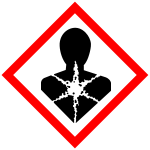
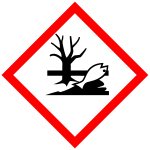
Signal word Danger
Hazard statement(s) H315 Causes skin irritation
H317 May cause an allergic skin reaction
H335 May cause respiratory irritation
H340 May cause genetic defects
H410 Very toxic to aquatic life with long lasting effects
Precautionary statement(s) Prevention P264 Wash ... thoroughly after handling.
P280 Wear protective gloves/protective clothing/eye protection/face protection/hearing protection/...
P261 Avoid breathing dust/fume/gas/mist/vapours/spray.
P272 Contaminated work clothing should not be allowed out of the workplace.
P271 Use only outdoors or in a well-ventilated area.
P203 Obtain, read and follow all safety instructions before use.
P273 Avoid release to the environment.
Response P302+P352 IF ON SKIN: Wash with plenty of water/...
P321 Specific treatment (see ... on this label).
P332+P317 If skin irritation occurs: Get medical help.
P362+P364 Take off contaminated clothing and wash it before reuse.
P333+P317 If skin irritation or rash occurs: Get medical help.
P304+P340 IF INHALED: Remove person to fresh air and keep comfortable for breathing.
P319 Get medical help if you feel unwell.
P318 IF exposed or concerned, get medical advice.
P391 Collect spillage.
Storage P403+P233 Store in a well-ventilated place. Keep container tightly closed.
P405 Store locked up.
Disposal P501 Dispose of contents/container to an appropriate treatment and disposal facility in accordance with applicable laws and regulations, and product characteristics at time of disposal.
Other hazards which do not result in classification
no data available
Handling and StoragePrecautions for safe handling
NO open flames. PREVENT DISPERSION OF DUST. Handling in a well ventilated place. Wear suitable protective clothing. Avoid contact with skin and eyes. Avoid formation of dust and aerosols. Use non-sparking tools. Prevent fire caused by electrostatic discharge steam.
Conditions for safe storage, including any incompatibilities
Separated from food and feedstuffs. Dry. Well closed. Store in an area without drain or sewer access. Provision to contain effluent from fire extinguishing.Decomposed on storage in contact with water.
-
-
Seller Information
-
Business Type:
Distributor
-
Main Products:
Chemicals bulk
-
Location:
1 WOODMEAD DR WOODMEAD SANDTON JOHANNESBURG GAUTENG 2191
-
Payment Terms:
TT against B/L draft before shipment,100% TT in advance
-
Year of Establishment:
2023
-
-
Country Product Purchase Quantity Date Posted Post an enquiry for this product