Manufacturer: Hangzhou Royalchem Co.,LTD.
Website: www.cnroyalchem.com
【 Providing a complete set of intermediates and impurities for Lifitegrast 】
【 Providing a complete set of intermediates and impurities for Lifitegrast 】
【 Providing a complete set of intermediates and impurities for Lifitegrast 】
Product Description: (R)-2-Amino-3-(3-bromophenyl)propanoic acid
Chemical Identification:
CAS Registry Number: 99292-78-0
IUPAC Name: (R)-2-Amino-3-(3-bromophenyl)propanoic acid
Common Synonyms:
(R)-3-(3-Bromophenyl)alanine
(R)-β-(3-Bromophenyl)-alanine
(R)-3-Bromo-DL-phenylalanine (Note: Often refers to racemic mix; specify (R))
(R)-2-Amino-3-(m-bromophenyl)propanoic acid
(R)-m-Bromo-DL-phenylalanine (Note: Often refers to racemic mix; specify (R))
H-(R)-3-BrPhe-OH (Common shorthand in peptide chemistry)
(R)-1-Amino-1-carboxyethyl-3-bromobenzene
Molecular Formula: C₉H₁₀BrNO₂
Molecular Weight: 244.09 g/mol
Structural Characteristics:
Core Structure: Non-proteinogenic α-amino acid derivative.
Backbone: Features the standard 2-amino propanoic acid (alanine) backbone.
Substituent: A bromine atom (Br) is attached to the meta position (position 3) of the phenyl ring side chain.
Stereochemistry: The chiral α-carbon atom has the (R)-configuration . This enantiomeric purity is critical for applications involving chiral recognition, asymmetric synthesis, or biological activity studies where stereochemistry matters.
Functional Groups: Contains both a carboxylic acid (-COOH) and a primary amino group (-NH₂), making it an α-amino acid capable of forming zwitterions. The aromatic ring bears a bromine substituent.
Physical Properties (Typical):
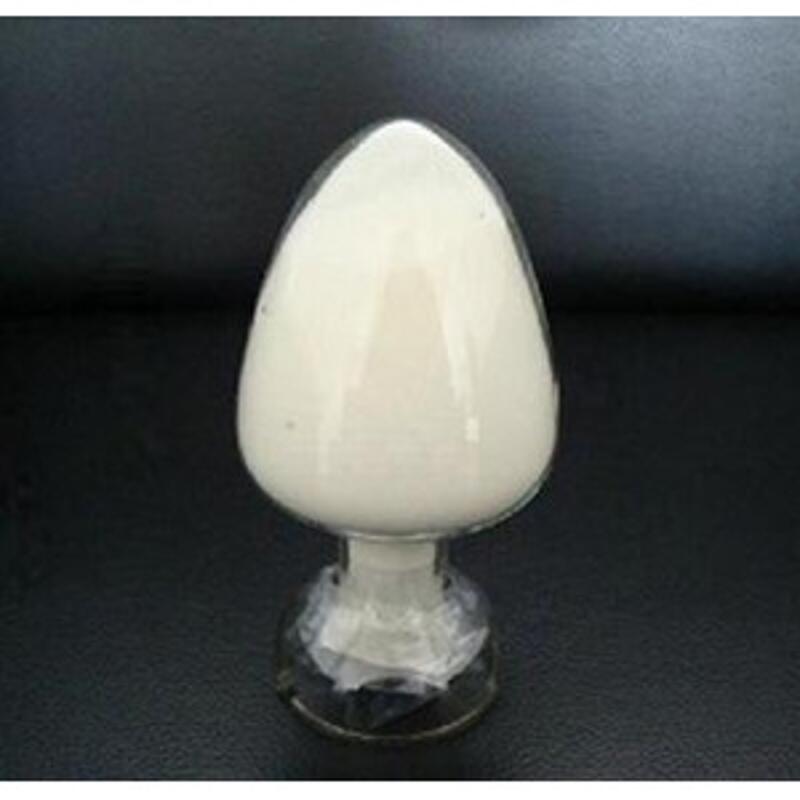
Appearance: White to off-white crystalline powder or solid.
Melting Point: Typically in the range of ~250-270 °C (decomposition may occur).
Solubility:
Slightly soluble to soluble in water (forms zwitterion).
Soluble in strong acids (e.g., dilute HCl) and strong bases (e.g., dilute NaOH).
Sparingly soluble or insoluble in most organic solvents (e.g., ethanol, methanol, acetone, ethyl acetate, diethyl ether, DCM). Solubility may improve in polar aprotic solvents like DMF or DMSO.
Optical Rotation: Exhibits a specific optical rotation (e.g., [α]D²⁵ = approx. +20° to +35° in 1M HCl, exact value depends on concentration, solvent, temperature, and purity ). A positive value is characteristic of the (R)-enantiomer under acidic conditions.
Hygroscopicity: May exhibit slight hygroscopicity.
Chemical Properties:
Acid/Base Behavior: Exists predominantly as a zwitterion (H₃N⁺-CH(R)-COO⁻) at physiological pH. The carboxylic acid (pKa ~2.2) and amino group (pKa ~9.5) can be protonated/deprotonated.
Reactivity: The amino group can participate in acylation (e.g., peptide bond formation), alkylation, and Schiff base formation. The carboxylic acid can undergo esterification, amidation, and salt formation. The aromatic bromine atom is moderately activated towards electrophilic aromatic substitution ( meta directing) and can participate in cross-coupling reactions (e.g., Suzuki, Sonogashira). The benzylic position may be susceptible to oxidation.
Applications:
Pharmaceutical Research: Key chiral building block for synthesizing peptidomimetics, bioactive peptides, and small molecule drug candidates targeting various diseases (e.g., CNS disorders, oncology, inflammation). The bromine atom serves as a versatile handle for further structural diversification via cross-coupling.
Medicinal Chemistry: Used to study structure-activity relationships (SAR), particularly the impact of a meta -bromo substituent on phenylalanine derivatives and the role of chirality in receptor binding or enzyme inhibition.
Peptide Chemistry: Incorporated into synthetic peptides to modify their structure, stability, lipophilicity, binding affinity, or to introduce a site for bioconjugation (via the bromine).
Chemical Biology: Probe molecule for studying enzyme mechanisms (e.g., aminoacyl-tRNA synthetases, decarboxylases, hydroxylases) or as a precursor for radiolabeled analogs.
Asymmetric Synthesis: Chiral synthon or auxiliary in stereoselective reactions.
Material Science: Potential monomer for specialty polymers.
Storage & Handling:
Storage Conditions: Store in a cool (< 25°C), dry place, protected from light and moisture. Ideally under inert atmosphere (e.g., nitrogen or argon) for long-term storage to prevent oxidation or racemization.
Stability: Stable under recommended storage conditions. May be sensitive to prolonged exposure to light, heat, strong oxidizing agents, strong acids, or strong bases. Potential for racemization under harsh conditions (high temp/pH).
Handling: Handle using standard laboratory safety practices. Use appropriate personal protective equipment (PPE) including gloves, safety glasses, and lab coat. Avoid inhalation of dust and contact with skin or eyes.
Safety Information (General - Consult SDS for Specifics):
Hazards: May cause skin, eye, or respiratory irritation. Harmful if swallowed.
Precautionary Statements: P261 (Avoid breathing dust/fume/gas/mist/vapours/spray), P280 (Wear protective gloves/protective clothing/eye protection/face protection), P305+P351+P338 (IF IN EYES: Rinse cautiously with water for several minutes. Remove contact lenses, if present and easy to do. Continue rinsing).
Safety Data Sheet (SDS): ALWAYS consult the specific, up-to-date Safety Data Sheet (SDS) provided by the supplier before handling for comprehensive hazard identification, first-aid measures, firefighting measures, accidental release measures, exposure controls, and disposal information.