




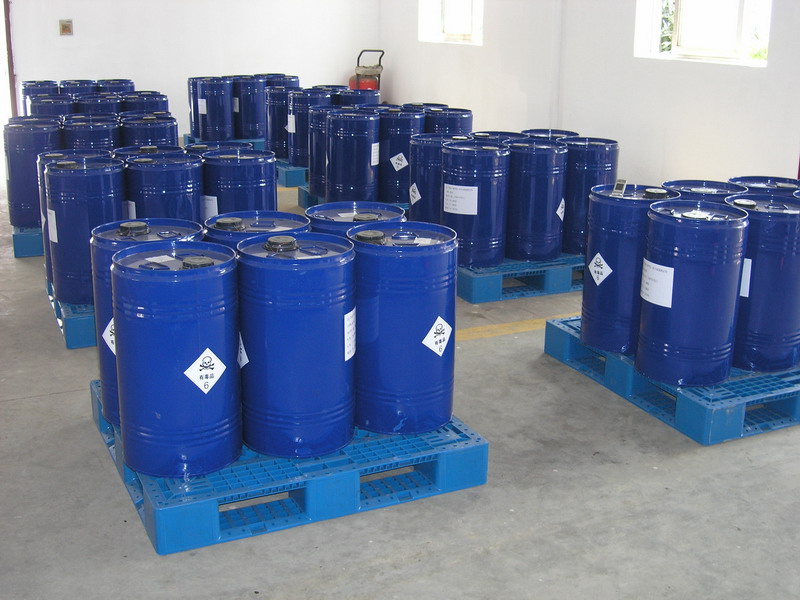


Tripropylene Glycol(24800-44-0)
1 Inquiries
24800-44-0
99%
shanghai
LUYUNJIA
200kg/barrel
Yes
2030-08-30

DIMETHYL SULFOXIDE,NMP,MMT
-
Product Description
-
Seller Information
-
Inquiry History
-
DescriptionECHEMI Editorial ReferenceTripropylene glycol is a water-white liquid. Soluble in water, methanol, ether. Combustible. One of its unique features is its combination of water-solubility and good solubility for many organic compounds. Because of high boiling point and low volatility it is used in the formulation of textile soaps, lubricants, cutting oils, and similar applications.
Tripropylene glycol is a colorless liquid. (USCG, 1999)|Liquid|ODOURLESS COLOURLESS LIQUID.
Tripropylene glycol is a colorless liquid. (USCG, 1999)Basic Info-
Product Name:
Tripropylene glycol
Other Name:((1-methyl-1,2-ethanediyl)bis(oxy))bis-propano;[(1-methyl-1,2-ethanediyl)bis(oxy)]bis-Propanol;Tripropylene glycol, 98%, mixture of isomers;2-(2-(2-hydroxypropoxy)propoxy)-1-propanol;2-(2-(2-hydroxypropoxy)propoxy-1-propanol;tripropyleneglycol,mixtureofisomers;Tripropyleneglycol,90%;Propanol, (1-methyl-1,2-ethanediyl)bis(oxy)bis-
CAS No.:24800-44-0
Molecular Formula:C9H20O4
InChIKeys:SNAJJYBUNRAGEF-UHFFFAOYSA-N
Molecular Weight:192.25
Exact Mass:192.136154
BRN:2235421
EC Number:246-466-0
UNII:5U049772F7
ICSC Number:1348
TSCA:TSCA listed
DSSTox ID:DTXSID7027837
Color/Form:Colorless to Light yellow
HScode:29094990
Categories:
Characteristics-
PSA:
58.92000
Chemical Properties:Reactivity with Water No reaction; Reactivity with Common Materials: May attack some forms of plastics and elastomers; Stability During Transport: Stable; Neutralizing Agents for Acids and Caustics: Not pertinent; Polymerization: Not pertinent; Inhibitor of Polymerization: Not pertinent.
XLogP3:-0.83
Appearance:Tripropylene glycol is a colorless liquid. (USCG, 1999)
Density:1.021 g/mL at 25 °C (lit.)
Melting Point:-45°C
Boiling Point:273 °C (lit.)
Flash Point:131.2±21.8 °C
Refractive Index:n20/D1.444(lit.)
Water Solubility:Miscible with water, methanol and ether.
Vapor Pressure:<0.01 mm Hg ( 25 °C)
Vapor Density:6.63 (vs air)
Flammability characteristics:Non flammable
Odor:Characteristic.
Henrys Law Constant:3.0×10⁹mol/(m3Pa) at 25℃, HSDB (2015)
Experimental Properties:1 PPM EQUIV TO 7.86 MG/CU M @ 25 °C, 760 MM HG|1 MG/L= 128 PPM|SUPERCOOLS INSTEAD OF FREEZING|Does not crystallize
Air and Water Reactions:Water soluble.
Reactive Group:Alcohols and Polyols
Reactivity Profile:Tripropylene glycol is a ether-alcohol derivative. The ether being relatively unreactive. Flammable and/or toxic gases are generated by the combination of alcohols with alkali metals, nitrides, and strong reducing agents. They react with oxoacids and carboxylic acids to form esters plus water. Oxidizing agents convert alcohols to aldehydes or ketones. Alcohols exhibit both weak acid and weak base behavior. They may initiate the polymerization of isocyanates and epoxides. May attack some forms of plastics [USCG, 1999].
Critical Temperature & Pressure:Store at room temperature, keep dry and cool
Hazard IdentificationClassification of the substance or mixture
Not classified.
GHS label elements, including precautionary statements
Pictogram(s) No symbol. Signal word No signal word
Hazard statement(s) none
Precautionary statement(s) Prevention none
Response none
Storage none
Disposal none
Other hazards which do not result in classification
no data available
Handling and StoragePrecautions for safe handling
NO open flames. Handling in a well ventilated place. Wear suitable protective clothing. Avoid contact with skin and eyes. Avoid formation of dust and aerosols. Use non-sparking tools. Prevent fire caused by electrostatic discharge steam.
Conditions for safe storage, including any incompatibilities
Well closed.
-
-
Seller Information
-
Business Type:
Distributor
-
Main Products:
DIMETHYL SULFOXIDE,NMP,MMT
-
Location:
NO3, Jiangtou West Road, Huli district, Xiamen
-
Payment Terms:
TT against copy of documents,L/C
-
Average lead Time:
7 days
-
Total Annual Revenue:
$5 million-$10 million
-
Total Employees:
5-10
-
Year of Establishment:
2016
-
-
Inquiry History1 Inquiries
Country Product Purchase Quantity Date Posted  Russia
Tripropylene Glycol
1 MT Oct 9, 2025 Post an enquiry for this product
- Hot Searches
- polyter price
- qingdao sigma chemical qsc
- sulfuric acid price
- hexane 3 4 dione
- where can i buy tirzepatide in bulk
- scrotal dermatitis
- where can i get retatrutide
- chemical data index
- high density polyethylene price
- ammonium nitrate prills
- retatrutide peptide supplier
- 3-methoxy benzoic acid
More from this Seller
-
-

-
Lactose 63-42-3
/ 99%
-
-
-
")
-
Poly Aluminium Chloride(101707-17-9)
industrial Grade / 99.5%
$650-690/MT FOB
-
-
-

-
Glycine 56-40-6
/ 99%
-
-
-
")
-
Sles70%(68585-34-2)
industrial Grade / 99.5%
$1500-1600/MT FOB
-


