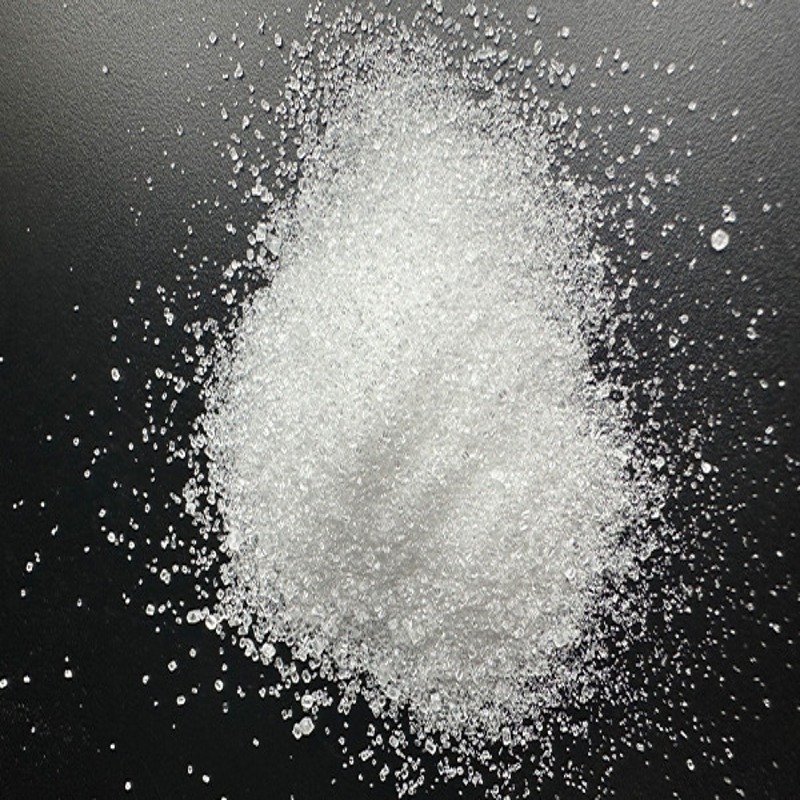
Ranitidine RC02808
2 Inquiries
66357-35-5
Pharmaceutical Grade
99%
Royalchem
25kg/drum
Yes
2029-12-31

Pharmaceutical intermediates
-
Product Description
-
Seller Information
-
Inquiry History
-
DescriptionECHEMI Editorial ReferenceSolid
Ranitidine is a commonly used drug, classified as a histamine H2-receptor antagonist, and belongs to the same drug class as [cimetidine] and [famotidine]. This drug helps to prevent and treat gastric-acid associated conditions, including ulcers, because of its ability to decrease gastric acid secretion. Ranitidine is often referred to as Zantac, and is available in various forms, including tablet, injection, and effervescent tablet preparations. The prevalence of GERD is thought to be 10-20% in western countries. Ranitidine has proven to be an effective treatment for relieving uncomfortable symptoms of gastric acid associated conditions and is therefore widely used in GERD and other gastric-acid related conditions.|Ranitidine is a Histamine-2 Receptor Antagonist. The mechanism of action of ranitidine is as a Histamine H2 Receptor Antagonist.|Ranitidine is a member of the class of histamine H2-receptor antagonists with antacid activity. Ranitidine is a competitive and reversible inhibitor of the action of histamine, released by enterochromaffin-like (ECL) cells, at the histamine H2-receptors on parietal cells in the stomach, thereby inhibiting the normal and meal-stimulated secretion of stomach acid. In addition, other substances that promote acid secretion have a reduced effect on parietal cells when the H2 receptors are blocked.|A non-imidazole blocker of those histamine receptors that mediate gastric secretion (H2 receptors). It is used to treat gastrointestinal ulcers.Basic Info-
Product Name:
Ranitidine
Other Name:1,1-Ethenediamine,N-[2-[[[5-[(dimethylamino)methyl]-2-furanyl]methyl]thio]ethyl]-N′-methyl-2-nitro-;N-[2-[[[5-[(Dimethylamino)methyl]-2-furanyl]methyl]thio]ethyl]-N′-methyl-2-nitro-1,1-ethenediamine;Ranitidine;Midaven;Zenetac;Ulcerit;Label;70956-04-6;80020-48-0;86386-78-9
CAS No.:66357-35-5
Molecular Formula:C13H22N4O3S
InChIKeys:InChIKey=VMXUWOKSQNHOCA-UHFFFAOYSA-N
Molecular Weight:314.4
Exact Mass:314.40
EC Number:266-332-5
UNII:884KT10YB7
NCI Thesaurus Code:C29412
ATC Code:A02BA02
HScode:2932999099
Categories:
Characteristics-
PSA:
112
XLogP3:1.93
Appearance:tan solid
Density:1.184±0.06 g/cm3(Predicted)
Melting Point:69-70 °C
Boiling Point:437.1ºC at 760 mmHg
Refractive Index:1.558
Water Solubility:H2O: 24.7 mg/mL
Storage Conditions:Desiccate at +4°C
Toxicity:LD50 oral in rat: > 5gm/kg
Odor:Characteristic
Taste:Bitter taste
Dissociation Constants:8.2 and 2.7
Hazard IdentificationClassification of the substance or mixture
Skin irritation, Category 2
Skin sensitization, Category 1
Eye irritation, Category 2
Respiratory sensitization, Category 1
GHS label elements, including precautionary statements
Pictogram(s) 

Signal word Danger
Hazard statement(s) H315 Causes skin irritation
H317 May cause an allergic skin reaction
H319 Causes serious eye irritation
H334 May cause allergy or asthma symptoms or breathing difficulties if inhaled
Precautionary statement(s) Prevention P264 Wash ... thoroughly after handling.
P280 Wear protective gloves/protective clothing/eye protection/face protection/hearing protection/...
P261 Avoid breathing dust/fume/gas/mist/vapours/spray.
P272 Contaminated work clothing should not be allowed out of the workplace.
P284 [In case of inadequate ventilation] wear respiratory protection.
Response P302+P352 IF ON SKIN: Wash with plenty of water/...
P321 Specific treatment (see ... on this label).
P332+P317 If skin irritation occurs: Get medical help.
P362+P364 Take off contaminated clothing and wash it before reuse.
P333+P317 If skin irritation or rash occurs: Get medical help.
P305+P351+P338 IF IN EYES: Rinse cautiously with water for several minutes. Remove contact lenses, if present and easy to do. Continue rinsing.
P304+P340 IF INHALED: Remove person to fresh air and keep comfortable for breathing.
P342+P316 If experiencing respiratory symptoms: Get emergency medical help immediately.
Storage none
Disposal P501 Dispose of contents/container to an appropriate treatment and disposal facility in accordance with applicable laws and regulations, and product characteristics at time of disposal.
Other hazards which do not result in classification
no data available
Handling and StoragePrecautions for safe handling
Handling in a well ventilated place. Wear suitable protective clothing. Avoid contact with skin and eyes. Avoid formation of dust and aerosols. Use non-sparking tools. Prevent fire caused by electrostatic discharge steam.
Conditions for safe storage, including any incompatibilities
Ranitidine hydrochloride tablets or soln should be stored in a dry place @ 15-30 deg C in tight, light-resistant containers. The oral soln should be stored in a tight, light-resistant container @ 4-25 deg C. Ranitidine hydrochloride injection and the commercially available injection of the drug in 0.45% sodium chloride should be protected from light and stored @ 4-30 deg C; however, it is preferable that the latter preparation be stored @ room temp (25 deg C), although brief exposure to temp up to 40 deg C will not adversely affect stability, and that freezing be avoided. Slight darkening of the injection will not affect potency. Ranitidine hydrochloride
-
-
Seller Information
-
Business Type:
Trader
-
Main Products:
Pharmaceutical intermediates
-
Location:
Room 336, Building 7, No. 177 Xingqiao North Road, Xingqiao Street, Linping District, Hangzhou
-
Payment Terms:
TT against copy of documents,D/P,L/C,TT against B/L draft before shipment,100% TT in advance
-
Average lead Time:
14 days
-
Total Annual Revenue:
Less than $1 million
-
Total Employees:
Less than 5
-
Year of Establishment:
2025
-
-
Inquiry History2 Inquiries
Country Product Purchase Quantity Date Posted  India
India
Ranitidine
1 KG Aug 12, 2025
India
Ranitidine
50 MT Apr 21, 2025 Post an enquiry for this product
More from this Seller
-
-

-
1,3-Adamantanediacetamide RC07643
Industrial Grade / 99%
$1/KG EXW
-
-
-

-
Potassium peroxymonosulfate RC03595
Industrial Grade / 99%
$3/KG EXW
-
-
-

-
Talniflumate RC02872
Pharmaceutical Grade / 99%
$1/KG EXW
-
-
-

-
Dihexa RC06999
Pharmaceutical Grade / 99%
$1/KG EXW
-
-
-
 RC03984")
-
Potassium hexachloroiridate(IV) RC03984
Industrial Grade / 99%
$1/KG EXW
-
-
-

-
Formamide RC06947
Industrial Grade / 99%
$1/KG EXW
-




Hot Related Products
-
 L-Cysteine 99.9% HAIDE Biotech
 -
 China one-stop supply N-acetyl-l-cysteine 99% / glycine 99% / L-cysteine 99% powder
 -
 Furfuryl alcohol 98-00-0
 -
 Supply Activated Carbon/CAS; 7440-44-0
 -
 L-Cysteine | CAS 52-90-4 | amino acid fortification
 -
 L-Cysteine CAS.52-90-4
 -
 L-cysteine manufacturer AJI
 -
 Powdered activated carbon 7440-44-0, activated carbon for waste incineration 64365-11-3, activated carbon decolorizing agent
 -
 L-Cysteine 99% White crystalline or powder waylead
 -
 Dimethyl sulfide 99% powder aly-75-18-3 lk