Name | Varenicline tartrate |
CAS number | 375815-87-5 |
Description | Varenicline is a partial agonist at the α4β2 subtype of neuronal nicotinic acetylcholine receptors (nAChRs), which are implicated in nicotine addiction. In vitro, it binds α4β2 nAChRs with subnanomolar affinity, producing moderate receptor activation and competitively inhibiting nicotine-induced depolarization and dopamine release. In vivo, administration in rodent and primate models reduces nicotine self-administration, decreases withdrawal symptoms, and lowers dopamine release in the nucleus accumbens, demonstrating both anti-craving and anti-reinforcement effects at doses of 0.1–1 mg/kg. |
Related CAS # | 375815-87-5 (tartrate) 866823-63-4 (HCl) 249296-44-4 (free base) |
Synonym | Varenicline tartrate; Chantix; Champix; HSDB7591; HSDB-7591; HSDB 7591; CP 526555; CP-526555; CP526555; |
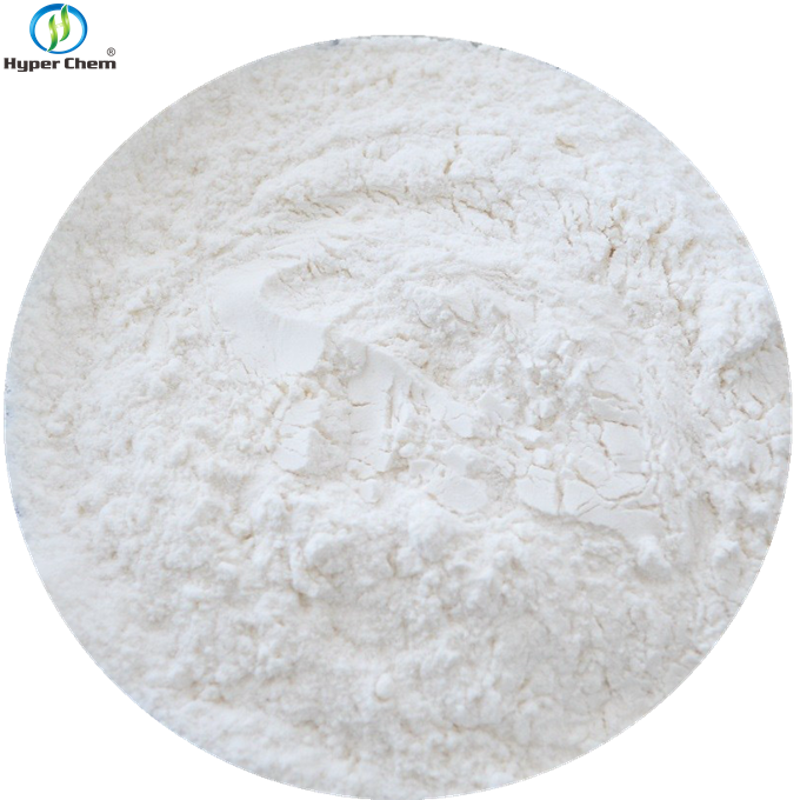
Appearance | Solid powder |
Quality Standard | USP, EP, BP, CP |
Shipping Condition | Shipped under ambient temperature as non-hazardous chemical. This product is stable enough for a few weeks during ordinary shipping and time spent in Customs. |
Storage Condition | Dry, dark and at 0 - 4 ℃ for short term (days to weeks) or -20 ℃ for long term (months to years). |
Shelf Life | >2 years if stored properly |
Sample package | Aluminium foil bag |
Commercial package | Aluminium Tin, Fiber drum |
Origin | China |
Varenicline tartrate More Info
1. PRODUCT OVERVIEW
Varenicline Tartrate is a prescription medication used as an aid to smoking cessation treatment. It is the first drug approved in the class of nicotinic receptor partial agonists for smoking cessation. The generic name is Varenicline Tartrate with CAS number 375815-87-5. The molecular formula is C₁₇H₁₉N₃O₆ and the molecular weight is 361.35 g/mol. Common brand names include Chantix and Champix. The therapeutic category is Smoking Cessation Agent and the dose form is Oral Solid Tablets.
2. MECHANISM OF ACTION
Varenicline Tartrate works through a dual mechanism of action. First, it has agonist activity with high affinity binding at α4β2 neuronal nicotinic acetylcholine receptors. The partial agonist effect stimulates receptor-mediated activity at a significantly lower level than nicotine, which is sufficient to alleviate nicotine withdrawal symptoms.
Second, varenicline exhibits antagonist activity by blocking the ability of nicotine to activate α4β2 receptors and stimulating the central nervous mesolimbic dopamine system. This prevents the reinforcement and reward experienced upon smoking and reduces nicotine-induced dopamine release and nicotine self-administration behavior.
The receptor selectivity profile shows the compound has 0.06 nM Ki value at the α4β2 receptor as the primary target. At the α3β4 receptor it shows 240 nM Ki value with more than 500-fold selectivity. At the α7 receptor the Ki value is 322 nM showing more than 3,500-fold selectivity. At the α1βγδ receptor the Ki value is 3540 nM showing more than 20,000-fold selectivity. The 5-HT3 receptor shows moderate affinity with a Ki value of 350 nM.
3. PHARMACOKINETIC PROPERTIES
3.1 Absorption
Maximum plasma concentrations occur within 3-4 hours after oral administration. The bioavailability is approximately 90% systemic availability with virtually complete absorption. Steady state is reached within 4 days of multiple oral dosing and the compound exhibits linear pharmacokinetics after single or repeated doses. Oral bioavailability is unaffected by food or time-of-day dosing.
3.2 Distribution
Protein binding is low at less than 20% and is independent of age and renal function. The volume of distribution is approximately 415 liters at steady state.
3.3 Metabolism
Metabolism is minimal with less than 10% being metabolized. The primary route is elimination unchanged in urine at 92%. Minor pathways include glucuronidation, oxidation, N-methylation, and conjugation with hexose sugars. Pharmacokinetics should be unaffected in patients with hepatic insufficiency due to absence of significant hepatic metabolism.
3.4 Elimination
The half-life is approximately 24 hours with an individual range of 10-58 hours. The compound is primarily excreted through glomerular filtration with active tubular secretion via organic cationic transporter. Eighty-one percent is excreted unchanged in urine.
3.5 Special Populations
For mild renal impairment with creatinine clearance of 50 mL/min or higher, there is no clinically meaningful difference. For moderate renal impairment with creatinine clearance of 30-50 mL/min, there is a 1.5-fold exposure increase. For severe renal impairment with creatinine clearance less than 30 mL/min, there is a 2.1-fold exposure increase. Patients with end-stage renal disease can be efficiently removed by haemodialysis. There are no clinically meaningful differences for hepatic impairment, age, race, gender, or smoking status.
4. PHARMACEUTICAL FORMULATION
4.1 Available Strengths
The product is available in two strengths. The 0.5 mg strength is white to off-white, capsule-shaped, biconvex, film-coated with "0.5" debossed on one side and plain on the other. The 1 mg strength is light blue to blue, capsule-shaped, biconvex, film-coated with "1.0" debossed on one side and plain on the other.
4.2 Chemical Properties
The drug substance appears as off-white to yellow powder. The compound is highly soluble in water and is classified as BCS Class I. It is non-hygroscopic.
4.3 Storage Conditions
The storage temperature is 2-8°C for refrigerated storage. Room temperature transportation is acceptable.
5. CLINICAL TRIALS
Varenicline tartrate efficacy in smoking cessation was demonstrated in five double-blind, placebo-controlled clinical trials involving a total of 4,190 chronic cigarette smokers who smoke approximately 10 cigarettes per day.
The study design features include 12 weeks of drug treatment followed by 40 weeks of double-blind assessment. The target quit date was set one week after treatment initiation. Comparators included placebo and bupropion SR in two studies. The primary endpoint was Abstinence Responder Rate measuring 4-week continuous abstinence from Week 9 through Week 12.
6. DRUG INTERACTIONS
6.1 Known Interactions
Concomitant use with Nicotine Replacement Therapy may increase adverse reactions including nausea, headache, vomiting, dizziness, dyspepsia, and fatigue. Co-administration with NRT has not been shown to provide additional benefit compared to varenicline alone and combination treatment safety and efficacy have not been studied.
6.2 Cytochrome P450 Interactions
In vitro studies show that varenicline tartrate does not inhibit cytochrome P450 enzymes with an IC50 greater than 6,400 ng/mL. No clinically meaningful drug interactions have been documented.
7. REGULATORY STATUS
The product has a USDMF available for the United States and a Brazilian DMF available for Brazil. Regulatory filing is available.
8. SUPPLY CHAIN INFORMATION
Various pharmaceutical companies manufacture varenicline tartrate including Pfizer, Viatris, Dr. Reddy's, GenMed, and Apotex. Generic formulations are available. The product has achieved Biopharmaceutics Classification System biowaiver compared to the originator product.
9. PRODUCT AVAILABILITY
Varenicline Tartrate is available from multiple pharmaceutical API manufacturers and suppliers worldwide including Dr. Reddy's Laboratories, Piramal Pharma Solutions, and various international pharmaceutical companies.