Product
Supplier
Encyclopedia
Inquiry
p-Anisidine104-94-9C7H9NO buy - large image1
p-Anisidine104-94-9C7H9NO buy - image1
p-Anisidine104-94-9C7H9NO buy - image2
p-Anisidine104-94-9C7H9NO buy - image3
p-Anisidine104-94-9C7H9NO buy - image4
p-Anisidine104-94-9C7H9NO buy - image5
p-Anisidine104-94-9C7H9NO buy - image6

p-Anisidine104-94-9C7H9NO

10 Inquiries

Unit Price:

$33-34/MT FOB

Get Latest Price
CAS No.:

104-94-9

Grade:

Pharmaceutical Grade

Content:

99.5%

Port:

上海

Brand:

OORENT

Packaging:

Vial/Bottle/Bag/Carton

Price valid (until):

2026-07-17

Company Type:
Trader
Location:
China
Qualification:
Main Products:

pharmaceutical intermediates,peptides,electronic chemicals

  • Product Description

  • Seller Information

  • Inquiry History

  • Description

    Product Detail

    p-Anisidine Basic information
    Anisidine value
    Product Name: p-Anisidine
    Synonyms: P-AMINOANISOLE;4-[4-(4-Aminophenyl)phenyl]aniline;p,p'-Diaminoterphenyl;1,4-Anisidine;p-Anisidine,95%,pract.;1-Methoxy-4-amino-benzen (p-anisidin);1-Methoxy-4-amino-benzene / p-anisidine;4-Methoxy-1-aminobenzene
    CAS: 104-94-9
    MF: C7H9NO
    MW: 123.15
    EINECS: 203-254-2
    Product Categories: Thiophenes;amine;Intermediates of Dyes and Pigments;Intermediates;Anilines (Building Blocks for Liquid Crystals);Building Blocks for Liquid Crystals;Functional Materials;104-94-9;bc0001;K00001
    Mol File: 104-94-9.mol
    Shop p-Anisidine104-94-9C7H9NO-Detailed Image 1

    p-Anisidine Chemical Properties
    Melting point  56-59 °C(lit.)
    Boiling point  240-243 °C(lit.)
    bulk density 700kg/m3
    density  1.06
    vapor density  4.28
    vapor pressure  0.02 hPa (20 °C)
    refractive index  1.5559
    Fp  122 °C
    storage temp.  Store below +30°C.
    solubility  21g/l
    pka 5.34(at 25℃)
    form  crystalline
    color  dark gray to brown
    Specific Gravity 1.07
    PH 7.7 (1g/l, H2O, 20℃)
    Water Solubility  21 g/L (20 ºC)
    Merck  14,667
    BRN  471556
    Henry's Law Constant (x 10-8 atmm3/mol): 6.62 at 25 °C (thermodynamic method-GC/UV spectrophotometry, Altschuh et al., 1999)
    Exposure limits ACGIH TLV-TWA:0.5 mg/m3 (0.1 ppm)
    OSHA PEL-TWA:0.5 mg/m3
    NIOSH REL-TWA:0.5 mg/m3;IDLH:50 mg/m3
    Dielectric constant 8.8399999999999999
    Stability: Hygroscopic, Material Darkens In Storage With No Loss In Purity
    InChI 1S/C7H9NO/c1-9-7-4-2-6(8)3-5-7/h2-5H,8H2,1H3
    InChIKey BHAAPTBBJKJZER-UHFFFAOYSA-N
    SMILES COc1ccc(N)cc1
    LogP 0.950
    CAS DataBase Reference 104-94-9(CAS DataBase Reference)
    IARC 3 (Vol. 27, Sup 7) 1987
    NIST Chemistry Reference Benzenamine, 4-methoxy-(104-94-9)
    EPA Substance Registry System p-Anisidine (104-94-9)

    Safety Information
    Hazard Codes  T+,N,Xi
    Risk Statements  45-26/27/28-33-50
    Safety Statements  53-28-36/37-45-61-28A
    RIDADR  UN 2811 6.1/PG 3
    OEB C
    OEL TWA: 0.5 mg/m3 [skin]
    WGK Germany  2
    RTECS  BZ5450000
    8
    Autoignition Temperature 959 °F
    TSCA  TSCA listed
    HazardClass  6.1
    PackingGroup  III
    HS Code  29222200
    Storage Class 6.1A - Combustible acute toxic Cat. 1 and 2
    very toxic hazardous materials
    Hazard Classifications Acute Tox. 1 Dermal
    Acute Tox. 2 Inhalation
    Acute Tox. 2 Oral
    Aquatic Acute 1
    Aquatic Chronic 3
    Carc. 1B
    STOT RE 2
    Hazardous Substances Data 104-94-9(Hazardous Substances Data)
    Toxicity Acute oral LD50 for rats 1,400 mg/kg, mice 810 mg/kg, rabbits 2,900 mg/kg (quoted, RTECS, 1985).
    IDLH 50 mg/m3
    MSDS Information
    Provider Language
    4-Methoxybenzeneamine English
    SigmaAldrich English
    ACROS English
    ALFA English

    p-Anisidine Usage And Synthesis
    Anisidine value Anisidine value (AV) is a measure of the aldehyde levels in an oil or fat, in particular those that are unsaturated (and principally the 2–alkenals). To determine AV, a solution of the oil or fat in iso-octane is reacted with p-anisidine in glacial acetic acid to form yellowish reaction proucts. The AV is then determined from the absorbance measured at 350 nm, both before and after reaction.
    Chemical Properties Anisidine exists as ortho-, meta-, and paraisomers. They have characteristic amine (fishy) odors. releases toxic nitrogen oxides when heated to decomposition (Sax and Lewis, 1987).
    Physical properties Yellow to light brown powder, leaflets, solid or crystals with a characteristic amine or ammonialike odor. soluble in ethanol and ether, slightly soluble in water.
    Uses p-Anisidine is used mostly for producing dyes, and some smaller quantities are employed in making pharmaceuticals and liquid crystals.
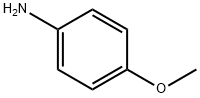
    Definition ChEBI: P-anisidine is a substituted aniline that is aniline in which the hydrogen para to the amino group has been replaced by a methoxy group. It is used as a reagent for the detection of oxidation products such as aldehydes and ketones in fats and oils. It has a role as a reagent and a genotoxin. It is a member of methoxybenzenes, a substituted aniline and a primary amino compound.
    Application p-Anisidine is used as a reagent to indicate the secondary stage of the oxidation, it is one of the three possible isomers of the Anisidine or methoxyaniline. The other two isomers are o-Anisidine (2-methoxyaniline) and m-Anisidine (3-methoxyaniline).
    The p-anisidine is widely used as an intermediate in the production of numerous azo and triphenylmethane dyes, and pigments. It is also used in the production of pharmaceuticals including the guaiacol expectorant, as an antioxidant for polymercaptan resins, and as a corrosion inhibitor for steel. Apart from the beneficial use of p-anisidine, it is toxic for human beings. The acute exposure may cause skin irritation, whereas the chronic exposure may cause headaches, vertigo, and blood complications like sulfhemoglobin, and methemoglobin. The oral exposure to anisidine hydrochloride resulted in cancer of the urinary bladder in male and female rats.
    https://www.longdom.org/open-access/physicochemical-and-spectroscopic-characterization-of-biofield-energytreated-panisidine-paco-1000102.pdf
    Preparation p-Anisidine is an important intermediate for synthesis of dye, medicine and perfume. Traditional preparation of p-Anisidine uses iron powder or sodium sulfide as reductant, which produces a large amount of waste and results in serious environment pollution problem. Liquid phase catalytic hydrogenation is not only an environmentally benign technique but also of high yield.
    Synthesis of p-Anisidine by Hydrogenation with Raney-RuNiC as Catalyst
    Synthesis Reference(s) Journal of the American Chemical Society, 99, p. 98, 1977 DOI: 10.1021/ja00443a018
    The Journal of Organic Chemistry, 49, p. 1434, 1984 DOI: 10.1021/jo00182a023
    Tetrahedron Letters, 21, p. 2603, 1980 DOI: 10.1016/S0040-4039(00)92816-8
    General Description P-anisidine appears as brown crystals or dark brown solid. Characteristic amine odor. (NTP, 1992)
    Air & Water Reactions Insoluble in water.
    Reactivity Profile p-Anisidine may be sensitive to heat, light and moisture. Reacts with acids, acid chlorides, acid anhydrides, chloroformates and strong oxidizing agents. Incompatible with alkaline materials. Incompatible with aldehydes, ketones and nitrates.
    Hazard Strong irritant. Toxic when absorbed through the skin. Questionable carcinogen.
    Fire Hazard p-Anisidine is flammable.
    Safety Profile Moderately toxic by several routes. A mild sensitizer. May cause a contact dermatitis. Mutation data reported. Questionable carcinogen. See also ANILINE. When heated to decomposition it emits toxic fumes of Nox
    Potential Exposure Anisidines are used in the manufacture of azo dyes; pharmaceuticals; textile-processing chemicals Incompatibilities: Incompatible with oxidizers (chlorates, nitrates, peroxides, permanganates, perchlorates, chlorine,bromine, fluorine, etc.); contact may cause fires or explosions. Keep away from alkaline materials, strong bases, strong acids, oxoacids, epoxides. Attacks some coatings and some forms of plastic and rubber.
    Carcinogenicity Available data were inadequate to evaluate the carcinogenicity of p-anisidine.
    Shipping UN2431 Anisidines, Hazard Class: 6.1; Labels: 6.1-Poisonous materials
    Purification Methods Crystallise p-anisidine from H2O or aqueous EtOH. Dry it in a vacuum oven at 35o for 6hours and store it in a dry box. [More et al. J Am Chem Soc 108 2257 1986.] Purify it also by vacuum sublimation [Guarr et al. J Am Chem Soc 107 5104 1985]. [Beilstein 13 IV 1015.]
    Waste Disposal Dissolve in combustible solvent (alcohols, benzene, etc.) and spray solution into furnace equipped with afterburner and scrubber, or burn spill residue on sand and soda ash absorbent in a furnace.

    Shop Fluorobenzene462-06-6C6H5F-Detailed Image 2 Shop Fluorobenzene462-06-6C6H5F-Detailed Image 3 Shop Fluorobenzene462-06-6C6H5F-Detailed Image 4 Shop Fluorobenzene462-06-6C6H5F-Detailed Image 5 Shop Fluorobenzene462-06-6C6H5F-Detailed Image 6 Shop Fluorobenzene462-06-6C6H5F-Detailed Image 7


    Basic Info
    Product Name:

    4-Methoxyaniline

    Other Name:

    Benzenamine,4-methoxy-;p-Anisidine;4-Methoxybenzenamine;p-Aminoanisole;4-Aminoanisole;p-Methoxyphenylamine;p-Anisylamine;4-Methoxyaniline;p-Anisidine;p-Methoxyaniline;1-Amino-4-methoxybenzene;p-Aminomethoxybenzene;4-Methoxyphenylamine;1,4-Anisidine;4-Aminomethoxybenzene;4-Methoxylaniline;Methyl 4-aminophenyl ether;Anisidine;NSC 7921;4-Methoxy-1-aminobenzene;1619933-04-8

    CAS No.:

    104-94-9

    Molecular Formula:

    C7H9NO

    InChIKeys:

    InChIKey=BHAAPTBBJKJZER-UHFFFAOYSA-N

    Molecular Weight:

    123.15

    Exact Mass:

    123.15

    BRN:

    471556

    EC Number:

    203-254-2

    UNII:

    575917SNR4

    ICSC Number:

    0971

    NSC Number:

    7921

    UN Number:

    2431

    DSSTox ID:

    DTXSID7024532

    Color/Form:

    White solid|Fused crystalline mass|Crystals, plates from aqueous solution|Yellow to brown, crystalline solid

    HScode:

    29222200

    Characteristics
    PSA:

    35.2

    XLogP3:

    0.95

    Appearance:

    dark gray to brown crystalline

    Density:

    1.071 g/cm3 @ Temp: 57 °C

    Melting Point:

    57.2 °C

    Boiling Point:

    243 °C

    Flash Point:

    122 °C

    Refractive Index:

    1.5559

    Water Solubility:

    H2O: 21 g/L (20 ºC)

    Storage Conditions:

    2-8°C

    Vapor Pressure:

    Vapour pressure, Pa at 20°C: 2

    Vapor Density:

    4.25

    Toxicity:

    Oral-rat LD50: 1320 mg/kg; Oral-Mouse LD50: 1410 mg/kg

    Flammability characteristics:

    Open flame is flammable; heat releases toxic aniline, nitrogen oxide gas

    Explosive limit:

    Finely dispersed particles form explosive mixtures in air.

    Odor:

    Amine-like odor

    Henrys Law Constant:

    6.60e-08 atm-m3/mole|Henry's Law constant = 6.60X10⁻⁸ atm-cu m/mol at 25 °C

    Dissociation Constants:

    pKa = 5.36 at 25 °C

    Experimental Properties:

    Hydroxyl radical reaction rate constant = 9.39X10⁻¹¹ cu cm/molec-sec at 25 °C (est)

    Air and Water Reactions:

    Insoluble in water.

    Reactive Group:

    Ethers

    Reactivity Profile:

    P-ANISIDINE may be sensitive to heat, light and moisture. Reacts with acids, acid chlorides, acid anhydrides, chloroformates and strong oxidizing agents. Incompatible with alkaline materials. Incompatible with aldehydes, ketones and nitrates. (NTP, 1992)

    Autoignition Temperature:

    515 °C

    Ionization Potential:

    7.44 eV

    Flammable Limits:

    Combustible Solid

    Physical Dangers:

    As a result of flow, agitation, etc., electrostatic charges can be generated. Dust explosion possible if in powder or granular form, mixed with air.

    Hazard Identification

    Classification of the substance or mixture

    Acute toxicity - Category 2, Oral

    Acute toxicity - Category 1, Dermal

    Acute toxicity - Category 2, Inhalation

    Specific target organ toxicity – repeated exposure, Category 2

    Hazardous to the aquatic environment, short-term (Acute) - Category Acute 1

    GHS label elements, including precautionary statements

    Pictogram(s)
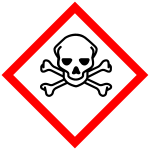
    Signal word

    Danger

    Hazard statement(s)

    H300 Fatal if swallowed

    H310 Fatal in contact with skin

    H330 Fatal if inhaled

    H373 May cause damage to organs through prolonged or repeated exposure

    H400 Very toxic to aquatic life

    Precautionary statement(s)
    Prevention

    P264 Wash ... thoroughly after handling.

    P270 Do not eat, drink or smoke when using this product.

    P262 Do not get in eyes, on skin, or on clothing.

    P280 Wear protective gloves/protective clothing/eye protection/face protection/hearing protection/...

    P260 Do not breathe dust/fume/gas/mist/vapours/spray.

    P271 Use only outdoors or in a well-ventilated area.

    P284 [In case of inadequate ventilation] wear respiratory protection.

    P273 Avoid release to the environment.

    Response

    P301+P316 IF SWALLOWED: Get emergency medical help immediately.

    P321 Specific treatment (see ... on this label).

    P330 Rinse mouth.

    P302+P352 IF ON SKIN: Wash with plenty of water/...

    P316 Get emergency medical help immediately.

    P361+P364 Take off immediately all contaminated clothing and wash it before reuse.

    P304+P340 IF INHALED: Remove person to fresh air and keep comfortable for breathing.

    P320 Specific treatment is urgent (see ... on this label).

    P319 Get medical help if you feel unwell.

    P391 Collect spillage.

    Storage

    P405 Store locked up.

    P403+P233 Store in a well-ventilated place. Keep container tightly closed.

    Disposal

    P501 Dispose of contents/container to an appropriate treatment and disposal facility in accordance with applicable laws and regulations, and product characteristics at time of disposal.

    Other hazards which do not result in classification

    no data available

    Handling and Storage

    Precautions for safe handling

    NO open flames. Prevent deposition of dust. Closed system, dust explosion-proof electrical equipment and lighting. Handling in a well ventilated place. Wear suitable protective clothing. Avoid contact with skin and eyes. Avoid formation of dust and aerosols. Use non-sparking tools. Prevent fire caused by electrostatic discharge steam.

    Conditions for safe storage, including any incompatibilities

    Separated from strong oxidants, strong bases, acids, chloroformates and food and feedstuffs. Provision to contain effluent from fire extinguishing. Store in an area without drain or sewer access.Store in tightly closed containers in a cool, dark, well-ventilated area. Protect against sunlight and strong oxidizers. Metal containers involving the transfer of this chemical should be grounded and bonded. Where possible, automatically pump liquid from drums or other storage containers to process containers. Drums must be equipped with self-closing valves, pressure vacuum bungs, and flame arresters. Use only non-sparking tools and equipment, especially when opening and closing containers of this chemical. Sources of ignition, such as smoking and open flames, are prohibited where this chemical is used, handled, or stored in a manner that could create a potential fire or explosion hazard. A regulated, marked area should be established where this chemical is handled, used, or stored ... Anisidines

  • Seller Information
    Business Type:

    Trader

    Main Products:

    pharmaceutical intermediates,peptides,electronic chemicals

    Location:

    Room 102, 1st Floor, East Office Building, No. 45 Pengwan Road, Qianwan Bonded Port Area, Qingdao Zone, China (Shandong) Pilot Free Trade Zone

    Payment Terms:

    100% TT in advance

    Average lead Time:

    10

    Total Annual Revenue:

    $10 million-$25 million

    Total Employees:

    51-100

    Year of Establishment:

    2024

    A reliable supplier is like insurance.

    We are mainly specilized in supply of pharmaceutical intermediates, electronic chemicals,food additives, and other fine chemical products.
    Integrity is the foundation, quality is life. We would like to work together with you to build a greener and brighter future.

    Website: orientchem.cc
    Email: scarlett@orientchem.cc
    WhatsApp: +86 17753254221

  • Inquiry History
    10 Inquiries
    Country Product Purchase Quantity Date Posted
    India

    p-Anisidine

    500.00 KG Oct 9, 2023
    India

    PARA ANSIDINE

    5000.00 KG Aug 29, 2023
    India

    P-ANISIDINE

    4 MT Aug 26, 2024
    India

    Para Anisidine 3,6 Di Sulfonic Acid (PA 3 6 DSA)

    1.00 KG Jul 3, 2023
    Russia

    p-Anisidine

    1 MT Jun 26, 2023
    Philippines

    p-anisidine

    100 G Feb 25, 2026
    India

    Para Anisidine

    25.00 MT Sep 28, 2023
    India

    N,N-DIMETHYL CARBAMOYL CHLORIDE

    5000.00 KG Aug 29, 2023
    India

    ETHYL FORMATE

    8000.00 KG Aug 29, 2023
    India

    RESORCINOL

    5000.00 KG Aug 29, 2023
    Post an enquiry for this product
pic ×

Scan the QR Code to Share

All products displayed on this website are only for non-medical purposes such as industrial applications or scientific research, and cannot be used for clinical diagnosis or treatment of humans or animals. They are not medicinal or edible.

According to relevant laws and regulations and the regulations of this website, units or individuals who purchase hazardous materials should obtain valid qualifications and qualification conditions.

The information shown above is provided by the enterprise itself, and the authenticity, accuracy and legitimacy of the content are the responsibility of the publishing company. ECHEMI does not bear any guarantee responsibility for this. Please be aware that risks in internet transactions objectively exist.

Feedback & Suggestions
Send Message

Thank you for your feedback. If you require further assistance, please contact us by email at info@echemi.com or call us at +86-532-55729510.