Product
Supplier
Encyclopedia
Inquiry
Benzyl benzoate120-51-4 buy - large image1
Benzyl benzoate120-51-4 buy - image1
Benzyl benzoate120-51-4 buy - image2
Benzyl benzoate120-51-4 buy - image3
Benzyl benzoate120-51-4 buy - image4
Benzyl benzoate120-51-4 buy - image5
Benzyl benzoate120-51-4 buy - image6

Benzyl benzoate120-51-4

11 Inquiries

Unit Price:

$33-34/MT FOB

Get Latest Price
CAS No.:

120-51-4

Grade:

Pharmaceutical Grade

Content:

99.5%

Port:

shanghai

Brand:

OORENT

Packaging:

Vial/Bottle/Bag/Carton

Price valid (until):

2026-09-25

Company Type:
Trader
Location:
China
Qualification:
Main Products:

pharmaceutical intermediates,peptides,electronic chemicals

  • Product Description

  • Seller Information

  • Inquiry History

  • Description


      Product Detail

    Benzyl benzoate Basic information
    Description Chemical Properties Uses Preparation toxicity References
    Product Name: Benzyl benzoate
    Synonyms: Benzyl benzoate Vetec(TM) reagent grade, 98%;Benzoic acid benzyl ester≥ 99% (GC);Benzyl alcohol benzoic ester;benzylalcoholbenzoicester;Benzylester kyseliny benzoove;ASCABIOL;ASCABIOL(R);Benzyl benzoate 99+ %
    CAS: 120-51-4
    MF: C14H12O2
    MW: 212.24
    EINECS: 204-402-9
    Product Categories: CYSTADANE;Building Blocks;C12 to C63;Carbonyl Compounds;Chemical Synthesis;Esters;Nutrition Research;Organic Building Blocks;Phytochemicals by Plant (Food/Spice/Herb);Vaccinium macrocarpon (Cranberry);organic chemical;Chemical;Aromatic Esters;Piperazine derivates;INORGANIC & ORGANIC CHEMICALS;Solvent;120-51-4;11
    Mol File: 120-51-4.mol
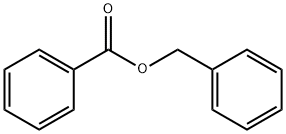
    Shop Benzyl benzoate120-51-4-Detailed Image 1

    Benzyl benzoate Chemical Properties
    Melting point  17-20 °C (lit.)
    Boiling point  323-324 °C (lit.)
    density  1.118 g/mL at 20 °C (lit.)
    vapor pressure  1 mm Hg ( 125 °C)
    refractive index  n20/D 1.568(lit.)
    FEMA  2138 | BENZYL BENZOATE
    Fp  298 °F
    storage temp.  2-8°C
    solubility  Miscible with ethanol, alcohol, chloroform, ether, oils.
    form  Liquid
    color  Clear colorless
    Odor at 100.00 %. faint sweet balsam oily herbal
    Odor Type balsamic
    biological source synthetic
    Water Solubility  practically insoluble
    Merck  14,1127
    JECFA Number 24
    BRN  2049280
    Henry's Law Constant 1.8×100 mol/(m3Pa) at 25℃, Mackay et al. (2006)
    Dielectric constant 4.8(20℃)
    Stability: Stable. Substances to be avoided include strong oxidizing agents. Combustible.
    Major Application pharmaceutical (small molecule)
    Cosmetics Ingredients Functions PERFUMING
    SOLVENT
    ANTIMICROBIAL
    Cosmetic Ingredient Review (CIR) Benzyl benzoate (120-51-4)
    InChI 1S/C14H12O2/c15-14(13-9-5-2-6-10-13)16-11-12-7-3-1-4-8-12/h1-10H,11H2
    InChIKey SESFRYSPDFLNCH-UHFFFAOYSA-N
    SMILES O=C(OCc1ccccc1)c2ccccc2
    LogP 4 at 20℃
    Surface tension 45.95mN/m at 20°C
    CAS DataBase Reference 120-51-4(CAS DataBase Reference)
    NIST Chemistry Reference Benzyl Benzoate(120-51-4)
    EPA Substance Registry System Benzyl benzoate (120-51-4)

    Safety Information
    Hazard Codes  Xn,N
    Risk Statements  22-51/53
    Safety Statements  25-61-46
    RIDADR  UN 3082 9 / PGIII
    WGK Germany  2
    RTECS  DG4200000
    Autoignition Temperature 896 °F
    TSCA  TSCA listed
    HazardClass  9
    HS Code  29163100
    Storage Class 10 - Combustible liquids
    Hazard Classifications Acute Tox. 4 Oral
    Aquatic Acute 1
    Aquatic Chronic 2
    Hazardous Substances Data 120-51-4(Hazardous Substances Data)
    Toxicity LD50 in rats, mice, rabbits, guinea pigs (g/kg): 1.7, 1.4, 1.8, 1.0 orally (Draize)
    MSDS Information
    Provider Language
    Benzyl benzoate English
    SigmaAldrich English
    ACROS English
    ALFA English

    Benzyl benzoate Usage And Synthesis
    Description Benzyl benzoate (BnBzO) is a mediation and insect repellent. It is one of the older preparation used to treat scabies which is a skin infections caused by the mite scarcoptes scabiei since it is lethal to the mite. It is capable of killing the mite in 5 minutes. It can also be used for the treatment of lice infestation of the head and the body. Its mechanism of action is through exerting toxic effect on the nervous system of the insects, further causing its death. It is also toxic to mite ova through an unknown mechanism. It can also be used as a repellent for chiggers, ticks, and mosquitoes as well as a dye carrier, solvent of cellulose derivatives, plasticizer, and a fixative.
    Chemical Properties Benzyl benzoate is a clear, colorless, oily liquid with a light, balsamic odor reminiscent of almond and a sharp, pungent taste. It produces a sharp, burning sensation on the tongue. At temperatures below 178℃ it exists as clear, colorless crystals.
    Uses Benzyl Benzoate has seen use as an insecticide, as well as a solvent for various chemical reactions.
    Benzyl benzoate is a benzyl compound that can be synthesized by reacting benzyl chloride with sodium benzoate in the presence of tetrabutylaramonium iodide. It has been used to:
    Prepare benzyl alcohol/benzyl benzoate (BABB) solution employed for enhancing the tissue transparency during the whole-mount immunostaining BABB method.
    Study its ability to induce an olfactory response in the third instar larvae of Drosophila melanogaster.
    Prepare Spalteholz fluid in combination with methyl salicylate, employed during LSFM (light sheet fluorescence microscopy) imaging.
    Preparation Benzyl benzoate is a constituent of Peru balsam and occurs naturally in certain plant species. Commercially, benzyl benzoate is produced synthetically by the dry esterification of sodium benzoate and benzoyl chloride in the presence of triethylamine or by the reaction of sodium benzylate with benzaldehyde.
    toxicity In man, benzyl benzoate was a skin sensitizer and caused gastro-intestinal effects in an infant. It was of moderate to low acute oral toxicity in a range of laboratory animal species and of low acute dermal toxicity in rabbits. Central nervous system effects were induced in several species given single doses orally or dermally. Repeated skin applications caused degenerative changes in various organs (including the liver, spleen and testes) of rabbits. No effects were seen in reproductive studies involving repeated oral administration to rats during pregnancy and lactation. Benzyl benzoate gave no evidence of mutagenicity in an Ames bacterial assay. It was a mild skin irritant in rabbits.
    References https://www.drugbank.ca/drugs/DB00676
    https://en.wikipedia.org/wiki/Benzyl_benzoate
    Description Benzyl benzoate is the ester of benzyl alcohol and benzoic acid, with the formula C6H5CH2O2CC6H5. This easily prepared compound with a mild balsamic odor has a variety of uses.Benzyl benzoate (BB) is one of the oldest drugs used for the treatment of scabies and is recommended as the “first-line intervention” for the cost-effective treatment of the disease.
    Chemical Properties Benzyl Benzoate is the main component of Peru balsam oil. It occurs in fairly large amounts in a number of blossom concretes and absolutes (e.g., tuberose and hyacinth). It forms either a viscous liquid or solid flakes (mp 21–22°C) and has a weak, sweet, balsamic odor.
    Shop Benzyl benzoate120-51-4-Detailed Image 2
    Benzyl Benzoate is prepared either by transesterification of technical methyl benzoate with benzyl alcohol or from benzyl chloride and sodium benzoate. A third process starts with benzaldehyde, which is converted in high yield into benzyl benzoate in the presence of sodium or aluminum benzylate (Tishchenko reaction). Benzyl benzoate is used in perfumery as a fixative and as a modifier in heavy blossom fragrances.
    Occurrence Contained in Peru balsam and in the concrete and absolute of tuberose flowers, hyacinth, Narcissus jonquilla L., and Dianthus caryophillus L.; also in the oil of ylang-ylang and in Tolu balsam. Reported found in American cranberry, cinnamon bark, cassia leaf, corn oil and hog plum (Spondias mombins L.).
    Uses Benzyl benzoate, as a topical solution, may be used as an antiparasitic insecticide to kill the mites responsible for the skin condition scabies , for example as a combination drug of benzyl benzoate/disulfiram.
    It has other uses :
    a fixative in fragrances to improve the stability and other characteristics of the main ingredients
    a food additive in artificial flavors
    a plasticizer in cellulose and other polymers
    a solvent for various chemical reactions
    a treatment for sweet itch in horses
    a treatment for scaly leg mites in chickens.
    Uses benzyl benzoate is an anti-microbial. It can also act as a solvent, helping dissolve other substances in the product, and as a perfuming ingredient. It is the ester of benzyl alcohol and benzoic acid.
    Uses As solvent of cellulose acetate, nitrocellulose and artificial musk; substitute for camphor in celluloid and plastic pyroxylin Compounds; perfume fixative; in confectionery and chewing gum flavors.
    Preparation By the dry esterification of sodium benzoate and benzoyl chloride in the presence of triethylamine or by reaction of sodium benzylate on benzaldehyde.
    Production Methods BENZYL BENZOATE is produced by the Cannizzaro reaction from benzaldehyde, by esterifying benzyl alcohol with benzoic acid, or by treating sodium benzoate with benzyl chloride. It is purified by distillation and crystallization. Benzyl benzoate is used as a fixative and solvent for musk in perfumes and flavors, as a plasticizer, miticide, and in some external medications. The compound has been found effective in the treatment of scabies and pediculosis capitis (head lice, Pediculus humanus var. capitis).
    Indications Benzyl benzoate: 20% to 25%. This agent is relatively nontoxic and is widely used in developing countries to treat scabies and pediculosis capitis and pubis. Only a veterinary preparation is available in the United States. Benzyl benzoate is synthetically derived from the esterification of benzoic acid with benzyl alcohol. Its mechanism of action is unknown. It is toxic to Sarcoptes scabei and may be toxic to Pediculosis capitis and Phthirus pubis. No resistance has been demonstrated to date.
    Benzyl benzoate can be used in a 5% emulsion to repel many arthropods and can be used as a lotion to treat sarcoptic mange and canine pediculosis.
    Definition ChEBI: Benzyl benzoate is a benzoate ester obtained by the formal condensation of benzoic acid with benzyl alcohol. It has been isolated from the plant species of the genus Polyalthia. It has a role as a scabicide, an acaricide and a plant metabolite. It is a benzyl ester and a benzoate ester. It is functionally related to a benzoic acid.
    Definition Benzyl benzoate is produced from benzyl alcohol and sodium benzoate in the presence of triethylamine or by transesterification of methyl benzoate with benzyl alcohol in the presence of an alkali benzyl oxide. In another manufacturing process benzaldehyde is condensed to form benzyl benzoate in the presence of sodium (Claisen-Tishchenko condensation). The presence of a small amount of an aliphatic ether improves this reaction. Benzyl benzoate is a byproduct in the manufacture of benzoic acid by the oxidation of toluene; it is present in the benzoic acid distillation residue.
    Brand name Pharmaceutic necessity for Dimercaprol [Injection]. Benylate (Sterling Winthrop).
    Taste threshold values Taste characteristics at 30 ppm: balsamic, fruity with powdery and berry nuances.
    Synthesis Reference(s) Journal of Heterocyclic Chemistry, 24, p. 187, 1987 DOI: 10.1002/jhet.5570240135
    Tetrahedron Letters, 27, p. 2383, 1986 DOI: 10.1016/S0040-4039(00)84535-9
    General Description Benzyl benzoate is an aromatic ester that is used as a food flavoring agent. It has been identified as one of the main volatile aroma component of cranberry, mango and Egyptian Jasminum sambac flowers.
    Hazard Irritant to eyes, skin.
    Flammability and Explosibility Not classified
    Pharmaceutical Applications Benzyl benzoate is used as a solubilizing agent and nonaqueous solvent in intramuscular injections at concentrations of 0.01–46.0% v/v, and as a solvent and plasticizer for cellulose and nitrocellulose. It is also used in the preparation of spray-dried powders using nanocapsules.
    However, the most widespread pharmaceutical use of benzyl benzoate is as a topical therapeutic agent in the treatment of scabies. Benzyl benzoate is also used therapeutically as a parasiticide in veterinary medicine.
    Other applications of benzyl benzoate include its use as a pediculicide, and as a solvent and fixative for flavors and perfumes in cosmetics and food products.
    Contact allergens Benzyl benzoate is the ester of benzyl alcohol and benzoic acid. It is contained in Myroxylon pereirae and Tolu balsam. It is used in acaricide preparations against Sarcoptes scabiei or as a pediculicide. Direct contact may cause skin irritation, but rarely allergic contact dermatitis. As a fragrance allergen, benzyl benzoate has to be mentioned by name in EU cosmetics.
    Biochem/physiol Actions Benzyl benzoate is the condensation product of benzoic acid and benzyl alcohol. It is utilized for treating human scabies as well as kills house dust mite.
    Mechanism of action It is believed to exert a neurotoxic effect, disrupting nerve cell membranes and leading to paralysis and death of the parasite
    Clinical Use Benzyl benzoate is a naturally occurring ester obtained fromPeru balsam and other resins. It is also prepared syntheticallyfrom benzyl alcohol and benzoyl chloride. The ester isa clear colorless liquid with a faint aromatic odor. It is insolublein water but soluble in organic solvents.
    Benzyl benzoate is an effective scabicide when appliedtopically. Immediate relief from itching probably resultsfrom a local anesthetic effect; however, a complete cureis frequently achieved with a single application of a 25%emulsion of benzyl benzoate in oleic acid, stabilized withtriethanolamine. This preparation has the additionaladvantage of being essentially odorless, nonstaining, andnonirritating to the skin. It is applied topically as a lotionover the entire dampened body, except the face.
    Safety Benzyl benzoate is metabolized by rapid hydrolysis to benzoic acid and benzyl alcohol. Benzyl alcohol is then further metabolized to hippuric acid, which is excreted in the urine.
    Benzyl benzoate is widely used as a 25% v/v topical application in the treatment of scabies and as an excipient in intramuscular injections and oral products. Adverse reactions to benzyl benzoate include skin irritation and hypersensitivity reactions. Oral ingestion may cause harmful stimulation of the CNS and convulsions. Benzyl benzoate should be avoided by perople with perfume allergy.
    LD50 (cat, oral): 2.24 g/kg
    LD50 (dog, oral): 22.44 g/kg
    LD50 (guinea pig, oral): 1.0 g/kg
    LD50 (mouse, oral): 1.4 g/kg
    LD50 (rabbit, oral): 1.68 g/kg
    LD50 (rabbit, skin): 4.0 g/kg
    LD50 (rat, oral): 0.5 g/kg
    LD50 (rat, skin): 4.0 g/kg
    Synthesis This colorless liquid is formally the condensation product of benzoic acid and benzyl alcohol. It can also be generated from benzaldehyde by the Tishchenko reaction.
    Environmental Fate Benzyl benzoate acts as a local irritant. At high levels of exposure, free benzoic acid may sequester significant amounts of acetyl coenzyme A (CoA), which could disrupt cholinergic signaling. Recent findings suggest that benzyl benzoate may have estrogenic properties.
    Metabolism Benzyl benzoate, a relatively non-toxic liquid widely used for the treatment of scabies, is converted into benzoic acid in vivo (Williams, 1959).
    storage Benzyl benzoate is stable when stored in tight, well-filled, lightresistant containers. Exposure to excessive heat (above 408℃) should be avoided.
    Toxicity evaluation Acute oral LD50 for rats: 1,700 mg/kg
    Incompatibilities Benzyl benzoate is incompatible with alkalis and oxidizing agents.
    Regulatory Status Included in the FDA Inactive Ingredients Database (IM injections and oral capsules). Included, as an active ingredient, in nonparenteral medicines licensed in the UK. Included in the Canadian List of Acceptable Non-medicinal Ingredients.
    Pesticide Type Acaricide; Insecticide; Veterinary substance


    Shop Tirzepatide2023788-19-2-Detailed Image 2 Shop Tirzepatide2023788-19-2-Detailed Image 3 Shop Tirzepatide2023788-19-2-Detailed Image 4 Shop Tirzepatide2023788-19-2-Detailed Image 5 Shop Tirzepatide2023788-19-2-Detailed Image 6 Shop Tirzepatide2023788-19-2-Detailed Image 7


    ECHEMI Editorial Reference
    Benzyl benzoate is used for treatment of paediatric scabies.
    Liquid; OtherSolid|Solid|COLOURLESS LIQUID OR WHITE SOLID WITH CHARACTERISTIC ODOUR.|leaflets or oily liquid with a faint, sweet, balsamic odour
    Benzyl benzoate is a benzoate ester obtained by the formal condensation of benzoic acid with benzyl alcohol. It has been isolated from the plant species of the genus Polyalthia. It has a role as a scabicide, an acaricide and a plant metabolite. It is a benzyl ester and a benzoate ester. It derives from a benzoic acid.|Benzyl benzoate is one of the older preparations used to treat scabies. Scabies is a skin infection caused by the mite sarcoptes scabiei. It is characterised by severe itching (particularly at night), red spots, and may lead to a secondary infection. Benzyl benzoate is lethal to this mite and so is useful in the treatment of scabies. It is also used to treat lice infestation of the head and body. Benzyl benzoate is not the treatment of choice for scabies due to its irritant properties.

    Basic Info
    Product Name:

    Benzyl benzoate

    Other Name:

    Benzoic acid,phenylmethyl ester;Benzoic acid,benzyl ester;Ascabin;Ascabiol;Benylate;Benzyl benzenecarboxylate;Benzyl benzoate;Benzylets;Benzyl phenylformate;Colebenz;Novoscabin;Peruscabin;Venzonate;Vanzoate;Scobenol;Scabagen;Scabanca;Scabide;Scabiozon;Phenylmethyl benzoate;Nicca Sunsolt LM 7EX;Pelemol B66;NSC 8081;Scabcare BB;Benzyloxy phenyl ketone

    CAS No.:

    120-51-4

    Molecular Formula:

    C14H12O2

    InChIKeys:

    InChIKey=SESFRYSPDFLNCH-UHFFFAOYSA-N

    Molecular Weight:

    212.24400

    Exact Mass:

    212.24

    EC Number:

    204-402-9

    UNII:

    N863NB338G

    ICSC Number:

    0390

    NSC Number:

    758204|8081

    DSSTox ID:

    DTXSID8029153

    Color/Form:

    Leaflets or oily liquid|Water-white liquid|Colorless, oily liquid|Clear, colorless liquid

    ATC Code:

    P - Antiparasitic products, insecticides and repellents

    HScode:

    4002191900

    Characteristics
    PSA:

    26.30000

    XLogP3:

    4

    Appearance:

    Liquid; OtherSolid

    Density:

    1.118 g/cm3 @ Temp: 25 °C

    Melting Point:

    21 °C

    Boiling Point:

    323-324 °C

    Flash Point:

    147ºC

    Refractive Index:

    1.567-1.57

    Water Solubility:

    Practically insoluble in water

    Storage Conditions:

    Store in a cool, dry place. Keep container closed when not in use. Keep from contact with oxidizing materials.

    Vapor Pressure:

    1 mm Hg ( 125 °C)

    Vapor Density:

    Relative vapour density (air = 1): 7.3

    Odor:

    Light, balsamic odor reminiscent of almond

    Taste:

    Sharp burning taste

    PH:

    Solution in alcohol practically neutral to moistened litmus paper

    Henrys Law Constant:

    Henry's Law constant = 2.34X10⁻⁷ atm-cu m/mol at 25 °C (est)

    Experimental Properties:

    Congeals at temperatures not below 18 °C|Supercools easily. Specfic gravity: 1.116-1.120 at 25 °C/25 °C|CONVERSION FACTORS: 8.66 MG/CU M IS EQUIVALENT TO 1 PPM (WT/VOL)|Heat of formation = -1.91X10+8 J/kmol|For more Other Experimental Properties (Complete) data for Benzyl benzoate (6 total), please visit the HSDB record page.

    Autoignition Temperature:

    896 °F (480 °C)|480 °C

    Heat of Combustion:

    -6.69X10+9 J/kmol

    Physical Dangers:

    The vapour is heavier than air.

    Heat of Vaporization:

    18.6 kcal/mol at 12-60 °C

    Critical Temperature & Pressure:

    Critical temperature = 820 deg K; Critical pressure = 2.58X10+6 Pa

    Hazard Identification

    Classification of the substance or mixture

    Acute toxicity - Category 4, Oral

    Hazardous to the aquatic environment, long-term (Chronic) - Category Chronic 2

    GHS label elements, including precautionary statements

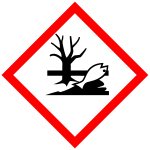
    Pictogram(s)

    Signal word

    Warning

    Hazard statement(s)

    H302 Harmful if swallowed

    H411 Toxic to aquatic life with long lasting effects

    Precautionary statement(s)
    Prevention

    P264 Wash ... thoroughly after handling.

    P270 Do not eat, drink or smoke when using this product.

    P273 Avoid release to the environment.

    Response

    P301+P317 IF SWALLOWED: Get medical help.

    P330 Rinse mouth.

    P391 Collect spillage.

    Storage

    none

    Disposal

    P501 Dispose of contents/container to an appropriate treatment and disposal facility in accordance with applicable laws and regulations, and product characteristics at time of disposal.

    Other hazards which do not result in classification

    no data available

    Handling and Storage

    Precautions for safe handling

    NO open flames. Handling in a well ventilated place. Wear suitable protective clothing. Avoid contact with skin and eyes. Avoid formation of dust and aerosols. Use non-sparking tools. Prevent fire caused by electrostatic discharge steam.

    Conditions for safe storage, including any incompatibilities

    Ventilation along the floor.IN GENERAL MATERIALS...TOXIC AS STORED OR WHICH CAN DECOMP INTO TOXIC COMPONENTS...SHOULD BE STORED IN COOL...VENTILATED PLACE, OUT OF... SUN, AWAY FROM...FIRE HAZARD...BE PERIODICALLY INSPECTED & MONITORED. INCOMPATIBLE MATERIALS SHOULD BE ISOLATED.

  • Seller Information
    Business Type:

    Trader

    Main Products:

    pharmaceutical intermediates,peptides,electronic chemicals

    Location:

    Room 102, 1st Floor, East Office Building, No. 45 Pengwan Road, Qianwan Bonded Port Area, Qingdao Zone, China (Shandong) Pilot Free Trade Zone

    Payment Terms:

    100% TT in advance

    Average lead Time:

    10

    Total Annual Revenue:

    $10 million-$25 million

    Total Employees:

    51-100

    Year of Establishment:

    2024

    A reliable supplier is like insurance.

    We are mainly specilized in supply of pharmaceutical intermediates, electronic chemicals,food additives, and other fine chemical products.
    Integrity is the foundation, quality is life. We would like to work together with you to build a greener and brighter future.

    Website: orientchem.cc
    Email: scarlett@orientchem.cc
    WhatsApp: +86 17753254221

  • Inquiry History
    11 Inquiries
    Country Product Purchase Quantity Date Posted
    Paraguay

    benzyl benzoate

    1500 KG Nov 14, 2025
    Thailand

    BENZYL BENZOATE

    1 MT Dec 28, 2023
    Greece

    Benzyl Benzoate

    10 KG Aug 25, 2026
    United States

    Benzyl Benzoate

    20 L Mar 12, 2026
    Bangladesh

    benzyl benzoate

    1 MT Aug 14, 2025
    India

    Benzyl Benzoate

    100 MT Apr 12, 2025
    Bangladesh

    Benzyl benzoate API BP

    25 MT Aug 18, 2026
    United Kingdom

    Benzyl benzoate

    1 KG May 16, 2026
    United States

    Benzyl benzoate

    30 KG Jul 31, 2025
    Thailand

    Benzyl Benzoate

    1 MT Apr 8, 2025
    India

    Benzyl Benzoate BP

    8750.00 KG May 20, 2024
    Post an enquiry for this product
pic ×

Scan the QR Code to Share

All products displayed on this website are only for non-medical purposes such as industrial applications or scientific research, and cannot be used for clinical diagnosis or treatment of humans or animals. They are not medicinal or edible.

According to relevant laws and regulations and the regulations of this website, units or individuals who purchase hazardous materials should obtain valid qualifications and qualification conditions.

The information shown above is provided by the enterprise itself, and the authenticity, accuracy and legitimacy of the content are the responsibility of the publishing company. ECHEMI does not bear any guarantee responsibility for this. Please be aware that risks in internet transactions objectively exist.

Feedback & Suggestions
Send Message

Thank you for your feedback. If you require further assistance, please contact us by email at info@echemi.com or call us at +86-532-55729510.