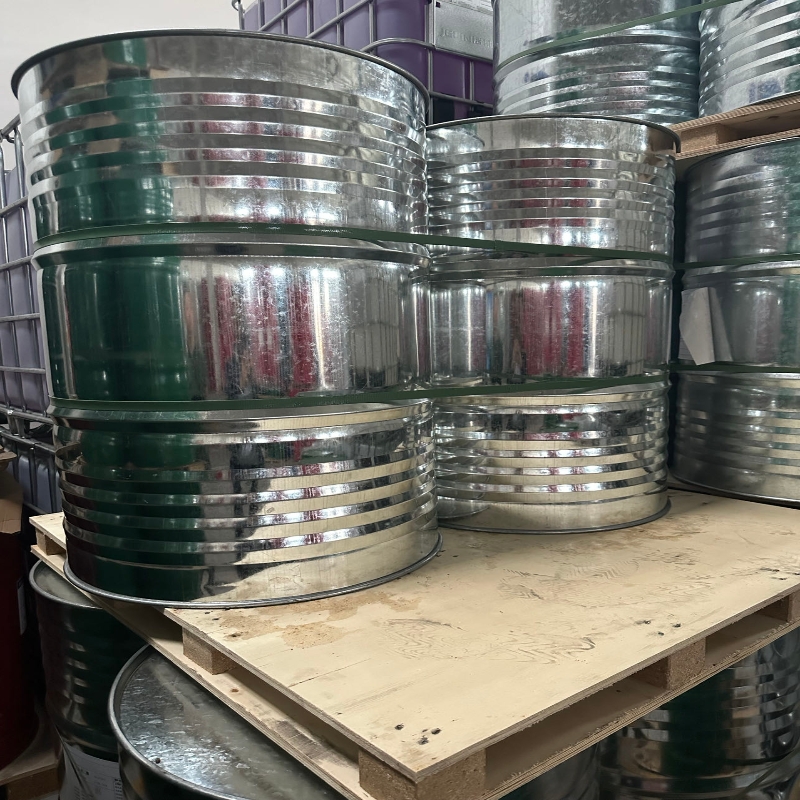
Methyl Acrylate(MA)
7 Inquiries
96-33-3
Chemically Pure
99.5%
SHANGHAI
200
2026-09-27

Acrylic
-
Product Description
-
Seller Information
-
Inquiry History
-
DescriptionECHEMI Editorial ReferenceMethyl acrylate is a clear, colorless, corrosive liquid with a sharp, fruity odor. It is soluble in water and completely miscible with most organic solvents.
Methyl acrylate has a variety of industrial uses. the more important commercial uses of methyl acrylate include the preparation of thermoplastic coatings, use in the manufacture of acrylic and modacrylic fibers. In the fiber application, methyl acrylate is used as a comonomer with acrylonitrile. These acrylic fibers usually coBasic Info-
Product Name:
Methyl acrylate
Other Name:2-Propenoic acid,methyl ester;Acrylic acid methyl ester;Methyl acrylate;2-Propenoic acid methyl ester;Methoxycarbonylethylene;Methyl propenoate;Methyl prop-2-enoate;Methyl acrylic ester;NSC 24146;K 400;Methacrylic acid tert-butyl ester;K 268P;Methyl acrylate-vinylidene copolymer;102256-29-1;1254182-69-8;2408240-60-6
CAS No.:96-33-3
Molecular Formula:C4H6O2
InChIKeys:InChIKey=BAPJBEWLBFYGME-UHFFFAOYSA-N
Molecular Weight:86.0892
Exact Mass:86.09
EC Number:202-500-6
HScode:2916121000
Categories:
Characteristics-
PSA:
26.3
XLogP3:0.3454
Appearance:colorless liquid
Density:0.9535 g/cm3 @ Temp: 20 °C
Melting Point:-76.5 °C
Boiling Point:80.5 °C
Flash Point:26.6 °F
Refractive Index:n20/D 1.402(lit.)
Water Solubility:Slightly soluble in water;soluble in ethanol, ether, acetone and benzene.
Storage Conditions:Low temperature and dry storage, separate storage with oxidants and acids
Vapor Pressure:Vapour pressure, kPa at 20°C: 9.1
Vapor Density:3 (vs air)
Toxicity:LD50 orally in rats: 0.3 g/kg (Smyth, Carpenter)
Flammability characteristics:Class IB Flammable Liquid: Fl.P. below 73°F and BP at or above 100°F.
Explosive limit:vol% in air: 2.85
Odor:Acrid odor
Hazard IdentificationClassification of the substance or mixture
Flammable liquids, Category 2
Acute toxicity - Category 4, Oral
Acute toxicity - Category 4, Dermal
Skin irritation, Category 2
Eye irritation, Category 2
Skin sensitization, Category 1
Acute toxicity - Category 4, Inhalation
Specific target organ toxicity â single exposure, Category 3
GHS label elements, including precautionary statements
Pictogram(s) 
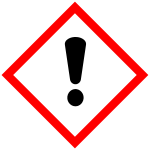
Signal word Danger
Hazard statement(s) H225 Highly flammable liquid and vapour
H302 Harmful if swallowed
H312 Harmful in contact with skin
H315 Causes skin irritation
H319 Causes serious eye irritation
H317 May cause an allergic skin reaction
H332 Harmful if inhaled
H335 May cause respiratory irritation
Precautionary statement(s) Prevention P210 Keep away from heat, hot surfaces, sparks, open flames and other ignition sources. No smoking.
P233 Keep container tightly closed.
P240 Ground and bond container and receiving equipment.
P241 Use explosion-proof [electrical/ventilating/lighting/...] equipment.
P242 Use non-sparking tools.
P243 Take action to prevent static discharges.
P280 Wear protective gloves/protective clothing/eye protection/face protection/hearing protection/...
P264 Wash ... thoroughly after handling.
P270 Do not eat, drink or smoke when using this product.
P261 Avoid breathing dust/fume/gas/mist/vapours/spray.
P272 Contaminated work clothing should not be allowed out of the workplace.
P271 Use only outdoors or in a well-ventilated area.
Response P303+P361+P353 IF ON SKIN (or hair): Take off immediately all contaminated clothing. Rinse affected areas with water [or shower].
P370+P378 In case of fire: Use ... to extinguish.
P301+P317 IF SWALLOWED: Get medical help.
P330 Rinse mouth.
P302+P352 IF ON SKIN: Wash with plenty of water/...
P317 Get medical help.
P321 Specific treatment (see ... on this label).
P362+P364 Take off contaminated clothing and wash it before reuse.
P332+P317 If skin irritation occurs: Get medical help.
P305+P351+P338 IF IN EYES: Rinse cautiously with water for several minutes. Remove contact lenses, if present and easy to do. Continue rinsing.
P333+P317 If skin irritation or rash occurs: Get medical help.
P304+P340 IF INHALED: Remove person to fresh air and keep comfortable for breathing.
P319 Get medical help if you feel unwell.
Storage P403+P235 Store in a well-ventilated place. Keep cool.
P403+P233 Store in a well-ventilated place. Keep container tightly closed.
P405 Store locked up.
Disposal P501 Dispose of contents/container to an appropriate treatment and disposal facility in accordance with applicable laws and regulations, and product characteristics at time of disposal.
Other hazards which do not result in classification
no data available
Handling and StoragePrecautions for safe handling
NO open flames, NO sparks and NO smoking. Closed system, ventilation, explosion-proof electrical equipment and lighting. Do NOT use compressed air for filling, discharging, or handling. Handling in a well ventilated place. Wear suitable protective clothing. Avoid contact with skin and eyes. Avoid formation of dust and aerosols. Use non-sparking tools. Prevent fire caused by electrostatic discharge steam.
Conditions for safe storage, including any incompatibilities
Fireproof. See Chemical Dangers. Cooled. Keep in the dark. Well closed. Store only if stabilized.Before entering confined space where this chemical may be present, check to make sure that an explosive concentration does not exist. Methyl acrylate must be stored to avoid contact with oxidizers (such as perchlorates, peroxides, permanganates, chlorates, and nitrates) since violent reactions occur. Store in tightly closed containers in a cool, well ventilated area away from heat and moisture. At temperatures above 20 deg C a violent reation could take place. Methyl acrylate should always be used with an inhibitor. Check that the correct concentration of inhibitor is used; if it is not, a violent reaction could occur. Sources of ignition, such as smoking and open flames, are prohibited where methyl acrylate is handled, used, or stored. Metal containers involving the transfer of 5 gallons or more of methyl acrylate should be grounded and bonded. Drums must be equipped with self-closing valves, pressure vacuum bungs, and flame arresters. Use only non-sparking tools and equipment, especially when opening and closing containers of methyl acrylate. Wherever methyl acrylate is used, handled, manufactured, or stored, use explosion-proof electrical equipment and fittings.
-
-
Seller Information
-
Business Type:
Trader
-
Main Products:
Acrylic
-
Location:
2nd Floor, No. 33 Lianxin Road, Liantang Town, Qingpu District, Shanghai
-
Payment Terms:
TT against copy of documents,D/A,TT against B/L draft before shipment,100% TT in advance
-
Total Annual Revenue:
$1 million-$2.5 million
-
Total Employees:
5-10
-
Year of Establishment:
2022
-
-
Inquiry History7 Inquiries
Country Product Purchase Quantity Date Posted  United States
Methyl Acrylate
1 KG Jan 24, 2026  Poland
Methyl Acrylate
25.00 KG Apr 3, 2026  Qatar
Qatar
Methyl acrylate
1.00 40' Fcl Jul 31, 2025
Qatar
Methyl Acrylate (MA)
1.00 40' Fcl Jul 2, 2025  South Korea
Methyl acrylate
70 MT Feb 2, 2026  India
India
Methyl Acrylate
1 20' Fcl Nov 8, 2024  Thailand
METHYL ACRYLATE
25 KG Oct 11, 2024 Post an enquiry for this product
- Hot Searches
- fuel kerosene price
- tirzepatide research peptide for sale online
- wholesale tirzepatide
- where can i get retatrutide peptide
- price of phenol
- winstrol price
- where can you buy sarms
- dimethiconol vs dimethicone
- retatrutide where to purchase
- ordering retatrutide
- etorecoxib
- price of methylamine
Hot Related Products
-
 Methanol 99.85% colourless liquid
 -
 Maleic Anhydride High quality TOP 1
 -
 High Purity industrial grade Methanol 99.9% / Methyl Alcohol CAS 67-56-1
$550-650/MT FOB
-
 67-56-1 Methanol 99.9% Colourless Liquid Batong
 -
 PROPYLENE GLYCOL USP 57-55-6
 -
 Propylene Glycol 99% pure CAS 57-55-6 in stock fast delivery
$60/KG FOB