GY-Lactose
FDA 21 Inquiries
63-42-3
Food Grade
99%
25kg/kraft paper bag
Yes
2026-10-29

DMF,Aniline,Benzene,Phosphoric acid,Hexane,Heptane
-
Product Details
-
Seller Information
-
Inquiry History
-
DescriptionECHEMI Editorial ReferenceLactose, a major sugar in the milk of most species, could regulate human’s intestinal microflora.
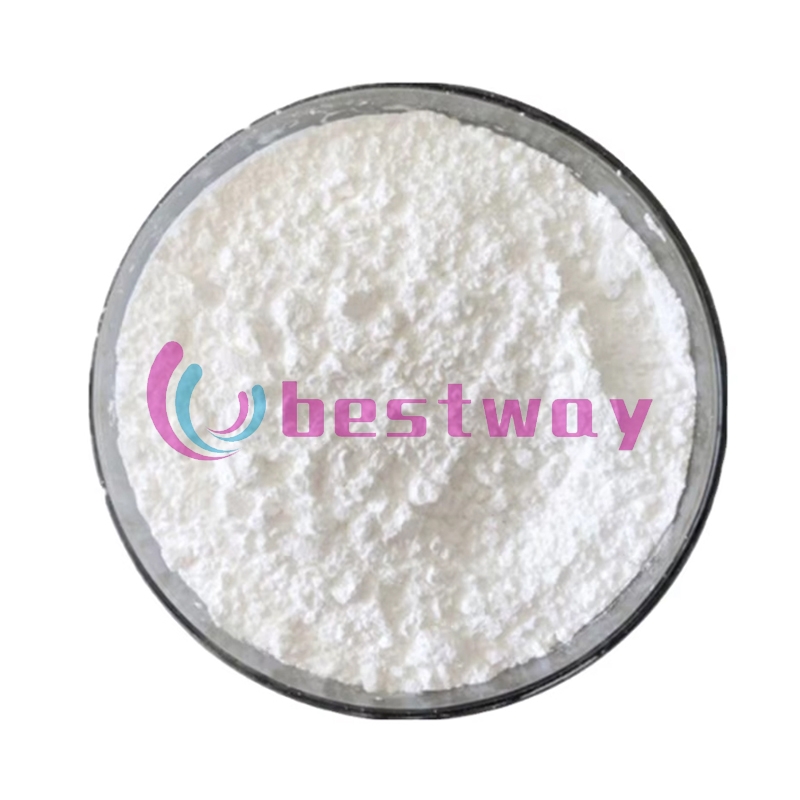
Lactose is a white hard crystalline powder. (NTP, 1992)
Lactose is a white hard crystalline powder. (NTP, 1992)|Beta-lactose is the beta-anomer of lactose.|beta-Lactose contains a Lactosylceramide motif and is often attached to a Cer aglycon.|A disaccharide of GLUCOSE and GALACTOSE in human and cow milk. It is used in pharmacy for tablets, in medicine as a nutrient, and in industry.CertificatesBasic Info-
Product Name:
(+)-Lactose
Other Name:D-Glucose,4-O-β-D-galactopyranosyl-;Lactose;4-O-β-D-Galactopyranosyl-D-glucose;Lactin;Lactobiose;Milk sugar;Saccharum lactin;Lactin (carbohydrate);(+)-Lactose;Lactose anhydrous;Aletobiose;Galactinum;Osmolactan;D-(+)-Lactose;Tablettose;Fast-flo;AHL;Zeparox EP;Lactose Fast-flo;Fast-Flo Lactose;Pharmatose 21;Pharmatose 325M;Nonpareil 107;Tablettose 70;Lactose anhydride;Flowlac 100;Tablettose 80;Super-Tab;Pharmatosa DCL 21;Sorbalac 400;DCl 11;Granulac 140M;Respitose SV 003;Prismalac;Sachelac;Spherolac;Pharmatose DCL 15;Respitose ML 003;Lactohale 300;Sorbolac 400;Dilactose;Lactose Edible 90;SuperTab 21AN;Respitose ML 001;Granulac 70;Granulac 140;Lactohale 100;Lactohale 200;Variolac 960;PrenoLakt;SuperTab 11SD;Respitose ML 006;DCL 15;Inhalac 70;Dairylac 80;Respitose SV 010;Respitose MC 001;LE-PRO LAC 451;Lactose DCL 11;Inhalac 250;Tablettose 100;America Grand Lactose;GranuLac;FlowLac;DuraLacH;Hilmar Extra Fine;Lactose DCL 21;Hilmar Fine Graind;Lactopure Refined Powder;Respitose SV 001;Hilmar 5030;Leprino 100;1336-90-9;35396-14-6;36570-80-6;73824-63-2;89466-76-2;200734-90-3;396716-09-9;1065027-17-9
CAS No.:63-42-3
Molecular Formula:C12H22O11
InChIKeys:InChIKey=DKXNBNKWCZZMJT-JVCRWLNRSA-N
Molecular Weight:342.29600
Exact Mass:342.30
EC Number:200-559-2|227-751-9
UNII:13Q3A43E0S
DSSTox ID:DTXSID5058723
Color/Form:White, hard, crystalline mass of white powder
HScode:1702190000
Categories:
Characteristics-
PSA:
197.37000
XLogP3:-5.55460
Appearance:white crystals or powder
Density:1.52 g/cm3
Melting Point:201-202 °C
Boiling Point:667.9ºC at 760 mmHg
Flash Point:357.8ºC
Refractive Index:1.652
Water Solubility:H2O: 5-10 g/100 mL at 20 ºC
Storage Conditions:Mold growth may occur under humid conditions (80% RH and above). Lactose may develop a brown coloration on storage, the reaction being accelerated by warm, damp conditions. At 80°C and 80% RH, tablets containing anhydrous lactose have been shown to expand 1.2 times after one day.
Lactose anhydrous should be stored in a well-closed container in a cool, dry place.Vapor Pressure:1.08E-20mmHg at 25°C
Odor:Odorless
Taste:Sweet
Henrys Law Constant:Henry's Law constant = 3.40X10⁻¹⁹ atm-cu m/mol at 25 °C (est)
Collision Cross Section:175.1 Ų [M+Na]+ [CCS Type: DT, Method: single field calibrated with Agilent tune mix (Agilent)]|178.83 Ų [M+Na]+ [CCS Type: DT, Method: stepped-field]|170.23 Ų [M-H]- [CCS Type: DT, Method: stepped-field]|173 Ų [M+Na]+ [CCS Type: TW, Method: calibrated with polyalanine]|178.6 Ų [M+K]+ [CCS Type: DT, Method: single field calibrated with ESI Low Concentration Tuning Mix (Agilent)]|175.3 Ų [M+Na]+ [CCS Type: DT, Method: single field calibrated with ESI Low Concentration Tuning Mix (Agilent)]|176.9 Ų [M-H]- [CCS Type: DT, Method: single field calibrated with ESI Low Concentration Tuning Mix (Agilent)]
Experimental Properties:Stable in air|On hydrolysis with 2% H2So4, or with emulsin lactose yields 1 mol d_glucose and 1 mol D-galactose. Reduces Fehling's solution|MP: 254 °C; density: 1.59 g/cu cm at 20 °C; very soluble in water; slightly soluble in ethanol; insoluble in ethyl ether, chloroform /beta-D-Lactose/|MP: 201 °C (decomposes); density: 1.547 g/cu cm at 20 °C; very soluble in water; insoluble in ethanol, ethyl ether, chloroform, methanol /alpha-lactose monohydrate/|Monoclinic sphenoidal crystals from water. Faintly sweet taste. Stable in air, but readily absorbs odors. Becomes anhydrous at 120 °C; mp: 201-202 °C (rapid heating). Shows mutarotation. Specific optical rotation +92.6 deg to +83.5 deg (10 minutes) to +69 deg (50 minutes) to 52.3 deg (22 hours, c = 4.5) at 20 °C/D. ... One gram dissolves in 5 mL water, in 2.6 mL boiling water; very slightly soluble in alcohol; insoluble in chloroform, ether. Ka at 16.5 °C = 6.0X10⁻¹³. Specific gravity of aqueous solutions calculated for the monohydrate: 5.2% = 1.018; 10.2% = 1.038; 20.0% = 1.078; 30.2% = 1.123; 50.9% = 1.226; 60.8% = 1.281; 69.1% = 1.330 at 20 °C/4 °C /alpha-Lactose monohydrate/|Hydroxyl radical reaction rate constant = 1.54X10⁻¹⁰ cu cm/molec-sec at 25 °C (est)
Air and Water Reactions:Water soluble.
Reactive Group:Alcohols and Polyols
Reactivity Profile:Flammable and/or toxic gases are generated by the combination of alcohols with alkali metals, nitrides, and strong reducing agents. They react with oxoacids and carboxylic acids to form esters plus water. Oxidizing agents convert them to aldehydes or ketones. Alcohols exhibit both weak acid and weak base behavior. They may initiate the polymerization of isocyanates and epoxides.
Hazard IdentificationClassification of the substance or mixture
Not classified.
GHS label elements, including precautionary statements
Pictogram(s) No symbol. Signal word No signal word
Hazard statement(s) none
Precautionary statement(s) Prevention none
Response none
Storage none
Disposal none
Other hazards which do not result in classification
no data available
Handling and StoragePrecautions for safe handling
Handling in a well ventilated place. Wear suitable protective clothing. Avoid contact with skin and eyes. Avoid formation of dust and aerosols. Use non-sparking tools. Prevent fire caused by electrostatic discharge steam.
Conditions for safe storage, including any incompatibilities
Store the container tightly closed in a dry, cool and well-ventilated place. Store apart from foodstuff containers or incompatible materials.
-
-
Seller Information
-
Business Type:
Trader
-
Main Products:
DMF,Aniline,Benzene,Phosphoric acid,Hexane,Heptane
-
Location:
No.19-10 Building 10, No.9 Huoju Rd, Jiulongpo District, Chongqing.
-
Payment Terms:
L/C,TT against B/L draft before shipment,100% TT in advance
-
Total Employees:
5-10
-
Year of Establishment:
2012
Company Certificates-
 EMS CERTIFICATION OF REGISTRATION
-
 OHSMS CERTIFICATION OF REGISTRATION
-
 QMS CERTIFICATION OF REGISTRATION
-
-
Inquiry History21 Inquiries
Country Product Purchase Quantity Date Posted  Malaysia
(+)-Lactose
300 MT Oct 19, 2026  Oman
Lactose Monohydrate
10 MT Aug 3, 2026  India
Lactose
100.00 MT Apr 7, 2026  Singapore
lactose (200 mesh) or lactose monohydrate
1 KG Feb 23, 2026
India
Lactose Anhydrous
200 KG Jan 7, 2026  Switzerland
Lactose Anhydrous food grade
200 KG Dec 4, 2025
Malaysia
Lactose 200 Mesh
1 MT Nov 13, 2025
India
Lactose-200 mesh
5000.00 KG Oct 9, 2025
Singapore
Inhalation grade of lactose
1 KG Oct 2, 2025
Singapore
Lactose
100 KG Sep 1, 2025
India
Lactose
625 KG Jul 29, 2025
India
Lactose
1 KG Mar 27, 2025  Indonesia
Lactose anhydrous
0.03 TON Oct 16, 2024  Egypt
anhydrous lactose
1000 KG Oct 3, 2024
Oman
Lactose
1 TON Sep 3, 2024  Bangladesh
High quality Lactose
500 MT May 7, 2024
Bangladesh
Lactose pharmaceutical grade
50 TON Mar 11, 2024
India
Lactose Anhydrous BP/USP GRADE
1300.00 KG Feb 1, 2024  Vietnam
latose
2 MT Jan 11, 2024
Vietnam
Lactose 200 mesh
2000 KG Jan 11, 2024 Post an enquiry for this product


- Hot Searches
- aluminium carbide
- prednisolone vs prednisolone sodium phosphate
- polyethylene terephthalate prices
- n-isopropylbenzylamine for sale
- polyethylene price 2021
- tirzepatide peptide where to buy
- retatrutide usa
- hobt sds
- methyl ethyl ketone for sale
- sodium propionate
- retatrutide vendor
- colored carbon powder
More from this Seller
-
-

-
GY-Ammonium Carbonate
Food Grade / 99.00%
-
-
-

-
GY-Cyclohexane
Industrial Grade / 99.9%
-
-
-

-
GY-2,6-Lutidine
Industrial Grade / 99.0%
-
-
-

-
GY-Methylcyclohexane
Industrial Grade / 99.0%
-
-
-
")
-
Diatomaceous Earth (Diatomite)
Industrial Grade / 85.0%
-
-
-

-
GY-Sodium sulfite
Industrial Grade / 97.0%
-


Hot Related Products
-
 Lactulose solution USP Lactulose concentrate CAS 4618-18-2
-
 Gluconic Acid
-
 China Most Professional Factory Supply High Qulity Acetobromo-α-D-galactose CAS 3068-32-4
-
 Chinese manufacture PNQ supply 2'-Focusllactose
$100/UNIT EXW
-
 2,3-Butanediol; 2,3-Butylene glycol; CAS 513-85-9
-
 Lactulose
$28/KG EXW
-
 2,3 Butanediol Cas: 513-85-9
-
 Professional Food Additive Manufacturer CAS NO 4618-18-2 Lactulose powder
-
 41263-94-9 2'-FUCOSYLLACTOSE
-
 Α-PROTEIN 99% Dideu