




γ-Aminobutyric acid

-
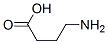
γ-Aminobutyric acid
structure -
-
CAS No:
56-12-2
-
Formula:
C4H9NO2
-
Chemical Name:
γ-Aminobutyric acid
-
Synonyms:
Butanoic acid,4-amino-;Butyric acid,4-amino-;4-Aminobutanoic acid;γ-Aminobutyric acid;GABA;Gamma-aminobutyric acid;4-Aminobutyric acid;Piperidinic acid;Piperidic acid;Gammalon;Gamarex;Gammalone;Gammasol;Mielogen;Mielomade;Gaballon;Gammar;γ-Aminobutanoic acid;Aminalon;ω-Aminobutyric acid;3-Carboxypropylamine;NSC 27418;NSC 32044;NSC 45460;NSC 51295;Pharmagaba;Pharmagaba 20;Pharmagaba 20D;Pharma-GABA 20S;Oryza GABA Extract HC 90;Pharma GABA 30L;Lacto Gaban;1: PN: TWI669392 SEQID: 1 claimed sequence;3131-86-0
- Categories:
-
CAS No:
Description
White, powdery solid; savory, meat-like aroma
Solid|White, powdery solid; Savoury, meat-like aroma
Gamma-aminobutyric acid is a gamma-amino acid that is butanoic acid with the amino substituent located at C-4. It has a role as a signalling molecule, a human metabolite, a Saccharomyces cerevisiae metabolite and a neurotransmitter. It is a gamma-amino acid and a monocarboxylic acid. It derives from a butyric acid. It is a conjugate acid of a gamma-aminobutyrate. It is a tautomer of a gamma-aminobutyric acid zwitterion.|The most common inhibitory neurotransmitter in the central nervous system.|Vigabatrin is a GABA derivative that is used in combination with other agents as therapy of refractory complex partial seizures and as monotherapy for infantile spasms. Vigabatrin is associated with a paradoxical decrease in serum enzyme levels during therapy, explained by its direct inhibition of aminotransferase activity. Vigabatrin has not been convincingly linked to cases of clinically apparent liver injury, but was linked to a fatal case of Reye syndrome in a child with severe developmental delay.|Granulocyte colony stimulating factor (G-CSF) and granulocyte-macrophage colony stimulating factor (GM-CSF) are glycosylated polypeptides that induce an increase in the proliferation and maturation of white blood cells including neutrophils and monocytes-macrophages. Recombinant forms of these colony stimulating factors are used to treat severe neutropenia in patients receiving cancer chemotherapy or undergoing hematopoietic cell transplantation. Recombinant forms include filgrastim (G-CSF) and sargramostim (GM-CSF), both of which are commercially available for therapy of severe neutropenia and bone marrow failure. Neither filgrastim nor sargramostim have been linked to serum enzyme elevations during therapy or to clinically apparent liver injury.|Gamma-Aminobutyric Acid is a naturally occurring neurotransmitter with central nervous system (CNS) inhibitory activity. Gamma-aminobutyric acid (GABA), converted from the principal excitatory neurotransmitter glutamate in the brain, plays a role in regulating neuronal excitability by binding to its receptors, GABA-A and GABA-B, and thereby causing ion channel opening, hyperpolarization and eventually inhibition of neurotransmission.
γ-Aminobutyric acid Basic Attributes
103.12
103.12
906818
200-258-6
2ACZ6IPC6I
757426|51295|45460|32044|27418
DTXSID6035106
C80523
29224995
Characteristics
63.3
-3.2
White to almost white Powder
1.2300 (estimate)
203 °C (decomp)
248ºC at 760 mmHg
103.8ºC
1.465
H2O: soluble
Store at RT.
Safety Information
2
36/37/38-20/21/22
26-36
ES6300000
Xi,Xn
Irritant
Stable under normal temperatures and pressures.
P261, P264, P271, P280, P302+P352, P304+P340, P305+P351+P338, P312, P321, P332+P313, P337+P313, P362, P403+P233, P405, P501
H315
|Warning|H315 (100%): Causes skin irritation [Warning Skin corrosion/irritation]|P261, P264, P271, P280, P302+P352, P304+P340, P305+P351+P338, P312, P321, P332+P313, P337+P313, P362, P403+P233, P405, and P501|Aggregated GHS information provided by 368 companies from 11 notifications to the ECHA C&L Inventory. Each notification may be associated with multiple companies.
Toxicity
In controlled clinical trials, addition of vigabatrin to standard anticonvulsant therapy was reported to cause an immediate and marked decrease in serum enzyme levels that could be reproduced by simply mixing vigabatrin with plasma. In some instances, markedly raised serum ALT levels were found to rapidly fall into the normal range with treatment. Vigabatrin inhibits GABA transaminase and is thus suspected of also being an inhibitor of alanine and aspartate aminotransferase, accounting for its unusual effects on liver associated enzymes. In prelicensure clinical trials, there were no reports of serum enzyme elevations during treatment and no instances of clinically apparent liver injury. After its general availability, however, there have been isolated case reports of severe liver injury and hepatitis associated with vigabatrin use. The onset of injury was 3 to 10 months after starting vigabatrin and was largely hepatocellular. One case resulted in rapid death from liver failure and a second worsened despite stopping and ultimately required a course of immunosuppression with prednisone and azathioprine (Case 1). Thus, clinically apparent liver injury from vigabatrin may occur and can be severe, but is rare.|Filgrastim and sargramostim have not been linked to instances of significant serum enzyme elevations during therapy and have not been implicated in cases of clinically apparent liver injury. In multiple large prelicensure studies, acute liver injury was not mentioned as an adverse event and serum aminotransferase elevations were elevated in a similar or lower proportion of patients receiving these growth factors than in placebo or comparator arms. G-CSF and GM-CSF are often given to critically ill patients receiving high doses of chemotherapy in whom serum enzyme elevations are common, but which usually can be attributed to the chemotherapy itself or the underlying malignancy. In addition, serum alkaline phosphatase elevations during filgrastim and sargramostim therapy may be from a bone source rather than the liver, in that both agents stimulate the bone marrow and not infrequently cause bone pain. In children, colony stimulating factors can cause hepatomegaly due to extramedullary hematopoiesis. However, since licensure and wide scale use, there have been no published reports of idiosyncratic acute liver injury attributed to filgrastim, pegfilgrastim or sargramostim.
Drug Information
Vigabatrin is a GABA derivative that is used in combination with other agents as therapy of refractory complex partial seizures and as monotherapy for infantile spasms. Vigabatrin is associated with a paradoxical decrease in serum enzyme levels during therapy, explained by its direct inhibition of aminotransferase activity. Vigabatrin has not been convincingly linked to cases of clinically apparent liver injury, but was linked to a fatal case of Reye syndrome in a child with severe developmental delay.|Granulocyte colony stimulating factor (G-CSF) and granulocyte-macrophage colony stimulating factor (GM-CSF) are glycosylated polypeptides that induce an increase in the proliferation and maturation of white blood cells including neutrophils and monocytes-macrophages. Recombinant forms of these colony stimulating factors are used to treat severe neutropenia in patients receiving cancer chemotherapy or undergoing hematopoietic cell transplantation. Recombinant forms include filgrastim (G-CSF) and sargramostim (GM-CSF), both of which are commercially available for therapy of severe neutropenia and bone marrow failure. Neither filgrastim nor sargramostim have been linked to serum enzyme elevations during therapy or to clinically apparent liver injury.
Anticonvulsants|Hematologic Growth Factors
Substances used for their pharmacological actions on GABAergic systems. GABAergic agents include agonists, antagonists, degradation or uptake inhibitors, depleters, precursors, and modulators of receptor function. (See all compounds classified as GABA Agents.)
4 Aminobutanoic Acid
γ-Aminobutyric acid Use and Manufacturing
It is obtained by using potassium phthalimide and γ-chlorobutyronitrile as raw materials, heating the reaction, and purifying the product with sulfuric acid.
antihypertensive
Butanoic acid, 4-amino-: ACTIVE
Food additives -> Flavoring Agents|Flavoring Agents -> JECFA Flavorings Index|Fatty Acyls [FA] -> Fatty Acids and Conjugates [FA01] -> Amino fatty acids [FA0110]|Cosmetics -> Hair conditioning
Flavoring Agents
Drug Function and Efficacy
It combines with blood ammonia in the body to form urea and is excreted from the body, which has the effect of reducing blood ammonia and promoting brain metabolism. It may be a central mediator that can enhance the activity of glucose phosphatase and facilitate the recovery of brain cell function.
Registered Holders
-
積水メディカル株式会社
Active![Japan]() Japan
Japan
-
Zhejiang Zhebei Pharmaceutical Co., Ltd.
Active![China]() China
China
-
NORTHEAST Pharmaceutical Group Co., Ltd.
Active![China]() China
China


Recommended Suppliers of γ-Aminobutyric acid
-
![China]() CN
CN
8 YRS
Business licensedDistributor Supplier of Resin,Coating&Ink,Adhesive,Polyurethane,Home&Personal Care,Plastic & Rubber -
![China]() CN
CN
10 YRS
Business licensed Certified factoryManufactory Supplier of Viablife Ceramide NPInquiryCAS No.: 56-12-2Grade: Cosmetics GradeContent: 99% -
![China]() CN
CN
6 YRS
Business licensed Certified factoryManufactory Supplier of Erythritol,L-Leucine DC,White Kidney Bean Extract,L-Citrulline DC,L-Glutamine DC,L-Arginine HCL DC,Sucralose,L-Isoleucine DC,D-Calcium Pantothenate,Apple Cider Vinegar Powder,Ginkgo Biloba Extract,nmn-Nicotinamide Mononucleotide,Stevia Extract,γ-aminobutyric(GABA),Tribulus Terrestris Extract,D-Biotin,NR-Nicotinamide Riboside,Ascorbic Acid DC,L-GlutathioneInquiryCAS No.: 56-12-2Grade: Food GradeContent: 99.0% -
![China]() CN
CN
5 YRS
Business licensed Certified factoryManufactory Supplier of D-ribose,Creatine Monohydrate,L-Glutamine -
![China]() CN
CN
3 YRS
Business licensed Certified factoryManufactory Supplier of Octocrylene,Etocrilene,Ethylhexyl Triazone,Tris Base,DL-Homocysteinethiolactone hydrochloride,Thiodiglycolic anhydride,Tris HCL,DHHB,VCE
Learn More Other Chemicals
-
3,5-DIBROMO-2-[[[(3,5-DINITROBENZOYL)AMINO]THIOXOMETHYL]AMINO]-BENZOIC ACID
535965-38-9
-
3,5-DIBROMO-2-[[[[(2-CHLOROPHENOXY)ACETYL]AMINO]THIOXOMETHYL]AMINO]-BENZOIC ACID
532386-89-3
-
3,5-DIBROMO-2-[[[(4-METHYL-3-NITROBENZOYL)AMINO]THIOXOMETHYL]AMINO]-BENZOIC ACID
532943-48-9
-
3,5-DIBROMO-2-[[[[3-(2-FURANYL)-1-OXO-2-PROPENYL]AMINO]THIOXOMETHYL]AMINO]-BENZOIC ACID Formula
586392-09-8
-
3,5-DIBROMO-2-[[[[(2-METHYLPHENOXY)ACETYL]AMINO]THIOXOMETHYL]AMINO]-BENZOIC ACID Formula
531548-30-8
-
2-(1,8-dibromo-16,18-dioxo-17-azapentacyclo[6.6.5.0~2,7~.0~9,14~.0~15,19~]nonadeca-2,4,6,9,11,13-hexaen-17-yl)benzoic acid Formula
333340-54-8
-
3,5-DIBROMO-2-[[[[3-(PHENOXYMETHYL)BENZOYL]AMINO]THIOXOMETHYL]AMINO]-BENZOIC ACID Structure
586393-79-5
-
3,5-DIBROMO-2-[[[(4-CHLOROBENZOYL)AMINO]THIOXOMETHYL]AMINO]-BENZOIC ACID Structure
531530-32-2
-
What is 2-Cyclopentyl-3-(2,4-dichlorophenyl)-1,2,3,4-tetrahydro-1-oxo-4-isoquinolinecarboxylic acid
400073-92-9
-
What is 9-Octadecenoic acid (9Z)-, compd. with N,N-dimethylcyclohexanamine (1:1)
65122-23-8