




2,6-Diaminotoluene
-
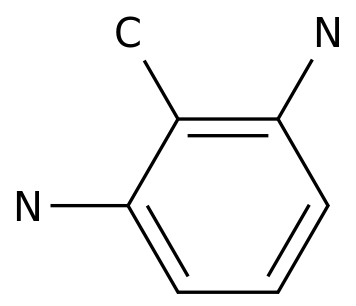
2,6-Diaminotoluene
structure -
-
CAS No:
823-40-5
-
Formula:
C7H10N2
-
Chemical Name:
2,6-Diaminotoluene
-
Synonyms:
1,3-Benzenediamine,2-methyl-;Toluene-2,6-diamine;2-Methyl-1,3-benzenediamine;2,6-Diaminotoluene;2,6-Tolylenediamine;2,6-Diamino-1-methylbenzene;2-Methyl-1,3-phenylenediamine;2-Methyl-m-phenylenediamine;2,6-Toluylenediamine;1,3-Diamino-2-methylbenzene;NSC 147490
- Categories:
-
CAS No:
Description
off-white crystals
2,6-diaminotoluene is a colorless prisms (from water). (NTP, 1992)|OtherSolid|Solid|COLOURLESS CRYSTALS. TURNS BROWN ON EXPOSURE TO AIR.|Colorless prisms (from water).
2,6-diaminotoluene is a colorless prisms (from water). (NTP, 1992)|2,6-diaminotoluene is a diamine that is toluene in which both of the hydrogens ortho- to the methyl group are replaced by amino groups. It has a role as a mutagen. It is a diamine and a primary amino compound. It derives from a hydride of a toluene.
2,6-Diaminotoluene Basic Attributes
122.17
122.17
2079476
212-513-9
H838Q10551
0340
147490
3077
DTXSID4027319
Prisms from benzene, water
29215190
Characteristics
52
0.16 (est)
Dark gray to brown or black Powder, Chunks or Pellets
1.1±0.1 g/cm3
106 °C
289 °C
148.3±21.3 °C
1.636
H2O: 60 g/L (15 ºC)
Well closed.
Vapour pressure, kPa at 150°C: 2.13
Open flame is flammable; high heat decomposes toxic nitrogen oxide fumes
Henry's Law constant = 7.43X10⁻¹⁰ atm-cu m/mol at 25 °C (est)
When heated to decomposition it emits toxic fumes of NOx|Hydroxyl radical reaction rate constant = 2.0X10⁻¹⁰ cu cm/molec-sec at 25 °C (est)
Water soluble.
Amines, Aromatic
2,6-DIAMINOTOLUENE neutralizes acids in exothermic reactions to form salts plus water. May be incompatible with isocyanates, halogenated organics, peroxides, phenols (acidic), epoxides, anhydrides, and acid halides. Flammable gaseous hydrogen may be generated in combination with strong reducing agents, such as hydrides.
Safety Information
III
6.1
UN 3077 9/PG 3
3
21/22-43-51/53-68-50/53-40
24-36/37-61
XS9750000
Xn,N
The warehouse is ventilated, low temperature and dry; stored separately from oxidants, food additives and acids
Stable. Combustible. Incompatible with strong oxidizing agents, strong acids.
P273-P280
H302 + H312-H317-H341-H411
Generators of waste (equal to or greater than 100 kg/mo) containing this contaminant, EPA hazardous waste number U221, must conform with USEPA regulations in storage, transportation, treatment and disposal of waste.|SRP: Wastewater from contaminant suppression, cleaning of protective clothing/equipment, or contaminated sites should be contained and evaluated for subject chemical or decomposition product concentrations. Concentrations shall be lower than applicable environmental discharge or disposal criteria. Alternatively, pretreatment and/or discharge to a permitted wastewater treatment facility is acceptable only after review by the governing authority and assurance that "pass through" violations will not occur. Due consideration shall be given to remediation worker exposure (inhalation, dermal and ingestion) as well as fate during treatment, transfer and disposal. If it is not practicable to manage the chemical in this fashion, it must be evaluated in accordance with EPA 40 CFR Part 261, specifically Subpart B, in order to determine the appropriate local, state and federal requirements for disposal.
Flash point data for this chemical are not available. It is probably combustible. (NTP, 1992)|Combustible.
|Warning|H302: Harmful if swallowed [Warning Acute toxicity, oral]|P201, P202, P261, P264, P270, P272, P273, P280, P281, P301+P312, P302+P352, P308+P313, P312, P321, P322, P330, P333+P313, P363, P391, P405, and P501|H302 (100%): Harmful if swallowed [Warning Acute toxicity, oral]|Aggregated GHS information provided by 166 companies from 4 notifications to the ECHA C&L Inventory. Each notification may be associated with multiple companies.|H315: Causes skin irritation [Warning Skin corrosion/irritation]|P201, P202, P260, P261, P264, P270, P271, P280, P281, P302+P352, P304+P340, P305+P351+P338, P308+P313, P309+P311, P312, P321, P332+P313, P337+P313, P362, P403+P233, P405, and P501
Excerpt from ERG Guide 171 [Substances (Low to Moderate Hazard)]: As an immediate precautionary measure, isolate spill or leak area in all directions for at least 50 meters (150 feet) for liquids and at least 25 meters (75 feet) for solids. SPILL: Increase, in the downwind direction, as necessary, the isolation distance shown above. FIRE: If tank, rail car or tank truck is involved in a fire, ISOLATE for 800 meters (1/2 mile) in all directions; also, consider initial evacuation for 800 meters (1/2 mile) in all directions. (ERG, 2016)
SMALL SPILLS AND LEAKAGE: If you spill this chemical, you should dampen the solid spill material with water, then transfer the dampened material to a suitable container. Use absorbent paper dampened with water to pick up any remaining material. Seal your contaminated clothing and the absorbent paper in a vapor-tight plastic bag for eventual disposal. Wash all contaminated surfaces with a soap and water solution. Do not reenter the contaminated area until the Safety Officer (or other responsible person) has verified that the area has been properly cleaned. STORAGE PRECAUTIONS: You should store this material in a refrigerator. (NTP, 1992)
RECOMMENDED RESPIRATOR: Where the neat test chemical is weighed and diluted, wear a NIOSH-approved half face respirator equipped with an organic vapor/acid gas cartridge (specific for organic vapors, HCl, acid gas and SO2) with a dust/mist filter. (NTP, 1992)|Wear positive pressure self-contained breathing apparatus when fighting fires involving this material. /Toluenediamine/|Wear appropriate personal protective clothing to prevent skin contact. /Toluenediamine/|Wear appropriate eye protection to prevent eye contact. /Toluenediamine/|Eyewash fountains should be provided in areas where there is any possbility that workers could be exposed to the substance; this is irrespective of the recommendation involving the wearing of eye protection. /Toluenediamine/|For more Personal Protective Equipment (PPE) (Complete) data for 2,6-DIAMINOTOLUENE (8 total), please visit the HSDB record page.
If material involved in fire: Extinguish fire using agent suitable for type of surrounding fire. (Material itself does not burn or burns with difficulty.) Use water in flooding quantities as fog. Use "alcohol" foam, dry chemical or carbon dioxide. Apply water from as far a distance as possible. Keep run-off water out of sewers and water sources. /2,4-Toluenediamine/|Use water spray, foam, dry powder.
Spillage Disposal. Personal protection: P2 filter respirator for harmful particles. Do not let this chemical enter the environment. Sweep spilled substance into covered containers. If appropriate, moisten first to prevent dusting. Carefully collect remainder. Then store and dispose of according to local regulations.
If material not involved in fire: Keep material out of water sources and sewers. Build dikes to contain flow as necessary. Attempt to stop leak if without undue personnel hazard. /Toluenediamine/|Personnel protection: Avoid breathing vapors. Keep upwind. Do not handle broken packages unless wearing appropriate personal protective equipment. /Toluenediamine/|The worker should immediately wash the skin when it becomes contaminated. /Toluenediamine/|The worker should wash daily at the end of each work shift, and prior to eating, drinking, smoking, etc. /Toluenediamine/|For more Preventive Measures (Complete) data for 2,6-DIAMINOTOLUENE (7 total), please visit the HSDB record page.
/GUIDE 151: SUBSTANCES - TOXIC (NON-COMBUSTIBLE)/ Health: Highly toxic, may be fatal if inhaled, swallowed or absorbed through skin. Avoid any skin contact. Effects of contact or inhalation may be delayed. Fire may produce irritating, corrosive and/or toxic gases. Runoff from fire control or dilution water may be corrosive and/or toxic and cause pollution. /2,4-Toluenediamine; 2,4-Toluylenediamine; 2,4-Toluylenediamine, solid; 2,4-Toluylenediamine, solution/|/GUIDE 151: SUBSTANCES - TOXIC (NON-COMBUSTIBLE)/ Fire or Explosion: Non-combustible, substance itself does not burn but may decompose upon heating to produce corrosive and/or toxic fumes. Containers may explode when heated. Runoff may pollute waterways. /2,4-Toluenediamine; 2,4-Toluylenediamine; 2,4-Toluylenediamine, solid; 2,4-Toluylenediamine, solution/|/GUIDE 151: SUBSTANCES - TOXIC (NON-COMBUSTIBLE)/ Public Safety: CALL Emergency Response Telephone Number ... As an immediate precautionary measure, isolate spill or leak area in all directions for at least 50 meters (150 feet) for liquids and at lease 25 meters (75 feet) for solids. Keep unauthorized personnel away. Stay upwind. Keep out of low areas. /2,4-Toluenediamine; 2,4-Toluylenediamine; 2,4-Toluylenediamine, solid; 2,4-Toluylenediamine, solution/|/GUIDE 151: SUBSTANCES - TOXIC (NON-COMBUSTIBLE)/ Protective Clothing: Wear positive pressure self-contained breathing apparatus (SCBA). Wear chemical protective clothing that is specifically recommended by the manufacturer. It may provide little or no thermal protection. Structural firefighters' protective clothing provides limited protection in fire situations ONLY; it is not effective in spill situations where direct contact with the substance is possible. /2,4-Toluenediamine; 2,4-Toluylenediamine; 2,4-Toluylenediamine, solid; 2,4-Toluylenediamine, solution/|For more DOT Emergency Guidelines (Complete) data for 2,6-DIAMINOTOLUENE (8 total), please visit the HSDB record page.
No person may /transport,/ offer or accept a hazardous material for transportation in commerce unless that person is registered in conformance ... and the hazardous material is properly classed, described, packaged, marked, labeled, and in condition for shipment as required or authorized by ... /the hazardous materials regulations (49 CFR 171-177)./|The International Air Transport Association (IATA) Dangerous Goods Regulations are published by the IATA Dangerous Goods Board pursuant to IATA Resolutions 618 and 619 and constitute a manual of industry carrier regulations to be followed by all IATA Member airlines when transporting hazardous materials.|The International Maritime Dangerous Goods Code lays down basic principles for transporting hazardous chemicals. Detailed recommendations for individual substances and a number of recommendations for good practice are included in the classes dealing with such substances. A general index of technical names has also been compiled. This index should always be consulted when attempting to locate the appropriate procedures to be used when shipping any substance or article.
In human beings, as in animals, diaminotoluenes are considered to be irritants for the mucous membranes and skin, and to lead to conjunctivitis and corneal opacities. ... In the case of ingestion of massive amounts, nausea, vomiting, and diarrhea would occur, with the possible production of methemoglobinemia. /Diaminotoluene/
NIOSH considers toluenediamine be a potential occupational carcinogen. NIOSH usually recommends that occupational exposures to carcinogens be limited to the lowest feasible concentration. /Toluenediamine/
Personal protection: P2 filter respirator for harmful particles. Do NOT let this chemical enter the environment. Sweep spilled substance into covered containers. If appropriate, moisten first to prevent dusting. Carefully collect remainder. Then store and dispose of according to local regulations.
Well closed.
Evaporation at 20 °C is negligible; a harmful concentration of airborne particles can, however, be reached quickly when dispersed.
The substance is irritating to the eyes, skin and respiratory tract. The substance may cause effects on the blood. This may result in the formation of methaemoglobin. The effects may be delayed. Medical observation is indicated.
Repeated or prolonged contact with skin may cause dermatitis. Repeated or prolonged contact may cause skin sensitization.
NO open flames.
AVOID ALL CONTACT!
Use ventilation, local exhaust or breathing protection.
Protective gloves. Protective clothing.
Wear safety goggles.
U221; A toxic waste when a discarded commercial chemical product or manufacturing chemical intermediate or an off-specification commercial chemical product or manufacturing chemical intermediate. /Toluenediamine/
Persons in charge of vessels or facilities are required to notify the National Response Center (NRC) immediately, when there is a release of this designated hazardous substance, in an amount equal to or greater than its reportable quantity of 10 lb or 4.54 kg. The toll free number of the NRC is (800) 424-8802. The rule for determining when notification is required is stated in 40 CFR 302.4 (section IV. D.3.b). /Toluenediamine/
U221; As stipulated in 40 CFR 261.33, when toluenediamine, as a commercial chemical product or manufacturing chemical intermediate or an off-specification commercial chemical product or a manufacturing chemical intermediate, becomes a waste, it must be managed according to Federal and/or State hazardous waste regulations. Also defined as a hazardous waste is any residue, contaminated soil, water, or other debris resulting from the cleanup of a spill, into water or on dry land, of this waste. Generators of small quantities of this waste may qualify for partial exclusion from hazardous waste regulations (40 CFR 261.5). /Toluenediamine/
Toxicity
2,4-, 2,5-, 2,6- and 3,4-Toluene diamine (TDA) were tested for their ability to enhance the transformation of primary hamster embryo cells (HEC) by Simian adenovirus 7 (SA7) when administered either prior to or after virus inoculation and for their ability to transform secondary HEC. 2,4-TDA was inactive when given prior to SA7, but active if given after. 2,5-TDA was active in both protocols. 2,6-TDA was marginally active if administered before virus and was the most active of the isomers when administered after virus. 3,4-TDA was the most active compound when added prior to SA7, and was also active when given after virus. All the isomers were capable of producing good dose--responses and absolute increases in the number of virus-transformed foci per dish in one or both of the experimental regimens. Each isomer chemically transformed secondary HEC but good dose--responses were rare, and none of the chemicals were active in more than 50% of the 5 or 6 separate tests performed on each.
LD50 Rat (female) oral 1000 mg/kg bw|LD50 Rat (male) oral 3000 mg/kg bw
F344 rats of each sex were fed 2,6-toluenediamine dihydrochloride at 250 or 500 ppm for 103 wk; B6C3F1 mice of each sex were fed at 2 doses, 50 or 100 ppm for 103 wk. 2,6-Toluenediamine dihydrochloride was not carcinogenic for male and female rats or for male and female mice.
2,6-Diaminotoluene's production and use as in the manufacture of dyes and dye intermediates(1) may result in its release to the environment through various waste streams(SRC).
TERRESTRIAL FATE: Based on a classification scheme(1), measured Koc values of 706 and 708(2) indicate that 2,6-diaminotoluene is expected to have low mobility in soil(SRC). The estimated pKa of 2,6-diaminotoluene is 4.69(3), indicating that this compound will exist partially in the cation form in the environment and cations generally adsorb more strongly to soils containing organic carbon and clay than their neutral counterparts(4). Aromatic amines are expected to bind strongly to humus or organic matter in soils due to the high reactivity of the aromatic amino group(5,6), suggesting that mobility may be much lower in some soils. Volatilization of the neutral species of 2,6-diaminotoluene from moist soil surfaces is not expected to be an important fate process(SRC) given an estimated Henry's Law constant of 7.4X10⁻¹⁰ atm-cu m/mole(SRC), using a fragment constant estimation method(7). 2,6-Diaminotoluene is not expected to volatilize from dry soil surfaces(SRC) based upon a vapor pressure of 2.46X10⁻³ mm Hg at 25 °C(8). A 34% 14-CO2 evolution in 375 days using a soil inoculum in the shake flask test(2) suggests that biodegradation is not an important environmental fate process in soil(SRC).|AQUATIC FATE: Based on a classification scheme(1), measured Koc values of 706 and 708(2) indicate that 2,6-diaminotoluene is expected to adsorb to suspended solids and sediment(SRC). Volatilization of the neutral species from water surfaces is not expected(3) based upon an estimated Henry's Law constant of 7.4X10⁻¹⁰ atm-cu m/mole(SRC), developed using a fragment constant estimation method(4). An estimated pKa of 4.69(5) indicates 2,6-diaminotoluene will exist almost partially in the cation form at pH values of 5 to 9 and, therefore, volatilization from water surfaces is not expected to be an important fate process(SRC). According to a classification scheme(6), an estimated BCF of 3(SRC), from an estimated log Kow of 0.16(7) and a regression-derived equation(8), suggests the potential for bioconcentration in aquatic organisms is low(SRC). A 34% 14-CO2 evolution in 375 days using a soil inoculum in the shake flask test(2) suggests that biodegradation is not an important environmental fate process in water(SRC).|ATMOSPHERIC FATE: According to a model of gas/particle partitioning of semivolatile organic compounds in the atmosphere(1), 2,6-diaminotoluene, which has a vapor pressure of 2.46X10⁻³ mm Hg at 25 °C(2), is expected to exist solely as a vapor in the ambient atmosphere. Vapor-phase 2,6-diaminotoluene is degraded in the atmosphere by reaction with photochemically-produced hydroxyl radicals(SRC); the half-life for this reaction in air is estimated to be 0.6 hours(SRC), calculated from its rate constant of 2.0X10⁻¹⁰ cu cm/molecule-sec at 25 °C(SRC) that was derived using a structure estimation method(3). By analogy to 2,4-diaminotoluene which absorbs UV wavelength 294 nm(4), 2,6-diaminotoluene may be susceptible to direct photolysis by sunlight(SRC).
The rate constant for the vapor-phase reaction of 2,6-diaminotoluene with photochemically-produced hydroxyl radicals has been estimated as 2.0X10⁻¹⁰ cu cm/molecule-sec at 25 °C(SRC) using a structure estimation method(1). This corresponds to an atmospheric half-life of about 0.6 hours at an atmospheric concentration of 5X10+5 hydroxyl radicals per cu cm(1,2). 2,6-Diaminotoluene is not expected to undergo hydrolysis in the environment due to the lack of functional groups that hydrolyze under environmental conditions(3). By analogy to 2,4-diaminotoluene which absorbs UV wavelength 294 nm(4), 2,6-diaminotoluene may be susceptible to direct photolysis by sunlight(SRC).
An estimated BCF of 3 was calculated in fish for 2,6-diaminotoluene(SRC), using an estimated log Kow of 0.16(1) and a regression-derived equation(2). According to a classification scheme(3), this BCF suggests the potential for bioconcentration in aquatic organisms is low(SRC).
Using aerobic conditions with a Washington silt loam surface soil (21% sand; 60% silt; 19% clay; pH 5; 1.3% total organic carbon) from a farm field planted with a rotation of corn and soybeans near Bethehem, PA and a Freehold sandy loam soil (53% sand; 40% silt; 7% clay; pH 5.8; 1.6% total organic carbon) from the Rutgers Experimental Farm, Adelphia, NJ, the Koc of 2,6-diaminotoluene were measured to be 706 and 708, respectively. Under anaerobic conditions, Koc values were 588 and 546, respectively(1). According to a classification scheme(2), this estimated Koc value suggests that 2,6-diaminotoluene is expected to have low mobility in soil. The estimated pKa of 2,6-diaminotoluene is 4.69(3), indicating that this compound will exist partially in the cation form in the environment and cations generally adsorb more strongly to soils containing organic carbon and clay than their neutral counterparts(4). Aromatic amines are expected to bind strongly to humus or organic matter in soils due to the high reactivity of the aromatic amino group(5,6), suggesting that mobility may be much lower in some soils.
The Henry's Law constant for 2,6-diaminotoluene is estimated as 7.4X10⁻¹⁰ atm-cu m/mole(SRC) using a fragment constant estimation method(1). This Henry's Law constant indicates that the neutral species of 2,6-diaminotoluene is expected to be essentially nonvolatile from water and moist soil surfaces(2). The estimated pKa of 4.69(3) indicates 2,6-diaminotoluene will exist partially in the cation form at pH values of 5 to 9 and, therefore, volatilization from water surfaces is not expected to be an important fate process. 2,6-Diaminotoluene is not expected to volatilize from dry soil surfaces(SRC) based upon a vapor pressure of 2.46X10⁻³ mm Hg(4).
GROUNDWATER: 2,6-Diaminotoluene was detected in 1 of 3 groundwater samples collected from beneath a former munitions plant Elsnig, Saxony, Germany at concentration of 0.8 ug/L. It was not detected at 5-7 meters nor 16-18 m depth but was detected at 25-27 meters(1).
Occupational exposure to 2,6-diaminotoluene may occur through inhalation and dermal contact with this compound at workplaces where 2,6-diaminotoluene is produced or used. Use data indicate that the general population may be exposed to 2,6-diaminotoluene via dermal contact with consumer products containing 2,6-diaminotoluene. (SRC)
2,6-Diaminotolunene concentrations of <0.01-3.5 ug/hr and <0.01-2.3 ng/L were reported as urinary elimination rates and plasma levels, respectively, of 15 factory workers exposed to thermal degradation products of TDI-based flexible foam and MDI-based polyurethane glue(1).
Drug Information
Chemical agents that increase the rate of genetic mutation by interfering with the function of nucleic acids. A clastogen is a specific mutagen that causes breaks in chromosomes. (See all compounds classified as Mutagens.)|Substances that increase the risk of NEOPLASMS in humans or animals. Both genotoxic chemicals, which affect DNA directly, and nongenotoxic chemicals, which induce neoplasms by other mechanism, are included. (See all compounds classified as Carcinogens.)
2,6-TDA is rapidly absorbed in the digestive tract. ... Rats given 10-milligram oral doses of (14)C-2,6-TDA eliminated 85% of the radioactivity in urine within 24 hours. No unmetabolized 2,6-TDA was found in the urine. After 6 days, 1% of the radioactivity could still be detected in tissues.|... 2,6-Diaminotoluene was rapidly and extensively absorbed following oral administration, indicating that its lack of carcinogenicity is not due to poor absorption from the gastrointestinal tract. 2,6-DAT was also rapidly excreted, with 85% of 2,6-DAT-associated radioactivity being recovered in the urine within 24 hr. ...
It undergoes hydroxylation and N-acetylation, and the primary metabolites found in urine /of rats/ are 2,6-diacetylaminotoluene and 6-acetylamino-2-amino-3-hydroxytoluene.|... Resolution of the urine by reverse phase HPLC demonstrated the presence of four metabolites, but none of the parent 2,6-DAT. Therefore, the lack of carcinogenicity of 2,6-DAT /in rats/ is not due to lack of biotransformation in vivo. Following separation by HPLC, the metabolites were analyzed by electron impact and fast atom bombardment mass spectroscopy and by NMR spectroscopy. The metabolites were identified as a) 3-hydroxy-2,6-DAT, b) 4-hydroxy-2-acetylamino-6-aminotoluene, c) 2-acetylamino-6-aminotoluene, and d) 2,6-di(acetylamino)-toluene. ...|Male F344-rats were randomly assigned to treatment groups and given a single 10 milligram dose of carbon-14 tagged 2,6-diaminotoluene by gavage. ...Four unique metabolites of 2,6-diaminotoluene were identified in the 24 hour urine specimens by reverse phase HPLC. The metabolites, identified by spectroscopic data, were 3-hydroxy-2,6-diaminotoluene, 5-hydroxy-2-acetylamino-6-aminotoluene, 2-acetylamino-6-aminotoluene, and 2,6-di(acetylamino)-toluene; the latter two metabolites caused significant mutagenicity in the presence of S9 activation. ...
Both 2,4-TDA and 2,6-TDA have been identified in hydrolyzed urine of persons exposed to toluene diisocyanates (TDI), and there are some studies of excretion of 2,4-TDA and 2,6-TDA by persons exposed to TDI. In one study of TDI-exposed workers, the half time in urine was determined to be 18 days for 2,4-TDA and 19 days for 2,6-TDA, and the half time in plasma 7.8 days for 2,4-TDA and 9.6 days for 2,6-TDA. In another study, in which volunteers were exposed to TDI for 4 hours, the half time in plasma for 2,4-TDA and 2,6-TDA was 2 to 5 hours during the initial elimination phase and more than 6 days in the slower phase.
ACUTE/CHRONIC HAZARDS: This compound is toxic. It is a local irritant. (NTP, 1992)
EYES: First check the victim for contact lenses and remove if present. Flush victim's eyes with water or normal saline solution for 20 to 30 minutes while simultaneously calling a hospital or poison control center. Do not put any ointments, oils, or medication in the victim's eyes without specific instructions from a physician. IMMEDIATELY transport the victim after flushing eyes to a hospital even if no symptoms (such as redness or irritation) develop. SKIN: IMMEDIATELY flood affected skin with water while removing and isolating all contaminated clothing. Gently wash all affected skin areas thoroughly with soap and water. If symptoms such as redness or irritation develop, IMMEDIATELY call a physician and be prepared to transport the victim to a hospital for treatment. INHALATION: IMMEDIATELY leave the contaminated area; take deep breaths of fresh air. If symptoms (such as wheezing, coughing, shortness of breath, or burning in the mouth, throat, or chest) develop, call a physician and be prepared to transport the victim to a hospital. Provide proper respiratory protection to rescuers entering an unknown atmosphere. Whenever possible, Self-Contained Breathing Apparatus (SCBA) should be used; if not available, use a level of protection greater than or equal to that advised under Protective Clothing. INGESTION: DO NOT INDUCE VOMITING. If the victim is conscious and not convulsing, give 1 or 2 glasses of water to dilute the chemical and IMMEDIATELY call a hospital or poison control center. Be prepared to transport the victim to a hospital if advised by a physician. If the victim is convulsing or unconscious, do not give anything by mouth, ensure that the victim's airway is open and lay the victim on his/her side with the head lower than the body. DO NOT INDUCE VOMITING. IMMEDIATELY transport the victim to a hospital. (NTP, 1992)
Fresh air, rest. Artificial respiration may be needed. Refer for medical attention.
Remove contaminated clothes. Rinse skin with plenty of water or shower.
First rinse with plenty of water for several minutes (remove contact lenses if easily possible), then refer for medical attention.
/SRP:/ Immediate first aid: Ensure that adequate decontamination has been carried out. If patient is not breathing, start artificial respiration, preferably with a demand valve resuscitator, bag-valve-mask device, or pocket mask, as trained. Perform CPR if necessary. Immediately flush contaminated eyes with gently flowing water. Do not induce vomiting. If vomiting occurs, lean patient forward or place on the left side (head-down position, if possible) to maintain an open airway and prevent aspiration. Keep patient quiet and maintain normal body temperature. Obtain medical attention. /Organic bases/Amines and related compounds/|/SRP:/ Basic treatment: Establish a patent airway (oropharyngeal or nasopharyngeal airway, if needed). Suction if necessary. Watch for signs of respiratory insufficiency and assist ventilations if necessary. Administer oxygen by nonrebreather mask at 10 to 15 L/min. Monitor for pulmonary edema and treat if necessary ... . Monitor for shock and treat if necessary ... . Anticipate seizures and treat if necessary ... . For eye contamination, flush eyes immediately with water. Irrigate each eye continuously with 0.9% saline (NS) during transport ... . Do not use emetics. For ingestion, rinse mouth and administer 5 mL/kg up to 200 mL of water for dilution if the patent can swallow, has a strong gag reflex, and does not drool. Administer activated charcoal ... . Cover skin burns with dry sterile dressings after decontamination ... . /Organic bases/Amines and related compounds/|/SRP:/ Advanced treatment: Consider orotracheal or nasotracheal intubation for airway control in the patient who is unconscious, has severe pulmonary edema, or is in severe respiratory distress. Positive-pressure ventilation techniques with a bag-valve-mask device may be beneficial. Consider drug therapy for pulmonary edema ... . Monitor cardiac rhythm and treat arrhythmias as necessary ... . Start IV administration of D5W /SRP: "To keep open", minimal flow rate/. Use 0.9% saline (NS) or lactated Ringer's (LR) if signs of hypovolemia are present. For hypotension with signs of hypovolemia, administer fluid cautiously. If patient is unresponsive to these measures, vasopressors may be helpful. Watch for signs of fluid overload ... . Administer 1% solution methylene blue if patient is symptomatic with severe hypoxia, cyanosis, and cardiac compromise not responding to oxygen. ... . Treat seizures with diazepam or lorazepam ... . Use proparacaine hydrochloride to assist eye irrigation ... . /Organic bases/Amines and related compounds/
/SIGNS AND SYMPTOMS/ In human beings, as in animals, diaminotoluenes are considered to be irritants for the mucous membranes and skin, and to lead to conjunctivitis and corneal opacities. When solutions come into contact with skin, they can cause irritation, severe dermatitis, and blistering. In case of the inhalation of fumes, coughing, dyspnea, and respiratory distress can result. ... In the case of ingestion of massive amounts, nausea, vomiting, and diarrhea would occur, with the possible production of methemoglobinemia. /Diaminotoluene/|/EPIDEMIOLOGY STUDIES/ In /a/ study, 50 volunteers were examined, 41 of whom provided semen specimens. The total eligible population was not given, though it was reported that 25 workers were regularly exposed, 15 of whom participated in the study. There were no significant differences in sperm count morphology between exposure groups, but the miscarriage rate was reported to be significantly ( P < 0.05) higher for the wives of workers in the DAT-exposed area of the plant, where 6 out of 15 pregnancies ended in miscarriage compared with 1 out of 7 for the wives of DNT-exposed workers, and 3 out of 38 for the wives of unexposed workers. /Diaminotoluene/|/EPIDEMIOLOGY STUDIES/ An epidemiological assessment of the reproduction hazards for males after occupational exposure to diaminotoluenes and dinitrotoluenes was carried out. Reported occupational exposures were ... generally well within the OSHA recommended level of 1.5 mg/cu m for dinitrotoluenes. Examination of 84 workers and 119 unexposed subjects consisted of semen analysis, blood testing, medical examination, and an interview. Seventy-two percent of non-vasectomized exposed workers provided semen samples. These groups of workers were defined by exposure intensity, frequency, and recency, and compared with controls. Although no significant differences in miscarriage rates were reported between exposure categories, the categories were as defined at the time of the study, not at the time of pregnancy. Fertility rates were reported to be unaffected by exposure, but no figures were given. There were no statistically significant differences in semen analysis, sperm count and morphology, and FSH levels, between the 3 exposure groups and unexposed workers. The authors concluded that the results of their study suggested that no detectable reproductive effects existed among male workers exposed to dinitrotoluenes and diaminotoluenes. /Diaminotoluene/|/EPIDEMIOLOGY STUDIES/ /Investigators/ reported an analysis of the fertility of workers exposed to DNT and DAT. The approach taken consisted of workers completing reproductive history questionnaires and of observed births being compared with expected births for the married workers. Expected births were derived from US birth rates by age, calendar year, and parity, and the ratio of observed to expected was expressed as a standardized fertility ratio (SFR). Populations of 137, 207, and 235 persons, respectively, were studied and were largely, but not exclusively, male. ... Comparisons of SFR between different exposure categories, both for the whole population and also among individuals who spent at least part of their reproductive life exposed, did not reveal any significant effects on SFR between exposure groups. The authors estimated that the power of this study to detect a 50% reduction in fertility would have been 90%. /Diaminotoluene/|/SURVEILLANCE/ In 2 ... studies, environmental hygiene sampling took place and workers were invited to volunteer for a medical examination, to complete a reproductive history questionnaire, and to provide semen and blood samples. Semen samples were analyzed for volume, sperm count, and sperm morphology. Blood samples were analyzed for various markers of renal and hepatic function, neither of which showed any significant inter-group differences in any of the studies. Wives of workers were given a more detailed reproductive history questionnaire. In the first study, there were 44 volunteers, 30 of whom provided usable semen specimens. The total potential study population was not given. Of the 30, 9 were exposed, 9 were controls, and 12 were in an intermediate category. The rate of spontaneous abortions was higher among the wives of exposed workers (6/18 pregnancies while the husband was exposed) compared with the controls (4/23 pregnancies), with 6/28 for the intermediate group. The small number of congenital malformations was not exposure related. The sperm count for the exposed (median = 49 million) was significantly ( P < 0.03) lower than that for the control group (median = 121 million); however, the latter figure was unusually high. The exposed group showed a significant reduction in the proportion of the large morphological type. The second study involved only a reproductive history questionnaire and the reporting of hygiene data by the company. Thirty-five out of 41 workers in DAT- and DNT-production areas were interviewed. The rates of congenital abnormalities or spontaneous abortion did not significantly differ between exposure groups. Where the husband was employed in DNT production, 1 out of 9 pregnancies ended in a spontaneous abortion; the equivalent data for DAT was 1 miscarriage out of 14 pregnancies. /Diaminotoluene/
2,6-DAT
The substance can be absorbed into the body by inhalation, through the skin and by ingestion.
Blue lips, fingernails and skin. Cough. Dizziness. Headache. Shortness of breath. Confusion. Convulsions. Nausea. Unconsciousness.
Redness.
Redness. Pain.
2,6-Diaminotoluene Use and Manufacturing
Diaminotoluenes are produced from dinitrotoluenes through a catalytic hydrogenation procedure, or by the reaction of iron and hydrochloric acid with dinitrotoluenes.|CATALYTIC REDUCTION OF MIXED DINITROTOLUENES TO FORM MIXED TOLUENEDIAMINES FOLLOWED BY ISOLATION OF THE 2,6-ISOMER IN A MIXTURE WITH 2,4-ISOMER.
Aromatic amines likely to have high carcinogenic potency. QSARs of aromatic amines.
Corrosion inhibitors and anti-scaling agents
(1977) 4.03X10+10 G (EST)|(1979) 4.74X10+10 G (EST)|1,3-Benzenediamine, 2-methyl- is listed as a High Production Volume (HPV) chemical (65FR81686). Chemicals listed as HPV were produced in or imported into the U.S. in >1 million pounds in 1990 and/or 1994. The HPV list is based on the 1990 Inventory Update Rule. (IUR) (40 CFR part 710 subpart B; 51FR21438).|Production volumes for non-confidential chemicals reported under the Inventory Update Rule.[Table#4822]
ESSENTIALLY 100% AS A CHEM INT FOR TOLUENE DIISOCYANATE
Toluenediamines are available as cast solids in drums and molten liquids in tank cars. /Toluenediamines/|2,4-Diaminotoluene is available in the USA as commercial grade; however, most of this chemical is used as intermediate, without isolation, and is usually produced as part of mixture of about 80% 2,4- & 20% 2,6-diaminotoluene. Also produced in smaller amounts as part of a mixture containing about 65% 2,4- & 35% 2,6-diaminotoluene.
All other basic organic chemical manufacturing|1,3-Benzenediamine, 2-methyl-: ACTIVE|From a commercial standpoint, the most important toluenediamine isomers are the meta, or 2,4- and 2,6-isomers, which are obtained as a mixture by hydrogenation of the corresponding dinitrotoluenes. ... About 4% of the 2,3- and 3,4-isomers are formed as byproducts during toluene dinitration, and the same isomeric diamines subsequently appear as impurities in the mixture of m-diamines. They can be removed by distillation and are sold as commercial o-toluenediamine.
Method: NIOSH 5516, Issue 2; Procedure: high performance liquid chromatography with ultraviolet detection; Analyte: 2,6-toluenediamine in the presence of isocyanates; Matrix: air; Detection Limit: 0.1 ug/sample.|Method: OSHA 65; Procedure: gas chromatography using an electron capture detector; Analyte: 2,6-diaminetoluene; Matrix: air; Detection Limit: 12 parts per trillion (58 nanogram/cu m).|Method is presented fordetermination of 2,6-diaminotoluene in aqueous extracts of food-contact boil-in-bag & retortable pouches. Extracts were subjected to methylene chloride extraction clean-up procedure which effected a 50 fold concentration. A 500 uL portion of concentrate was analyzed by HPLC on a reversed-phase, 5 um, C8 column. Lower limit of detection was 40 ng in unconcentrated aqueous extracts. Results of migration studies are also presented.|The use of HPLC for the determination of carcinogenic phenylenediamines was studied. Detection limits using UV and electrochemical detectors showed that electron detectors were superior in most cases. Chromatographic conditions and sample preparation procedures were described for many phenylenediamines of environmental significance. /Phenylenediamines/
2,6- and 2,4-Diaminotoluene were resolved as sharp peaks by normal-phase HPLC in 3 min by acetonitrile-water-saturated chloroform elution solvent (8:2, vol/vol) with detection by UV absorbance at 250 nm. Detection was very sensitive, allowing quantitation of 1-2 ng of either. Quantitative recovery of 2,4-TDA from spiked rat urine & plasma samples was obtained by extraction with methylene chloride.
Computed Properties
Molecular Weight:122.17
XLogP3:0.9
Hydrogen Bond Donor Count:2
Hydrogen Bond Acceptor Count:2
Exact Mass:122.084398327
Monoisotopic Mass:122.084398327
Topological Polar Surface Area:52
Heavy Atom Count:9
Complexity:82.9
Covalently-Bonded Unit Count:1
Compound Is Canonicalized:Yes
Recommended Suppliers of 2,6-Diaminotoluene
-
![China]() CN
5 YRS
Business licensed Certified factoryManufactory Supplier of Active Pharm Ingredients,Chemical Catalyst,Pharmaceutical Intermediates,Flavors and Fragrances,Agrochemicals,Chemical Pesticides,Organic Intermediates,OLED IntermediatesInquiryCAS No.: 823-40-5Grade: Industrial GradeContent: 99% -
![China]() CN
2 YRS
Business licensed Certified factoryManufactory Supplier of Agrochemicals,Daily Chemicals,Catalysts & Chemical Auxiliary Agents,Extract,Inorganic Chemicals,Organic Intermediate,Pigment & Dyestuff,Polymer,,Flavour & Fragrance,Basic Organic Chemicals,Pharmaceutical cosmetic additives,Veterinary APIs,Feed additives,Natural Nutrition Ingredients,Food Additives,Human APIs -
![China]() CN
4 YRS
Business licensed Certified factoryManufactory Supplier of Flavors & Fragrances,Catalyst & Auxiliary,Intermediates,Dyes & Pigments,Inorganic Chemistry,petro chemicals,Surfactant,Food Additives,Water Treatment Chemicals -
![China]() CN
3 YRS
Business licensedTrader Supplier of api,Intermediates,Organic Chemistry,Inorganic Chemistry,Daily Chemicals,Cosmetic Raw Materals,CATALYST AND AUXILIARY,FLAVORS AND FRAGRANCES,Chemical Pesticides,ADDITIVEInquiryCAS No.: 823-40-5Grade: Pharmaceutical GradeContent: 99%

Learn More Other Chemicals
-
1,4-Diamino anthraquinone
128-95-0
-
Acid Blue 1
129-17-9
-
4,5-Diamino-1-(2-hydroxyethyl)pyrazole sulfate
155601-30-2
-
4-Ethoxyaniline Formula
156-43-4
-
4-(Ethylamino)phenol Formula
659-34-7
-
Phenoxazin-5-ium, 3,7-bis(diethylamino)-, chloride (1:1) Formula
33203-82-6
-
HC Blue 2 Structure
33229-34-4
-
Acid Red 95 Structure
33239-19-9
-
What is 7-(2H-Naphtho[1,2-d]triazol-2-yl)-3-phenyl-2H-1-benzopyran-2-one
3333-62-8
-
What is Bismuth citrate
813-93-4