




4-Din1itroph1eno0l Safety Data Sheets
SAFETY DATA SHEETS
According to the UN GHS revision 8
SECTION 1: Identification
1.1 GHS Product identifier
| Product name | 2,4-dinitrophenol |
|---|
1.2 Other means of identification
| Product number | - |
|---|---|
| Other names | Phenol, 2,4-dinitro-; Solfo Black G; 1-Hydroxy-2,4-dinitrobenzene |
1.3 Recommended use of the chemical and restrictions on use
| Identified uses | Phenols/phenoxy acids |
|---|---|
| Uses advised against | no data available |
1.4 Supplier's details
| Company | Echemi.com |
|---|---|
| Address | Echemi.com |
| Telephone | Echemi.com |
1.5 Emergency phone number
| Emergency phone number | Echemi.com |
|---|---|
| Service hours | Monday to Friday, 9am-5pm (Standard time zone: UTC/GMT +8 hours). |
SECTION 2: Hazard identification
2.1 Classification of the substance or mixture
Acute toxicity - Category 3, Oral
Acute toxicity - Category 3, Dermal
Acute toxicity - Category 3, Inhalation
Specific target organ toxicity â repeated exposure, Category 2
Hazardous to the aquatic environment, short-term (Acute) - Category Acute 1
2.2 GHS label elements, including precautionary statements
| Pictogram(s) | 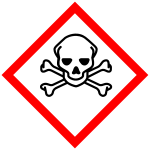 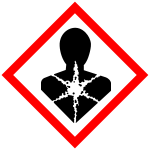 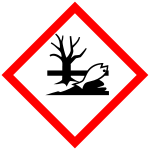 |
|---|---|
| Signal word | Danger |
| Hazard statement(s) | H301 Toxic if swallowed H311 Toxic in contact with skin H331 Toxic if inhaled H373 May cause damage to organs through prolonged or repeated exposure H400 Very toxic to aquatic life |
| Precautionary statement(s) | |
| Prevention | P264 Wash ... thoroughly after handling. P270 Do not eat, drink or smoke when using this product. P280 Wear protective gloves/protective clothing/eye protection/face protection/hearing protection/... P261 Avoid breathing dust/fume/gas/mist/vapours/spray. P271 Use only outdoors or in a well-ventilated area. P260 Do not breathe dust/fume/gas/mist/vapours/spray. P273 Avoid release to the environment. |
| Response | P301+P316 IF SWALLOWED: Get emergency medical help immediately. P321 Specific treatment (see ... on this label). P330 Rinse mouth. P302+P352 IF ON SKIN: Wash with plenty of water/... P316 Get emergency medical help immediately. P361+P364 Take off immediately all contaminated clothing and wash it before reuse. P304+P340 IF INHALED: Remove person to fresh air and keep comfortable for breathing. P319 Get medical help if you feel unwell. P391 Collect spillage. |
| Storage | P405 Store locked up. P403+P233 Store in a well-ventilated place. Keep container tightly closed. |
| Disposal | P501 Dispose of contents/container to an appropriate treatment and disposal facility in accordance with applicable laws and regulations, and product characteristics at time of disposal. |
2.3 Other hazards which do not result in classification
no data available
SECTION 3: Composition/information on ingredients
3.1 Substances
| Chemical name | Common names and synonyms | CAS number | EC number | Concentration |
|---|---|---|---|---|
| 2,4-dinitrophenol | 2,4-dinitrophenol | 51-28-5 | 200-087-7 | 100% |
SECTION 4: First-aid measures
4.1 Description of necessary first-aid measures
If inhaled
Fresh air, rest.
Following skin contact
Remove contaminated clothes. Rinse and then wash skin with water and soap. Refer immediately for medical attention .
Following eye contact
First rinse with plenty of water for several minutes (remove contact lenses if easily possible), then refer for medical attention.
Following ingestion
Rest. Refer immediately for medical attention. See Notes.
4.2 Most important symptoms/effects, acute and delayed
Dust: poisonous if inhaled or if skin is exposed. solid: poisonous if swallowed. (uscg, 1999)
4.3 Indication of immediate medical attention and special treatment needed, if necessary
Immediate first aid: Ensure that adequate decontamination has been carried out. If patient is not breathing, start artificial respiration, preferably with a demand-valve resuscitator, bag-valve-mask device, or pocket mask, as trained. Perform CPR as necessary. Immediately flush contaminated eyes with gently flowing water. Do not induce vomiting. If vomiting occurs, lean patient forward or place on left side (head-down position, if possible) to maintain an open airway and prevent aspiration. Keep patient quiet and maintain normal body temperature. Obtain medical attention. Dinitrophenol and Related Compounds
SECTION 5: Fire-fighting measures
5.1 Suitable extinguishing media
If material on fire or involved in fire: Do not extinguish fire unless flow can be stopped. Use water in flooding quantities as fog. Solid streams of water may be ineffective. Cool all affected containers with flooding quantities of water. Apply water from as far a distance as possible. Use foam, dry chemical, or carbon dioxide. Dinitrophenol solutions
5.2 Specific hazards arising from the chemical
Combustible. May explode if subjected to heat or flame. POISONOUS GAS IS PRODUCED WHEN HEATED. Vapors are toxic. Can detonate or explode when heated under confinement. (USCG, 1999)
5.3 Special protective actions for fire-fighters
Use water in large amounts. In case of fire: keep drums, etc., cool by spraying with water. Combat fire from a sheltered position.
SECTION 6: Accidental release measures
6.1 Personal precautions, protective equipment and emergency procedures
Evacuate danger area! Consult an expert! Personal protection: complete protective clothing including self-contained breathing apparatus. Do not allow to dry out. Do NOT let this chemical enter the environment. Sweep spilled substance into containers. Carefully collect remainder. Store and dispose of according to local regulations.
6.2 Environmental precautions
Evacuate danger area! Consult an expert! Personal protection: complete protective clothing including self-contained breathing apparatus. Do not allow to dry out. Do NOT let this chemical enter the environment. Sweep spilled substance into containers. Carefully collect remainder. Store and dispose of according to local regulations.
6.3 Methods and materials for containment and cleaning up
Evacuate persons not wearing protective equipment from area of spill or leak until clean-up is complete. Remove all ignition sources. Wet spilled material with water. Collect powdered material in the most convenient and safe manner and deposit in sealed containers. Ventilate area after clean-up is complete. It may be necessary to contain and dispose of this chemical as a hazardous waste. Keep dinitrophenol out of a confined space, such as a sewer, because of the possibility of an explosion, unless the sewer is designed to prevent the build-up of explosive concentrations. If material or contaminated runoff enters waterways, notify downstream users of potentially contaminated waters. Contact your Department of Environmental Protection of your regional office of the federal EPA for specific recommendations.
SECTION 7: Handling and storage
7.1 Precautions for safe handling
NO open flames, NO sparks and NO smoking. Do NOT expose to friction or shock. Use non-sparking handtools. Prevent deposition of dust. Closed system, dust explosion-proof electrical equipment and lighting. Handling in a well ventilated place. Wear suitable protective clothing. Avoid contact with skin and eyes. Avoid formation of dust and aerosols. Use non-sparking tools. Prevent fire caused by electrostatic discharge steam.
7.2 Conditions for safe storage, including any incompatibilities
Fireproof. Store in an area without drain or sewer access. Provision to contain effluent from fire extinguishing. Cool. Separated from combustible substances, reducing agents and food and feedstuffs./Dinitrophenol/ ... should be stored in a cool ventilated place away from area of acute fire hazard and away from powerful oxidizing agents. Dinitrophenol
SECTION 8: Exposure controls/personal protection
8.1 Control parameters
Occupational Exposure limit values
no data available
Biological limit values
no data available
8.2 Appropriate engineering controls
Ensure adequate ventilation. Handle in accordance with good industrial hygiene and safety practice. Set up emergency exits and the risk-elimination area.
8.3 Individual protection measures, such as personal protective equipment (PPE)
Eye/face protection
Wear safety goggles.
Skin protection
Protective gloves. Protective clothing.
Respiratory protection
Use local exhaust or breathing protection.
Thermal hazards
no data available
SECTION 9: Physical and chemical properties and safety characteristics
| Physical state | Solid. Platelets or leaflets, crystals. |
|---|---|
| Colour | Yellow. |
| Odour | SWEET, MUSTY ODOR |
| Melting point/freezing point | >= 112 - <= 114 °C. |
| Boiling point or initial boiling point and boiling range | 312.1ºC at 760 mmHg |
| Flammability | Combustible. Gives off irritating or toxic fumes (or gases) in a fire. |
| Lower and upper explosion limit/flammability limit | no data available |
| Flash point | 142.8ºC |
| Auto-ignition temperature | no data available |
| Decomposition temperature | no data available |
| pH | pH range: 2.6 Colorless, 4.4 Yellow |
| Kinematic viscosity | no data available |
| Solubility | >27.6 [ug/mL] |
| Partition coefficient n-octanol/water | log Pow = 1.54. Remarks:No further information available. |
| Vapour pressure | 1.49 mm Hg. Temperature:18 °C. |
| Density and/or relative density | 1.683 g/cm³. Temperature:24 °C. |
| Relative vapour density | 6.35 (vs air) |
| Particle characteristics | no data available |
SECTION 10: Stability and reactivity
10.1 Reactivity
May decompose explosively on shock, friction or concussion. May explode on heating. Mixtures with alkalis, ammonia and most metals are shock-sensitive. Decomposes on heating. This produces toxic gases including nitrogen oxides. See Notes.
10.2 Chemical stability
Appear to be stable in acid solution, but are susceptible to decomposition by UV radiation in alkaline solutions. Dintrophenols
10.3 Possibility of hazardous reactions
The flammability of the solution depends on the nature of the solvent. Dintrophenol is combustible though it may require some effort to ignite. /Dinitrophenol solutions/Dust explosion possible if in powder or granular form, mixed with air.2,4-DINITROPHENOL may explode if subjected to heat or flame. May explode if allowed to dry out. Forms explosive salts with alkalis and ammonia. Incompatible with heavy metals and their compounds. Also incompatible with strong oxidizing agents, strong bases and reducing agents. Reacts with combustibles. (NTP, 1992)
10.4 Conditions to avoid
no data available
10.5 Incompatible materials
Contact with reducing agents, combustibles may cause fire and explosions. Forms shock-sensitive explosive salts with ammonia, strong bases, and most metals. May accumulate static electrical charges /which/ may cause ignition of its vapors.
10.6 Hazardous decomposition products
When heated to decomposition it emits toxic fumes of /nitroxides/.
SECTION 11: Toxicological information
Acute toxicity
- Oral: LD50 - rat - 30 mg/kg.
- Inhalation: LCLo - dog - 300 mg/m^3.
- Dermal: LD0 - guinea pig - ca. 100 - 200 mg/kg.
Skin corrosion/irritation
no data available
Serious eye damage/irritation
no data available
Respiratory or skin sensitization
no data available
Germ cell mutagenicity
no data available
Carcinogenicity
no data available
Reproductive toxicity
Case reports of women taking 2,4-dinitrophenol orally for weight loss suggest that it may affect the female reproductive system, but the limited information is inconclusive. One study reported an increased incidence of stillborn animals and increased pup mortality in the offspring of animals exposed to 2,4-dintrophenol by gavage.
STOT-single exposure
The substance may be irritating to the eyes and skin.
STOT-repeated exposure
Repeated or prolonged contact with skin may cause dermatitis. The substance may have effects on the metabolism. This may result in cataract, cardiovascular disorders and nervous system impairment.
Aspiration hazard
A nuisance-causing concentration of airborne particles can be reached quickly when dispersed.
SECTION 12: Ecological information
12.1 Toxicity
- Toxicity to fish: LC50 - several types standard (OECD) fresh water fish - 390 µg/L - 96 h.
- Toxicity to daphnia and other aquatic invertebrates: EC50 - Daphnia magna - 4 390 µg/L - 48 h.
- Toxicity to algae: EC50 - several types of green algae - 10 900 µg/L - 96 h.
- Toxicity to microorganisms: NOEC - activated sludge respiring on syntetic sewage - 4 ppm - 6.5 h.
12.2 Persistence and degradability
AEROBIC: 2,4-Dinitrophenol, present at 100 mg/L, reached 0% of its theoretical BOD in 4 weeks using an activated sludge inoculum at 30 mg/L in the Japanese MITI test(1). It is reported that nitrophenols can inhibit aerobic microbial growth by uncoupling the metabolic process of oxidative phosphorylation(2). Static incubation of 5 and 10 mg/L of 2,4-dinitrophenol seeded with settled domestic wastewater resulted in 60 and 68% degradation, respectively, in 7 days(3). Oxygen uptake by mixed cultures of phenol adapted microorganisms suggests that 2,4-dinitrophenol was slowly degraded under aerobic conditions(4-5). Possible biotransformation processes of 2,4-dinitrophenol are: reduction of the nitro group, hydroxylation of the aromatic ring and displacement of the nitro group by a hydroxy group(6). A pure culture of the fungus Fusarium oxysporum was found to reduce 2,4-dinitrophenol to 2-amino-4-nitrophenol and 4-amino-2-nitrophenol(6). Nitrite release has been observed during the metabolism of 2,4-dinitrophenol by pure cultures of Nocardia alba, Arthrobacter and Corynebacterium simplex(6). The biodegradation half-life of 2,4-dinitrophenol in an acidic soil was reported as 32.1 days and the biodegradation half-life in a basic soil was reported as 4.6 days(7). The half-life for 2,4-dinitrophenol was measured in field studies to be 3-263 days at an application rate of 1.5 kg/ha, however degradation was not specified as abiotic or biodegradation(8).
12.3 Bioaccumulative potential
BCF values of <0.4-0.7 and <3.7 were measured in carp (Cyprinus carpio) exposed over a 6 week incubation period at 2,4-dinitrophenol concentrations of 50 and 5 ug/L, respectively(1). According to a classification scheme(2), these BCFs suggest the potential for bioconcentration in aquatic organisms is low(SRC).
12.4 Mobility in soil
2,4-Dinitrophenol has a measured Koc of 13.5 in alluvial sandy loam (7.8% clay, 30% silt, 62.2% sand, 1.1% organic matter, pH 8.1)(1). 2,4-Dinitrophenol also has a measured Koc of 16.6(2). According to a classification scheme(3), these Koc values suggest that 2,4-dinitrophenol is expected to have very high mobility in soil. The pKa of 2,4-dinitrophenol is 4.09(4), indicating that this compound will exist almost entirely in anion form in the environment and anions generally do not adsorb more strongly to soils containing organic carbon and clay than their neutral counterparts(5). This can be seen in the measured Koc values(SRC).
12.5 Other adverse effects
no data available
SECTION 13: Disposal considerations
13.1 Disposal methods
Product
The material can be disposed of by removal to a licensed chemical destruction plant or by controlled incineration with flue gas scrubbing. Do not contaminate water, foodstuffs, feed or seed by storage or disposal. Do not discharge to sewer systems.
Contaminated packaging
Containers can be triply rinsed (or equivalent) and offered for recycling or reconditioning. Alternatively, the packaging can be punctured to make it unusable for other purposes and then be disposed of in a sanitary landfill. Controlled incineration with flue gas scrubbing is possible for combustible packaging materials.
SECTION 14: Transport information
14.1 UN Number
| ADR/RID: UN0076 (For reference only, please check.) | IMDG: UN0076 (For reference only, please check.) | IATA: UN0076 (For reference only, please check.) |
14.2 UN Proper Shipping Name
| ADR/RID: DINITROPHENOL, dry or wetted with less than 15% water, by massâ (For reference only, please check.) | IMDG: DINITROPHENOL, dry or wetted with less than 15% water, by massâ (For reference only, please check.) | IATA: DINITROPHENOL, dry or wetted with less than 15% water, by massâ (For reference only, please check.) |
14.3 Transport hazard class(es)
| ADR/RID: 1.1D (For reference only, please check.) | IMDG: 1.1D (For reference only, please check.) | IATA: 1.1D (For reference only, please check.) |
14.4 Packing group, if applicable
| ADR/RID: (For reference only, please check.) | IMDG: (For reference only, please check.) | IATA: (For reference only, please check.) |
14.5 Environmental hazards
| ADR/RID: Yes | IMDG: Yes | IATA: Yes |
14.6 Special precautions for user
no data available
14.7 Transport in bulk according to IMO instruments
no data available
SECTION 15: Regulatory information
15.1 Safety, health and environmental regulations specific for the product in question
| Chemical name | Common names and synonyms | CAS number | EC number |
|---|---|---|---|
| 2,4-dinitrophenol | 2,4-dinitrophenol | 51-28-5 | 200-087-7 |
| European Inventory of Existing Commercial Chemical Substances (EINECS) | Listed. | ||
| EC Inventory | Listed. | ||
| United States Toxic Substances Control Act (TSCA) Inventory | Listed. | ||
| China Catalog of Hazardous chemicals 2015 | Listed. | ||
| New Zealand Inventory of Chemicals (NZIoC) | Listed. | ||
| Philippines Inventory of Chemicals and Chemical Substances (PICCS) | Listed. | ||
| Vietnam National Chemical Inventory | Listed. | ||
| Chinese Chemical Inventory of Existing Chemical Substances (China IECSC) | Listed. | ||
| Korea Existing Chemicals List (KECL) | Listed. | ||
SECTION 16: Other information
Information on revision
| Creation Date | July 15, 2019 |
|---|---|
| Revision Date | July 15, 2019 |
Abbreviations and acronyms
- CAS: Chemical Abstracts Service
- ADR: European Agreement concerning the International Carriage of Dangerous Goods by Road
- RID: Regulation concerning the International Carriage of Dangerous Goods by Rail
- IMDG: International Maritime Dangerous Goods
- IATA: International Air Transportation Association
- TWA: Time Weighted Average
- STEL: Short term exposure limit
- LC50: Lethal Concentration 50%
- LD50: Lethal Dose 50%
- EC50: Effective Concentration 50%
References
- IPCS - The International Chemical Safety Cards (ICSC), website: http://www.ilo.org/dyn/icsc/showcard.home
- HSDB - Hazardous Substances Data Bank, website: https://toxnet.nlm.nih.gov/newtoxnet/hsdb.htm
- IARC - International Agency for Research on Cancer, website: http://www.iarc.fr/
- eChemPortal - The Global Portal to Information on Chemical Substances by OECD, website: http://www.echemportal.org/echemportal/index?pageID=0&request_locale=en
- CAMEO Chemicals, website: http://cameochemicals.noaa.gov/search/simple
- ChemIDplus, website: http://chem.sis.nlm.nih.gov/chemidplus/chemidlite.jsp
- ERG - Emergency Response Guidebook by U.S. Department of Transportation, website: http://www.phmsa.dot.gov/hazmat/library/erg
- Germany GESTIS-database on hazard substance, website: http://www.dguv.de/ifa/gestis/gestis-stoffdatenbank/index-2.jsp
- ECHA - European Chemicals Agency, website: https://echa.europa.eu/
Other Information
Use all available methods for reducing body temperature.Because of its explosive properties, the compound is used in the form of a water paste.UN 0076 applies to the dry compound or wetted with less than 15% water (Hazard class 1, Subsidiary Risks 6.1). UN 1320 applies to compound wetted with no less than 15% waterCAS 25550-58-7 applies to unspecified isomers of dinitrophenol.
Disclaimer: The above information is believed to be correct but does not purport to be all inclusive and shall be used only as a guide. The information in this document is based on the present state of our knowledge and is applicable to the product with regard to appropriate safety precautions. It does not represent any guarantee of the properties of the product. We as supplier shall not be held liable for any damage resulting from handling or from contact with the above product.
Related Products
Industry News
More Safety Data Sheets