




Chloral hydrate Safety Data Sheets
SAFETY DATA SHEETS
According to the UN GHS revision 8
SECTION 1: Identification
1.1 GHS Product identifier
| Product name | 2,2,2-trichloroethane-1,1-diol |
|---|
1.2 Other means of identification
| Product number | - |
|---|---|
| Other names | Trichloroacetaldehyde Hydrate; trichloroacetaldehyde monohydrate; Dormal |
1.3 Recommended use of the chemical and restrictions on use
| Identified uses | Industrial and scientific research uses. |
|---|---|
| Uses advised against | no data available |
1.4 Supplier's details
| Company | Echemi.com |
|---|---|
| Address | Echemi.com |
| Telephone | Echemi.com |
1.5 Emergency phone number
| Emergency phone number | Echemi.com |
|---|---|
| Service hours | Monday to Friday, 9am-5pm (Standard time zone: UTC/GMT +8 hours). |
SECTION 2: Hazard identification
2.1 Classification of the substance or mixture
Acute toxicity - Category 3, Oral
Skin irritation, Category 2
Eye irritation, Category 2
2.2 GHS label elements, including precautionary statements
| Pictogram(s) | 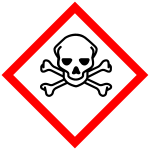 |
|---|---|
| Signal word | Danger |
| Hazard statement(s) | H301 Toxic if swallowed H315 Causes skin irritation H319 Causes serious eye irritation |
| Precautionary statement(s) | |
| Prevention | P264 Wash ... thoroughly after handling. P270 Do not eat, drink or smoke when using this product. P280 Wear protective gloves/protective clothing/eye protection/face protection/hearing protection/... |
| Response | P301+P316 IF SWALLOWED: Get emergency medical help immediately. P321 Specific treatment (see ... on this label). P330 Rinse mouth. P302+P352 IF ON SKIN: Wash with plenty of water/... P332+P317 If skin irritation occurs: Get medical help. P362+P364 Take off contaminated clothing and wash it before reuse. P305+P351+P338 IF IN EYES: Rinse cautiously with water for several minutes. Remove contact lenses, if present and easy to do. Continue rinsing. |
| Storage | P405 Store locked up. |
| Disposal | P501 Dispose of contents/container to an appropriate treatment and disposal facility in accordance with applicable laws and regulations, and product characteristics at time of disposal. |
2.3 Other hazards which do not result in classification
no data available
SECTION 3: Composition/information on ingredients
3.1 Substances
| Chemical name | Common names and synonyms | CAS number | EC number | Concentration |
|---|---|---|---|---|
| 2,2,2-trichloroethane-1,1-diol | 2,2,2-trichloroethane-1,1-diol | 302-17-0 | 206-117-5 | 100% |
SECTION 4: First-aid measures
4.1 Description of necessary first-aid measures
If inhaled
Fresh air, rest. Artificial respiration may be needed. Refer immediately for medical attention.
Following skin contact
Rinse skin with plenty of water or shower.
Following eye contact
First rinse with plenty of water for several minutes (remove contact lenses if easily possible), then refer for medical attention.
Following ingestion
Rinse mouth. Do NOT induce vomiting. Refer immediately for medical attention.
4.2 Most important symptoms/effects, acute and delayed
SYMPTOMS: Symptoms of exposure to this compound include general anesthesia, cardiac arrythmias and blood pressure depression. Other symptoms include hemorrhagic gastritis, enteritis, central nervous system depression, coma, severe respiratory depression, ventricular tachycardia and cardiac arrest. Dermatitis, swelling of the lids, hyperemia, edema of the conjuctiva and a sensation of irritation and tearing may also occur. Exposure may result in gastric irritation, rapid circulatory collapse, kidney and liver damage, heart damage, psychosis and leukopenia. Flatulence, abdominal distension, nausea, headache, giddiness, rashes and blood dyscrasias can occur. ACUTE/CHRONIC HAZARDS: This compound is an irritant of the skin and eyes. When heated to decomposition it emits toxic fumes of chlorine. (NTP, 1992)
4.3 Indication of immediate medical attention and special treatment needed, if necessary
Maintain an open airway and assist ventilation if necessary. Administer supplemental oxygen. Treat coma, hypothermia, hypotension, and pulmonary edema if they occur. Monitor patients for at least 6 hours after ingestion, because delayed absorption may occur. Patients with chloral hydrate ingestion should be monitored 18 to 24 hours because of the risk of cardiac arrhythmias. Tachyarrhythmias caused by myocardial sensitization may be treated with propranolol or esmolol. ... Administer activated charcoal orally if conditions are appropriate. Gastric lavage is not necessary after small to moderate ingestions if activated charcoal can be given promptly. ... Sedative-Hypnotic Agents
SECTION 5: Fire-fighting measures
5.1 Suitable extinguishing media
Fires involving this material can be controlled with a dry chemical, carbon dioxide or Halon extinguisher. (NTP, 1992)
5.2 Specific hazards arising from the chemical
Flash point data for this chemical are not available; however, it is probably combustible. (NTP, 1992)
5.3 Special protective actions for fire-fighters
In case of fire in the surroundings, use appropriate extinguishing media. In case of fire: keep drums, etc., cool by spraying with water.
SECTION 6: Accidental release measures
6.1 Personal precautions, protective equipment and emergency procedures
Personal protection: particulate filter respirator adapted to the airborne concentration of the substance. Sweep spilled substance into covered containers. If appropriate, moisten first to prevent dusting. Carefully collect remainder. Then store and dispose of according to local regulations.
6.2 Environmental precautions
Personal protection: particulate filter respirator adapted to the airborne concentration of the substance. Sweep spilled substance into covered containers. If appropriate, moisten first to prevent dusting. Carefully collect remainder. Then store and dispose of according to local regulations.
6.3 Methods and materials for containment and cleaning up
Collect and arrange disposal. Keep the chemical in suitable and closed containers for disposal. Remove all sources of ignition. Use spark-proof tools and explosion-proof equipment. Adhered or collected material should be promptly disposed of, in accordance with appropriate laws and regulations.
SECTION 7: Handling and storage
7.1 Precautions for safe handling
Handling in a well ventilated place. Wear suitable protective clothing. Avoid contact with skin and eyes. Avoid formation of dust and aerosols. Use non-sparking tools. Prevent fire caused by electrostatic discharge steam.
7.2 Conditions for safe storage, including any incompatibilities
Separated from strong bases and food and feedstuffs.Chloral hydrate oral solution should be stored in tight, light-resistant containers. Chloral hydrate capsules should be stored at 15-30 deg C.
SECTION 8: Exposure controls/personal protection
8.1 Control parameters
Occupational Exposure limit values
no data available
Biological limit values
no data available
8.2 Appropriate engineering controls
Ensure adequate ventilation. Handle in accordance with good industrial hygiene and safety practice. Set up emergency exits and the risk-elimination area.
8.3 Individual protection measures, such as personal protective equipment (PPE)
Eye/face protection
Wear safety spectacles or eye protection in combination with breathing protection if powder.
Skin protection
Protective gloves.
Respiratory protection
Use local exhaust or breathing protection.
Thermal hazards
no data available
SECTION 9: Physical and chemical properties and safety characteristics
| Physical state | Solid. Crystalline. |
|---|---|
| Colour | White. |
| Odour | Aromatic, penetrating and slightly acrid odor |
| Melting point/freezing point | 55.3 °C. Atm. press.:973.8 hPa. |
| Boiling point or initial boiling point and boiling range | 100.66 °C. Atm. press.:973.8 hPa. |
| Flammability | Not combustible. Gives off irritating or toxic fumes (or gases) in a fire. |
| Lower and upper explosion limit/flammability limit | no data available |
| Flash point | 75 °C. Atm. press.:973.4 hPa. |
| Auto-ignition temperature | no data available |
| Decomposition temperature | 97°C |
| pH | 5. Remarks:Concentration details not available. 1% w/v aqueous solution of test substance was prepared for estimation of pH. |
| Kinematic viscosity | no data available |
| Solubility | greater than or equal to 10 mg/mL at 68.9° F (NTP, 1992) |
| Partition coefficient n-octanol/water | log Pow = 1.092. Temperature:25. Remarks:PH details not available. |
| Vapour pressure | 1 999.83 Pa. Temperature:25 °C. |
| Density and/or relative density | 0.947 g/cm³. Temperature:28.9 °C.;0.967 g/cm³. Temperature:28.9 °C. |
| Relative vapour density | 5.1 (Air= 1) |
| Particle characteristics | no data available |
SECTION 10: Stability and reactivity
10.1 Reactivity
Decomposes on heating. This produces toxic and corrosive fumes including hydrogen chloride. Reacts with strong bases. This produces chloroform.
10.2 Chemical stability
Slowly volatilizes on exposure to air.
10.3 Possibility of hazardous reactions
Combustible when exposed to heat or flame.CHLORAL HYDRATE is incompatible with alkalis, alkaline earth metals, alkali carbonates and soluble barbiturates. It is decomposed by sodium hydroxide. It reduces ammoniacal silver nitrate. It liquefies when triturated with an equal quantity of menthol, camphor or thymol. (NTP, 1992). Reaction of chloral hydrate with hydroxylamine produces toxic hydrogen cyanide gas, Org. Synth., 1941, Vol. 1, 377.
10.4 Conditions to avoid
no data available
10.5 Incompatible materials
no data available
10.6 Hazardous decomposition products
When heated to decomposition it emits toxic fumes of /hydrogen chloride/.
SECTION 11: Toxicological information
Acute toxicity
- Oral: LD50 - mouse (female) - 1 265 mg/kg bw.
- Inhalation: LC50 - mouse - 100 ppm.
- Dermal: no data available
Skin corrosion/irritation
no data available
Serious eye damage/irritation
no data available
Respiratory or skin sensitization
no data available
Germ cell mutagenicity
no data available
Carcinogenicity
WEIGHT-OF-EVIDENCE CHARACTERIZATION: Under the 1986 cancer guidelines (EPA), chloral hydrate is assigned to Group C, possible human carcinogen. Under the 1996 proposed guidelines (EPA) for carcinogen risk assessment, chloral hydrate shows suggestive evidence of human carcinogenicity by the oral route of exposure. There are no carcinogenicity data from humans. Two bioassays in rats in which chloral hydrate was administered by drinking water show no increase in tumors at any site. Because only minimal toxicity was observed in the livers of the rats in these bioassays, the tests were not conducted at the maximum tolerated dose. A chronic bioassay in female mice showed a slight increase in the severity grade of hyperplasia and a slight increase in the incidence of adenoma in the pituatary gland pars distalis at the highest exposure tested. There is some evidence that chloral hydrate causes hepatocellular tumors in male mice. An earlier study showing an increase of hepatocellular adenomas or trabecular carcinomas following a single bolus exposure could not be confirmed in a study using more animals and higher exposures. Three separate 2-year bioassays in male mice show an increased incidence of hepatocellular adenoma or carcinoma. There are no data identifying a lesion that is a precursor to the hepatocellular tumors. The strain of mice used has a very high spontaneous incidence of hepatocellular tumors. Two of the matabolites of chloral hydrate, trichloroacetic acid and dichloroacetic acid, have been shown to cause hepatocellular tumors in rodents. Trichloroacetic acid causes hepatocellular tumors only in mice. Dichloroacetic acid causes hepatocellular tumors in both rats and mice. There is an extensive database on genetic toxicity. A variety of results show that chloral hydrate is a weak gene mutagen and clastogen. Chloral hydrate induces aneuploidy in a wide variety of cell types. These latter effects are thought to arise by disruption of the spindle apparatus. A high concentration of chloral hydrate is required to cause observable effects. Although these data suggest that genotoxicity may play a role in the toxicity of chloral hydrate, the data indicate that these effects require concentrations that are unlikely to occur under physiological conditions at the exposures typically encountered from the environment. Collectively, these data provide suggestive evidence of carcinogenicity, but the weight of evidence is not sufficient to conduct a risk assessment assuming a linear response at low exposure. HUMAN CARCINOGENICITY DATA: None. ANIMAL CARCINOGENICITY DATA: Limited.
Reproductive toxicity
no data available
STOT-single exposure
The substance is irritating to the eyes, skin and respiratory tract. The substance may cause effects on the central nervous system. This may result in disorientation, lowering of blood pressure and lowering of consciousness. Exposure at high levels could cause cardiac dysrhythmia and unconsciousness or death.
STOT-repeated exposure
The substance may have effects on the liver. This may result in addiction, behavioural effects and liver impairment. This substance is probably carcinogenic to humans. May cause heritable genetic damage to human germ cells.
Aspiration hazard
A harmful contamination of the air will be reached rather slowly on evaporation of this substance at 20°C.
SECTION 12: Ecological information
12.1 Toxicity
- Toxicity to fish: LC50 - Danio rerio (previous name: Brachydanio rerio) - > 100 mg/L - 96 h.
- Toxicity to daphnia and other aquatic invertebrates: EC50 - Daphnia magna - > 98 mg/L - 48 h.
- Toxicity to algae: EC50 - Chlorella vulgaris - > 200 mg/L - 72 h.
- Toxicity to microorganisms: EC0 - Entosiphon sulcatum - < 79 mg/L - 72 h.
12.2 Persistence and degradability
AEROBIC: Biodegradation data for chloral hydrate were not available(1).
12.3 Bioaccumulative potential
An estimated BCF of 3 was calculated in fish for chloral hydrate(SRC), using a log Kow of 0.99(1) and a regression-derived equation(2). According to a classification scheme(3), this BCF suggests the potential for bioconcentration in aquatic organisms is low(SRC).
12.4 Mobility in soil
The Koc of chloral hydrate is estimated as 82(SRC), using a log Kow of 0.99(1) and a regression-derived equation(2). According to a classification scheme(3), this estimated Koc value suggests that chloral hydrate is expected to have high mobility in soil.
12.5 Other adverse effects
no data available
SECTION 13: Disposal considerations
13.1 Disposal methods
Product
The material can be disposed of by removal to a licensed chemical destruction plant or by controlled incineration with flue gas scrubbing. Do not contaminate water, foodstuffs, feed or seed by storage or disposal. Do not discharge to sewer systems.
Contaminated packaging
Containers can be triply rinsed (or equivalent) and offered for recycling or reconditioning. Alternatively, the packaging can be punctured to make it unusable for other purposes and then be disposed of in a sanitary landfill. Controlled incineration with flue gas scrubbing is possible for combustible packaging materials.
SECTION 14: Transport information
14.1 UN Number
| ADR/RID: UN2811 (For reference only, please check.) | IMDG: UN2811 (For reference only, please check.) | IATA: UN2811 (For reference only, please check.) |
14.2 UN Proper Shipping Name
| ADR/RID: TOXIC SOLID, ORGANIC, N.O.S. (For reference only, please check.) | IMDG: TOXIC SOLID, ORGANIC, N.O.S. (For reference only, please check.) | IATA: TOXIC SOLID, ORGANIC, N.O.S. (For reference only, please check.) |
14.3 Transport hazard class(es)
| ADR/RID: 6.1 (For reference only, please check.) | IMDG: 6.1 (For reference only, please check.) | IATA: 6.1 (For reference only, please check.) |
14.4 Packing group, if applicable
| ADR/RID: I (For reference only, please check.) | IMDG: I (For reference only, please check.) | IATA: I (For reference only, please check.) |
14.5 Environmental hazards
| ADR/RID: No | IMDG: No | IATA: No |
14.6 Special precautions for user
no data available
14.7 Transport in bulk according to IMO instruments
no data available
SECTION 15: Regulatory information
15.1 Safety, health and environmental regulations specific for the product in question
| Chemical name | Common names and synonyms | CAS number | EC number |
|---|---|---|---|
| 2,2,2-trichloroethane-1,1-diol | 2,2,2-trichloroethane-1,1-diol | 302-17-0 | 206-117-5 |
| European Inventory of Existing Commercial Chemical Substances (EINECS) | Listed. | ||
| EC Inventory | Listed. | ||
| United States Toxic Substances Control Act (TSCA) Inventory | Listed. | ||
| China Catalog of Hazardous chemicals 2015 | Not Listed. | ||
| New Zealand Inventory of Chemicals (NZIoC) | Listed. | ||
| Philippines Inventory of Chemicals and Chemical Substances (PICCS) | Listed. | ||
| Vietnam National Chemical Inventory | Listed. | ||
| Chinese Chemical Inventory of Existing Chemical Substances (China IECSC) | Listed. | ||
| Korea Existing Chemicals List (KECL) | Listed. | ||
SECTION 16: Other information
Information on revision
| Creation Date | July 15, 2019 |
|---|---|
| Revision Date | July 15, 2019 |
Abbreviations and acronyms
- CAS: Chemical Abstracts Service
- ADR: European Agreement concerning the International Carriage of Dangerous Goods by Road
- RID: Regulation concerning the International Carriage of Dangerous Goods by Rail
- IMDG: International Maritime Dangerous Goods
- IATA: International Air Transportation Association
- TWA: Time Weighted Average
- STEL: Short term exposure limit
- LC50: Lethal Concentration 50%
- LD50: Lethal Dose 50%
- EC50: Effective Concentration 50%
References
- IPCS - The International Chemical Safety Cards (ICSC), website: http://www.ilo.org/dyn/icsc/showcard.home
- HSDB - Hazardous Substances Data Bank, website: https://toxnet.nlm.nih.gov/newtoxnet/hsdb.htm
- IARC - International Agency for Research on Cancer, website: http://www.iarc.fr/
- eChemPortal - The Global Portal to Information on Chemical Substances by OECD, website: http://www.echemportal.org/echemportal/index?pageID=0&request_locale=en
- CAMEO Chemicals, website: http://cameochemicals.noaa.gov/search/simple
- ChemIDplus, website: http://chem.sis.nlm.nih.gov/chemidplus/chemidlite.jsp
- ERG - Emergency Response Guidebook by U.S. Department of Transportation, website: http://www.phmsa.dot.gov/hazmat/library/erg
- Germany GESTIS-database on hazard substance, website: http://www.dguv.de/ifa/gestis/gestis-stoffdatenbank/index-2.jsp
- ECHA - European Chemicals Agency, website: https://echa.europa.eu/
Other Information
Use of alcoholic beverages enhances the harmful effect.Depending on the degree of exposure, periodic medical examination is suggested.
Disclaimer: The above information is believed to be correct but does not purport to be all inclusive and shall be used only as a guide. The information in this document is based on the present state of our knowledge and is applicable to the product with regard to appropriate safety precautions. It does not represent any guarantee of the properties of the product. We as supplier shall not be held liable for any damage resulting from handling or from contact with the above product.
Chloral hydrate is included in Nervous System Drugs category.
Related Products
Industry News
More Safety Data Sheets