




Nitrogen trifluoride Safety Data Sheets
SAFETY DATA SHEETS
According to the UN GHS revision 8
SECTION 1: Identification
1.1 GHS Product identifier
| Product name | Nitrogen trifluoride |
|---|
1.2 Other means of identification
| Product number | - |
|---|---|
| Other names | Trifluoroammonia;Trifluoramine;NF3 |
1.3 Recommended use of the chemical and restrictions on use
| Identified uses | CBI,Oxidizing/reducing agents |
|---|---|
| Uses advised against | no data available |
1.4 Supplier's details
| Company | Echemi.com |
|---|---|
| Address | Echemi.com |
| Telephone | Echemi.com |
1.5 Emergency phone number
| Emergency phone number | Echemi.com |
|---|---|
| Service hours | Monday to Friday, 9am-5pm (Standard time zone: UTC/GMT +8 hours). |
SECTION 2: Hazard identification
2.1 Classification of the substance or mixture
Oxidizing gases, Category 1
Gases under pressure: Liquefied gas
Acute toxicity - Category 4, Inhalation
Specific target organ toxicity â repeated exposure, Category 2
2.2 GHS label elements, including precautionary statements
| Pictogram(s) |   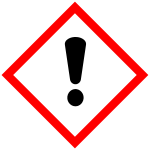 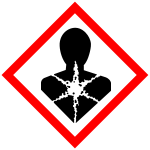 |
|---|---|
| Signal word | Danger |
| Hazard statement(s) | H270 May cause or intensify fire; oxidizer H280 Contains gas under pressure; may explode if heated H332 Harmful if inhaled H373 May cause damage to organs through prolonged or repeated exposure |
| Precautionary statement(s) | |
| Prevention | P220 Keep away from clothing and other combustible materials. P244 Keep valves and fittings free from oil and grease. P261 Avoid breathing dust/fume/gas/mist/vapours/spray. P271 Use only outdoors or in a well-ventilated area. P260 Do not breathe dust/fume/gas/mist/vapours/spray. |
| Response | P370+P376 In case of fire: Stop leak if safe to do so. P304+P340 IF INHALED: Remove person to fresh air and keep comfortable for breathing. P317 Get medical help. P319 Get medical help if you feel unwell. |
| Storage | P403 Store in a well-ventilated place. P410+P403 Protect from sunlight. Store in a well-ventilated place. |
| Disposal | P501 Dispose of contents/container to an appropriate treatment and disposal facility in accordance with applicable laws and regulations, and product characteristics at time of disposal. |
2.3 Other hazards which do not result in classification
no data available
SECTION 3: Composition/information on ingredients
3.1 Substances
| Chemical name | Common names and synonyms | CAS number | EC number | Concentration |
|---|---|---|---|---|
| Nitrogen trifluoride | Nitrogen trifluoride | 7783-54-2 | 232-007-1 | 100% |
SECTION 4: First-aid measures
4.1 Description of necessary first-aid measures
If inhaled
Fresh air, rest.
Following skin contact
Remove contaminated clothes.
Following eye contact
First rinse with plenty of water for several minutes (remove contact lenses if easily possible), then refer for medical attention.
Following ingestion
Rinse mouth with water. Do not induce vomiting. Never give anything by mouth to an unconscious person. Call a doctor or Poison Control Center immediately.
4.2 Most important symptoms/effects, acute and delayed
Excerpt from ERG Guide 122 [Gases - Oxidizing (Including Refrigerated Liquids)]: Vapors may cause dizziness or asphyxiation without warning. Contact with gas or liquefied gas may cause burns, severe injury and/or frostbite. Fire may produce irritating and/or toxic gases. (ERG, 2016)
4.3 Indication of immediate medical attention and special treatment needed, if necessary
Immediate first aid: Ensure that adequate decontamination has been carried out. If patient is not breathing, start artificial respiration, preferably with a demand-valve resuscitator, bag-valve-mask device, or pocket mask, as trained. Perform CPR if necessary. Immediately flush contaminated eyes with gently flowing water. Do not induce vomiting. If vomiting occurs, lean patient forward or place on left side (head-down position, if possible) to maintain an open airway and prevent aspiration. Keep patient quiet and maintain normal body temperature. Obtain medical attention. Fluorine and Related Compounds
SECTION 5: Fire-fighting measures
5.1 Suitable extinguishing media
Do not extinguish the fire unless the flow of gas can be stopped and any remaining gas is out of the line. Specially trained personnel may use fog lines to cool exposures and let the fire burn itself out. Vapors are heavier than air and will collect in low areas. Containers may explode in fire. Storage containers and parts of containers may rocket great distances, in many directions. If material or contaminated runoff enters waterways, notify downstream users of potentially contaminates waters. Notify local health and fire officials and pollution control agencies. From a secure, explosion-proof location, use water spray to cool exposed containers. If cooling streams are ineffective (venting sound increases in volume and pitch, tank discolors, or shows any signs of deforming), withdraw immediately to a secure location. ... The only respirators recommended for firefighting are self-contained breathing apparatuses that have full face-pieces and are operated in a pressure-demand or other positive-pressure mode.
5.2 Specific hazards arising from the chemical
Excerpt from ERG Guide 122 [Gases - Oxidizing (Including Refrigerated Liquids)]: Substance does not burn but will support combustion. Some may react explosively with fuels. May ignite combustibles (wood, paper, oil, clothing, etc.). Vapors from liquefied gas are initially heavier than air and spread along ground. Runoff may create fire or explosion hazard. Containers may explode when heated. Ruptured cylinders may rocket. (ERG, 2016)
5.3 Special protective actions for fire-fighters
In case of fire in the surroundings, use appropriate extinguishing media. In case of fire: keep cylinder cool by spraying with water.
SECTION 6: Accidental release measures
6.1 Personal precautions, protective equipment and emergency procedures
Ventilation. NEVER direct water jet on liquid. Personal protection: self-contained breathing apparatus.
6.2 Environmental precautions
Ventilation. NEVER direct water jet on liquid. Personal protection: self-contained breathing apparatus.
6.3 Methods and materials for containment and cleaning up
If in a building, evacuate building and confine vapors by closing doors and shutting down HVAC systems. Restrict persons not wearing protective equipment from area of spill or leak until cleanup is complete. Remove all ignition sources. Ventilate area of spill or leak to disperse the gas. Wear chemical protective suit with self-contained breathing apparatus to combat spills. Stay upwind and use water spray to "knock down" vapor; contain runoff. Stop the flow of gas, if it can be done safely from a distance. If source is a cylinder and the leak cannot be stopped in place, remove the leaking cylinder to a safe place, and repair leak or allow cylinder to empty. Keep this chemical out of confined spaces, such as a sewer, because of the possibility of explosion, unless the sewer is designed to prevent the buildup of explosive concentrations.
SECTION 7: Handling and storage
7.1 Precautions for safe handling
NO contact with flammables. NO contact with reducing agents. Handling in a well ventilated place. Wear suitable protective clothing. Avoid contact with skin and eyes. Avoid formation of dust and aerosols. Use non-sparking tools. Prevent fire caused by electrostatic discharge steam.
7.2 Conditions for safe storage, including any incompatibilities
Fireproof if in building. Separated from combustible substances and reducing agents. Cool.Store separately in an area isolated from flammables, combustibles, or other yellow coded materials. ... High concentrations cause a deficiency of oxygen with the risk of unconsciousness or death. Check that oxygen content is at least 19% before entering storage or spill area.
SECTION 8: Exposure controls/personal protection
8.1 Control parameters
Occupational Exposure limit values
TLV: 10 ppm as TWA; BEI issued
Biological limit values
no data available
8.2 Appropriate engineering controls
Ensure adequate ventilation. Handle in accordance with good industrial hygiene and safety practice. Set up emergency exits and the risk-elimination area.
8.3 Individual protection measures, such as personal protective equipment (PPE)
Eye/face protection
Wear safety goggles.
Skin protection
Wear fire/flame resistant and impervious clothing. Handle with gloves. Gloves must be inspected prior to use. Wash and dry hands. The selected protective gloves have to satisfy the specifications of EU Directive 89/686/EEC and the standard EN 374 derived from it.
Respiratory protection
Use ventilation, local exhaust or breathing protection.
Thermal hazards
no data available
SECTION 9: Physical and chemical properties and safety characteristics
| Physical state | Nitrogen trifluoride is a colorless gas with a moldy odor. Very toxic by inhalation. Slightly soluble in water. Corrosive to tissue. Under prolonged exposure to fire or heat the containers may rupture violently and rocket. Used to make other chemicals and as a component of rocket fuels. |
|---|---|
| Colour | Colorless gas [Note: Shipped as a nonliquified compressed gas] |
| Odour | Moldy odor |
| Melting point/freezing point | -207ºC |
| Boiling point or initial boiling point and boiling range | -129ºC |
| Flammability | Nonflammable Gas |
| Lower and upper explosion limit/flammability limit | no data available |
| Flash point | no data available |
| Auto-ignition temperature | no data available |
| Decomposition temperature | no data available |
| pH | no data available |
| Kinematic viscosity | no data available |
| Solubility | Slight (NIOSH, 2016) |
| Partition coefficient n-octanol/water | no data available |
| Vapour pressure | greater than 1 atm (NIOSH, 2016) |
| Density and/or relative density | 1.361 g/cm3 |
| Relative vapour density | 2.46 |
| Particle characteristics | no data available |
SECTION 10: Stability and reactivity
10.1 Reactivity
Decomposes on heating. This produces toxic fumes including fluoride. The substance is a strong oxidant. It reacts with combustible and reducing materials. Reacts violently with ammonia, carbon monoxide, diborane, hydrogen, hydrogen sulfide, methane and tetrafluorohydrazine. This generates explosion hazard. Attacks metals. The substance is decomposed by electric sparks.
10.2 Chemical stability
no data available
10.3 Possibility of hazardous reactions
This material is a nonflammable gas.The gas is heavier than air and may accumulate in lowered spaces causing a deficiency of oxygen.NITROGEN TRIFLUORIDE is a very powerful oxidizing agent. Presents dangerous fire hazard in the presence of reducing agents. Etches glass in the presence of moisture. Emits toxic and corrosive fumes of fluoride when heated to decomposition [Lewis, 3rd ed., 1993, p. 937]. Can react violently with hydrogen, ammonia, carbon monoxide, diborane, hydrogen sulfide, methane, tetrafluorohydrazine, charcoal. Explosive reaction with chlorine dioxide. A severe explosion may occur when exposed to reducing agents under pressure [Bretherick, 5th ed., 1995, p. 1427].
10.4 Conditions to avoid
no data available
10.5 Incompatible materials
Can react violently with /ammonia/, /carbon monoxide/, diborane, /hydrogen/, /hydrogen sulfide/, /methane/, tetrafluorohydrazine. Can react vigorously with reducing materials.
10.6 Hazardous decomposition products
Decomposed by electric sparks.
SECTION 11: Toxicological information
Acute toxicity
- Oral: no data available
- Inhalation: LC50 Mouse inhalation 7500 ppm/1 hr
- Dermal: no data available
Skin corrosion/irritation
no data available
Serious eye damage/irritation
no data available
Respiratory or skin sensitization
no data available
Germ cell mutagenicity
no data available
Carcinogenicity
no data available
Reproductive toxicity
no data available
STOT-single exposure
no data available
STOT-repeated exposure
The substance may have effects on the liver and kidneys. Repeated or prolonged inhalation may cause fluorosis.
Aspiration hazard
A harmful concentration of this gas in the air will be reached very quickly on loss of containment.
SECTION 12: Ecological information
12.1 Toxicity
- Toxicity to fish: no data available
- Toxicity to daphnia and other aquatic invertebrates: no data available
- Toxicity to algae: no data available
- Toxicity to microorganisms: no data available
12.2 Persistence and degradability
no data available
12.3 Bioaccumulative potential
no data available
12.4 Mobility in soil
no data available
12.5 Other adverse effects
no data available
SECTION 13: Disposal considerations
13.1 Disposal methods
Product
The material can be disposed of by removal to a licensed chemical destruction plant or by controlled incineration with flue gas scrubbing. Do not contaminate water, foodstuffs, feed or seed by storage or disposal. Do not discharge to sewer systems.
Contaminated packaging
Containers can be triply rinsed (or equivalent) and offered for recycling or reconditioning. Alternatively, the packaging can be punctured to make it unusable for other purposes and then be disposed of in a sanitary landfill. Controlled incineration with flue gas scrubbing is possible for combustible packaging materials.
SECTION 14: Transport information
14.1 UN Number
| ADR/RID: UN2451 (For reference only, please check.) | IMDG: UN2451 (For reference only, please check.) | IATA: UN2451 (For reference only, please check.) |
14.2 UN Proper Shipping Name
| ADR/RID: NITROGEN TRIFLUORIDE (For reference only, please check.) | IMDG: NITROGEN TRIFLUORIDE (For reference only, please check.) | IATA: NITROGEN TRIFLUORIDE (For reference only, please check.) |
14.3 Transport hazard class(es)
| ADR/RID: 2.2 (For reference only, please check.) | IMDG: 2.2 (For reference only, please check.) | IATA: 2.2 (For reference only, please check.) |
14.4 Packing group, if applicable
| ADR/RID: (For reference only, please check.) | IMDG: (For reference only, please check.) | IATA: (For reference only, please check.) |
14.5 Environmental hazards
| ADR/RID: No | IMDG: No | IATA: No |
14.6 Special precautions for user
no data available
14.7 Transport in bulk according to IMO instruments
no data available
SECTION 15: Regulatory information
15.1 Safety, health and environmental regulations specific for the product in question
| Chemical name | Common names and synonyms | CAS number | EC number |
|---|---|---|---|
| Nitrogen trifluoride | Nitrogen trifluoride | 7783-54-2 | 232-007-1 |
| European Inventory of Existing Commercial Chemical Substances (EINECS) | Listed. | ||
| EC Inventory | Listed. | ||
| United States Toxic Substances Control Act (TSCA) Inventory | Listed. | ||
| China Catalog of Hazardous chemicals 2015 | Listed. | ||
| New Zealand Inventory of Chemicals (NZIoC) | Not Listed. | ||
| Philippines Inventory of Chemicals and Chemical Substances (PICCS) | Listed. | ||
| Vietnam National Chemical Inventory | Not Listed. | ||
| Chinese Chemical Inventory of Existing Chemical Substances (China IECSC) | Listed. | ||
| Korea Existing Chemicals List (KECL) | Listed. | ||
SECTION 16: Other information
Information on revision
| Creation Date | July 15, 2019 |
|---|---|
| Revision Date | July 15, 2019 |
Abbreviations and acronyms
- CAS: Chemical Abstracts Service
- ADR: European Agreement concerning the International Carriage of Dangerous Goods by Road
- RID: Regulation concerning the International Carriage of Dangerous Goods by Rail
- IMDG: International Maritime Dangerous Goods
- IATA: International Air Transportation Association
- TWA: Time Weighted Average
- STEL: Short term exposure limit
- LC50: Lethal Concentration 50%
- LD50: Lethal Dose 50%
- EC50: Effective Concentration 50%
References
- IPCS - The International Chemical Safety Cards (ICSC), website: http://www.ilo.org/dyn/icsc/showcard.home
- HSDB - Hazardous Substances Data Bank, website: https://toxnet.nlm.nih.gov/newtoxnet/hsdb.htm
- IARC - International Agency for Research on Cancer, website: http://www.iarc.fr/
- eChemPortal - The Global Portal to Information on Chemical Substances by OECD, website: http://www.echemportal.org/echemportal/index?pageID=0&request_locale=en
- CAMEO Chemicals, website: http://cameochemicals.noaa.gov/search/simple
- ChemIDplus, website: http://chem.sis.nlm.nih.gov/chemidplus/chemidlite.jsp
- ERG - Emergency Response Guidebook by U.S. Department of Transportation, website: http://www.phmsa.dot.gov/hazmat/library/erg
- Germany GESTIS-database on hazard substance, website: http://www.dguv.de/ifa/gestis/gestis-stoffdatenbank/index-2.jsp
- ECHA - European Chemicals Agency, website: https://echa.europa.eu/
Other Information
Density of the liquid at boiling point: 1.885 kg/l.The odour warning when the exposure limit value is exceeded is insufficient.Methemoglobinemia has been observed in animals, but relevance to humans is unclear.Turn leaking cylinder with the leak up to prevent escape of gas in liquid state.Wear protective equipment during this operation.Check oxygen content before entering area.High concentrations in the air cause a deficiency of oxygen with the risk of unconsciousness or death.
Disclaimer: The above information is believed to be correct but does not purport to be all inclusive and shall be used only as a guide. The information in this document is based on the present state of our knowledge and is applicable to the product with regard to appropriate safety precautions. It does not represent any guarantee of the properties of the product. We as supplier shall not be held liable for any damage resulting from handling or from contact with the above product.
Nitrogen trifluoride is included in Coordination Complexes category.
Related Products
More Safety Data Sheets