




trans-Chlordane Safety Data Sheets
SAFETY DATA SHEETS
According to the UN GHS revision 8
SECTION 1: Identification
1.1 GHS Product identifier
| Product name | (1α,2β,3aα,4β,7β,7aα)-1,2,4,5,6,7,8,8-octachloro-2,3,3a,4,7,7a-hexahydro-4,7-methano-1H-indene |
|---|
1.2 Other means of identification
| Product number | - |
|---|---|
| Other names | trans-Chlordane;1-exo,2-endo-4,5,6,7,8,8-octachloro-3a,4,7,7a-tetrahydro-4,7-methanoindane;t-chlordane |
1.3 Recommended use of the chemical and restrictions on use
| Identified uses | Pesticides (chemicals used for killing pests, such as rodents, insects, or plants) |
|---|---|
| Uses advised against | no data available |
1.4 Supplier's details
| Company | Echemi.com |
|---|---|
| Address | Echemi.com |
| Telephone | Echemi.com |
1.5 Emergency phone number
| Emergency phone number | Echemi.com |
|---|---|
| Service hours | Monday to Friday, 9am-5pm (Standard time zone: UTC/GMT +8 hours). |
SECTION 2: Hazard identification
2.1 Classification of the substance or mixture
Acute toxicity - Category 4, Oral
Carcinogenicity, Category 2
Hazardous to the aquatic environment, short-term (Acute) - Category Acute 1
2.2 GHS label elements, including precautionary statements
| Pictogram(s) |   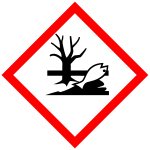 |
|---|---|
| Signal word | Warning |
| Hazard statement(s) | H302 Harmful if swallowed H351 Suspected of causing cancer H400 Very toxic to aquatic life |
| Precautionary statement(s) | |
| Prevention | P264 Wash ... thoroughly after handling. P270 Do not eat, drink or smoke when using this product. P203 Obtain, read and follow all safety instructions before use. P280 Wear protective gloves/protective clothing/eye protection/face protection/hearing protection/... P273 Avoid release to the environment. |
| Response | P301+P317 IF SWALLOWED: Get medical help. P330 Rinse mouth. P318 IF exposed or concerned, get medical advice. P391 Collect spillage. |
| Storage | P405 Store locked up. |
| Disposal | P501 Dispose of contents/container to an appropriate treatment and disposal facility in accordance with applicable laws and regulations, and product characteristics at time of disposal. |
2.3 Other hazards which do not result in classification
no data available
SECTION 3: Composition/information on ingredients
3.1 Substances
| Chemical name | Common names and synonyms | CAS number | EC number | Concentration |
|---|---|---|---|---|
| (1α,2β,3aα,4β,7β,7aα)-1,2,4,5,6,7,8,8-octachloro-2,3,3a,4,7,7a-hexahydro-4,7-methano-1H-indene | (1α,2β,3aα,4β,7β,7aα)-1,2,4,5,6,7,8,8-octachloro-2,3,3a,4,7,7a-hexahydro-4,7-methano-1H-indene | 5103-74-2 | 225-826-0 | 100% |
SECTION 4: First-aid measures
4.1 Description of necessary first-aid measures
If inhaled
Fresh air, rest. Refer for medical attention.
Following skin contact
Remove contaminated clothes. Rinse and then wash skin with water and soap.
Following eye contact
First rinse with plenty of water for several minutes (remove contact lenses if easily possible), then refer for medical attention.
Following ingestion
Rest. Refer for medical attention .
4.2 Most important symptoms/effects, acute and delayed
SYMPTOMS: Symptoms of exposure to this compound include blurred vision, confusion, ataxia, delirium, coughing, abdominal pain, nausea, irritability and anuria. Other symptoms may include nervousness, loss of coordination, unconsciousness and dry red skin. It may also cause neuroblastoma. It is moderately irritating to the skin and can cause deep depression and liver changes. Symptoms of acute poisoning with this type of compound include vomiting, diarrhea, paraesthesia, excitement, giddiness, fatigue, tremors, convulsions, coma, possibly pulmonary edema; liver, kidney and myocardial toxicity and hypothermia. Also, respiration may be accelerated initially and later depressed. Symptoms of chronic poisoning with this type of compound may include headache, loss of appetite, muscular weakness, fine tremors, apprehensive mental state, aplastic anemia and acute leukemia. ACUTE/CHRONIC HAZARDS: This compound is readily absorbed through the skin as well as through other portals. It is toxic by skin absorption and orally. When heated to decomposition it emits toxic fumes of organo chloride products, carbon monoxide and carbon dioxide. (NTP, 1992)
Fatal oral dose to adult humans is between 6 and 60 g with onset of symptoms within 45 minutes to several hours after ingestion, although symptoms have occurred following very small doses either orally or by skin exposure. Some reports of delayed development of liver disease, blood disorders and upset stomach. Chlordane is considered to be borderline between a moderately and highly toxic substance. (EPA, 1998)
4.3 Indication of immediate medical attention and special treatment needed, if necessary
Treatment is symptomatic and supportive. Oils should not be used as either cathartics or dermal cleansing agents, as they increase absorption. Gastric lavage and use of activated charcoal and sodium sulfate are indicated for ingestion. If dermal exposure occurred, contaminated clothes should be removed, and the skin should be thoroughly cleansed with soap and water. Management of seizures in both children and adults is with Valium or phenobarbital. Respiratory depression and even respiratory arrest, especially with concomitant use of Valium and phenobarbital in children, may occur. These drugs preferably should be used only in critical care areas where emergency endotracheal intubation can be performed. /It is recommended/ that epinephrine not be utilized in patients with organochlorine poisoning, as the organochlorines induce myocardial irritability and ventricular arrhythmias may occur. However, dopamine may be necessary in the event of hypotension unresponsive to fluid administration, and epinephrine may be necessary in the event of cardiopulmonary arrest. ... Organochlorine insecticides
SECTION 5: Fire-fighting measures
5.1 Suitable extinguishing media
Fire fighting: Self-contained breathing apparatus with a full facepiece, operated in pressure-demand or other positive-pressure mode. ...
5.2 Specific hazards arising from the chemical
This chemical is combustible. (NTP, 1992)
Flammable/combustible material; may be ignited by heat, sparks or flames. Vapors may travel to a source of ignition and flash back. Run-off to sewers may create fire or explosion hazard. Containers may explode in heat of fire. Vapors are toxic indoors and outdoors. Chlordane degrades under natural environmental conditions to photoisomers, such as photo-cis- chlordane, which are more toxic to certain animals than chlordane and also showed higher bioaccumulation. Loses chlorine in presence of alkaline reagents; should not be formulated with any solvent, carrier, diluent or emulsifier which has alkaline reaction. (EPA, 1998)
5.3 Special protective actions for fire-fighters
Wear self-contained breathing apparatus for firefighting if necessary.
SECTION 6: Accidental release measures
6.1 Personal precautions, protective equipment and emergency procedures
Avoid dust formation. Avoid breathing mist, gas or vapours.Avoid contacting with skin and eye. Use personal protective equipment.Wear chemical impermeable gloves. Ensure adequate ventilation.Remove all sources of ignition. Evacuate personnel to safe areas.Keep people away from and upwind of spill/leak.
6.2 Environmental precautions
Collect leaking and spilled liquid in sealable containers as far as possible. Absorb remaining liquid in sand or inert absorbent. Then store and dispose of according to local regulations. Do NOT wash away into sewer. Personal protection: chemical protection suit including self-contained breathing apparatus.
6.3 Methods and materials for containment and cleaning up
A process for removing pollutants from Du pont's chambers works plant in Deepwater, NJ is described. Process involves neutralization of wastes & settling, followed by combined powdered carbon-biological process. Among pesticides listed as priority pollutants are heptachlor and chlordane.
SECTION 7: Handling and storage
7.1 Precautions for safe handling
Handling in a well ventilated place. Wear suitable protective clothing. Avoid contact with skin and eyes. Avoid formation of dust and aerosols. Use non-sparking tools. Prevent fire caused by electrostatic discharge steam.
7.2 Conditions for safe storage, including any incompatibilities
Provision to contain effluent from fire extinguishing. Separated from food and feedstuffs, bases and incompatible materials. See Chemical Dangers. Well closed. Keep in a well-ventilated room.Ambient temperature for storage.
SECTION 8: Exposure controls/personal protection
8.1 Control parameters
Occupational Exposure limit values
| Component | (1α,2β,3aα,4β,7β,7aα)-1,2,4,5,6,7,8,8-octachloro-2,3,3a,4,7,7a-hexahydro-4,7-methano-1H-indene |
|---|---|
| CAS No. | 5103-74-2 |
| NIOSH considers chlordane to be a potential occupational carcinogen. NIOSH usually recommends that occupational exposures to carcinogens be limited to the lowest feasible concn. Recommended Exposure Limit: 10 Hr Time-Weighted Avg: 0.5 mg/cu m, skin. |
Biological limit values
no data available
8.2 Appropriate engineering controls
Ensure adequate ventilation. Handle in accordance with good industrial hygiene and safety practice. Set up emergency exits and the risk-elimination area.
8.3 Individual protection measures, such as personal protective equipment (PPE)
Eye/face protection
Wear tightly fitting safety goggles with side-shields conforming to EN 166(EU) or NIOSH (US).
Skin protection
Wear fire/flame resistant and impervious clothing. Handle with gloves. Gloves must be inspected prior to use. Wash and dry hands. The selected protective gloves have to satisfy the specifications of EU Directive 89/686/EEC and the standard EN 374 derived from it.
Respiratory protection
If the exposure limits are exceeded, irritation or other symptoms are experienced, use a full-face respirator.
Thermal hazards
no data available
SECTION 9: Physical and chemical properties and safety characteristics
| Physical state | PHYSICAL DESCRIPTION: Brown or amber very viscous liquid. Insoluble in water. |
|---|---|
| Colour | Viscous, amber-colored liquid |
| Odour | PENETRATING; AROMATIC; SLIGHTLY PUNGENT, LIKE CHLORINE |
| Melting point/freezing point | 223-225° F (cis); 219-221° F (trans) (NTP, 1992) |
| Boiling point or initial boiling point and boiling range | 424.7ºC at 760mmHg |
| Flammability | Noncombustible Liquid, but may be utilized in flammable solutions. |
| Lower and upper explosion limit/flammability limit | 0.7%-5% (in kerosene soln) |
| Flash point | 212.5ºC |
| Auto-ignition temperature | 410° F (USCG, 1999) |
| Decomposition temperature | no data available |
| pH | no data available |
| Kinematic viscosity | 69 poises at 25 deg C (about that of 95% glycerol); viscosity reduced by heating to 120-140 deg F |
| Solubility | 0.0001 % (NIOSH, 2016) |
| Partition coefficient n-octanol/water | log Kow= 6.16 |
| Vapour pressure | 1e-05 mm Hg at 77° F (EPA, 1998) |
| Density and/or relative density | 1.8g/cm3 |
| Relative vapour density | 14.3 (NTP, 1992) (Relative to Air) |
| Particle characteristics | no data available |
SECTION 10: Stability and reactivity
10.1 Reactivity
NIOSH considers chlordane to be a potential occupational carcinogen.
Decomposes on burning. Decomposes on contact with bases. This produces toxic fumes including phosgene and hydrogen chloride. Attacks iron, zinc, plastics, rubber and coatings.
10.2 Chemical stability
Dehydrohalogenates in presence of alkali
10.3 Possibility of hazardous reactions
CHLORDANE, a mixture of related chlorinated cyclodienes, is decomposed by alkalis. Corrodes iron and zinc. Can react with strong oxidizing agents. Attacks some forms of plastics, rubber and coatings (NTP, 1992)
10.4 Conditions to avoid
no data available
10.5 Incompatible materials
Loses ...chlorine in presence of alkaline reagents and should not be formulated with any solvent, carrier, diluent or emulsifier, which has alkaline reaction.
10.6 Hazardous decomposition products
Hazardous decomposition products: Toxic gases and vapors, such as hydrogen chloride, chlorine, phosgene, and carbon monoxide. ...
SECTION 11: Toxicological information
Acute toxicity
- Oral: LD50 Rat oral 590 mg/kg
- Inhalation: LC50 Cat inhalation 100 mg/cu m/4 hours
- Dermal: LD50 Rat (female) percutaneous 690 mg/kg
Skin corrosion/irritation
no data available
Serious eye damage/irritation
no data available
Respiratory or skin sensitization
no data available
Germ cell mutagenicity
no data available
Carcinogenicity
EPA: Probable human carcinogen, IARC: Not classifiable as to carcinogenicity to humans, NTP: Not evaluated
Reproductive toxicity
A study of women living in homes repeatedly treated for termites with chlordane revealed an increased incidence of ovarian and uterine disease, compared with a reference population. However, it is not possible to state whether these effects were solely due to chlordane or to other chemicals as well. An animal study reported biochemical and behavioral laterations mimicking male sex steroids, while another study reported alterations in reproductive behavior, both in male rats exposed to chlordane.
STOT-single exposure
no data available
STOT-repeated exposure
no data available
Aspiration hazard
no data available
SECTION 12: Ecological information
12.1 Toxicity
- Toxicity to fish: LC50 Rainbow trout 42 ug/l/96 hr (95% confidence limit 37-48 ug/l) @ 12 deg C, wt 1.0 g. Static bioassay without aeration, pH 7.2-7.5, water hardness 40-50 mg/l as calcium carbonate and alkalinity of 30-35 mg/l.
- Toxicity to daphnia and other aquatic invertebrates: no data available
- Toxicity to algae: no data available
- Toxicity to microorganisms: no data available
12.2 Persistence and degradability
A pure culture of Nocardiopsis sp. isolated from soil was able to degrade chlordane with dichlorochlordene, oxychlordane, heptachlor, heptachlor-endo-epoxide, chlordene, chlorohydrin, and 3-hydroxy-trans-chlordene produced as metabolites(1).
12.3 Bioaccumulative potential
Lagodon rhomboides (pinfish) exposed to chlordane exhibited a bioconcentration factor of 6227. Duration of 96 hr.
12.4 Mobility in soil
The extremely low mobility of chlordane within soil ... after 14 months and 72 inches (183 cm) of rainfall /was observed/. Chlordane was found not to have extensively penetrated below nine inches (23 cm). Most of the residues (85-90%) were found in the 0-3 inch (0-8 cm) cultivated layer. Nine to 15% and 1.2-1.6% were found in the 3-6 inch (8-15 cm) and 6-9 inch (15-23 cm) layers, respectively.
12.5 Other adverse effects
no data available
SECTION 13: Disposal considerations
13.1 Disposal methods
Product
The material can be disposed of by removal to a licensed chemical destruction plant or by controlled incineration with flue gas scrubbing. Do not contaminate water, foodstuffs, feed or seed by storage or disposal. Do not discharge to sewer systems.
Contaminated packaging
Containers can be triply rinsed (or equivalent) and offered for recycling or reconditioning. Alternatively, the packaging can be punctured to make it unusable for other purposes and then be disposed of in a sanitary landfill. Controlled incineration with flue gas scrubbing is possible for combustible packaging materials.
SECTION 14: Transport information
14.1 UN Number
| ADR/RID: UN2761 (For reference only, please check.) | IMDG: UN2761 (For reference only, please check.) | IATA: UN2761 (For reference only, please check.) |
14.2 UN Proper Shipping Name
| ADR/RID: ORGANOCHLORINE PESTICIDE, SOLID, TOXIC (For reference only, please check.) | IMDG: ORGANOCHLORINE PESTICIDE, SOLID, TOXIC (For reference only, please check.) | IATA: ORGANOCHLORINE PESTICIDE, SOLID, TOXIC (For reference only, please check.) |
14.3 Transport hazard class(es)
| ADR/RID: 6.1 (For reference only, please check.) | IMDG: 6.1 (For reference only, please check.) | IATA: 6.1 (For reference only, please check.) |
14.4 Packing group, if applicable
| ADR/RID: I (For reference only, please check.) | IMDG: I (For reference only, please check.) | IATA: I (For reference only, please check.) |
14.5 Environmental hazards
| ADR/RID: Yes | IMDG: Yes | IATA: Yes |
14.6 Special precautions for user
no data available
14.7 Transport in bulk according to IMO instruments
no data available
SECTION 15: Regulatory information
15.1 Safety, health and environmental regulations specific for the product in question
| Chemical name | Common names and synonyms | CAS number | EC number |
|---|---|---|---|
| (1α,2β,3aα,4β,7β,7aα)-1,2,4,5,6,7,8,8-octachloro-2,3,3a,4,7,7a-hexahydro-4,7-methano-1H-indene | (1α,2β,3aα,4β,7β,7aα)-1,2,4,5,6,7,8,8-octachloro-2,3,3a,4,7,7a-hexahydro-4,7-methano-1H-indene | 5103-74-2 | 225-826-0 |
| European Inventory of Existing Commercial Chemical Substances (EINECS) | Listed. | ||
| EC Inventory | Listed. | ||
| United States Toxic Substances Control Act (TSCA) Inventory | Not Listed. | ||
| China Catalog of Hazardous chemicals 2015 | Not Listed. | ||
| New Zealand Inventory of Chemicals (NZIoC) | Not Listed. | ||
| Philippines Inventory of Chemicals and Chemical Substances (PICCS) | Not Listed. | ||
| Vietnam National Chemical Inventory | Listed. | ||
| Chinese Chemical Inventory of Existing Chemical Substances (China IECSC) | Not Listed. | ||
| Korea Existing Chemicals List (KECL) | Not Listed. | ||
SECTION 16: Other information
Information on revision
| Creation Date | July 15, 2019 |
|---|---|
| Revision Date | July 15, 2019 |
Abbreviations and acronyms
- CAS: Chemical Abstracts Service
- ADR: European Agreement concerning the International Carriage of Dangerous Goods by Road
- RID: Regulation concerning the International Carriage of Dangerous Goods by Rail
- IMDG: International Maritime Dangerous Goods
- IATA: International Air Transportation Association
- TWA: Time Weighted Average
- STEL: Short term exposure limit
- LC50: Lethal Concentration 50%
- LD50: Lethal Dose 50%
- EC50: Effective Concentration 50%
References
- IPCS - The International Chemical Safety Cards (ICSC), website: http://www.ilo.org/dyn/icsc/showcard.home
- HSDB - Hazardous Substances Data Bank, website: https://toxnet.nlm.nih.gov/newtoxnet/hsdb.htm
- IARC - International Agency for Research on Cancer, website: http://www.iarc.fr/
- eChemPortal - The Global Portal to Information on Chemical Substances by OECD, website: http://www.echemportal.org/echemportal/index?pageID=0&request_locale=en
- CAMEO Chemicals, website: http://cameochemicals.noaa.gov/search/simple
- ChemIDplus, website: http://chem.sis.nlm.nih.gov/chemidplus/chemidlite.jsp
- ERG - Emergency Response Guidebook by U.S. Department of Transportation, website: http://www.phmsa.dot.gov/hazmat/library/erg
- Germany GESTIS-database on hazard substance, website: http://www.dguv.de/ifa/gestis/gestis-stoffdatenbank/index-2.jsp
- ECHA - European Chemicals Agency, website: https://echa.europa.eu/
Disclaimer: The above information is believed to be correct but does not purport to be all inclusive and shall be used only as a guide. The information in this document is based on the present state of our knowledge and is applicable to the product with regard to appropriate safety precautions. It does not represent any guarantee of the properties of the product. We as supplier shall not be held liable for any damage resulting from handling or from contact with the above product.
trans-Chlordane is included in Insecticides category.
Industry News
More Safety Data Sheets