




Basic Chemical Industry-
Bio-based Materials Products and Industry Pattern
You haven't heard of carbon peaking and carbon neutrality, have you? China's 14th Five-Year Plan period is a critical period for accelerating the energy transition, enhancing energy security and achieving carbon peaking.
Low carbon living is everyone's responsibility. In the context of the global pursuit of environmental protection, bio-based materials have been seen as the key to achieving carbon neutrality and a necessary path to sustainable development. As a cutting-edge technology, bio-based materials are environmentally friendly as compared to traditional petroleum-based products, as they reduce the number of synthesis steps such as high temperature and high pressure, do not produce a large amount of non-degradable waste and effectively reduce carbon emissions in the production process. The application of bio-based materials and bio-based products is becoming more and more widespread, and will develop rapidly in the next decade. It is foreseeable that the world will face a trillion dollars of bio-based and degradable market development space, and the development of bio-based materials is very important for enterprises, countries, and even all of humanity.

What is the Bio-based Materials? What is the relation between bio-based materials and chemical industry pattern?
Bio-based Materials are a new type of materials made from renewable biomass or raw materials obtained through biological manufacturing by biological, chemical and physical means, such as bioplastics and biofunctional polymers. Bio-based materials are different from traditional chemical products made from non-renewable petrochemical resources such as coal and petroleum, which have the characteristics of renewable raw materials, reduced carbon emissions and energy saving.
Over the last few decades, phosphorus-containing flame retardants have received considerable attention in improving the flame retardancy of epoxy resins (EP).
Natural security, energy security and the promotion of dual carbon targets have also been the focus of attention at the two sessions. This year's government work report, in addition to emphasising energy security and the dual carbon target, focuses more on "calculating the big picture, the long-term picture, the overall picture and the comprehensive picture", and does not engage in a "carbon rush" or campaign-style "carbon reduction".
Classification of bio-based materials
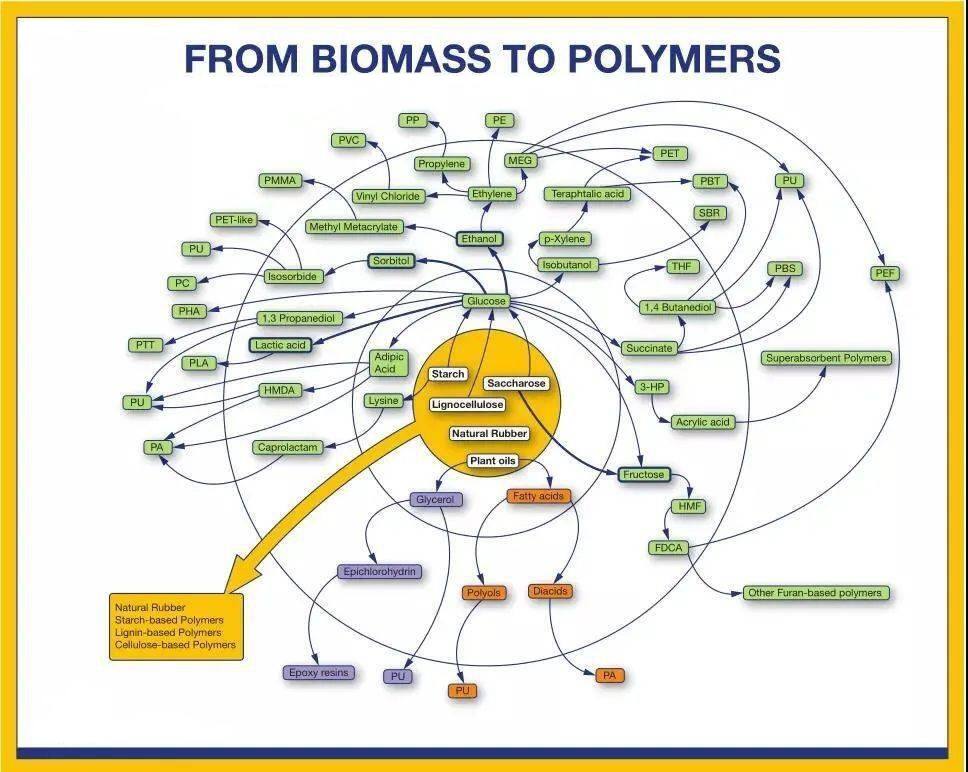

Bio-based coatings industry

Research and development of vegetable oil coatings is the future development trend.The 13th Five-Year Plan for China's coatings industry states-by 2023, the total output value of China's coatings industry will grow to RMB 690 billion.
Scientists and academics recognise that vegetable oils and fats are renewable resources and that research and development of vegetable oil coatings is the way forward. Expanding the sources of non-edible oils for paints has great potential in the country, and together with policy support, bio-based paints have great potential for development. In addition, according to the characteristics of the molecular structure of grease and alkyd resins, they can be modified in various way, in order to improve the physical and chemical properties of the coatings and make them widely used in different industries and different fields. Bio-based heavy-duty anti-corrosion coatings (cashew nut oil epoxy resin system), water-based biological nano-waterproof coatings, water-based biological rust-proof coatings, bio-based antifouling coatings have been introduced one after another.
Bio-based additives industry

Bio-based additives industry

- PREVIOUS
- NEXT


Bio-based plastics and polymers industry-Biobased plastics
2.111 million tonnes of global biobased plastics production capacity in 2020, with 1.227 million tonnes of biodegradable plastics and 884,000 tonnes of non-biodegradable capacity. By the end of 2021, Asia will hold a total of 49.9% of the world's bio-based plastics production capacity. Bio-based polymers - In 2020, global bio-based plastics production capacity will reach 2.111 million tonnes, of which 1.227 million tonnes will be biodegradable, mainly PLA and starch-based plastics, each accounting for 32%; non-biodegradable capacity will be 884,000 tonnes.
- Bio-based rubber industry
- Bio-based EPDM
-
Bio-based rubber refers to rubber prepared synthetically from bio-based raw materials and rubber produced from latex produced from plants other than the trifoliate rubber tree.
-
EPDM is saturated in the main chain and has excellent resistance to ageing, heat, oxygen, ozone, UV and outdoor ageing, and is extremely elastic. It can be used in shoe materials, tyres, automotive parts, wires and cables. 2018 World Cup official match ball Adidas Telstar is using Arlon Newco's bio-based EPDM material.


Bio-based materials, as a cutting-edge technology, can effectively reduce carbon emissions in the production process compared to traditional materials, and at the same time bring new economic growth points. Some experts expressed the hope that, on this basis, the National Development and Reform Commission would pay great attention to the bio-based chemical industry. Let's put the world on the road to sustainable development and give humanity a clean chemical environment.
- Latest News
- the new Nymax™ BIO formulation
-
According to LCA data, the energy consumption of corn-based PLA is 63.89 MJ per kg of product, which is significantly lower than the energy consumption of the same amount of petroleum-based plastics and the CO emissions are only 1.605 kg per kg of product, much lower than the CO emissions of petroleum-based plastics such as PET, PVC and PP. Carbon dioxide emissions are considered carbon neutral if they are the product of combustion of biomass or bio-based materials.MORE
-
On 16 March, Evante launched the new Nymax™ BIO formulation, a family of bio-based polyamide materials that will help customers achieve their sustainability goals. The new material solves the challenge that many bio-based polyamide materials currently on the market do not meet the required water absorption rate. The carbon footprint of renewable plant materials has been proven to be much lower than that of commonly used petroleum-based materials.MORE