




Pharmaceutical Intermediates
- • Analgesics (59)
- • Anesthetics (54)
- • Anti-Addiction Agents (8)
- • Antibacterials (119)
- • Anticonvulsants (20)
- • Antidementia Agents (23)
- • Antidepressants (35)
- • Antiemetics (24)
- • Antifungals (25)
- • Antigout Agents (9)
- • Anti-inflammatory Agents (28)
- • Antimigraine Agents (21)
- • Antineoplastics (430)
- • Antiparasitics (11)
- • Antiparkinson Agents (28)
- • Antipsychotics (54)
- • Antispasticity Agents (12)
- • Antivirals (146)
- • Anxiolytics (16)
- • Blood Glucose Regulators (106)
- • Blood Products (61)
- • Cardiovascular Agents (179)
- • CNS Agents (22)
- • Dental and Oral Agents (8)
- • Dermatological Agents (19)
- • Electrolytes (15)
- • Gastrointestinal Agents (63)
- • Genetic/Enzyme Disorder (12)
- • Genitourinary Agents (47)
- • Immunological Agents (36)
- • Metabolic Bone Disease (6)
- • Ophthalmic Agents (477)
- • Respiratory Tract (51)
- • Skeletal Muscle Relaxants (5)
- • Sleep Disorder Agents (28)
- • Oled Material Intermediate (340)
- • Heterocyclic Compound (9783)
- • Bulk Drug Intermediates (18034)
Related News
-
Premium Global Chemical Sourcing Requests (3-6Sep.,2026)
2026-09-07 -
U.S. Formally Publishes India PFA Trade Cases, Raising New Barriers for Fluoropolymer Supply
2026-09-02 -
Premium Global Chemical Sourcing Requests (27-30Aug, 2026)
2026-08-31 -
Supply Tightening Drives Up Phthalic Anhydride Prices, Further Increases May Face Obstacles in China
2026-09-05 -
Rising Raw Material Costs Drive Slight Increase in August Polyester Filament Market Prices
2026-09-01 -
Acetic Acid Market Prices Show Strong Upward Trend
2026-09-01


Immunological Agents Intermediates
Immunological Agents
-
-4-(4,4,5,5-tetramethyl-1,3,2-dioxaborolan-2-yl)-1H-pyrazole RC00704")
Pharmaceutical Grade / 99%
-
-1H-pyrazole-4-boronic acid pinacol ester 99.90% CAS 1029716-44-6 Honour")
Pharmaceutical Grade / 99.90%
-
-4-(4,4,5,5-tetramethyl-1,3,2-dioxaborolan-2-yl)-1H-pyrazole")
Pharmaceutical Grade / -
-
-4-pyrazole borate pinacol ester1029716-44-6")
Pharmaceutical Grade / 99%


Request for quotation , get quotes from more suppliers.
4-Morpholineethanol
(622-40-2)-

Pharmaceutical Grade / 99%
-

Industrial Grade / pharmaceutical grade / 99%
-

Industrial Grade / 99%
-

Industrial Grade / 99%
$1/KG EXW


Request for quotation , get quotes from more suppliers.
-

Pharmaceutical Grade / 99%
$1/KG EXW
-

Pharmaceutical Grade / 99%
-

Pharmaceutical Grade / 99%
-

- / 99.00%


Request for quotation , get quotes from more suppliers.
-

- / 99.00%
-

Industrial Grade / 99%
-

Industrial Grade / 99.0%
-


Request for quotation , get quotes from more suppliers.
-

Pharmaceutical Grade / 99%
-

pharmaceutical grade / 98%
-

- / 99.00%
-



Request for quotation , get quotes from more suppliers.
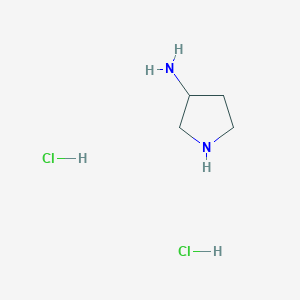
3-Pyrrolidinamine, hydrochloride (1:2)
(103831-11-4)-

Pharmaceutical Grade / 99%
-

Pharmaceutical Grade / 95%
-

- / 99.00%
-

Industrial Grade / 99.0%



Request for quotation , get quotes from more suppliers.
-
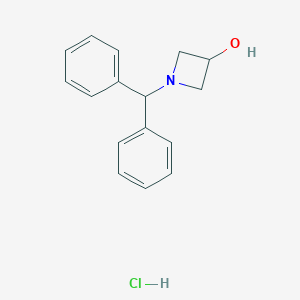
-3-HYDROXYAZETIDINE HYDROCHLORIDE")
Industrial Grade / 99%
-
-3-Hydroxyazetidine Hydrochloride")
-
-3-HYDROXYAZETIDINE HYDROCHLORIDE")
-


Request for quotation , get quotes from more suppliers.
-
succinate GMP 99% White to Light Yellow Holy Pharm")
Pharmaceutical Grade / 99%
-
- 1-Benzyl-N,4-dimethylpiperidin-3-amine ((2R,3R)-2,3-bis((4-methylbenzoyl)oxy)succinate) (2: 1) 477600-71-8")
Pharmaceutical Grade / 99%
-
-1-Benzyl-N,4-dimethylpiperidin-3-amine hemi((2R,3R)-2,3-bis((4-methylbenzoyl)oxy)succinate)")
Pharmaceutical Grade / 95%
-
succinate)")
pharmaceutical grade / 98%

Request for quotation , get quotes from more suppliers.
-
![buy 7-((2-(triMethylsilyl)ethoxy)Methyl)-4-chloro- 7H-pyrrolo[2,3-d]pyriMidine cas 941685-26-3Baricitinib Intermediates]( "7-((2-(triMethylsilyl)ethoxy)Methyl)-4-chloro- 7H-pyrrolo[2,3-d]pyriMidine cas 941685-26-3Baricitinib Intermediates")
Pharmaceutical Grade / 99%
-

Pharmaceutical Grade / 99%
-
![buy 7-((2-(triMethylsilyl)ethoxy)Methyl)-4-chloro-7H-pyrrolo[2,3-d]pyriMidine]( "7-((2-(triMethylsilyl)ethoxy)Methyl)-4-chloro-7H-pyrrolo[2,3-d]pyriMidine")
Pharmaceutical grade / 99%
-
![buy 4-CHLORO-7-((2-(TRIMETHYLSILYL)ETHOXY)METHYL)-7H-PYRROLO[2,3-D]PYRIMIDINE]( "4-CHLORO-7-((2-(TRIMETHYLSILYL)ETHOXY)METHYL)-7H-PYRROLO[2,3-D]PYRIMIDINE")
Pharmaceutical grade / 99%
$2/KG EXW
![buy 7-((2-(triMethylsilyl)ethoxy)Methyl)-4-chloro- 7H-pyrrolo[2,3-d]pyriMidine cas 941685-26-3Baricitinib Intermediates](https://file.echemi.com/fileManage/upload/goodpicture/20250917/tirzepatide-cas-2023788-19-2-for-reduce-weight-gip-glp-1_b20250917141922349.jpg "7-((2-(triMethylsilyl)ethoxy)Methyl)-4-chloro- 7H-pyrrolo[2,3-d]pyriMidine cas 941685-26-3Baricitinib Intermediates")

![buy 7-((2-(triMethylsilyl)ethoxy)Methyl)-4-chloro-7H-pyrrolo[2,3-d]pyriMidine](https://file.echemi.com/fileManage/upload/canonicalSmiles/20220812/4a47865ecda54b5999f6938de39e783f.png "7-((2-(triMethylsilyl)ethoxy)Methyl)-4-chloro-7H-pyrrolo[2,3-d]pyriMidine")
Request for quotation , get quotes from more suppliers.
-
-1-(3-Ethoxy-4-Methoxyphenyl)-2-(Methylsulfonyl)ethylaMine N-acetyl-L-leucine salt -a")
-
- 1-(3-Ethoxy-4-Methoxyphenyl) -2-(Methylsulfonyl)ethylaMine N-acetyl-L-leucine salt")
- / 99%
-
-1-(3-ethoxy-4-methoxyphenyl)-1-(methylsulphonyl)-eth-2-ylamine-N-acetyl-L-leucine salt for Apremilast Intermediate C")
-
-1-(3-Ethoxy-4-Methoxyphenyl)-2-(Methylsulfonyl)ethylaMineN-acetyl-L-leucinesalt")
Analytical Reagent / 99%


Request for quotation , get quotes from more suppliers.
More Information
Immunological Agents Intermediates are essential raw materials used in the synthesis of drugs and therapies that modulate or enhance the immune system. These intermediates provide the foundation for vaccine production, monoclonal antibodies, immunostimulants, and immunosuppressive agents.
Common applications and types include:
• Vaccine intermediates — for antigen preparation and formulation of immunizations.
• Monoclonal antibody intermediates — used in targeted immunotherapy for diseases such as cancer and autoimmune disorders.
• Immunostimulant intermediates — supporting drugs that enhance immune response.
• Immunosuppressive intermediates — for therapies controlling overactive immune activity, including transplant medicine.
Frequently Asked Questions
Immunological Agents are substances that modulate or interact with the immune system to prevent, diagnose, or treat diseases. They include vaccines, monoclonal antibodies, cytokines, immunomodulators, and immune checkpoint inhibitors. These agents work by either stimulating the immune response (e.g., vaccines) or suppressing it (e.g., in autoimmune disorders). Their mechanism depends on the specific agent and therapeutic goal, making them essential in oncology, infectious disease management, and autoimmune therapy.
Common types of Immunological Agents include:1. Vaccines – used to induce immunity against pathogens.2. Monoclonal antibodies – target specific antigens on cells, widely used in cancer and autoimmune diseases.3. Cytokines – signaling proteins like interferons and interleukins that regulate immune responses.4. Immunosuppressants – such as corticosteroids or calcineurin inhibitors, used to control overactive immune responses.5. Immune checkpoint inhibitors – enhance T-cell activity against tumors.Each type serves distinct therapeutic purposes based on disease context and patient needs.
Immunological Agents are typically produced using biotechnological methods, including recombinant DNA technology, hybridoma systems (for monoclonal antibodies), or cell culture techniques. Manufacturing must comply with Good Manufacturing Practice (GMP) standards to ensure purity, potency, and safety. Quality control involves rigorous testing for identity, sterility, endotoxin levels, protein concentration, and biological activity. Regulatory agencies like the FDA or EMA require extensive documentation and validation throughout the production lifecycle.
When sourcing Immunological Agents, consider:1. Regulatory compliance – ensure the supplier meets GMP, ISO, or other relevant certifications.2. Product characterization – verify data on purity, specificity, and functional activity.3. Batch-to-batch consistency – critical for reproducibility in research or treatment.4. Supplier reputation and technical support – reliable vendors provide certificates of analysis and scientific assistance.5. Intended use – confirm whether the agent is suitable for in vitro, in vivo, or clinical applications.Selecting a qualified supplier minimizes risk and ensures experimental or therapeutic efficacy.
Emerging trends in Immunological Agent development include:1. Personalized immunotherapies – tailored to individual patient biomarkers, especially in oncology.2. Bispecific antibodies – engineered to bind two different antigens simultaneously for enhanced targeting.3. mRNA-based vaccines – demonstrated success in infectious diseases and now being explored for cancer.4. Microbiome-modulating immunotherapies – leveraging gut flora to influence immune responses.5. AI-driven target discovery – accelerating the identification of novel immune pathways.These innovations reflect the field’s shift toward precision medicine and improved therapeutic outcomes.