




Catalyst and Auxiliary
- • Antioxidants (113)
- • UV Absorbers (93)
- • Polyethylene Glycol Derivatives (73)
- • Fluorescent Brightener (62)
- • Plastic Rubber Chemicals (94)
- • Polymer (474)
- • Precious Metal Catalysts (246)
- • Coupling Agent (8)
- • Zeolite (5)
- • Flame Retardants (12)
- • Petrochemical (28)
Related News
-
China’s Polyolefin Exports Keep Surging, Reversing the Global Plastics Trade Map
2026-07-14 -
India Launches Anti-Dumping Probe into PET Film from China, Singapore, Thailand and the UAE
2026-07-07 -
Both Supply and Demand Weak, Polyethylene Operates on the Weaker Side
2026-02-06 -
Demand Limited, Polyethylene Narrowly Fluctuating
2025-11-01 -
Polyethylene Under Pressure, Trend Weak
2025-10-14 -
Polyethylene Narrowly Ranges Since August
2025-08-12


Polyethylene Glycol Derivatives
Polyethylene Glycol Derivatives
Polyethylene glycol 2-ethylhexyl ether
(26468-86-0)-

top / 99%
$3.26/KG EXW
-

Industrial Grade, Feed Grade, Food Grade, Pharma Grade / 99%
-

-

Industrial Grade / 99.50%


Request for quotation , get quotes from more suppliers.
3,6,9,12,15,18-Hexaoxaoctacosan-1-ol
(5168-89-8)3
(CH
2
)
16
COO
-
). These have twoparts: a nonpolar part (th
-

Industrial Grade / 99%
-

-

-

Industrial Grade / 99%


Request for quotation , get quotes from more suppliers.
-

Industrial Grade / 99%
-
-oxiran reaction products with polyethylene glycol")
Industrial Grade / 99%
-

-
-oxiran reaction products with polyethylene glycol")


Request for quotation , get quotes from more suppliers.
-

- / 99.00%
-

-

Industrial Grade / 99%
-


Request for quotation , get quotes from more suppliers.
Aluminum chloride hydroxide sulfate
(39290-78-3)-

Industrial Grade / 100%
-

-

Industrial Grade / 30%
-


Request for quotation , get quotes from more suppliers.
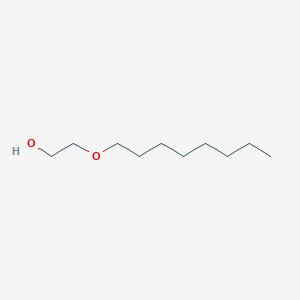
Polyethylene glycol octyl ether
(27252-75-1)-

Industrial Grade, Feed Grade, Food Grade, Pharma Grade / 99%
-
ethanol")
-

Different Grade / 99.9%
$0.1/KG EXW
-

BR / -

Request for quotation , get quotes from more suppliers.
-

Industrial Grade / 99%
-

Industrial Grade / 95%
-

Industrial Grade / 99%
-


Request for quotation , get quotes from more suppliers.
Methoxypolyethylene glycol maleimide
(99126-64-4)-

Industrial Grade / 99%
-

Industrial Grade / 95%
-

-


Request for quotation , get quotes from more suppliers.
-

Industrial Grade / 99%
-

-

-


Request for quotation , get quotes from more suppliers.
-

Industrial Grade / 99%
-
![buy a-[3-(Trimethoxysilyl)propyl]-w-hydroxypoly(oxy-1,2-ethanediyl)]( "a-[3-(Trimethoxysilyl)propyl]-w-hydroxypoly(oxy-1,2-ethanediyl)")
Industrial Grade / 99%
-
![buy a-[3-(Trimethoxysilyl)propyl]-w-hydroxypoly(oxy-1,2-ethanediyl)]( "a-[3-(Trimethoxysilyl)propyl]-w-hydroxypoly(oxy-1,2-ethanediyl)")
-
![buy a-[3-(Trimethoxysilyl)propyl]-w-hydroxypoly(oxy-1,2-ethanediyl)]( "a-[3-(Trimethoxysilyl)propyl]-w-hydroxypoly(oxy-1,2-ethanediyl)")
Industrial Grade / 99%
![buy a-[3-(Trimethoxysilyl)propyl]-w-hydroxypoly(oxy-1,2-ethanediyl)](https://file.echemi.com/fileManage/upload/canonicalSmiles/20220811/2e00216e5b0342acabd96ac368544646.png "a-[3-(Trimethoxysilyl)propyl]-w-hydroxypoly(oxy-1,2-ethanediyl)")
Request for quotation , get quotes from more suppliers.
Source Polyethylene Glycol Derivatives Raw Materials by Region

More Information
Polyethylene glycol (PEG) is an important chemical polymer that has found its application in numerous fields due to its flexibility and non-toxicity. It exists in several molecular weights, which set its properties and is classified as polyethylene glycol. This categorization guarantees that PEG fits the specific needs of various applications from the pharmaceutical to the industrial application. The polyethylene glycol solution is readily soluble, non-toxic and chemically stable, which makes it an ideal ingredient for formulation that demands reliability in terms of performance.
The versatility of polyethylene glycol makes it one of the most important raw materials in many industries. Its adaptability allows it to be used effectively in:
● Pharmaceutical excipients in drug delivery systems
● Samples of personal care products include creams, lotions and toothpaste.
● Lubricants for industrial and anti-foaming agents.
● Food processing's role in stabilizing and emulsifying
● Textile manufacturing process for fabric treatments.
● Paints and coatings to be used as a binder or a dispersing agent
Frequently Asked Questions
Polyethylene Glycol (PEG) Derivatives are chemically modified forms of polyethylene glycol, engineered to enhance solubility, stability, or biocompatibility for specific applications. These derivatives are widely used in pharmaceuticals, cosmetics, and industrial formulations due to their non-toxic, water-soluble, and versatile molecular structures. Common types include methoxy-PEG, PEG-amines, PEG-acids, and branched PEG variants.
In the pharmaceutical industry, PEG Derivatives are primarily used for drug delivery, protein conjugation (PEGylation), and formulation enhancement. PEGylation improves the pharmacokinetics of therapeutic proteins and peptides by increasing their half-life and reducing immunogenicity. Additionally, PEG-based excipients help stabilize injectables, improve solubility of poorly water-soluble drugs, and enable controlled-release formulations.
Selecting the appropriate PEG Derivative depends on several factors:1. Molecular weight – affects viscosity, solubility, and biodistribution.2. Functional group – determines reactivity (e.g., NHS ester for amine coupling, maleimide for thiol conjugation).3. Purity and end-group fidelity – critical for reproducibility in R&D and manufacturing.4. Regulatory compliance – ensure the derivative meets pharmacopeial standards (USP/NF, EP) if used in clinical or commercial products.Consulting technical datasheets and supplier certifications is essential for informed selection.
Yes, many Polyethylene Glycol Derivatives are considered safe for use in cosmetics and personal care products when manufactured to high purity standards. They function as emulsifiers, humectants, solubilizers, and texture enhancers. However, safety depends on the specific derivative, concentration, and impurity profile (e.g., ethylene oxide or 1,4-dioxane residuals). Reputable suppliers provide certificates of analysis and comply with guidelines from the FDA, EU Cosmetics Regulation, and CIR (Cosmetic Ingredient Review).
When sourcing Polyethylene Glycol Derivatives, prioritize suppliers that adhere to stringent quality standards such as cGMP (current Good Manufacturing Practice), ISO certification, and compliance with pharmacopeias (USP, EP, JP). Request documentation including Certificates of Analysis (CoA), Safety Data Sheets (SDS), and regulatory support files. For pharmaceutical or diagnostic use, ensure the product is manufactured under traceable, validated processes with documented batch consistency and low endotoxin levels.