Why has gummies become the fastest growing health care product formulation?
Last week, an exciting event occurred in the domestic health care product industry, that is, the Market Supervision Bureau organized the drafting of the technical requirements for the filing of gel candies and powders, and revised the "Regulations on Excipients Available for Filing of Health Food and Their Use (2020) Annual Edition) (Draft for Soliciting Opinions)" and "Formulations and Main Production Processes of Health Food Filing Products (2020 Edition) (Draft for Soliciting Comments)". This means that my country's registered health food will usher in two new dosage forms, which will inject a new force into the innovation and development of the domestic health care product industry.
Gummy-a rising health product dosage form
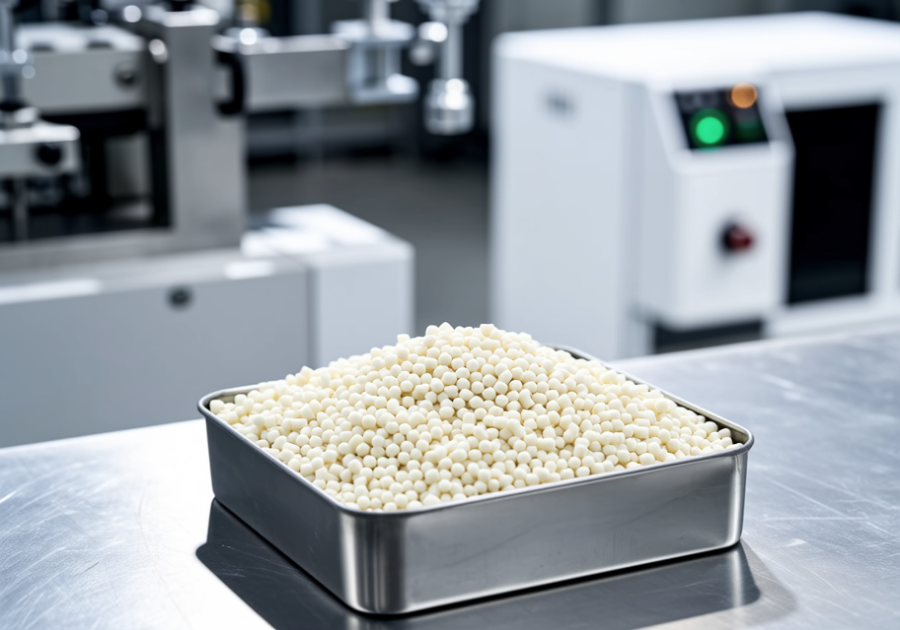
Gelatin candies are made of sugar or syrup or sweeteners, edible gums (or starch), etc. as the main raw materials, and are made into elastic and chewy candies, that is, soft candies. Although it is a very common snack, the application of this form to the functional food industry has become popular in recent years. According to the Nutrition Business Journal, the compound annual growth rate of the global gum dietary supplement market in 2018 is about 16%, which is the fastest growing formulation, while the compound annual growth rate of the entire supplement market is only 6%. Sugar accounted for 12% of all dietary supplement sales that year. According to survey data from the Responsible Nutrition Committee, in the United States, 49% of dietary supplement users in the United States in 2019 switched from traditional tablets, capsules and other forms to soft sweets. In 2019, the largest category of gum supplements in the U.S. is vitamins and minerals. Other categories such as herbal/botanicals, probiotics, and melatonin are also becoming more and more popular.
The explosive growth of fudge dietary supplements, in addition to the rapid growth of the industry itself, is also inseparable from its appearance similar to ordinary foods and a pleasant eating experience. In the past few years, the consumption of dietary supplements has exploded among consumers of all ages. At the same time, "pill fatigue" has also appeared. Like medicines, most dietary supplements are sold in the traditional form of tablets, capsules, and oral liquids. Many people need to take a lot of them throughout the day, which will invisibly cause a lot of psychological pressure on consumers and therefore promote them. The innovation of dietary supplement formulations has prompted manufacturers to introduce more creative formulations to attract more consumers.
The long-term snack gummy not only does not look like medicine, but also provides consumers with an interesting, delicious and portable way to take in nutrition. Not only can it make the brand stand out, it can also attract more new users to join the meal. Consumption of supplements. Initially, the gummy formulations were mainly aimed at children who did not like to "take medicine". Currently, gummy candies account for more than half of the sales of children's vitamins, minerals and functional foods. However, soft candies can be swallowed without water. They have a long shelf life, rich flavors and colors. They have also begun to attract young women and middle-aged and elderly groups. Now adults are the main target audience of soft candies, occupying the market of gum supplements. 65% of the total.
Innovative trends in soft candy dietary supplements
1. Plant base
Gelatin is extracted from the bones, ligaments, skins, and tendons of animals such as cattle and pigs. It has long been the main raw material for making soft candies. It has given soft candies a stable, gummy and elastic texture. However, gelatin has a low melting point (about 35°C). ) It is extremely easy to melt during storage and transportation, resulting in deformation and agglomeration. At the same time, consumers are also beginning to prefer more sustainable and non-animal plant ingredients, making pectin, seaweed gum, gum arabic, guar gum, Vegetarian colloids such as agar gradually replaced the gelatin in soft candy. These plant colloids often contain a lot of dietary fiber, which is good for digestion and has high thermal stability.
PURIS, a pea ingredient manufacturer, has also introduced an organic pea starch that can be used in soft candies as a substitute for pectin and gelatin.
2. Reduce sugar
The flavor of soft candy is the main success factor in winning the market, but its higher sugar content may cause tooth decay in children and lead to obesity. Therefore, reducing the sugar content of soft candy and maintaining its flavor is also an important innovation trend. Commercials can substitute sugar substitutes such as erythritol, stevia, and Luo Han Guo, or use natural fruit and vegetable ingredients instead of added sugar.
The soft candy developed by Paradise Fruits is added with apple juice to reduce sugar. The product does not contain gelatin. It is made from organic, real fruits and does not contain any added sugar.
3. Clean the label
Although the price of gum supplements is more expensive than similar products, consumers are still willing to pay more for organic gums, which often carry natural, organic, and non-GMO claims. In developing countries, consumers are increasingly willing to buy soft sweets with natural ingredients due to the high importance of food safety and product quality.
4. Portable pouch packaging
Although consumers like bottles and cans as the packaging type for gum supplements, vertical pouch packaging that is more portable will become a trend.
5. More innovative flavors
At present, the flavour of dietary supplements for soft candies is dominated by citrus, strawberry, blueberry and other flavors. The first reason is that the taste of these fruits is sour and can easily cover the peculiar smell of functional ingredients. Second, familiar natural fruits can be better Consumers accept, and more new flavors are yet to be developed.
Main market applications of gum supplements
1. Soft candy category: vitamin/mineral
Vitamins/minerals are the most important type of gummy supplements. A report recently released by TMR pointed out that the outlook for the gummy vitamin market is still optimistic, with a compound annual growth rate of approximately 6%, from approximately US$3.1 billion in 2018 to About 5.8 billion US dollars in 2029. Among them, women's consumption of gummy vitamins is high, and children will become the main consumers of vitamin gummy by 2024.
2. Soft candy category: probiotics
In the past few years, gummy vitamins rich in probiotics have gained great attention. Probiotics are widely known for their health benefits in improving immunity and promoting digestion.
3. Soft candy category: herbal/plant extract
4. Soft candy category: other common functional soft candy
(1) Promote sleep: Melatonin gum
(2) Beauty and whitening: collagen gum
(3) Puzzle development: omega-3
(4) Protect cardiovascular and cerebrovascular: Coenzyme Q10
(5) Anti-hair loss: Biotin

You May Interested In


2026-09-20
Trade Alert
Delivering the latest product trends and industry news straight to your inbox.
(We'll never share your email address with a third-party.)

Related News
-
U.S. Chemical Tariff Deadline Nears as the Industry Faces Cost Repricing and Supply-Chain Adjustment
-
EU Biocidal Data Protection Extension Raises the Stakes for Chemical Market Entry
-
EU Finalizes Anti-Dumping Duties on Chinese Adipic Acid as Chemical Trade Enters a Rule-Intensive Phase
-
EU Plans Broader Quotas and Tariffs on China, With Chemicals Clearly Named
-
Trump’s Steel, Aluminum and Copper Tariff Changes Pull Chemical Manufacturing Into the Impact Zone
-
Supplement Recall Puts Nutrition Ingredient Safety Back Under Pressure
-
API Supplier Audits Move to the Center of Pharma Supply Resilience
-
Solvay's "Slimming Action": Soda Ash Production Capacity in Spain Slashed by 180,000 Tons, 77 Jobs to Go
-
Japanese Plastics Market Accelerates its Shifts to Recycled Materials and Bioplastics
-
Ammonia Leaks in Iraq and Jordan Put Fertilizer Production and Port Safety on Alert
Recommend Reading
-
![ExxonMobil’s 264,000-bpd Joliet Refinery Shuts After Site-Wide Power Failure]()
ExxonMobil’s 264,000-bpd Joliet Refinery Shuts After Site-Wide Power Failure
-
![LG Chem Teams Up with Jianghua Microelectronics to Advance Semiconductor Ultra-High-Purity IPA]()
LG Chem Teams Up with Jianghua Microelectronics to Advance Semiconductor Ultra-High-Purity IPA
-
![The “Counter-Wind Ledger” of CHF 11.2 Billion: Sika Barely Grew in 2025—Yet Kept Taking Market Share]()
The “Counter-Wind Ledger” of CHF 11.2 Billion: Sika Barely Grew in 2025—Yet Kept Taking Market Share
-
![Chemours Sells Its Former Titanium Dioxide Site in Taiwan: Turning a “White Powder” Factory into “Wind Power Real Estate” for $360 Million—Buying Not Cash, But Breathing Room]()
Chemours Sells Its Former Titanium Dioxide Site in Taiwan: Turning a “White Powder” Factory into “Wind Power Real Estate” for $360 Million—Buying Not Cash, But Breathing Room
-
![South Korea Retires 1.39 Million Tonnes of Ethylene Capacity as Northeast Asia’s Petrochemical Reset Turns Real]()
South Korea Retires 1.39 Million Tonnes of Ethylene Capacity as Northeast Asia’s Petrochemical Reset Turns Real
-
![Crude Oil and Supply-Demand Dynamics Drive Toluene Market to First Decline and Then Rise in April]()
Crude Oil and Supply-Demand Dynamics Drive Toluene Market to First Decline and Then Rise in April
-
![Caustic Soda Prices Decline in April]()
Caustic Soda Prices Decline in April
-
![April DMF Market Prices Show an Initial Rise Followed by a Decline]()
April DMF Market Prices Show an Initial Rise Followed by a Decline
-
![In April, the overall trend of maleic anhydride in China declined]()
In April, the overall trend of maleic anhydride in China declined
-
![Costs Decline, Consumption Weakens—ABS Prices Drop Sharply in April]()
Costs Decline, Consumption Weakens—ABS Prices Drop Sharply in April