How much do you know about AIBN chemical property?
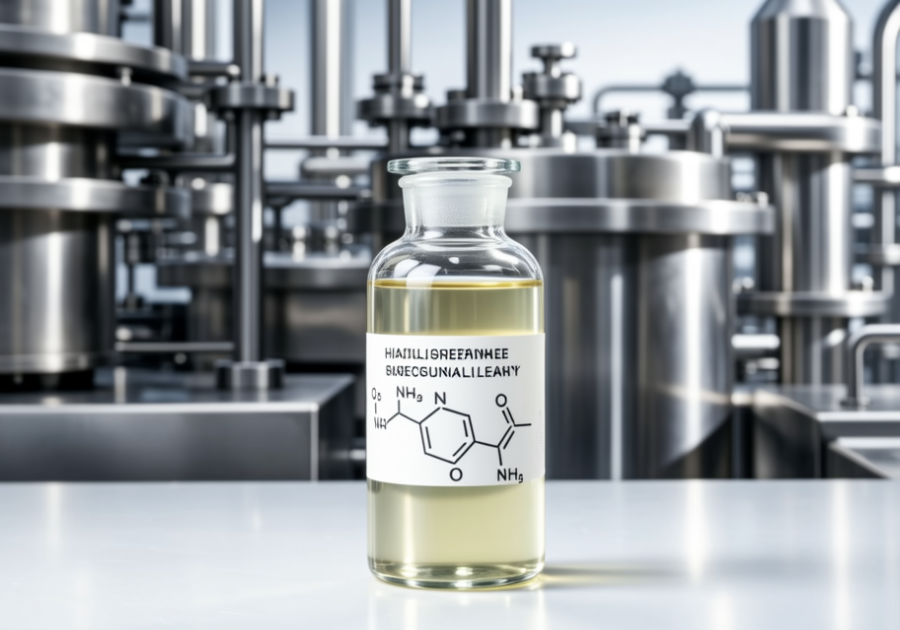
AIBN, also known as Azobisisobutyronitrile, is an organic compound and the most common oil-soluble azo polymerization initiator, used in the polymerization of various polymers. This article will introduce AIBN chemical property to better understand its chemical reaction principle.
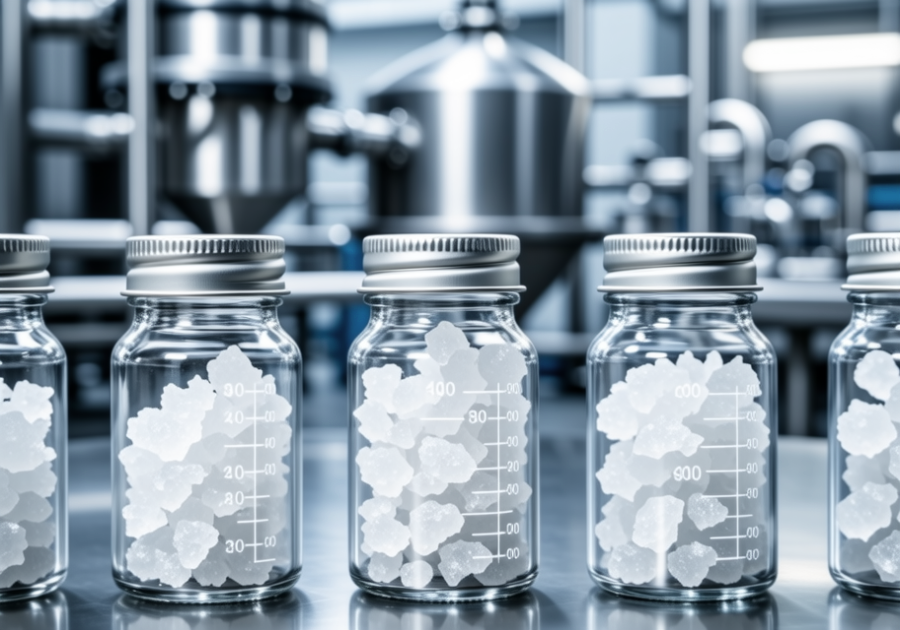
AIBN is a white crystalline powder, insoluble in water, soluble in ethanol, ether, toluene, methanol and other organic solvents. It has a density of 1.11g/cm3, a melting point of 102-104°C, a boiling point of 236.2°C, and a flash point of 96.6°C, its refractive index is 1.49, its chemical formula is C8H12N4, and CAS NO. is 78-67-1.
AIBN is the abbreviation of the Azobisisobutyronitrile. It can be seen from its full name that this is an organic compound that is an azo compound, that is, two nitrogen atoms connected by a double covalent bond -N=N- participate in its structure.It is a compound widely used as a free radical initiator in practical chemistry.
Remember, a free radical is an unstable molecule that has one or more unpaired electrons and is formed during an intermediate stage of a chemical reaction. AIBN is one of the most commonly used free radical initiators in the production of synthetic fibers, adhesives and detergents, used together with organic peroxides. But AIBN has the advantage over the latter of producing no oxygenated by-products or unwanted color changes. Although AIBN is a useful free radical generator in laboratories and industry, due to its flammable and explosive properties it can be a health hazard and cause serious accidents and must be handled with caution.
AIBN chemical reaction
The free radicals formed by the decomposition of AIBN can initiate free radical polymerization and other free radical initiated reactions. For example, a mixture of styrene and maleic anhydride in toluene will react if heated, forming a copolymer when AIB is added. Another example of a radical reaction that can be initiated by AIBN is the anti-Markovnikov hydrohalogenation of alkenes. AIBN is also used as a free radical initiator in Wall-Ziegler bromination reactions. The AIBN-derived 2-cyano-2-propyl radical abstracts hydrogen from tributyltin hydride. The resulting tributyltin radical can be used to remove bromine atoms.
The AIBN-derived radical abstracts a hydrogen from HBr, yielding a bromine radical that can add to alkenes. This type of olefin hydrohalogenation reaction has anti-Markovnikov selectivity.
AIBN chemical applications
AIBN is mainly used as a foaming agent for rubber, plastics, etc., and can also be used in organic synthesis. In the chemical industry, AIBN is used in the production of vinyl chloride, vinyl acetate, acrylonitrile, polyurethane, PVC foaming agents, polyvinyl alcohol, styrene polyester and polyamide. AIBN can also be used as a polymerization initiator. For example, AIBN is used as an initiator in the synthesis of highly cross-linked Poly(divinylbenzene) (PDVB) polymers; it is used as an initiator in the polymerization process of 2-hydroxyethyl methacrylate (HEMA).
Why is AIBN a good free radical initiator?
AIBN is a good free radical initiator because it has two stable nitrile groups symmetrically connected through an azo group. These free radicals can be used in a variety of organic chemical reactions, so AIBN is widely used in laboratories.
How does AIBN work?
AIBN acts as a free radical initiator in many chemical reactions. AIBN works by forming nitrile radicals and releasing nitrogen gas when the compound decomposes.
Why did AIBN explode?
AIBN is explosive because it can decompose at relatively low temperatures, releasing nitrogen gas, and can burn violently or explode when exposed to a spark or heat source. In its stable form, it is also a toxic compound that can irritate the body's skin and mucous membranes and can even be fatal.
Features and Benefits of AIBN
AIBN undergoes unimolecular decomposition at a good rate, without much change from one solvent to another, and producing no oxygenated by-products.
Products chemically similar to AIBN
V-601 is a nitrile-free, oil-soluble azo polymerization initiator developed as an alternative to AIBN. V-601 has similar polymerization activity to AIBN, and its decomposition by-products are less toxic.
Protective measures for AIBN chemical operations
Engineering controls: closed operation, local exhaust.
Respiratory protection: Filtering dust respirators should be worn when exposure to toxicants is possible. During emergency rescue or evacuation, it is recommended to wear self-contained breathing apparatus.
Eye protection: Wear safety glasses.
Body protection: Wear breathable protective clothing.
Hand protection: Wear anti-toxic gloves.
Other protection: After work, shower and change clothes. Store clothes contaminated with poisons separately and wash them for later use.
In short, through this article, we have fully understood AIBN chemical properties, chemical uses and reaction processes, etc., to help you better choose suitable products in the chemical industry.
Looking for chemical products? Let suppliers reach out to you!
What Happens when Soap is Added to HCl?
You May Interested In


Glow70/KLOW80 99% China Peptides Warehouse Direct Delivery Lyophilized Powder in Stock
$1.8E+2/UNIT FOB


2026-08-27
Trade Alert
Delivering the latest product trends and industry news straight to your inbox.
(We'll never share your email address with a third-party.)

Related News
-
Anastrozole Side Effects: What You Need to Know
-
Benzoylecgonine: Detection and Testing Methods
-
Why You Should Never Mix Bleach and Vinegar
-
Zoledronic Acid: Uses, Mechanism, and Side Effects
-
Acesulfame Potassium: Safety, Side Effects, and Food Uses
-
Caffeine Structure & Effects: What You Should Know
-
Polysorbate 80: Food Additive, Medical Use, and Safety
-
Sulfur Dioxide Properties & Uses: Industrial, Preservative & Safety Guide
-
Understanding the Arsenate Symbol and Its Uses
-
Methane Lewis Structure Explained: Step-by-Step Guide
Recommend Reading
-
![How to Get Rid of Sulfur Burps Fast: Natural Remedies That Work]()
How to Get Rid of Sulfur Burps Fast: Natural Remedies That Work
-
![Viprostol Usage & Precautions: What You Need to Know]()
Viprostol Usage & Precautions: What You Need to Know
-
![Clostebol Uses & Safety: What You Should Know]()
Clostebol Uses & Safety: What You Should Know
-
![What Color Should a Zinc-Copper Couple Be?]()
What Color Should a Zinc-Copper Couple Be?
-
![August 10, 2026—Xinol Market Outlook]()
August 10, 2026—Xinol Market Outlook
-
![Business Society’s Market Outlook for Acetic Acid on August 11, 2026: Volatile and Tending to Weaken]()
Business Society’s Market Outlook for Acetic Acid on August 11, 2026: Volatile and Tending to Weaken
-
![Business Society’s Market Outlook for Maleic Anhydride on August 10, 2026: Volatile]()
Business Society’s Market Outlook for Maleic Anhydride on August 10, 2026: Volatile
-
![Premium Global Chemical Sourcing Requests (3-7 Nov 2025)]()
Premium Global Chemical Sourcing Requests (3-7 Nov 2025)
-
![Phthalic Anhydride Market Insight on August 10, 2026 in China]()
Phthalic Anhydride Market Insight on August 10, 2026 in China