A Water Field Problem: How to Remove PFAS From Water?
Before talking about the question of “How to remove pfas from water”, some basic properties will be introduced. PFAS, the perfluorinated and polyfluoroalkyl substances, are a series of unnatural and synthetic organic compounds that are not easily broken down. Some types have been proven to accumulate in the environment and people's bodies. There are severe health effects when exposed to some PFAS.
Until July 2020, more than 2,200 scenarios in all 50 states were contaminated with PFAS, covering every field including household goods, packaging, workplaces, drinking water, and even living organisms. From the above introduction, we know that PFAS are difficult to remove and degrade and exist everywhere. So, how to remove PFAS from water? This is a very big problem that needs to be solved urgently. Luckily, some effective methods have been discovered.
How to remove pfas from water?
1.Adopting granular activated carbon to remove PFAS from water
From the point of view of efficiency level, granular activated carbon, short for GAC, is the most widely used way in the scope of drinking water remediation technology so far. As we all know, GAC is a material that can be effectively used in water treatment technology, with a wide range and high efficiency.
Therefore, GAC materials do not need frequent replacement of reaction beds for the invested wastewater treatment plant. As for the removal effect of GAC on PFAS, the Orange County Water District in the United States has also tested the performance of granular activated carbon, ion exchangers, and new adsorbents on PFAS.
Carbon filtration technology has been used in its field due to the easy operation of displacing the filter element. "Though GAC technology has the advantage of high efficiency, it is still possible that there will be better methods to replace GAC in the future with the technology developing continually and the effect of innovate and subject to economies.” Vice president and co-founder of Bluefield Research who has written for Water Technology Online said.
2.Using Ion-exchange resin to remove PFAS from water
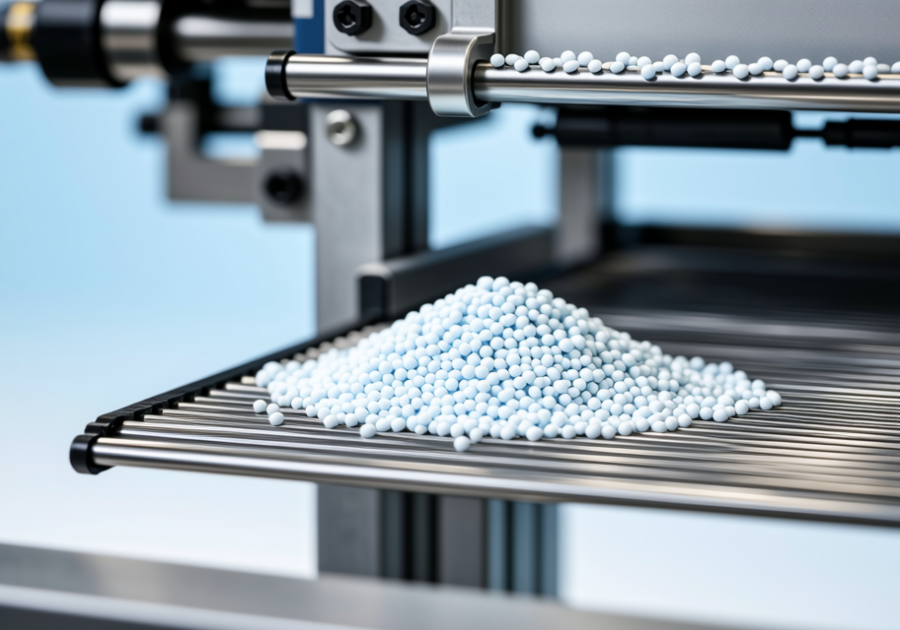
Next, we will introduce another answer to the question “How to remove pfas from water”. Ion-exchange (IX) resin is composed of polymer materials with high porosity, mainly consisting of acid, alkali, and water-insoluble substances, which can form resin microbeads. There are cation exchange resins and anion exchange resins. IX resin has the adsorption capacity through the selection of resin media for specific PFAS.
Although IX resin has a high cost per unit volume of resin, it has a long service life and does not require a large reaction space, so its operating costs are not very expensive. It can be seen that the use of IX resin is an efficient and economical option when faced with small reaction Spaces or small-scale processes such as mobile repair techniques. For PFAS, the use of IX resin can more effectively remove those short chains of PFAS that cannot be adsorbed by activated carbon.
The ion exchange resin acts like a powerful small magnet, and the cations in the resin attract the anions in the PFAS, which then adsorb and hold the contaminated material from the water to remove the PFAS.
3.Adopting reverse osmosis technology to remove PFAS from water
Reverse osmosis (RO) technology is known for a semi-permeable membrane capable of removing ions, chemicals, and microdeposits. Among them, high-pressure membranes such as nanofiltration membranes and reverse osmosis membranes can effectively remove PFAS. According to the data provided by the US Environmental Protection Agency, RO for a variety of PFAS, including short-chain PFAS, the removal rate is usually more than 90%.
In this technology, about 80% of the water can flow out through the high-pressure film to achieve water purification. Reverse osmosis technology is suitable for urban residents, because the volume of water that residents need to treat is small, and domestic sewage is easy to treat. So there is no need to worry too much about its treatment efficiency and other problems.
Conclusion:
This brings us to conclude our essay on the theme of “How to remove pfas from water”. Because PFAS are difficult to remove and more difficult to degrade, it has become a big challenge in the water industry. Three methods have been introduced in this article. Among them, granular activated carbon technology is the most widely used because of its simple operation. New technology to remove it from water in a more effective way still needs to be studied.
Looking for chemical products? Let suppliers reach out to you!
You May Interested In


Glow70/KLOW80 99% China Peptides Warehouse Direct Delivery Lyophilized Powder in Stock
$169/UNIT FOB


2026-10-19
Trade Alert
Delivering the latest product trends and industry news straight to your inbox.
(We'll never share your email address with a third-party.)

Related News
Recommend Reading
-
![Business Society’s Benzene Anhydride Trend Analysis for September 18, 2026: Moderate Pullback]()
Business Society’s Benzene Anhydride Trend Analysis for September 18, 2026: Moderate Pullback
-
![Business Society’s Trend Analysis for Epichlorohydrin on September 18, 2026: Weak Rebound (Bearish)]()
Business Society’s Trend Analysis for Epichlorohydrin on September 18, 2026: Weak Rebound (Bearish)
-
![Business Society PVC Trend Analysis for September 18, 2026: Weak and Volatile]()
Business Society PVC Trend Analysis for September 18, 2026: Weak and Volatile
-
![Business Society September 18, 2026 MIBK Trend Analysis: Moderate Correction]()
Business Society September 18, 2026 MIBK Trend Analysis: Moderate Correction
-
![2025 Review and 2026 Outlook of the Methanol Market in China]()
2025 Review and 2026 Outlook of the Methanol Market in China