Stearic acid in soap | Detailed Explanation
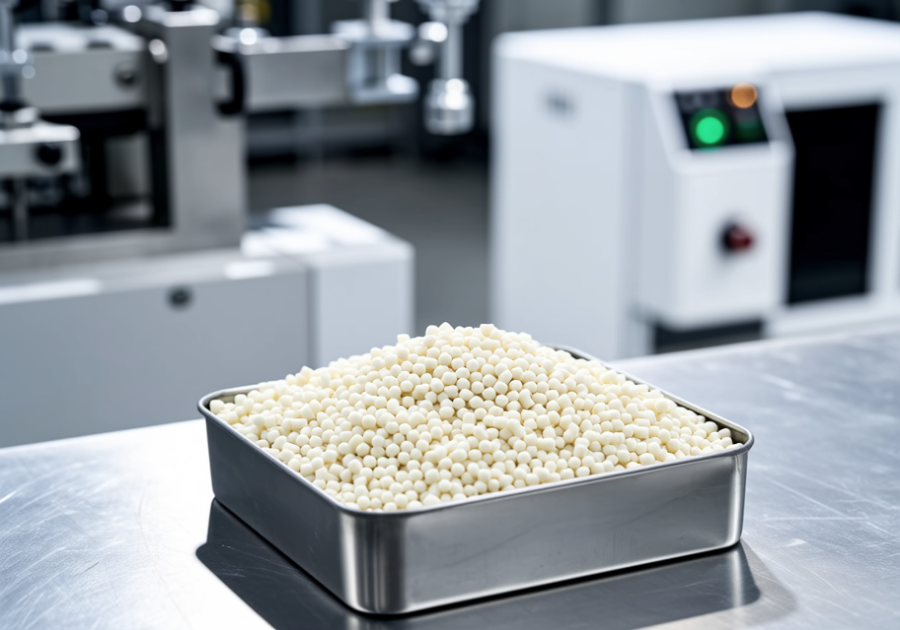
We can find stearic acid in different fields. It is known that stearic acid, also named octadecanoic acid, has the molecular formula C18H36O2. This material is an organic compound that is usually produced by the hydrolysis of fats and oils. Before we explore the stearic acid in soap, let’s explore where we can find this material.
Where can we find stearic acid?
Some studies show that almost all fats and oils will involve different amounts of stearic acid. There are higher levels of this material in animal fats, such as butter, containing up to 24%. In contrast, there are lower levels of this substance in vegetable oils, such as tea oil, which is just about 0.8%, and palm oil, which is 6%. However, cocoa butter is a special one, which contains up to 34%. You know that this special material has a wide range of applications. We can see it in cosmetics to plastic products. In the following part, let’s explore this material and try to find the stearic acid in soap.
What are the benefits of stearic acid?
Before we talk about the stearic acid in soap, let’s see the benefits of stearic acid first. We can find that producers always use it to improve water resistance in our daily lives. Experiments have demonstrated that high polymer materials are more likely to absorb water, which can change their properties and cause corrosion. If you add stearic acid to your products, you can use it to improve the water-repellency of your products, allowing them to remain stable in wet environments. This is a great boon for producers in areas such as outdoor products, construction materials, and electronic devices.
Moreover, people tend to apply it in skin care products, such as snow creams and cold creams, where it acts as an emulsifier, resulting in a stable, white paste. Therefore, this kind of material is more widely used in the cosmetic industry.
In addition, this material is also widely used in some PVC plastic pipes, plates, profiles, and films. You must know that it is a PVC heat stabilizer with better lubricity heat stabilization. It is found that stearic acid can prevent coking during processing in the above products. Also, it is an effective heat stabilizer when added to PVC film processing. Therefore, it can defend against discoloration of the finished film caused by exposure to sulfides.
Stearic acid is also used as a lubricant, defoamer, and raw material of food additives such as glycerol stearate, sorbitan stearate, and sucrose ester in the food industry.
In a word, this kind of material has various functions. It can be seen that this kind of material is widely applied in a wide variety of industrial and consumer products.
Stearic acid in soap
Now, let’s explore the stearic acid in soap. Stearic acid can be found in almost all commercially available soaps and cleaning products. That is because it is the simplest and most common way to use stearic acid to improve the soap’s durability. It is rarely found alone in nature and is not a chemical compound. Stearic acid, often in the form of a glyceride, is found in most animal and vegetable fats and oils, especially butter. Cocoa butter and shea butter both contain about 40% stearic acid. When adding 3 percent of stearic acid to a handmade soap recipe, the amount of stearic acid is approximately the same as adding 7.5 percent cocoa butter or shea butter.
With a melting point of 69.4 degrees Celsius, pure stearic acid is an organic acid and therefore can interact with bases to produce sodium stearate, making it a soap. It is sufficient to use about 3% stearic acid in a handmade soap recipe, with a limit of 5% added on. When you want to add the stearic acid and part of the coconut oil together with water heating to 70 ~ 80 degrees, stirring to dissolve, and then leaving to cool naturally can be used.
Conclusion
In a word, this article mainly talks about stearic acid. Then, the benefits of stearic acid are elaborated in detail. Finally, we have explored the stearic acid in soap in a lot of detail. After knowing this material, I believe you must understand how to choose it and how to use it.
Looking for chemical products? Let suppliers reach out to you!
You May Interested In


Glow70/KLOW80 99% China Peptides Warehouse Direct Delivery Lyophilized Powder in Stock
$169/UNIT FOB


2026-10-25
Trade Alert
Delivering the latest product trends and industry news straight to your inbox.
(We'll never share your email address with a third-party.)

Related News
Recommend Reading
-
![Weak Consumption Leads to Decline in ABS Prices in Mid-May in China]()
Weak Consumption Leads to Decline in ABS Prices in Mid-May in China
-
![The negative spread has widened, with acrylic acid prices continuously falling and showing weakness domestically in China]()
The negative spread has widened, with acrylic acid prices continuously falling and showing weakness domestically in China
-
![Insufficient Downstream Demand Leads to Weak DMF Market Prices]()
Insufficient Downstream Demand Leads to Weak DMF Market Prices
-
![Short-term correction in lithium carbonate, medium to long-term logic remains unchanged]()
Short-term correction in lithium carbonate, medium to long-term logic remains unchanged
-
![Formic Acid Moving Averages Set to Cross Upward—Rising Trend May Be About to Begin]()
Formic Acid Moving Averages Set to Cross Upward—Rising Trend May Be About to Begin