




Australian Lobster Trade Set to Restart Soon, Four-Year Loss Exceeds 20 Billion AUD, Sino-Australian Relations Gradually Warming!
The Australian Prime Minister's website published an official statement on Thursday, making it clear that Australian Prime Minister Anthony Albanese and Chinese Premier Li Qiang, during the East Asia Cooperation Leaders' meetings in Vientiane, reached a consensus on the issue of mutual concern - the resumption of the fresh lobster trade by the end of this year after a four-year suspension. Australia is one of the key suppliers to the Chinese lobster market, and its exports have dropped significantly due to diplomatic tensions between the two countries over the origin of the novel coronavirus. In particular, since 2020, China has imposed high tariffs on major Australian imports, including lobsters.
"Thanks to our patient and thoughtful strategy, we have successfully restarted trade with our largest export partner." We are sparing no effort to gradually remove all barriers to trade and have agreed with Premier Li on a specific timetable for the resumption of the lobster trade, which will be close to the eve of the Chinese New Year."
According to relevant documents, the Australian lobster industry has suffered more than 20 billion Australian dollars (13.4 billion US dollars) in economic losses due to export restrictions.
In 2020, Australian Prime Minister Morrison blocked Huawei's participation in the construction of Australia's 5G network on the grounds of national security, and called for an independent international traceability investigation into the new coronavirus. The move prompted a furious response from China, which imposed punitive tariffs, sanctions and informal bans on A $20bn worth of Australian exports, ranging from agricultural products such as wine, beef, lobster and barley to commodities such as coal, copper and timber.
Since the new Australian government took office in May 2022, China-Australia relations have shown a significant improvement, and China has lifted import restrictions on Australian barley, wine, beef and other goods. The resumption of the lobster trade marks the imminent breaking down of the last trade barrier to Australian exports to China.
Mr Albanese said exports of Australian goods, including wine and barley, had grown significantly as restrictions were gradually lifted.
Looking for chemical products? Let suppliers reach out to you!

You May Interested In



2026-06-29
-


Functional Ingredients Industry Overview
Collection of Markets for Functional Ingredients in Food & Nutrition and Cosmetics.Published in: Mar. 2026
Trade Alert
Delivering the latest product trends and industry news straight to your inbox.
(We'll never share your email address with a third-party.)

Related News
-
Biochem to Acquire BASF’s Global Glycinates Business
-
Moldova Proposes Stricter Quality Standards for Edible Casein and Caseinates
-
EU Authorises Propionic Acid and Its Salts as Feed Additives Until 2035
-
EFSA Approves Cellulase from GM Aspergillus Niger with Low Allergy Risk
-
Canada Launches Re-Evaluation of Herbicide Iodosulfuron-Methyl-Sodium
-
EFSA Reports Avian Influenza Situation in Europe and Human Cases in Asia
-
EFSA Renews Authorisation of Inositol for Use in Fish and Crustacean Feed
-
EFSA Finds L-Cysteine Feed Additives Safe for All Animal Species
-
EFSA Confirms Safety of Triacylglycerol Lipase for Expanded Food Uses
-
UK Proposes Sharp Increase in MRL for Flubendiamide in Tea
Recommend Reading
-

Caviar Sales Surge in India as Imports Face 50 Percent Price Hike and Tight Wildlife Controls
-

Canada’s Seafood Exports Escape Trump’s 35 Percent Tariff USMCA Exemption Protects Salmon and Lobster Trade
-

Trump Sets 19 Percent Tariff on All Indonesian Exports to US $1.9 Billion Seafood Trade Faces Uncertainty
-

EFSA Confirms Acacia Gum Safe in Animal Feed Up to 4889 mg/kg User Sensitization Risk Highlighted
-

Trump Raises Brazil Import Tariffs to 50 Percent $229 Million Seafood Trade in Jeopardy
-
Substandard Drug Findings Expose Deep Structural Gaps in Medicine Quality Control
-

Minoxidil Safety Under Global Review as Infant Exposure Risks Surface
-
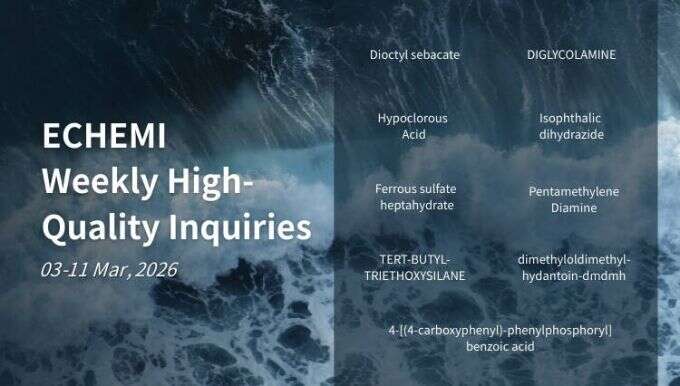
Premium Global Chemical Sourcing Requests (3 - 11 Mar, 2026)
-

SKC Secures $40 Million IFC Investment for 70,000-Ton Biodegradable PBAT Plant in Vietnam Commercial Launch Set for 2026
-
Costs Plunge Aniline Prices Fall from High Levels