




McKinsey Pays to Close a Purdue Liability Chapter
McKinsey’s planned $125 million contribution to Purdue Pharma’s bankruptcy is not just another opioid-era settlement headline. ETPharma reports that the payment resolves potential legal claims Purdue could have pursued against the consulting firm over sales and marketing advice linked to the company’s downfall, while McKinsey makes no admission of wrongdoing.
That matters because the opioid crisis has repeatedly shown that accountability does not stop with manufacturers. Advisers, distributors, and associated actors have also come under scrutiny when their work helped amplify aggressive commercial behavior. McKinsey’s contribution reflects that wider liability landscape. Even when there is no formal admission, the cost of closing exposure can be substantial when the underlying public-health damage is historically severe. The consulting role in pharmaceutical commercialization is no longer insulated from the consequences of how those strategies played out.
The Purdue case remains one of the most consequential corporate collapses in modern healthcare. Any additional settlement tied to it carries symbolic weight because it reinforces the idea that the opioid crisis generated a chain of responsibility wider than one company or one executive group. McKinsey has already faced earlier scrutiny tied to opioid-related work, and this latest step keeps the focus on how commercial advice can become legally and reputationally hazardous when it aligns with harmful market behavior.
The broader implication for pharma-adjacent consulting is clear. Growth strategy is no longer judged only by how well it drives sales, but by whether it can withstand retrospective scrutiny when public harm is involved. In that sense, the Purdue legacy is still reshaping the risk calculus around commercial advisory work.

You May Interested In


Glow70/KLOW80 99% China Peptides Warehouse Direct Delivery Lyophilized Powder in Stock
$169/UNIT FOB


2026-10-12
Trade Alert
Delivering the latest product trends and industry news straight to your inbox.
(We'll never share your email address with a third-party.)

Related News
-
LB Group Takes Over UK Titanium Dioxide Plant, Restarts 150,000-tonne Capacity
-
Evonik to Close Two German Plants, Further Cutting Europe’s High-Purity Silicon Tetrachloride Capacity
-
Syngenta Bee Pesticide Protest Shows the Pressure Building Around Crop Protection Giants
-
Novo Nordisk’s Oral Wegovy Wins EU Approval as Weight-Loss Competition Shifts from Injections to Pills
-
AstraZeneca Pays Up to $1.5 Billion for Global Rights to Chinese Lung Cancer Drug
-
Wanhua Chemical and Xingfa Group Jointly Develop 5.32 Billion Yuan Phosphate Mine
-
Ingredion Agrees to Acquire Tate & Lyle for $3.6 Billion, Reshaping the Global Specialty Ingredients Market
-
When BASF Lets Agriculture Fly Solo: A Capital Repricing of Scale and Ambition
-
Production Down 6%, Profits Cut by $3.7 Billion: Middle East Conflict Hits ExxonMobil Hard
-
AstraZeneca and CSPC Strengthen Biologics Manufacturing Partnership in China
Recommend Reading
-
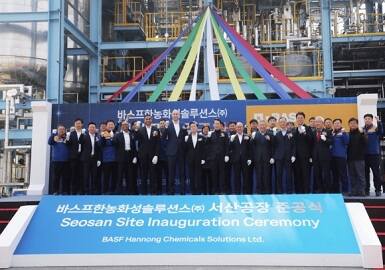
![BASF and Hannong Chemical Joint Venture Nonionic Surfactant Plant Begins Operation in South Korea]()
BASF and Hannong Chemical Joint Venture Nonionic Surfactant Plant Begins Operation in South Korea
-
![Nylon Giant to Close Another European Plant, Cutting 140 Jobs]()
Nylon Giant to Close Another European Plant, Cutting 140 Jobs
-
![Novo Nordisk Sounds the Alarm: Growth Headwinds Loom Over Global Operations in 2026]()
Novo Nordisk Sounds the Alarm: Growth Headwinds Loom Over Global Operations in 2026
-
![5%–10% Is Just the Surface: Behind Dow’s Greater China Price Letter Lies a Global Repricing of Silicones]()
5%–10% Is Just the Surface: Behind Dow’s Greater China Price Letter Lies a Global Repricing of Silicones
-
![Huntsman Issues Two Consecutive MDI Price Hike Notices: €250 Increase in Europe, $300 Increase in India]()
Huntsman Issues Two Consecutive MDI Price Hike Notices: €250 Increase in Europe, $300 Increase in India
-
![Premium Global Chemical Sourcing Requests (3-5July, 2026)]()
Premium Global Chemical Sourcing Requests (3-5July, 2026)
-
![MTBE Market Trends: First Rise, Then Fall]()
MTBE Market Trends: First Rise, Then Fall
-
![Hydrogen Peroxide Formula: H2O2 Concentration & Safety]()
Hydrogen Peroxide Formula: H2O2 Concentration & Safety
-
![Ethanol Market Prices at High Levels with Consolidation]()
Ethanol Market Prices at High Levels with Consolidation
-
![Imidazole: Heterocyclic Chemistry, Antifungal Drugs, and Buffer Systems]()
Imidazole: Heterocyclic Chemistry, Antifungal Drugs, and Buffer Systems





- Hot Searches
- aniracetam supplement where to buy
- price of formic acid
- is miconazole nitrate the same as miconazole
- soda ash dense price
- urea fertilizer price
- sbr rubber price
- 2 4 4 trimethylpentane
- trimethylamine
- janoshik tirzepatide
- dimethylmercury
- glp-1 retatrutide where to buy
- price of kerosene at sheetz