Tirzepatide is the one GLP-1 molecule where the price quoted tells you almost nothing about whether the material can legally reach you. Three facts shape every sourcing decision: no generic tirzepatide is approved anywhere, the primary compound patent runs to January 2036, and the United States now screens GLP-1 API shipments against an import alert green list. A buyer who compares quotes without checking those three things is comparing sellers who operate under different rules.
What "tirzepatide API" can legally be in 2026
Tirzepatide (CAS 2023788-19-2) is approved as Mounjaro and Zepbound, both held by Eli Lilly. The compound patent expires in January 2036; secondary patents on formulation and dosing extend protection toward 2039. There is therefore no lawful generic tirzepatide API on the market — what exists is licensed API manufacturing for development and filing purposes, plus a much larger volume of material sold as "research use only" or as an input to compounding.
That second category was narrowed in 2025. The FDA resolved the tirzepatide shortage in October 2024, which ended the shortage exemption that had permitted compounding: state-licensed 503A pharmacies had until 18 February 2025, and 503B outsourcing facilities until 19 March 2025. A supplier whose pitch still rests on compounded tirzepatide is describing a market that closed.
The practical consequence for procurement: the question is not "who has the cheapest tirzepatide," but "which suppliers can document a batch that a regulator will accept, and which are reselling vials into a channel that no longer has a legal home."
The 7 checks before you pay
1. Establish what the seller is actually supplying
- What to do: ask directly whether the material is API for pharmaceutical manufacture, an intermediate, or research-grade material for laboratory use. Require the answer in writing on the quotation.
- What documents: product specification stating grade and intended use; if API, the regulatory basis under which the manufacturer produces it.
- What disqualification looks like: "pharmaceutical grade" used as a marketing adjective with no regulatory basis; the same seller offering "API" and single vials from the same lot; refusal to state intended use.
2. Resolve the DMF number in the FDA database
- What to do: take the DMF number from the quotation and confirm it exists, is Type II, is active, and is held by the entity that owns the plant — not by a trader in between.
- What documents: DMF number plus a letter of authorization (LOA) naming your company as the reference.
- What disqualification looks like: a DMF number that does not resolve; a DMF held by a third party who will not issue an LOA; "DMF in preparation" presented as filed.
- Important: a Type II DMF is not an approval. It allows the holder's data to be referenced in someone else's application, and nothing more.
3. Check the border gate, not just the paperwork
This is the check that most tirzepatide buyers skip, and it is the one that decides whether goods arrive.
- What to do: for US-bound material, confirm the manufacturer appears on FDA's Import Alert 66-80 green list for tirzepatide specifically, and does not appear on Import Alert 66-40, which detains drugs from firms found not to meet GMP.
- What documents: the live FDA pages, checked on the day you order — not a screenshot from the seller's brochure.
- What disqualification looks like: green-listed for a different GLP-1 product but not for tirzepatide; an active DMF with no green-list entry; silence when you ask which alert applies.
- Why it matters: FDA evaluated 48 GLP-1 API sites and found 21% noncompliant, and documented a pattern of sites that register as GLP-1 API manufacturers, solicit orders, decline FDA records requests, and then deregister. Registration alone proves nothing.
4. Verify GMP certification covers the site and the peptide line
- What to do: match the certificate's facility address and scope against the plant the DMF names and the plant your batch will be made in.
- What documents: GMP certificate from NMPA, an EU authority, or a PIC/S member inspection, valid at the time of shipment.
- What disqualification looks like: a certificate for a different product line; a group-level certificate with no site address; "GMP standard" with no certificate at all.
5. Demand the batch COA with raw chromatograms
- What to do: require COA data for the exact batch, including HPLC purity with method and MS identity confirmation. For a 39-amino-acid peptide with a C20 fatty diacid moiety, the related-peptide and impurity profile carries as much weight as the purity number.
- What documents: COA (batch, methods, purity, impurity profile, residual solvents per ICH Q3C, water content), plus the chromatogram and mass spectrum files.
- What disqualification looks like: a purity figure with no method; chromatograms without axes; the COA batch number differing from the label.
6. Recognise the retail-vial tell
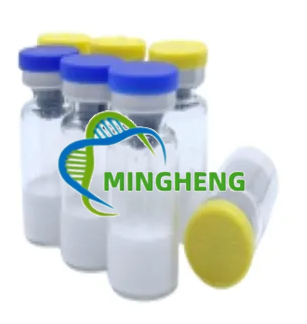
- What to do: treat milligram-scale vials, ten-vial kits, per-dose packaging, and weight-loss framing as signals that you are looking at a consumer channel, not an API supplier.
- What documents: bulk packing specification, lead time in kilograms, and a batch size the plant can actually produce.
- What disqualification looks like: MOQ quoted in vials; a catalogue mixing tirzepatide, retatrutide and cosmetic peptides with identical packaging; marketing copy borrowed from a telehealth site.
7. Confirm commercial continuity and your own patent exposure
- What to do: agree supply terms, change-control notification, and retest obligations in writing, and confirm with your own regulatory counsel what the patent position means in your destination market.
- What documents: supply agreement with change control; LOA; your counsel's written position on filing and launch timing.
- What disqualification looks like: no change-control clause; willingness to ship to any market without asking about your regulatory strategy; a price that only works if the material is never inspected.
Three quote sources, and how to tell them apart
| What you are quoted | What it really is | Fastest tell |
| "API, GMP, DMF available" at a mid-market price | Licensed API capacity, usually for development and filing | DMF resolves; holder owns the plant; green-list entry for tirzepatide |
| "API grade" at a fraction of the market price | Material from a plant with no green-list standing, or relabelled bulk substance | DMF missing or held by a third party; no green-list entry; seller deflects border questions |
| "99% pure, ships in 1-3 days" at vial pricing | Research-grade or consumer-channel material | MOQ in vials; ten-vial kits; weight-loss marketing |
The middle row is the expensive one. Material that clears every document check except the border gate looks identical on a COA and fails at import, at which point the loss is the shipment plus the timeline.
What price to expect
Bulk tirzepatide API is quoted case by case, and quotes on the same molecule can differ by two orders of magnitude because they describe entirely different legal products. A number only means something when it is attached to a documentation set: DMF holder identity, green-list standing for tirzepatide, batch-specific third-party data, and a supply agreement with change control.
Two rules that hold regardless of market conditions:
- Quote against a fixed documentation set. Ask every supplier for the same four items and compare only quotes that answer all four.
- Treat a low outlier as a border problem first. On this molecule, the cheapest offer is most often the one whose material cannot be cleared, not the one with the best cost structure.
Current listings and inquiry activity for this product are maintained on the tirzepatide price page; read them together with the checks above rather than as a price benchmark.
Suppliers currently listing this product
Data as of 2026-11-03: ECHEMI's tirzepatide supplier list (CAS 2023788-19-2) shows 200+ suppliers, and the visible mix is dominated by trading companies offering milligram vials rather than plants offering bulk API. That ratio is the practical reason the retail-vial test in check #6 comes before any price discussion.
| What to look for on a listing | What a usable listing shows | What a weak listing shows |
| Manufacturer identity | Plant address matching the GMP certificate and DMF holder | Trading company name only |
| Regulatory standing | DMF number, green-list status for tirzepatide | "Documents on request," indefinitely |
| Product form | Bulk API, packing and storage terms stated | Vials sized by dose, consumer packaging |
Browse current tirzepatide suppliers for the live list — the count moves with listing turnover, so use it as a dated snapshot, not a fixed figure.
FAQ
Is compounded tirzepatide still legal?
Not as a routine substitute. The shortage that permitted compounding was resolved in October 2024; 503A pharmacies had to stop by 18 February 2025 and 503B facilities by 19 March 2025. Narrow patient-specific exceptions exist, but a supplier advertising compounded tirzepatide at scale is selling outside the current framework.
Can a Chinese or Indian manufacturer ship tirzepatide API into the US?
Only if the plant's tirzepatide is on the Import Alert 66-80 green list or the material otherwise satisfies FDA's conditions, and the firm is not on Import Alert 66-40. An active DMF alone does not clear the border.
Why do quotes for the same molecule span two orders of magnitude?
Because they are not the same product. Licensed API for development, unregistered bulk substance, and research vials sit in different regulatory categories with different cost structures — and only the first can support a filing.
Does an active Type II DMF mean the API is approved?
No. A DMF is a repository of manufacturing data that an applicant may reference with the holder's authorization. Approval attaches to a drug application, never to a DMF.
References
- FDA — Drug Master Files (DMFs): fda.gov/drugs/forms-submission-requirements/drug-master-files-dmfs(accessed 2026-11-03)
- FDA — FDA's Concerns with Unapproved GLP-1 Drugs Used for Weight Loss: fda.gov/drugs/drug-alerts-and-statements/fdas-concerns-unapproved-glp-1-drugs-used-weight-loss(accessed 2026-11-03)
- FDA — FDA clarifies policies for compounders as national GLP-1 supply begins to stabiliz): fda.gov/drugs/drug-alerts-and-statements/fda-clarifies-policies-compounders-national-glp-1-supply-begins-stabilize(accessed 2026-11-03)
- ICH Q7 — Good Manufacturing Practice Guide for Active Pharmaceutical Ingredients(accessed 2026-11-03)
- ICH Q3C(R8) — Impurities: Guideline for Residual Solvents(accessed 2026-11-03)
Author: ECHEMI Procurement Editorial Team
Reviewed by: Howie
Updated: 2026-11-07