




Is Silver Nitrate Soluble in Water? How and Why Explained
If you’ve ever seen a black stain on someone’s fingers after handling old lab chemicals, there’s a good chance it was silver nitrate. This unassuming white crystal—AgNO₃ to chemists—looks harmless enough in its bottle. But mix it with water, and it quietly unleashes one of the most versatile ions in applied chemistry: silver.
So, is silver nitrate soluble in water?
Yes—extremely so. In fact, at room temperature, over 120 grams can dissolve in just 100 milliliters of water. That kind of solubility isn’t accidental; it’s built into its very nature.
Silver nitrate is an ionic compound, formed when a silver cation (Ag⁺) bonds with a nitrate anion (NO₃⁻). When dropped into water, the polar water molecules—oxygen ends slightly negative, hydrogen ends slightly positive—swarm around these ions like magnets. The oxygen-rich regions latch onto Ag⁺, while the hydrogens orient toward NO₃⁻. This pulls the crystal apart in a process called dissociation:
AgNO₃(s) → Ag⁺(aq) + NO₃⁻(aq)
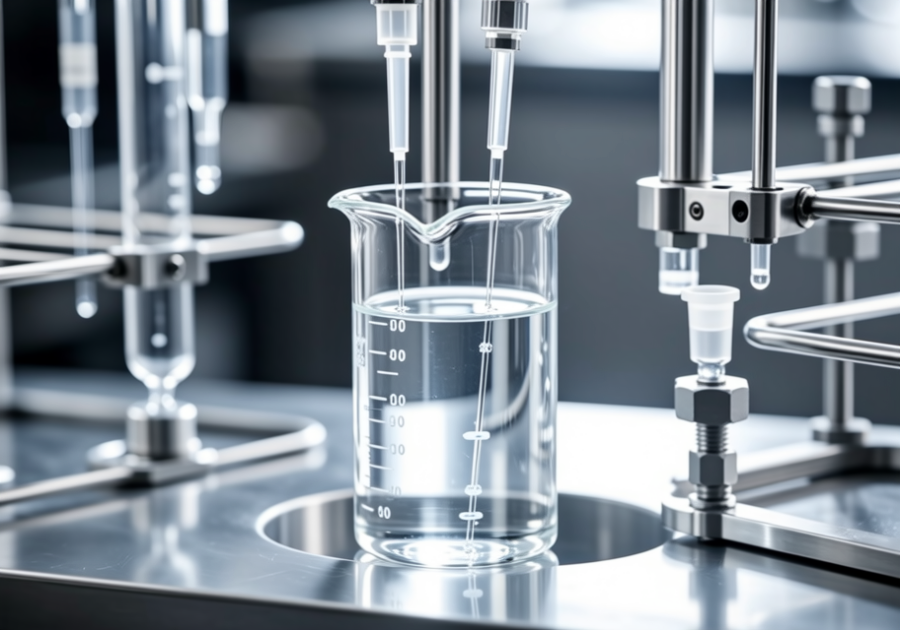
No residue. No cloudiness. Just a clear, colorless solution teeming with reactive silver ions.
And those ions are where the magic happens.
Historically, silver nitrate’s biggest claim to fame was in photography. When mixed with halides like sodium chloride or potassium bromide, it forms insoluble silver halides—AgCl, AgBr—that darken instantly under light. Those tiny crystals coated photographic film for over a century, capturing everything from family portraits to moon landings. Even today, some artists and labs still use wet-plate collodion processes that rely on freshly prepared silver nitrate solutions.
In medicine, diluted silver nitrate has long served as a topical antiseptic. A 0.5% to 1% solution can cauterize small wounds, treat granulation tissue, or prevent neonatal eye infections (a practice dating back to the 1800s). The silver ion disrupts bacterial cell membranes and interferes with DNA replication—making it effective against a broad spectrum of microbes. But caution is key: concentrated solutions burn skin and leave stubborn gray-black stains that can last days, as silver reduces to metallic form upon contact with organic matter.
Beyond clinics and darkrooms, silver nitrate is a workhorse in labs. It’s used to test for halides (a white precipitate means chloride is present), to stain proteins in gels during electrophoresis, and as a precursor to other silver compounds—like silver oxide or silver nanoparticles.
But this usefulness comes with responsibility. Silver nitrate is light-sensitive—that’s why it’s always stored in amber or opaque bottles. Left in sunlight, it decomposes into silver metal, nitrogen dioxide, and oxygen, turning purplish or black. It’s also corrosive and toxic if ingested. Never mix it with ethanol or other organics—some combinations can form explosive silver fulminate. And always wear gloves: that “temporary” stain might take a week to fade as your skin sheds.
Despite these risks, silver nitrate remains irreplaceable. Its perfect storm of high solubility, reactivity, and antimicrobial power makes it a rare bridge between classical chemistry and modern application.
So the next time you see an old photo or hear about silver-based wound dressings, remember: behind much of that utility is a simple salt—AgNO₃—doing its quiet, potent work, one dissolved ion at a time.
Looking for chemical products? Let suppliers reach out to you!
What is a Covalent Compound?
You May Interested In


Glow70/KLOW80 99% China Peptides Warehouse Direct Delivery Lyophilized Powder in Stock
$169/UNIT FOB


2026-10-22
Trade Alert
Delivering the latest product trends and industry news straight to your inbox.
(We'll never share your email address with a third-party.)

Related News
Recommend Reading
-
![Business Society’s Market Outlook for Melamine on August 21, 2026: Fluctuating Trend]()
Business Society’s Market Outlook for Melamine on August 21, 2026: Fluctuating Trend
-
![Business Society’s Market Outlook for Dichloromethane on September 8, 2026: Volatile]()
Business Society’s Market Outlook for Dichloromethane on September 8, 2026: Volatile
-
![Business Society’s Market Outlook for Epoxy Resins on August 21, 2026: Slight Decline]()
Business Society’s Market Outlook for Epoxy Resins on August 21, 2026: Slight Decline
-
![Business Society October 21, 2026 Fuel Oil 180CST Trend Analysis: Volatility]()
Business Society October 21, 2026 Fuel Oil 180CST Trend Analysis: Volatility
-
![Business Society’s Market Outlook for MIBK on September 8, 2026: Relatively Strong Performance]()
Business Society’s Market Outlook for MIBK on September 8, 2026: Relatively Strong Performance



- Hot Searches
- price of kerosene per gallon
- tci 4-fluorobenzaldehyde price
- pp polypropylene resin price asia 2025 english
- betasone tablet uses
- chemical market prices
- glp-3 retatrutide buy online usa
- retatrutide pricing
- urea price
- urea prices
- perchloroethylene msds
- red phosphorus sale
- 1 4 butanediol buy