




China's cosmetics market is changing around high-end products
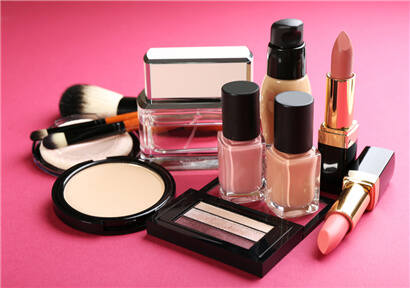
China's cosmetics market is changing with high-end products as the center, and the market share of international big brands is increasing.
According to a report recently issued by Yang Jihye, a researcher of Meritz Comprehensive Financial Securities, international luxury brands show great influence in the Chinese cosmetics market, whereas the skin care market is dominated by local brands showing differences. According to Euromonitor, the cosmetics and daily necessities market in China increased by 12.3% in 2018 compared with the previous year, reaching 70 trillion won, especially the high-end market increased by 28.9% compared with the previous year, which stimulated the growth of the whole market. It is speculated that the market size of high-end products is 17 trillion won and that of mass products is about 43 trillion won, but the growth rate of mass market is 3.4% in the next five years. On the contrary, the growth rate of high-end products is 11.4%.
Skin care market in 2018 increased by 13.2% compared with the previous year, reaching 36 trillion won, and the cosmetics market increased by 24.2%, reaching 7 trillion won.
Especially in China's booming cosmetics market, the market share of major international brands is rising sharply. In 2018, China's cosmetics market share increased significantly, followed by L'Oreal's Santa Laurent, LVMH's Dior and Estee Lauder's MAC. Among the local brands in China, the market share of Marie Daijia, Hanshu and Kazilan, the giants of traditional Chinese cosmetics, decreased significantly.
Emory Pacific's Lanzhi and Yueshi Fengyin's cosmetics market share declined by a much larger margin than skin care products.
With the change of consumption trend, the differentiation characteristics of international and Chinese local brands in skin care market become more and more prominent.
Especially the local enterprises in China, such as exclusive brand Royal clay Square, cosmetics brand Winona based on traditional Chinese medicine, natural hairdressing and body care brand nourishment, professional eye makeup brand Wanmei, etc. are increasing their market share.
According to researcher Yang, the brand share of Chinese local enterprises, especially those with strong functional expertise, has increased significantly. Hotels, Xinluo, New World, LG and other enterprises are expected to benefit from the expansion of China's high-end cosmetics market.

You May Interested In


High Quality β-Nicotinamide adenine dinucleotide CAS 53-84-9 NADwith ready stock and best price
$3E+1/UNIT FOB


2026-10-22
Trade Alert
Delivering the latest product trends and industry news straight to your inbox.
(We'll never share your email address with a third-party.)

Related News
-
From “Made in China” to “Created in China”
-
COSMOPROF WORLDWIDE BOLOGNA PRESENTS “THE INVISIBLE BEAUTY”, THE PROJECT REVEALING WHAT MAKES BEAUTY POSSIBLE
-
Skin longevity, biotech, fragrance and sensory beauty take centre stage as in-cosmetics Asia returns to Bangkok
-
Skin longevity, biotech, fragrance and sensory beauty take centre stage as in-cosmetics Asia returns to Bangkok
-
COSMOPROF WORLDWIDE BOLOGNA ANNOUNCES 2027 DATES AND UNVEILS A NEW LAYOUT FOR ITS 60TH ANNIVERSARY EDITION
-
in-cosmetics Global launches the first Nutricosmetics Ingredient Index
-
in-cosmetics Global reveals line-up for 2026 programme curated for innovation
-
IN-COSMETICS GLOBAL TO LAUNCH FIRST DEDICATED INNER BEAUTY ZONE FOR NUTRICOSMETIC INNOVATIONS IN 2026
-
COSMOPROF WORLDWIDE BOLOGNA 2026: A GLOBAL BEAUTY ECOSYSTEM IN CONTINUOUS EVOLUTION
-
French Cosmetics Exports Poised for First Drop in Over Two Decades in 2025
Recommend Reading
-
![Honeywell Acquires Johnson Matthey Catalyst Business at a Discount, Cutting £475 Million from the Price]()
Honeywell Acquires Johnson Matthey Catalyst Business at a Discount, Cutting £475 Million from the Price
-
![China’s TiO₂ Industry Launches Sixth Price Hike Wave as More Than 20 Producers Follow]()
China’s TiO₂ Industry Launches Sixth Price Hike Wave as More Than 20 Producers Follow
-
![Arkema Triples Transparent Polyamide Capacity in Singapore: a Bet on Virtual Reality Growth or a Move to Strengthen Supply Resilience?]()
Arkema Triples Transparent Polyamide Capacity in Singapore: a Bet on Virtual Reality Growth or a Move to Strengthen Supply Resilience?
-
![New York’s Additive Ban Signals a Tougher Era for Food Formulation]()
New York’s Additive Ban Signals a Tougher Era for Food Formulation
-
![EU Chemical Antidumping Complaints Hit a Record High: Trade Remedies Reshape Export Competition]()
EU Chemical Antidumping Complaints Hit a Record High: Trade Remedies Reshape Export Competition
-
![September 4, 2026 DMF Market View in China: Relatively Strong]()
September 4, 2026 DMF Market View in China: Relatively Strong
-
![Business Society’s Trend Analysis for Propylene Oxide on September 15, 2026: Strong Consolidation (Bullish)]()
Business Society’s Trend Analysis for Propylene Oxide on September 15, 2026: Strong Consolidation (Bullish)
-
![Business Society’s Acetone Trend Analysis for September 11, 2026: Operating at High Levels]()
Business Society’s Acetone Trend Analysis for September 11, 2026: Operating at High Levels
-
![Business Society September 23, 2026 Heavy-Grade Soda Ash Trend Analysis: A Short-Side Rally]()
Business Society September 23, 2026 Heavy-Grade Soda Ash Trend Analysis: A Short-Side Rally
-
![Cost support weakens, sodium metabisulfite prices fall]()
Cost support weakens, sodium metabisulfite prices fall






- Hot Searches
- emulsifiers for cosmetics
- 222 trifluoroethanol
- olive oil msds
- ambeed 87736-88-7 price
- dishwashing dispersants
- semaglutide research peptide for sale
- methylamine price per gallon
- radium radium
- chem pharmaceuticals
- dipotassium phosphate distributor
- ethylbenzene price
- mono propylene glycol for sale