Seminar on Sino-US Economic and Trade Relations: Current Situation and Prospects
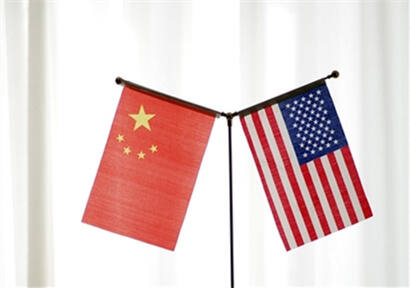
Xinhua News Agency, Hong Kong, July 9. Only cooperation can win-win. Despite the great changes in the international situation, China and the United States should strengthen communication and dialogue and promote economic and trade consultation and cooperation. This is the common voice of Chinese and foreign participants at the Symposium on "Sino-US Economic and Trade Relations: Present Situation and Prospects", which opened in Hong Kong on 9 July. The seminar was jointly organized by the China International Economic Exchange Center and the Sino-US Exchange Foundation. At the opening ceremony, Tung Chee-hua, Vice-Chairman of the CPPCC National Committee and Chairman of the Sino-US Exchange Foundation, delivered a welcoming speech. Zeng Peiyan, Chairman of the China International Economic Exchange Center, former Prime Minister Yasuo Fukuda of Japan and Chairman of the Asian Research Center of the American Heritage Foundation attended and made keynote speeches. Speakers stressed that the two major economies of China and the United States are crucial to global economic stability. China and the United States should control differences, continue to promote Sino-US economic and trade consultations and jointly promote Sino-US relations based on coordination, cooperation and stability. In his keynote speech, Zeng Peiyan emphasised that in the global industrial chain and value chain layout, commodities, technology, human resources, capital and other factors have realized large-scale cross-border flows, forming a large market, a large intersection and a large cycle of global factors. Great balance has greatly improved the efficiency of factor allocation and promoted the prosperity of the global economy. In the era of globalization, we need to use new concepts, not only from the perspective of trade in goods, but also from the perspective of the benefits of global factor flows. The benefits of each participant in the transaction depend on the comparative advantages of natural endowment, capital accumulation, scientific and technological level, industrial level, labor quality and other related factors, as well as the ways and means of participating in the transaction.
Zeng Peiyan stressed that the formation of the US foreign trade deficit has its objective inevitability. The US has not suffered losses in its economic and trade exchanges with China, but has gained tangible benefits in various sectors such as the state, enterprises and families. The US side should take a comprehensive view of the causes of the trade deficit and its gains and losses. Policy measures should be based on objective analysis. Tariffs imposed blindly will only be counterproductive. It is hoped that China and the United States will respect each other's core interests, address their respective legitimate concerns, implement the principles and directions set by the two heads of state, act in a pragmatic and progressive manner, and reach mutually acceptable trade agreements. In his speech, Fukuda reviewed the history of economic and trade frictions between Japan and the United States, emphasizing that economic and trade frictions are inevitable in economic development, and that both sides should stand on the overall concept to make decisions. If handled properly, it will be an opportunity for both sides to make progress. Faulkner analyzed the challenges facing China and the United States in their economic and trade negotiations. He said that China and the United States should take reshaping and upgrading their economic and trade relations as their common goal and take economic and trade negotiations as an opportunity to achieve this goal. The United States must learn to effectively adjust the way it interacts with China. He hoped that the two sides would actively promote negotiations and implement the agreements reached. The participants interviewed by reporters said that Sino-US relations are one of the most important bilateral relations in the world, while Sino-US cooperation has both advantages and disadvantages. At present, although there are some differences between the two countries, their interests are highly integrated and the areas of cooperation are vast. They should promote each other and develop together. The two heads of state in Osaka reached important consensus and agreed to resume economic and trade negotiations on the basis of equality and mutual respect, which pointed out the direction for the further development of Sino-US relations. Former Senator Mark Kirk of the Republican Party of the United States believes that the prospects for Sino-US economic and trade negotiations remain positive. As long as the two sides maintain a pragmatic and cooperative attitude, effectively address their concerns and strengthen communication and dialogue, they can accumulate energy for the final trade agreement and ultimately achieve a win-win outcome.
"Sino-US Economic and Trade Relations: Present Situation and Prospects" Seminar will last for two days, followed by in-depth discussions on the three topics of "Sino-US Economic and Trade Relations", "Sino-US Relations: Present Situation and Prospects", "Globalization, Global Governance and the Future of Multilateralism". Former senior officials from China, the United States, Canada, Japan, Singapore and other countries and regions, representatives of the National Committee on U.S. -China Relations, the American Chamber of Commerce, the Heritage Foundation, Brown University, Yale University, the Chinese University of Hong Kong, representatives of China Industry Association, think tanks and other institutions, Qualcomm, Zhengtai, Dell, Intel Enterprise representatives attended the meeting.

You May Interested In


High Quality β-Nicotinamide adenine dinucleotide CAS 53-84-9 NADwith ready stock and best price
$3E+1/UNIT FOB


2026-10-24
Trade Alert
Delivering the latest product trends and industry news straight to your inbox.
(We'll never share your email address with a third-party.)

Related News
-
Bgi and 13 other companies have been included in the US list of 'military involvement'.
-
From Fungus to Food: EFSA Greenlights Rhizomucor pusillus Biomass as Safe Novel Ingredient
-
Sun-Kissed Insect Oil? EFSA Approves UV-Treated Mealworm Fat as Safe—and Vitamin D-Rich—Novel Food
-
Triple Shield, Zero Risk: EFSA Declares Stacked GM Cotton Safe for Food, Feed, and Environment
-
Red Algae, Golden Promise—With a Daily Dose Warning: EFSA Clears Astaxanthin-Rich Algal Meal for New Foods
-
Arkema Divests PVC Additives Business to Focus Resources on High-Performance Materials Market
-
From Kitchen Herb to Feed Additive: EFSA Gives Green Light to Marjoram Oil—With a Caution for Handlers
-
Alipay, Baidu, and iFlytek Win Big—As the Government Spends $1.1 Billion on AI Healthcare, Is This a Lifeline or a Feeding Frenzy for Tech Giants?
-
From Ancient Volcanoes to Modern Feed Mills: EFSA Validates Volcanic Zeolite as Safe and Effective Feed Additive
-
What Can $3.4 Billion Buy? Shin-Etsu Chemical’s Answer: Upstream Control of PVC
Recommend Reading
-
![Probiotic Promise, Safety Snag: EFSA Gives Mixed Verdict on Multi-Strain Dog Feed Additive]()
Probiotic Promise, Safety Snag: EFSA Gives Mixed Verdict on Multi-Strain Dog Feed Additive
-
![$530 Million Lawsuit Unheard, $76 Million Counterclaim Filed: Is Qicai Chemical’s ‘Reputation Defense’ a Desperate Last Stand or a Calculated PR Gambit?]()
$530 Million Lawsuit Unheard, $76 Million Counterclaim Filed: Is Qicai Chemical’s ‘Reputation Defense’ a Desperate Last Stand or a Calculated PR Gambit?
-
![Spice Up the Coop: EFSA Reaffirms Safety of Botanical Blend for Broiler Feed—With a Warning for Handlers]()
Spice Up the Coop: EFSA Reaffirms Safety of Botanical Blend for Broiler Feed—With a Warning for Handlers
-
![The Cold Cycle: PVC Market’s Chill and Faint Light Ahead]()
The Cold Cycle: PVC Market’s Chill and Faint Light Ahead
-
![Echoes of Overcapacity: The Structural Anxiety of China’s EVA Industry Chain]()
Echoes of Overcapacity: The Structural Anxiety of China’s EVA Industry Chain
-
![Silver Nitrate: Medical Uses, Photography History, and Staining Properties]()
Silver Nitrate: Medical Uses, Photography History, and Staining Properties
-
![Phthalic Anhydride Prices Rebound and Rise in China]()
Phthalic Anhydride Prices Rebound and Rise in China
-
![Business Society October 21, 2026 Melamine Trend Analysis: Clear Decline]()
Business Society October 21, 2026 Melamine Trend Analysis: Clear Decline
-
![Lack of Positive Factors Continues to Weaken Polyethylene Market]()
Lack of Positive Factors Continues to Weaken Polyethylene Market
-
![Entering December, the domestic maleic anhydride market in China continues to decline]()
Entering December, the domestic maleic anhydride market in China continues to decline