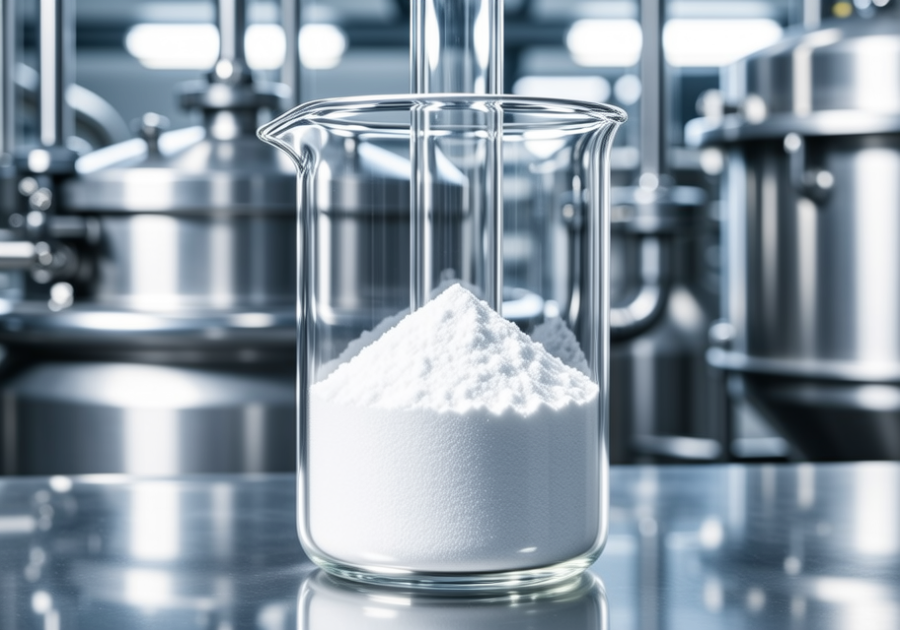
From Ancient Volcanoes to Modern Feed Mills: EFSA Validates Volcanic Zeolite as Safe and Effective Feed Additive
Deep beneath layers of geological time—and now inside European feed bins—lies a mineral with a fiery origin and a quiet utility: clinoptilolite of volcanic origin. On December 11, 2025, the European Food Safety Authority (EFSA) delivered a pivotal scientific opinion affirming that this naturally occurring zeolite is not only safe for use in feed for key terrestrial animals, but also effective as a pellet binder and anti-caking agent—a dual endorsement that bridges earth science and agricultural innovation.
Requested by the European Commission, the assessment by EFSA’s Panel on Additives and Products or Substances used in Animal Feed (FEEDAP) examined the safety and efficacy of clinoptilolite—a microporous aluminosilicate formed from volcanic ash reacting with alkaline groundwater over millennia. Today, it’s prized in animal nutrition not for its nutrients, but for its physical functionality: improving feed texture, preventing clumping, and ensuring pellets hold their shape during transport and storage.
The panel concluded that when used at up to 20,000 mg per kilogram of complete feed, clinoptilolite is safe for poultry raised for fattening or breeding, ornamental birds, piglets (both suckling and weaned), and fattening pigs. For these categories—representing a significant share of Europe’s livestock sector—the green light is clear. However, EFSA noted that insufficient data prevented a safety conclusion for other terrestrial species, such as ruminants or rabbits, urging caution and further study before broader application.
Crucially, the additive poses no risk to consumers who eat meat, eggs, or dairy from animals fed clinoptilolite-containing diets, nor does it threaten the environment through manure or runoff. This environmental neutrality stems from clinoptilolite’s inert nature—it passes through the digestive tract unchanged and doesn’t bioaccumulate.
But while safe for animals and ecosystems, the mineral isn’t harmless to humans handling it in concentrated form. The FEEDAP Panel flagged that although it is not irritating to skin or eyes, it should be considered a dermal and respiratory sensitizer. Exposure via inhalation or skin contact is deemed a risk—a reminder that even natural minerals demand occupational safeguards in feed manufacturing settings. Proper ventilation, protective gear, and dust control are essential to protect workers.
On efficacy, the verdict was unequivocal: clinoptilolite works as intended. Its porous structure and surface properties help bind fine particles into durable pellets and prevent feed from hardening in humid conditions—critical for maintaining feed quality, reducing waste, and ensuring consistent nutrient delivery.
This approval underscores a growing reliance on geologically derived, non-synthetic additives in sustainable animal production. Unlike chemically engineered alternatives, volcanic clinoptilolite is abundant, stable, and functionally robust—offering a “clean-label” solution for an industry under pressure to reduce artificial inputs.
In essence, EFSA’s opinion transforms an ancient volcanic relic into a modern agri-tech asset—not by altering biology, but by enhancing logistics. As feed mills across Europe continue optimizing efficiency and sustainability, they may find that sometimes, the best innovations aren’t invented—they’re excavated.

You May Interested In


High Quality β-Nicotinamide adenine dinucleotide CAS 53-84-9 NADwith ready stock and best price
$3E+1/UNIT FOB


2026-10-25
Trade Alert
Delivering the latest product trends and industry news straight to your inbox.
(We'll never share your email address with a third-party.)

Related News
-
The Last 10% Tariff Trap: A New Chapter in U.S.–China Negotiations on “Fentanyl Tariffs”
-
Vietnam Drives ASEAN Towards a Modern Economy
-
USDA Puts Fresh Money Into Local Food Markets
-
Redwall Raises Prices by as Much as 80%, Songwon Launches Global Increases, and Chemical Companies Are Collectively Passing On Costs
-
U.S. Strikes Three Iranian Tankers as “Tanker-for-Tanker” Escalation Raises Chemical Shipping Risk
-
"No available slots" returns as global shipping rates skyrocket amid multiple factors
-
Panama Canal Delays Deeper Draft Cut, but Transit Capacity Is Still Tightening
-
Middle East Conflict Pushes Up Oil Prices as More Than 100 Chemical Raw Materials Rise in Concentration
-
Crude Tanker Freight From the Americas to Asia Tops $80 Million per Voyage Amid Global Shipping Crunch
-
China, U.S. and Australia Escalate Antidumping Scrutiny: Chemical Exports Face Rising Compliance Pressure
Recommend Reading
-
![Global Ag M&A in 2025 Looked Less Like Expansion and More Like Selection]()
Global Ag M&A in 2025 Looked Less Like Expansion and More Like Selection
-
![Canada’s Acynonapyr Review Offers More Than a New Mite Product]()
Canada’s Acynonapyr Review Offers More Than a New Mite Product
-
![West Asia’s Conflict Is Testing the Hidden Fragility of Pharma Trade]()
West Asia’s Conflict Is Testing the Hidden Fragility of Pharma Trade
-
![Three Major Indian Chemical Investments Target China's PC Exports]()
Three Major Indian Chemical Investments Target China's PC Exports
-
![Shandong’s Export Growth Is 2.8%; This Category Is 19%: Shandong Has a Chokehold on the Upstream of Global Manufacturing]()
Shandong’s Export Growth Is 2.8%; This Category Is 19%: Shandong Has a Chokehold on the Upstream of Global Manufacturing
-
![Raw Material Support Drives Uptick in Adipic Acid Prices]()
Raw Material Support Drives Uptick in Adipic Acid Prices
-
![High Inventory Triggers Formaldehyde Price Drop]()
High Inventory Triggers Formaldehyde Price Drop
-
![Business Society October 10, 2026 Methanol Trend Analysis: Stronger-Driven Volatility]()
Business Society October 10, 2026 Methanol Trend Analysis: Stronger-Driven Volatility
-
![Business Society’s August 12, 2026 Melamine Market Outlook: Clearly Downward]()
Business Society’s August 12, 2026 Melamine Market Outlook: Clearly Downward
-
![Demand Weakens, Butanol Prices Retreat from High Levels]()
Demand Weakens, Butanol Prices Retreat from High Levels