Coal industry: strengthening health in supply side reform
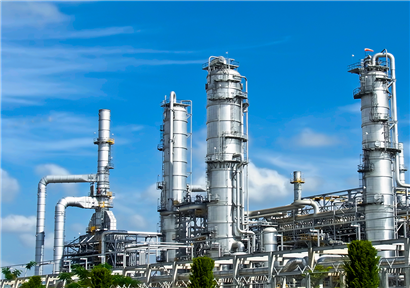
Through the four-year supply side structural reform, the production structure of China's coal industry has been continuously adjusted, the production concentration has been increasing year by year, the production layout has been continuously optimized, the debt ratio of enterprises has fallen, the profitability has risen, and the industry investment has recovered. 2019 is the fourth year for the State Council to put forward the idea of coal to eliminate excess capacity and achieve the development of poverty alleviation. Through the four-year "supply side structural reform", the production structure of the coal industry has been continuously adjusted, and the production concentration has been improved; the production layout has been continuously optimized; the debt ratio of enterprises has fallen, the profitability has risen, and the industry investment has recovered.
In terms of consumption, according to the national statistical data, the proportion of coal consumption in the first half of this year decreased by 2.1 percentage points; according to the calculation of China coal transportation and Marketing Association, the cumulative consumption of commercial coal in the country from January to August 2019 was 2.63 billion tons, an increase of 0.4% year on year. Among them, the consumption of coal in the power industry is 1.41 billion tons, down 0.9% year on year, but the consumption of coal in the steel, building materials and chemical industries is increasing. From January to August 2019, the consumption of coal in the steel, building materials and chemical industries respectively reached 460 million tons, 310 million tons and 200 million tons, up 5.9%, 3.3% and 1.3% year on year. Production: the increase is concentrated in the "three West and one new" area. With the deepening of the supply side structural reform of the coal industry, the coal production layout has been continuously adjusted, and the new production capacity is mainly concentrated in the "three West and one new" area. This year, the release of high-quality coal production capacity accelerated.
From January to August 2019, the national development and Reform Commission and the National Energy Administration approved a total of 33 coal mines, all of which are large and super large, including 31 new projects, 2 reconstruction and expansion projects (5 million tons / year reconstruction and expansion project of wenjiazhuang coal mine and 5 million tons / year reconstruction and expansion project of Manglai open pit mine), 33 coal mines with a net added capacity of about 161 million tons / year; in the same period last year, 14 coal mines with a net added capacity of 60 were approved In the first half of this year, the number of projects approved and the net production capacity increased were more than twice that of the same period last year. The newly approved production capacity is mainly concentrated in Sanxi area and Xinjiang (26 out of 33 are from the above four provinces / regions), only 10 newly approved coal mines in Inner Mongolia, with a production capacity of 62.3 million tons / year and a net increase capacity of 61.4 million tons / year, accounting for about 38% of the net increase capacity. Four coal mines of Shaanxi coal chemical group (Xiaozhuang coal mine, caojiatan coal mine, xiaobaodang No.1 Coal Mine and xiaobaodang No.2 coal mine) have been approved by the general office of the national development and Reform Commission, and they are produced according to the designed production capacity. The production capacity of xiaobaodang No.1, No.2 Coal Mine and caojiatan coal mine has been increased from 8 million tons / year to 15 million tons / year, 13 million tons / year and 15 million tons / year respectively.
In addition, Tashan Coal Mine, GaoJiaLiang coal mine and other large-scale coal mines have successively completed the verification of production capacity, which has been greatly improved. According to the latest production capacity announcement (No.2 in 2019) issued by the national energy administration, by the end of December 2018, the total coal quantity in Sanxi region (Shanxi, Shaanxi and Inner Mongolia) accounted for 35.7% of the total coal mines in the country, 4.4% higher than that in the previous announcement (by the end of June 2018); the total coal production capacity in Sanxi region (Shanxi, Shaanxi and Inner Mongolia) accounted for 64.1% of the total coal production capacity in the country, which was higher than that in the previous announcement. The previous announcement increased by 1.6%. The number of coal in the "three West and one new" area accounts for nearly one third of the total number of coal mines in China, up 4.9% from the previous announcement; the coal capacity in the "three West and one new" area accounts for nearly 70% of the total coal capacity in China. In addition, the average production scale (production capacity) of the "three West and one new" single mine is in the forefront of the country. The average production scale of single mines in Inner Mongolia, Xinjiang, Shaanxi and Shanxi is 2.392 million tons / year, 1.9510 million tons / year, 1.9211 million tons / year and 1.5636 million tons / year respectively, ranking the third, fourth, sixth and ninth in the average production scale of single mines in this announcement.
The output of raw coal continued to grow, the import of coal was moderately liberalized, and the supply guarantee capacity was strengthened. According to the data of China Coal Industry Association, from January to August 2019, China's raw coal output was 2.41 billion tons, an increase of about 131 million tons over the previous year, up 5.7% year on year. Only in August 2019, the output of raw coal reached 316 million tons, up 6.5% year on year. According to the data of the customs, the cumulative import of coal and lignite from January to August 2019 is about 220 million tons, an increase of 17.14 million tons compared with the same period last year, an increase of 8.4% year on year. The import of power coal fell back. From January to August 2019, the total import of power coal was about 57.19 million tons, an increase of 2.4% year on year; the import of coking coal increased significantly, and from January to August 2019, the total import of coking coal was about 53.12 million tons, an increase of 22.7% year on year. The bottleneck of transportation has been solved, and the railway traffic volume has maintained growth. From January to August 2019, the National Coal Railway shipment volume was 1.62 billion tons, a year-on-year increase of 3.2%, and the coal transportation support capacity was further improved; from January to June 2019, the state-owned key coal mine shipment volume was about 591 million tons, a year-on-year increase of 3.9%, accounting for 49.2% of the total, an increase of 0.6 percentage points compared with the same period last year.
In the first half of the year, the coal shipment volume of Daqin Railway was about 218 million tons, down 3.2% year on year. In addition, the construction of the world's longest heavy-duty railway, Haoji railway, has been basically completed. The planned annual transportation capacity of the railway is more than 200 million tons, which will open the transportation bottleneck of "north coal South transportation". With the deepening of "de capacity" work, the coal production scale in Northeast, East, central and southwest China continued to decline. Following the completion of 290 million tons / year, 250 million tons / year and 270 million tons / year capacity reduction from 2016 to 2018, according to incomplete statistics, the total capacity reduction plans put forward by each province in 2019 exceed 70 million tons / year, among which the capacity withdrawal plans put forward by Shanxi, Guizhou and Hebei exceed 10 million tons / year, respectively 18.95 million tons / year, 16.17 million tons / year and 10.03 million tons / year. Among them, the total number of coal in Northeast China (Heilongjiang, Jilin and Liaoning) accounts for 12.1% of the total number of coal mines in China, which is 4.0% lower than the previous announcement (as of the end of June 2018); the coal production capacity in Northeast China accounts for 4.2% of the total coal production capacity in China, which is 0.4% lower than the previous announcement. The total number of coal in East China (Jiangsu, Anhui, Fujian, Jiangxi and Shandong) accounts for 8.8% of the total number of coal mines in China, which is the same as the previous announcement (as of the end of June 2018); the coal capacity in East China accounts for 8.8% of the total capacity of coal mines in China, which is 0.5% lower than the previous announcement.
The total number of coal in Central China (Henan, Hubei and Hunan) accounts for 8.8% of the total number of coal mines in China, down 4.9% compared with the last announcement (as of the end of June 2018); the coal production capacity in Central China accounts for 4.6% of the total coal production capacity in China, down 0.7% compared with the previous announcement. The total number of coal in Southwest China (Sichuan, Yunnan, Guizhou and Chongqing) accounts for 27.6% of the total number of coal mines in China, an increase of 4.0% over the previous announcement (as of the end of June 2018); the coal production capacity in Southwest China accounts for 7.9% of the total coal production capacity in China, an increase of 0.2% over the previous announcement. Structure: according to the announcement of the national energy administration, by the end of 2018, there were 823 large and super large coal mines in the production of coal enterprises, an increase of 1 compared with the announcement of the previous period; 1002 medium-sized coal mines, an increase of 8 compared with the announcement of the previous period. The number of small coal mines continued to decline to 1548, a decrease of 452. The proportion of large and super large coal mines is about 24%, which is about 2% higher than the previous announcement; the proportion of small coal mines is about 46%, which is 6% lower than the previous announcement. The production capacity of large and extra large coal mines accounted for 72%, which was the same as the previous announcement; the production capacity of small coal mines accounted for about 7%, which was about 1% lower than the previous period. From January to August 2019, the number of small coal mines decreased significantly, while the proportion of large and extra large coal mines continued to rise, and the structure of the coal industry continued to optimize.
According to the data of China Coal Industry Association, in the first half of 2019, the total output of the top ten coal production enterprises in China was about 837 million tons, an increase of 18.76 million tons over the previous year, an increase of 2.3% year on year. The output of enterprises directly reported by the association in the first half of the year was 1.28 billion tons, and the output of enterprises in the top ten coal production in China accounted for 65.4% of the total output of enterprises directly reported by the association, an increase of 1.4 percentage points over the same period last year. Operation and Investment: profits fell slightly, industry investment recovered from January to August 2019, and fixed asset investment in coal mining and washing industry increased by 26.1% year-on-year, 26.5 percentage points higher than the previous year. From January to June 2019, the operating revenue of Coal Enterprises above Designated Size nationwide was 1169.73 billion yuan, an increase of 40.2 billion yuan over the same period of last year, an increase of 3.6% over the same period of last year; the total utilization (after subsidy) was 139.11 billion yuan, a decrease of 9.6 billion yuan over the same period of last year, a decrease of 6.5% over the same period of last year; the loss of loss enterprises was 20.79 billion yuan, an increase of 4.3 billion yuan over the same period of last year, an increase of 26.2% over the same period of last year; the asset liability ratio was 65.9% 8%.

You May Interested In


High Quality β-Nicotinamide adenine dinucleotide CAS 53-84-9 NADwith ready stock and best price
$3/UNIT FOB


2026-10-15
Trade Alert
Delivering the latest product trends and industry news straight to your inbox.
(We'll never share your email address with a third-party.)

Related News
-
Coal Price Surge Coupled with El Niño Drives Urea Up by RMB 100/Ton in a Single Day
-
Coal prices soared, South Africa's Thungela company doubled its annual profit
-
The operating conditions of the German chemical industry have further deteriorated
-
How can we use nitrogen as fuel in various industry?
-
Nepal consumes 800 metric tons of pesticides every year
-
China's pesticide and fertilizer market seeks biological alternatives
-
China丨“Top 50 Exporting Companies of China Agrochemical in Year 2021” List Released
-
Chemical Enterprises Collectively Stop Production! Supply 'Urgent'
-
Power coal price in Zhejiang Province decreased by 4.0% YoY
-
CBI faces up to triple risks at home and abroad, will focus on five areas
Recommend Reading
-
![The GLP-1 Sweet Shot in India’s Diabetic Gut]()
The GLP-1 Sweet Shot in India’s Diabetic Gut
-
![APVMA Suspends Dimethoate Use on Select Berries Amid Updated Exposure Assessment]()
APVMA Suspends Dimethoate Use on Select Berries Amid Updated Exposure Assessment
-
![Spain Authorizes Emergency Use of Sulfoxaflor Formulation to Combat Cabbage Whitefly Outbreak]()
Spain Authorizes Emergency Use of Sulfoxaflor Formulation to Combat Cabbage Whitefly Outbreak
-
![EFSA Publishes Peer Review Conclusions on Phenmedipham Herbicide Assessment]()
EFSA Publishes Peer Review Conclusions on Phenmedipham Herbicide Assessment
-
![EFSA Unable to Conclude on Full-Scope Safety of Genetically Modified Oilseed Rape LBFLFK]()
EFSA Unable to Conclude on Full-Scope Safety of Genetically Modified Oilseed Rape LBFLFK
-
![U.S. Exempts Critical Chemical Manufacturers from Emissions Rules for Two Years]()
U.S. Exempts Critical Chemical Manufacturers from Emissions Rules for Two Years
-
![China Releases 15th Five-Year Carbon-Peaking Action Plan, Pushing Coal Chemicals into a Mandatory Low-Carbon Upgrade Cycle]()
China Releases 15th Five-Year Carbon-Peaking Action Plan, Pushing Coal Chemicals into a Mandatory Low-Carbon Upgrade Cycle
-
![FDA Revokes Orange B Authorization and Proposes Removing Citrus Red No. 2]()
FDA Revokes Orange B Authorization and Proposes Removing Citrus Red No. 2
-
![EFSA’s Updated Food-Additive Application Guidance Takes Effect]()
EFSA’s Updated Food-Additive Application Guidance Takes Effect
-
![India Approves ₹30.3 Billion Chemical-Park Scheme to Build Three Mega Industrial Hubs]()
India Approves ₹30.3 Billion Chemical-Park Scheme to Build Three Mega Industrial Hubs