The power shortage crisis in many parts of China and the shutdown of manufacturing industries have had an impact on the chemical industry and foreign trade.
This year, China's abnormally high summer temperatures have continued and electricity demand has increased dramatically. Among them, Sichuan, Chongqing, Zhejiang, Jiangsu, Hubei and Anhui have introduced electricity restriction policies, and many industrial enterprises have received notices of power outages and staggered electricity consumption.
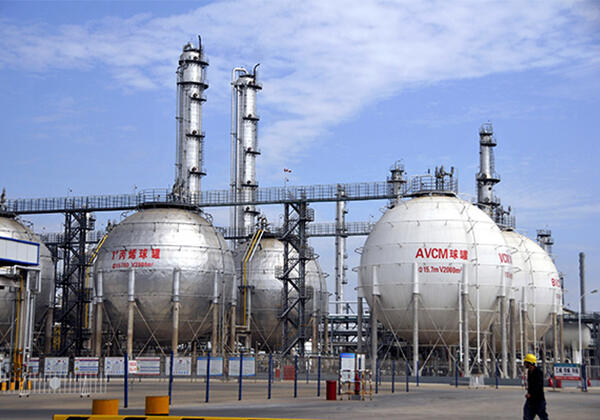
Sichuan enterprises shutdown extended to July 25, more than 3,300 enterprises in Ningbo staggered production
On August 21, Sichuan launched a level one emergency response to ensure energy supply in emergencies. In August 15-20, Sichuan requires industrial power users to stop work and production on the basis of priority civilian electricity consumption. Industrial shutdown continued until August 25. At present, the province (except Panzhihua, Liangshan) of the 19 cities (states) of Sichuan power grid orderly power program in all industrial power users (including the white list of key security enterprises) to implement production shutdown (except security load).
Sichuan has a larger share of production of titanium dioxide, industrial silicon, polysilicon, yellow phosphorus, lithium salt, urea and other raw materials, the current round of power restrictions, will cause the above-mentioned raw materials start rate plummeted, and even a total shutdown state.
On the same day, Shanghai announced the suspension of the opening of the Bund along the Huangpu River, the North Bund, the small Lujiazui area landscape lighting, to slow down the peak electricity load. Last Friday, Wuhan began to restrict electricity in some areas, including industrial enterprises and some office buildings. Anhui province also has some enterprises shut down, the power supply and demand situation is serious, do not rule out the possibility of further restrictions.
In addition, a number of factories in Jiangsu and Zhejiang have received notices of power restrictions and arranged for staggered production. Zhejiang Province launched a C-level 12.5 million kilowatts of orderly electricity consumption on August 8. A few days ago, more than 3,300 enterprises in Ningbo, Zhejiang Province, have adjusted their production operation hours, staggered power consumption, giving priority to civilian power consumption, and the maximum load shedding reached 290,000 kilowatts.

Several industries have been hit by power restrictions. Is the impact on foreign trade serious?
Electricity consumption, higher growth rates are basically export-oriented industries, including: electrical machinery, automobile manufacturing, furniture manufacturing, wood processing, computer communications and other electronic equipment, instrumentation, general equipment, textiles and clothing, educational supplies and textiles.
Sichuan is not only a major province in China's photovoltaic industry, but also has more than a dozen important semiconductor supply chain companies such as TI and Intel. In addition, power restrictions have had an impact on industries such as lithium salt and chemicals. Chongqing is a gathering place for electronic products such as laptops, and power restriction measures may have an impact on the electronics supply chain.
Jiangsu and Zhejiang and other gathering of many export enterprises, the current launch of the power restriction policy will have a certain impact on industrial electricity consumption, a variety of industrial products production capacity is limited. For foreign exports, the delivery period will be extended, thus affecting the stocking cycle and increasing inventory pressure.

You May Interested In


SS-31 Cosmetic peptides, discounted price improving cognitive impairment factory supply
$8E+1/UNIT FOB


2026-09-13
Trade Alert
Delivering the latest product trends and industry news straight to your inbox.
(We'll never share your email address with a third-party.)

Related News
-
Sharp Decline in Profits for Chemical Manufacturing in First Eight Months
-
The chemical market is dominated by weakness and fluctuation
-
In the First Five Months, the Profit of Chemical Raw Materials and Products Manufacturing Industry Increased by 13.8%
-
Manufacturing Prices of Chemical Raw Materials and Products in May Rose 13.6% Year-on-year and 0.6% Month-on-month
-
Another Increase! Wanhua Raises Prices Of 4 Water-Based Products, Up To 5,000 CNY/ton
-
Four National Chemical Industry Chains! Strengthening The Bones Of Green Chemical Development
-
Crude Oil Ups And Downs, But PVC At The Mercy Of Futures?
-
A Total Investment Of 10 Billion! 400,000 Tons Of Pe And 450,000 Tons Of Pp Projects Successfully Signed
-
From January to February, The Investment in Chemical Raw Materials And Products Manufacturing Industry Increased by 16.2% Year-on-year
-
Heavyweight! Anhui Will Vigorously Develop New Bio-Based Materials With Special Advantages
Recommend Reading
-
![Behind Starbucks China’s Ownership Change: The Race for Localization and Efficiency]()
Behind Starbucks China’s Ownership Change: The Race for Localization and Efficiency
-
![Wanhua’s Counter-Cyclical Expansion: A Gamble or a Strategic Move for the Next Cycle?]()
Wanhua’s Counter-Cyclical Expansion: A Gamble or a Strategic Move for the Next Cycle?
-
![BASF Ludwigshafen Workforce Falls Below 30,000, Lowest Level in 72 Years]()
BASF Ludwigshafen Workforce Falls Below 30,000, Lowest Level in 72 Years
-
![Sherwin-Williams Completes Acquisition of BASF's Decorative Paints Business in Brazil for $1.15 Billion]()
Sherwin-Williams Completes Acquisition of BASF's Decorative Paints Business in Brazil for $1.15 Billion
-
![BASF Brings Biomass-Balance Polyols to North America]()
BASF Brings Biomass-Balance Polyols to North America
-
![July China Phenol Market Trended Upward with Fluctuations]()
July China Phenol Market Trended Upward with Fluctuations
-
![Supply-Demand Gap Widens, Lithium Carbonate Prices Approach Year-to-Date High]()
Supply-Demand Gap Widens, Lithium Carbonate Prices Approach Year-to-Date High
-
![July China Marine Fuel Market Rises]()
July China Marine Fuel Market Rises
-
![Shipment Pressure Eases Locally; PC Prices Show Mixed Trends in Early November]()
Shipment Pressure Eases Locally; PC Prices Show Mixed Trends in Early November
-
![This week, the Aniline market in China continues to rise (7.20-7.24)]()
This week, the Aniline market in China continues to rise (7.20-7.24)