What is the chemical composition of sodium bicarbonate.
So what exactly is the chemical composition of sodium bicarbonate? Sodium bicarbonate (NaHCO3) is a compound made up of salt and baking soda. Sodium bicarbonate is an alkaline salt that behaves as an acid in solution.
The chemical composition of sodium bicarbonate formula for sodium bicarbonate is HNaO CO . The molecular weight of one mole of this substance is 58.00 g/mol.
Sodium bicarbonate is a colorless, odorless, and chemically unstable crystalline compound that dissipates in moist environments to release carbon dioxide gas and basic water molecules. Sodium bicarbonate can be dissolved in water to form an alkaline solution capable of reacting with acid or other base solutions. It is typically consumed as a salt substitute.
Sodium bicarbonate is used in acidic solutions where it acts as a base to neutralize acids. In contrast, the substance is also used in basic solutions for its basic properties. In alkaline solutions, sodium bicarbonate reacts with acids to form sodium carbonate and water. In other words, sodium bicarbonate serves as a source of carbon dioxide gas in alkaline solutions and produces an alkaline solution by reacting with acids; likewise, it can operate as an acid-neutralizing agent by reacting with acids and producing sodium carbonate.
Chemical composition of sodium bicarbonate
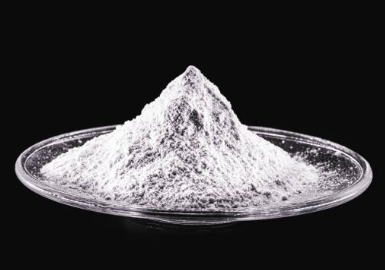
The chemical formula for sodium bicarbonate is NaHCO3. Sodium bicarbonate is a white, crystalline, hygroscopic solid that is soluble in water and many organic solvents. It also occurs naturally in sea salt as the mineral halite.
When dissolved in water, the correlation between energy release and heat of reaction varies depending on temperature. At room temperature (25℃), there is approximately 4 kilojoules of energy released per mole of hydrogen carbonate ion reacted with sodium ions to form sodium carbonate and water with concomitant release of heat until equilibrium is reached at about 904 kJ/mol. At higher temperatures around 100 ℃, the heat of reaction with water is even more exothermic.
Sodium bicarbonate is manufactured industrially by reacting sodium carbonate and sodium bicarbonate together at about 350 ℃ and rapidly cooling the resulting sodium hydrogen carbonate (NaHCO3) to produce the final product. It may also be prepared on a laboratory scale by the reaction of an equivalent amount of bicarbonate with soluble sodiums in water.
Sodium bicarbonate is worked up from the sodium salt by passing hot sulfuric acid through the solution.
Sodium bicarbonate is used to make soft soaps and for various other soap-related purposes. It also finds use in making laboratory reagents such as sodium hydrogencarbonate solution, which is often used as a pH buffer. It also finds use in medicines (as an antidiuretic).
It is also used in baking (to stabilize bread) and cleaning products, such as glass cleaners and degreasing agents. It was once widely prescribed for neutralizing stomach acid, but its usefulness has been decreasing over the years since other more effective antacids became available.
Sodium bicarbonate is used to neutralize stomach acid in preparation for endoscopic procedures. It is also used as an antacid for relief of heartburn and indigestion. It is sometimes used as a construction dust control, particularly in the UK where it is called "Calcicare".
Sodium bicarbonate can act as a fire suppressant and reduce the spread of fires through chemical barriers such as dry-powder fire extinguishers, but has drawbacks (e.g., it must be applied quickly to be effective). It may provide limited protection from radioactive contamination from activated carbon used in some smoke detectors.
Sodium bicarbonate is also used for cleaning, as a bleach substitute in laundry and as a strong cleaning agent to remove tar from pavement. It is also used in water softener systems due to its ability to neutralize sulfuric acid which prevents it from removing minerals such as calcium from the water.
In medicine, it is also an antacid for treating heartburn, upset stomach and indigestion.
Sodium bicarbonate is commonly used in metal casting operations where sand is the primary investment material. It adds strength to the sand and retards its decomposition during long holding periods required by certain metal alloys that can be lost easily in conventional sand molds.
Conclusion
In chemistry, sodium bicarbonate (NaHCO3) is an alkaline substance with many uses. It's a major component of baking powder and also used in the pharmaceutical industry for manufacturing drugs such as Tylenol.
It is called a "base" because it can neutralize acids. You may have seen this happen before when you put vinegar on ants or spilled fruit juice; these substances are acidic, which causes sodium bicarbonate to react with them by converting the acid molecules into base molecules-a process called "neutralization"-thus restoring your home to its original pH balance.
Looking for chemical products? Let suppliers reach out to you!
You May Interested In


Glow70/KLOW80 99% China Peptides Warehouse Direct Delivery Lyophilized Powder in Stock
$169/UNIT FOB


2026-10-24
Trade Alert
Delivering the latest product trends and industry news straight to your inbox.
(We'll never share your email address with a third-party.)

Related News
-
ECHEMI High Quality Inquiries (22-26 June)
-
ECHEMI High Quality Inquiries (18-22 May)
-
Exploring the Properties: Is Sodium Bicarbonate a Base or Something Else?
-
How to Use Sodium Bicarbonate in Different Ways?
-
What is components of baking soda and its use?
-
Global lithium resource supply is still tight
-
As an important raw material for lithiumbatteries, the price of lithium carbonate has not yet seen the ceiling
-
The Secret To Neutralizing Phosphoric Acid With Sodium Bicarbonate
-
Carbon Dioxide and Sodium Bicarbonate: A Potent Combination for Baking
-
How to Chemical Reaction Of Acetic Acid And Sodium Bicarbonate
Recommend Reading
-
![Uses and Benefits of Sodium Selenite]()
Uses and Benefits of Sodium Selenite
-
![Applications and Safety of Sodium Dichromate]()
Applications and Safety of Sodium Dichromate
-
![Understanding Titanium Oxide: Properties and Uses]()
Understanding Titanium Oxide: Properties and Uses
-
Sodium Metabisulfite: Properties, Uses, and Safety
-
![Magnesium Stearate in Supplements: Is it Safe? (Vegan Status & Function)]()
Magnesium Stearate in Supplements: Is it Safe? (Vegan Status & Function)
-
![Business Society’s August 19, 2026 Phthalic Anhydride Market Outlook: Continuing to Rise]()
Business Society’s August 19, 2026 Phthalic Anhydride Market Outlook: Continuing to Rise
-
![Business Society’s September 9, 2026 View on Isooctanol Market Trends: Clearly Downward]()
Business Society’s September 9, 2026 View on Isooctanol Market Trends: Clearly Downward
-
![Business Society’s Market Outlook for Epichlorohydrin on August 19, 2026: Clearly Downward]()
Business Society’s Market Outlook for Epichlorohydrin on August 19, 2026: Clearly Downward
-
![Acetic Acid Market Prices Show Narrow Upward Trend]()
Acetic Acid Market Prices Show Narrow Upward Trend
-
![Business Society’s Market Outlook for Epichlorohydrin on September 8, 2026: The Trend Is Volatile]()
Business Society’s Market Outlook for Epichlorohydrin on September 8, 2026: The Trend Is Volatile