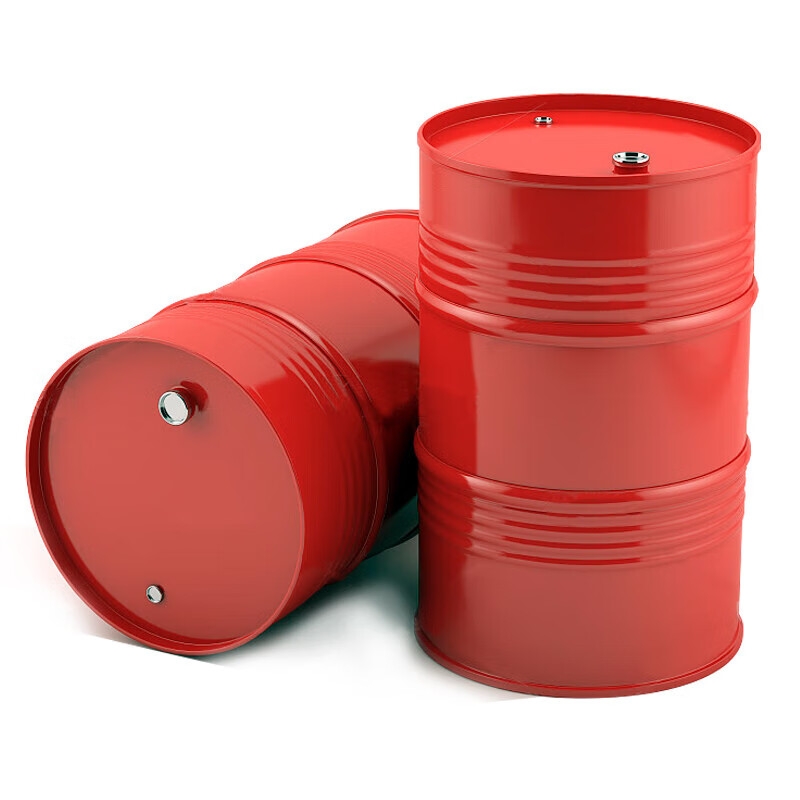
DIMETHYL SULFATE Premium grade
16 Inquiries
77-78-1
Premium grade
QINGDAO
250kg/0.12kg Bag
Yes
2016-09-15

-
Product Description
-
Seller Information
-
Inquiry History
-
Description

1 Properties: colorless or light yellow transparent liquid, micro strip onion smell. [1]
2.pH value: < 7 (1% solution) [2]
3 melting point (c): -31.8[3]
4 boiling point (decomposition, c): 188[4]
5 relative density (water =1): 1.33 (20 degrees C) [5]
6 relative vapor density (air =1): 4.35[6]
7 saturated vapor pressure (kPa): 2 (76 degrees C) [7]
8 critical pressure (MPa): 7.01[8]
9 the octanol / water partition coefficient: 0.16[9]
10 point (c): 83 (OC); 83.3 (CC) [10]
11 ignition temperature (c): 188[11]
Upper limit of 12.. Explosion (%): 23.3[12]
13 explosion lower limit (%): 3.6[13]
14 solubility: slightly soluble in water, soluble in ethanol, ether, acetone, etc.. [14]
toxicology data
1, people inhale 97ppm/10M LCLo. Rat oral 205mg/kg LC50:; inhaled 45mg/m3/4H LD50. Mice were exposed to LC50: 140 mg/kg; inhaled LC50: 280 mg/m3. Two methyl sulfate is high toxic, and mustard gas is similar to that of acute toxicity similar to phosgene, is 15 times bigger than chlorine. The eyes and upper respiratory tract have a strong stimulating effect, has strong corrosive effect on the skin. Can cause conjunctival congestion and edema, corneal epithelial exfoliation, tracheal and bronchial epithelial cell necrosis, worn out resulting in mediastinal or subcutaneous emphysema. In addition, also can damage the liver, kidney and heart, skin contact can cause burns, blisters and depth of necrosis. Mechanism of action is not entirely clear, most scholars think is due to the nature of the substance of the methyl, it hydrolyzed in vivo into methanol and sulfuric acid and cause toxic effects, which have been by animal experiment and death cases of blood and guts in methanol detection confirmed. That Ghiringhelli the local effects of eye and skin, in part due to sulfate and the effects of systemic and nervous system and pulmonary edema is due to a toxic effect of dimethyl sulfate molecule itself, because it can make the body of some important groups of methylation induced by. Two methyl sulfate on the skin damage, in addition to its corrosive effect, but also may cause contact allergic dermatitis. In recent years, animal experiments in foreign countries reported that the chromosome aberration caused by two methyl sulfate poisoning. Experiment with rats also confirmed that there is a carcinogenic effect.
2 acute toxicity [15]
LD50:205mg/kg (rat)
LC50:45mg/m3 (rat inhalation, 4h)
3 stimulating [16]
Rabbit skin: 10mg (24h), severe stimulation (open stimulation test).
Rabbit eyes: 100mg (4S), severe stimulation (water rinse)
4 subacute and chronic toxicity [17] rats inhaled 0.5ppm, weekly 6h, 2 weeks, no effect; 17mg/m3,18 weeks, MLC (minimum lethal concentration). After six months of exposure to animals, it can be seen that the pain is reduced.
5 mutagenicity DNA [18] damage: human lymphocytes 1mmol/L. Sister chromatin exchange: human fibroblasts 1 mol/L. DNA adduct: human HeLa cells 5 mu mol/L. Procedures for the synthesis of DNA: human lymphocytes 10 mu mol/L.
6 carcinogenic IARC [19] carcinogenic review: G2A, a possible human carcinogen.
Ecological data
1 ecological toxicity LC50:7.5~15mg/L [20] (96h) (FISH)
2 biodegradability [21]
Aerobic biodegradation (H): 168~672
Anaerobic biodegradation (H): 672~2688
3 non biodegradable [22]
Half life (H) of the air in the air: 36.5~365
Molecular structure data
1, molar refractive index: 23.59
2, molar volume (cm3/mol): 95.3
3, such as Zhang (90.2K): 234.2
4, surface tension (dyne/cm): 36.4
5, polarization ratio (10-24cm3): 9.35
Computational chemistry data
1 hydrophobic parameter calculation reference value (XlogP): -0.3
2 hydrogen bond donor number: 0
3 hydrogen bond acceptor number: 4
4 the number of rotatable chemical keys: 2
5 the number of each variance structure: None
6 topological polar surface area 61
7 heavy atom number: 7
8 surface charge: 0
9 complexity: 107
10 isotope atomic number: 0
11 determine the number of atomic structure centers: 0
12 the number of the atomic number: 0
13 to determine the number of chemical bond Center: 0
14 uncertainty of the number of chemical bond Center: 0
15 the number of covalent bonds: 1
Property and stability
1 this product is highly toxic. Strong irritation and corrosion effects on the mucosa and skin of the respiratory system. Affect the nervous system and blood system, damage the heart, lungs, liver, kidney and other functions. Rat oral LD50 was 440mg/kg. Air content of up to 1%, the inhalation of the human body that is fatal. Maximum allowable concentration of 0.5mg/m3. Available water as an antidote. Operator should wear protective equipment.
2 stability [23] stability
3 cut material [24] strong oxidant, alkali, ammonia, water
4 avoid contact with [25] moist air conditions
5 polymerization hazard [26] does not aggregate
6 decomposition products of [27] sulfur dioxide
Storage method
Storage note [28] store in a cool, dry, well ventilated warehouse, the implementation of "double send and receive, double custody" system. Away from the fire, heat source. Library temperature is not more than 32 degrees Celsius, the relative humidity is not more than 80%. Keep container seal. Should be with the oxidant, alkali, food chemicals stored separately, avoid mixing. Fire fighting equipment with corresponding variety and quantity. The storage area should be equipped with a leak emergency treatment equipment and a suitable shelter material.
synthetic method
Method for the synthesis of dimethyl sulfate, such as sodium, anhydrous sulfate and methanol method, dimethyl ether and sulfur trioxide synthesis, chlorosulfonic acid synthesis, methyl hydrogen sulfate method. But in addition to dimethyl ether and sulfur trioxide synthesis method, there is a low yield of the product, raw material consumption, equipment corrosion and serious problem.
The 1 industry mainly uses two ether and three sulfur dioxide reaction to produce two sulfuric acid methyl ester. The dehydration of methanol was two


 ECHEMI Editorial ReferenceDimethyl sulfate is a colorless, oily liquid that is slightly soluble in water. It has a faint, onion-like odor; the odor threshold has not been established. The vapor pressure for dimethyl sulfate is 0.5 mm Hg at 20 °C, and it has a log octanol/water partition coefficient (log Kow ) of 0.032. Dimethyl sulfate is essentially odorless. The specific gravity of this colorless, corrosive, oily liquid is 1.3322 g/cm3. Dimethyl sulfate is soluble in ether, dioxane, acetone, benzene, and other aromati
Dimethyl sulfate is a chemical compound with formula (CH3O)2SO2. As the diester of methanol and sulfuric acid, its formula is often written as (CH3)2SO4 or even Me2SO4, where CH3 or Me is methyl. Me2SO4 is mainly used as a methylating agent in organic synthesis.Basic Info-
Product Name:
Dimethyl sulfate
Other Name:Sulfuric acid,dimethyl ester;Dimethyl sulfate;Methyl sulfate;Dimethyl sulphate;NSC 56194;98478-67-2;139443-72-4;62086-97-9
CAS No.:77-78-1
UN No.:1595
Molecular Formula:C2H6O4S
InChIKeys:InChIKey=VAYGXNSJCAHWJZ-UHFFFAOYSA-N
Molecular Weight:126.13200
Exact Mass:126.13
EC Number:201-058-1
HScode:2920909090
Categories:
Characteristics-
PSA:
60.98000
XLogP3:0.60480
Appearance:Dimethyl sulfate is a colorless oily liquid, odorless to a faint onion-like odor. It is very toxic by inhalation. It is a combustible liquid and has a flash point of 182°F. It is slightly soluble in water and decomposed by water to give sulfuric acid with evolution of heat. It is corrosive to metals and tissue. It is a potent methylating agent.
Density:1.3322 g/cm3 @ Temp: 20 °C
Melting Point:-27 °C
Boiling Point:187.5 °C @ Press: 769 Torr
Flash Point:83ºC
Refractive Index:1.386-1.388
Water Solubility:ethanol: 0.26 g/mL, clear, colorless | 2.8 g/100 mL (18 ºC)
Storage Conditions:2-8ºC
Vapor Pressure:Vapour pressure, Pa at 20°C: 65
Vapor Density:Relative vapour density (air = 1): 4.4
Toxicity:LD50 orally in rats: 440 mg/kg (Smyth)
Flammability characteristics:Class IIIA Combustible Liquid: Fl.P. at or above 140°F and below 200°F.
Explosive limit:vol% in air: 3.63.3
Odor:Essentially odorless
Hazard IdentificationClassification of the substance or mixture
Acute toxicity - Category 3, Oral
Skin corrosion, Sub-category 1B
Skin sensitization, Category 1
Acute toxicity - Category 2, Inhalation
Germ cell mutagenicity, Category 2
Carcinogenicity, Category 1B
GHS label elements, including precautionary statements
Pictogram(s) 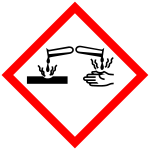
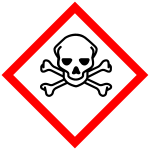
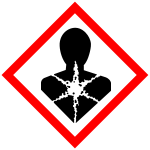
Signal word Danger
Hazard statement(s) H301 Toxic if swallowed
H314 Causes severe skin burns and eye damage
H317 May cause an allergic skin reaction
H330 Fatal if inhaled
H341 Suspected of causing genetic defects
H350 May cause cancer
Precautionary statement(s) Prevention P264 Wash ... thoroughly after handling.
P270 Do not eat, drink or smoke when using this product.
P260 Do not breathe dust/fume/gas/mist/vapours/spray.
P280 Wear protective gloves/protective clothing/eye protection/face protection/hearing protection/...
P261 Avoid breathing dust/fume/gas/mist/vapours/spray.
P272 Contaminated work clothing should not be allowed out of the workplace.
P271 Use only outdoors or in a well-ventilated area.
P284 [In case of inadequate ventilation] wear respiratory protection.
P203 Obtain, read and follow all safety instructions before use.
Response P301+P316 IF SWALLOWED: Get emergency medical help immediately.
P321 Specific treatment (see ... on this label).
P330 Rinse mouth.
P301+P330+P331 IF SWALLOWED: Rinse mouth. Do NOT induce vomiting.
P363 Wash contaminated clothing before reuse.
P304+P340 IF INHALED: Remove person to fresh air and keep comfortable for breathing.
P316 Get emergency medical help immediately.
P305+P351+P338 IF IN EYES: Rinse cautiously with water for several minutes. Remove contact lenses, if present and easy to do. Continue rinsing.
P302+P352 IF ON SKIN: Wash with plenty of water/...
P333+P317 If skin irritation or rash occurs: Get medical help.
P362+P364 Take off contaminated clothing and wash it before reuse.
P320 Specific treatment is urgent (see ... on this label).
P318 IF exposed or concerned, get medical advice.
Storage P405 Store locked up.
P403+P233 Store in a well-ventilated place. Keep container tightly closed.
Disposal P501 Dispose of contents/container to an appropriate treatment and disposal facility in accordance with applicable laws and regulations, and product characteristics at time of disposal.
Other hazards which do not result in classification
no data available
Handling and StoragePrecautions for safe handling
NO open flames. Above 83°C use a closed system and ventilation. Handling in a well ventilated place. Wear suitable protective clothing. Avoid contact with skin and eyes. Avoid formation of dust and aerosols. Use non-sparking tools. Prevent fire caused by electrostatic discharge steam.
Conditions for safe storage, including any incompatibilities
Separated from food and feedstuffs and incompatible materials. See Chemical Dangers. Cool. Dry. Well closed. Ventilation along the floor. Store in an area without drain or sewer access.PRECAUTIONS FOR "CARCINOGENS": Storage site should be as close as practicable to lab in which carcinogens are to be used, so that only small quantities required for ... expt need to be carried. Carcinogens should be kept in only one section of cupboard, an explosion-proof refrigerator, or freezer (depending on chemicophysical properties ...) that bears appropriate label. An inventory ... should be kept, showing quantity of carcinogen & date it was acquired . Facilities for dispensing ... should be contiguous to storage area. Chemical Carcinogens
-
-
Seller Information
-
Business Type:
Manufactory
-
Location:
SHANDONG ZIBO LINZI DISTRICT LINZI AVENUE XINYINUO BUILDING 17-2
-
-
Inquiry History16 Inquiries
Country Product Purchase Quantity Date Posted  Russia
Dimethyl Sulfate
5 L May 28, 2025  Indonesia
Dimethyl Sulfate
6000 MT Sep 11, 2026  United Kingdom
Dimethyl Sulfate
100 MT Jun 5, 2025  United States
Dimethyl Sulfate
1 L May 20, 2024  India
India
Dimethyl Sulphate
1.00 20' Fcl Jan 8, 2024  Philippines
dimethyl sulfate
25 KG Jul 28, 2026
Philippines
Dimethyl Sulfate
1 L Jul 24, 2026
India
Dimethyl sulphate
100 KG Mar 19, 2025  Nigeria
DIMETHYL SULFATE Premium grade
1 Nov 3, 2023
India
DIMETHYL SULFATE
1000 KG Jul 20, 2026
India
DIMETHYL SULFATE
1 KG Jul 17, 2026  Canada
Dimethyl Sulfate
2 KG Jun 21, 2026
India
Dimethyl sulphate
2000 KG May 4, 2026
India
Dimethyl sulphate
50.00 MT Apr 3, 2026  Thailand
Dimethyl Sulfate
30.00 MT Nov 3, 2023  South Korea
DIOCTYLDIMETHYL AMINE
500 G Mar 4, 2025 Post an enquiry for this product
More from this Seller
-
-

-
Hydroxylamine hydrochloride good quality
Premium grade
-

Hot Related Products
-
 Methanol 99.85% colourless liquid
 -
 High Purity industrial grade Methanol 99.9% / Methyl Alcohol CAS 67-56-1
$550-650/MT FOB
-
 67-56-1 Methanol 99.9% Colourless Liquid Batong
 -
 Methanol-
 -
 Methanol CAS 67-56-1 - Industrial Grade Multi-Purpose Solvent & Raw Material
 -
 Methanol 99% powder aly- 67-56-1 lk
 -
 methyl alcohol Methanol
 -
 High Purity Industrial Grade") Methanol (CH OH) High Purity Industrial Grade
Methanol (CH OH) High Purity Industrial Grade -
 Methanol Methyl CAS 67-56-1 99.9% Industrial Grade Clear colorless liquid
$560-600/MT FOB
-
 Methanol,CAS 67-56-1